
Tour review · HISTORICAL TOURS
7 Days Balkan tour to historic Croatia and Bosnia Herzegovina
Old walls, new stories, one smooth route. This 7 day Balkans loop pairs Zagreb and Plitvice Lakes with big names like Dubrovnik, plus the Bosnia stops that add real meaning to the trip. On some departures, the tour leader can be someone like Kenny, known for fluent Mandarin and English storytelling that keeps the group engaged.
Two things I like a lot: first, the pacing. You get guided time in major cities, but you still have moments to look around at your own speed in places like Zadar and Dubrovnik. Second, the logistics are handled. You ride in modern air-con coaches with a tour manager and you get 3 star style hotels with private facilities, plus breakfast to start most days.
One consideration: most attraction admissions are not included, and that matters on a route packed with ticketed sights. You will likely add a few extras, especially around Dubrovnik and the Bosnia heritage stops, so budget for it and plan your timing.
Key things to know before you go
- A tight route with major highlights: Zagreb to Plitvice, then the coast to Dubrovnik, then Bosnia, then back into Croatia and onward to Hungary.
- Small group feel: capped at 30 travelers, with a tour manager and a professional driver.
- English supported on the bus: the tour is offered in English, and the leader can also handle Chinese-speaking guests if groups are combined.
- Comfort plus walking: 3 star minimum hotels and private facilities, but you will still do plenty of old-town strolling and park walks.
- Tickets mostly cost extra: some items are marked free in the plan, but many are not included.
More Budapest ideas for the space still left in the itinerary
- Budapest: Historic Cruise with Welcome Drink★ 4.7 · 6,512 reviews
- Budapest Historical Sightseeing – Free Walking Tour★ 5.0 · 1,302 reviews
- Buda Castle District Dark History, Legends and Vampire Night Tour★ 4.5 · 1,240 reviews
- BloodThirsty Hungary: Walking tour & Dark Historical Stories★ 4.9 · 633 reviews
One bus, two countries, a 7 day circle from Budapest
This tour is built for travelers who want a lot of places without stitching together separate bookings. You start at Budapest Keleti on Kerepesi út (8:30 am) and you end back at the same spot. Between those bookends, you cover Croatia first, then Bosnia and Herzegovina, then return to Croatia for the trip back to Hungary.
The biggest value is the rhythm. You spend time walking the key areas with guidance, then you move on by coach before the day drags. That matters on a route like this, because the distances can make DIY travel feel exhausting.
You also get the kind of setup that helps if you like structure but still want to look around. Hotels are 3 star minimum with private facilities, and each room category is handled as twin or double setups, plus single rooms where applicable. Breakfast is included for 6 days, so you do not need to hunt for early coffee and something to eat before every morning departure.
Zagreb Cathedral and St Mark area: Gothic details after hard times
Zagreb is often treated like a stopover, but this itinerary gives it center stage on Day 1. You head into the Croatian capital in the morning, then you focus on a compact set of landmarks tied together by the old town atmosphere.
The highlights listed are the Zagreb Cathedral, Ban Josip Jelacic Square, and St. Mark’s Church. Even with wars in the region’s recent past, the core buildings in Zagreb are well preserved, and the city’s architecture is one of those “slow down and look” experiences. Gothic details, carefully crafted decorations, and the feel of a city that has kept its identity through changes all come through during this guided block.
Practical note: these are classic city-walking stops. You are not trying to outrun the day, but you should plan for uneven old-street surfaces and time spent getting your bearings. If you like history that you can see in stone and layout, Zagreb rewards you.
Plitvice Lakes National Park: waterfalls, travertine, and easy pacing
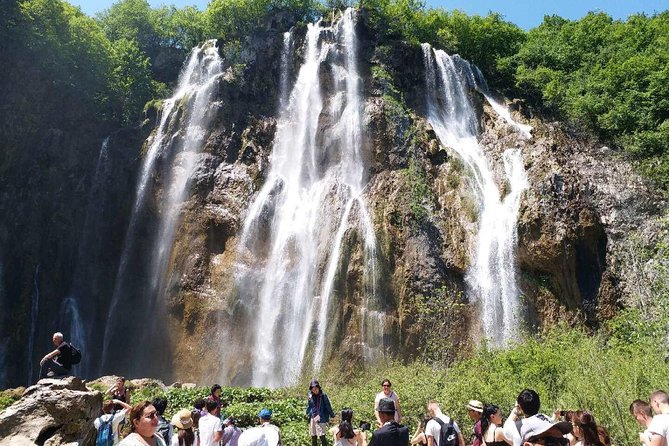
Plitvice Lakes National Park is the trip’s nature reset. The plan describes it as the Jiuzhaigou of Europe, and the reason is obvious once you understand the concept: 16 lakes connected by waterfalls, walkways, and hiking trails, all shaped by travertine barriers.
This is one of the few days with a clearly stated big block of time, about 4 hours of guided experience. That helps. Instead of squeezing nature into a rushed stop, you get enough time to follow the main paths, see the cascading sections, and understand the formation of the lakes.
You are also given the key visual idea to look for: calcium carbonate rich water with a silver color, mirroring the trees and forming tiny crystals. The “tranquil atmosphere” part is not just marketing. When you’re standing in that walkway system, the sound of water and the layering effect of the waterfalls create a natural focus.
One drawback to consider: even with a guided pace, you should expect a mix of stairs, walking on paths, and time outdoors. Wear shoes you trust and bring sun and rain protection.
Zadar and the sea organ: coastal contrasts before you reach Split
Day 3 is split between Croatia’s coastal character and the Roman weight of Split. You start in Zadar, described as having a strong religious atmosphere with narrow medieval streets. That medieval feel matters because it makes Zadar different from the more overtly “resort” parts of the coast.
In Zadar, the plan points you toward the Sea Organ (Morske Orgulje) and Sun Salutation, a solar light display near the waterfront. This is one of those experiences that works even if you are not a museum person. You get a modern, design-forward moment sitting right in a historic setting, and you can watch it change with how the light hits.
Then you move on to Split, with a focus on Diocletian’s Palace and the Peristyle. The ruins and Roman style architecture are dated to more than 1,700 years, with Diocletian’s Palace built in the fourth century AD. That kind of time depth hits differently when you are looking at the structures up close rather than reading about them later.
The overnight placement is listed as Neum or nearby. That can be a plus if you like quieter evenings, but it also means your day is shaped around travel and guided viewing blocks.
- Budapest: City Highlights Cruise with Welcome Drink
★ 4.6 · 35,610 reviews - Budapest: Unlimited Prosecco, Beer and Aperol Spritz Cruise
★ 4.8 · 25,310 reviews - Budapest: Széchenyi Spa Day Ticket with Optional Upgrades
★ 4.3 · 23,911 reviews - Budapest: Nighttime or Daytime Sightseeing Cruise
★ 4.2 · 21,062 reviews - Budapest: 1-Hour Evening Sightseeing Cruise with Drink
★ 4.5 · 8,330 reviews
Dubrovnik Old Town, walls, and the rector’s palace
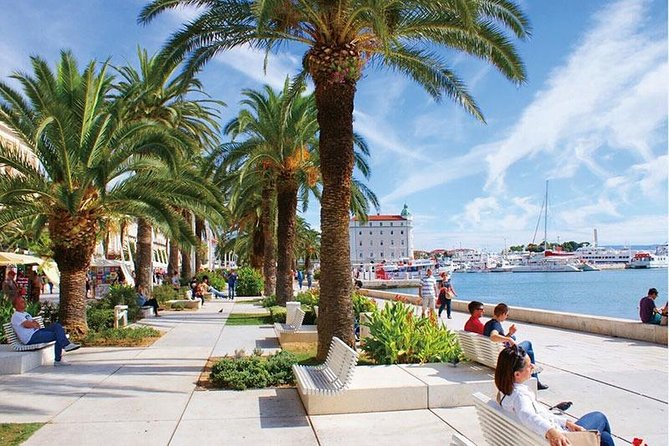
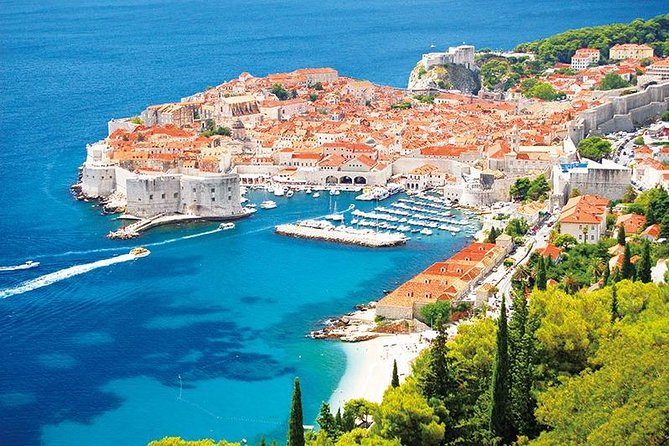
Dubrovnik is the headline city on Day 4, and the itinerary reflects that by giving multiple guided stops: Dubrovnik, the Old Town, Rector’s Palace, and the Franciscan Church and Monastery. The duration blocks range from 1 hour to 2 hours depending on the specific stop, which suggests the day is structured around getting you into the key areas while still allowing a little breathing room.
Dubrovnik is described through pop culture references too, like Game of Thrones’ King’s Landing and Miyazaki’s The Witch’s Delivery Service. Those references are useful because they help you recognize what you’re seeing when the streets and city walls appear familiar from screens.
Beyond the movie links, the core draw is the old town layout, the city walls, and the defensive feel of the towers and gates. You also have the option mentioned for a cable car ride to view the city from above. If you want one “wow” moment that shows you why Dubrovnik is so famous, this aerial viewpoint can do it fast.
One consideration: Dubrovnik’s old town areas are heavily visited, and your time is guided. That is great if you want the highlights, but if you prefer long unstructured wandering, you may feel the schedule a bit. For this reason, I like planning one relaxed walk after your guided segment if you can.
Počitelj, Blagaj, and Mostar: Bosnia’s heritage in three strong views
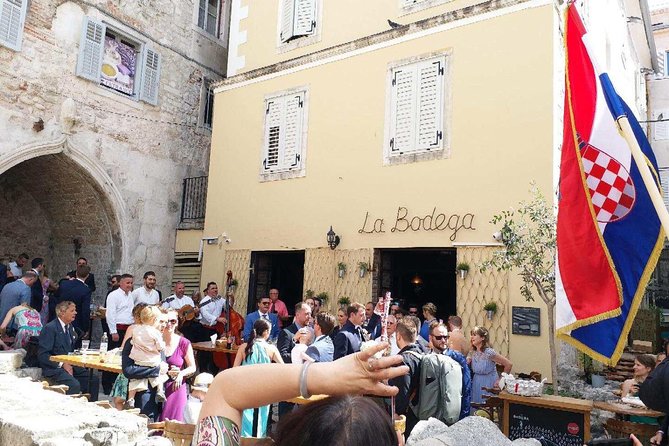
Day 5 is the Bosnia and Herzegovina day, and it is built around three very different heritage settings. First is Počitelj, a stepped medieval fortress village that is included on the World Cultural Heritage list. Stepped means you get layers of built forms rising through the terrain, so it is not just a single viewpoint. It encourages you to scan and notice how the village clings to the hillside.
Next is Blagaj, with the Dervish Monastery on a 200 meter high cliff and crystal clear streams. Even if you have seen European monastery sites before, the setting here is a big part of the experience. The water and the cliff combine into a scene that feels more dramatic than typical churchyard visits.
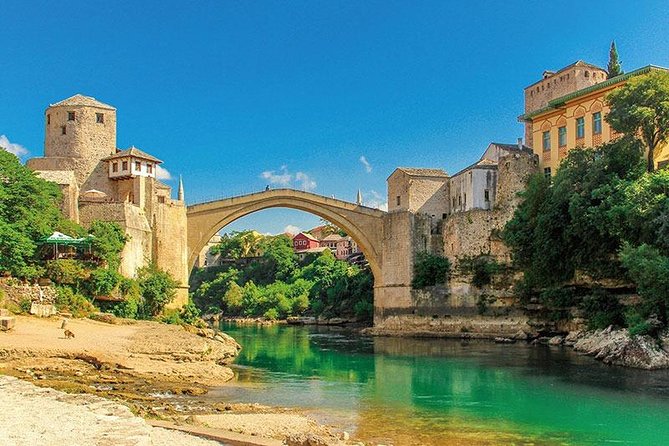
Then you reach Mostar, and the star is the ancient arch bridge. You cross the bridge area and look at the scenery on both sides of the river. This is one of those “pause here” spots where your photos will look good without too much effort, but the guided context is what helps it feel more than just pretty scenery.
Like other days, the plan is organized in hour blocks, but you can use that structure to your advantage. Go in with the questions you care about, like how fortress villages were built for defense, and then check whether what you see matches those ideas.
Sarajevo and the Latin Bridge: history you can walk through
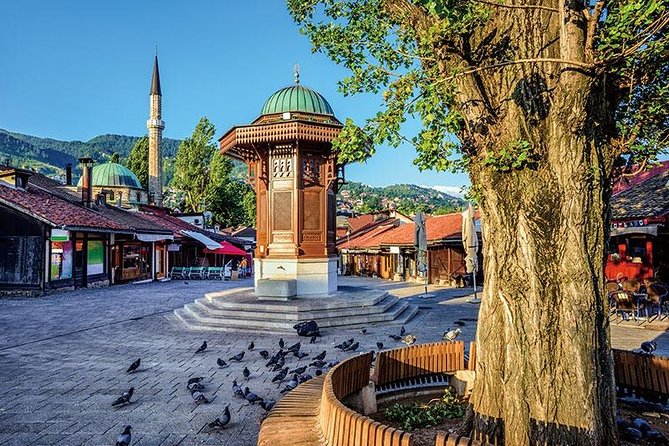
Sarajevo is scheduled on Day 6, with Old Town and the Latin Bridge as the focus. The description emphasizes that Sarajevo is a gateway where different religions and cultures intersect, and it also references the assassination at the Latin Bridge that caused the First World War. It also mentions the Sarajevo Meeting of Cultures Line on the ground.
What that adds to your trip is understanding. When you have already seen fortress and bridge heritage in Počitelj, Blagaj, and Mostar, Sarajevo feels like a next step, not a random stop. You are moving from architectural symbols of place and identity into a story of modern European history.
The itinerary also says you cross the border into Croatia after the visit. That matters because it keeps the day moving and explains why you end up back in Croatia for the overnight in Vinkovci or nearby.
Again, the practical takeaway is straightforward: budget time to walk through Old Town sections and to look down at those “details on the ground.” These are the moments that become your memories later.
Back in Croatia, then Pecs in Hungary: finishing with Ottoman-era echoes
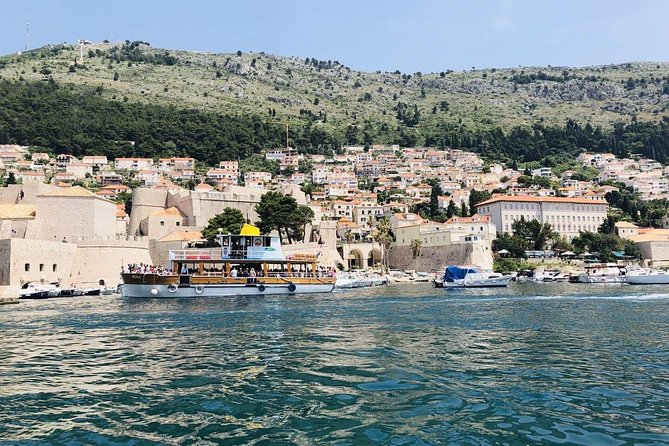
Day 7 is your wrap-up in Hungary, with Pecs as the key stop before returning to Budapest in the afternoon. The plan notes that Pecs sits between the Danube and the Drava and has one of the most attractive city profiles in Hungary, plus a long history.
What I like about the way Pecs is presented here is the balance of themes. You get a magnificent museum mention and the best Turkish ruins in the country. You also get cultural references like music, opera, and ballet.
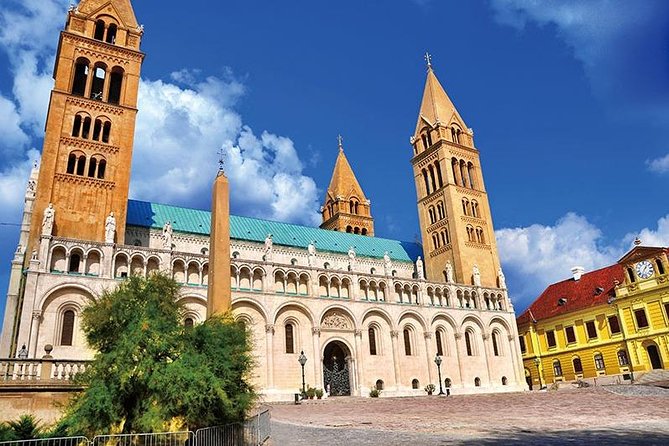
The listed highlights are Pecs Cathedral in the area of central Szent István Square, which gives you a strong visual anchor for the city center. If you want your last day to feel more about culture and architecture than travel stress, this finale fits that mood.
The tour includes an optional post-hotel in Budapest or nearby, depending on what you choose.
Price, what you get, and where extra costs show up
At $1,160.11 per person for a 7 day route, you are paying for organized movement between countries plus guided time. The inclusion list covers accommodation in 3 star (minimum) hotels, modern air-con coaches, a tour manager, and breakfast for 6 days. That reduces the planning friction a lot, especially when you cross borders and shift between major city cores.
Where you should expect extra costs is admissions and optional activities. The itinerary explicitly marks many stops as admission ticket not included, with some items marked free, like Plitvice Lakes and certain other city stops. Cable cars in Dubrovnik are referenced as optional, and those are often ticketed.
The right way to think about value here is this: you are not only buying “places,” you are buying time saved from logistics and the ability to connect the dots with a guided narrative. That narrative matters on a route through places with heavy historical layers, where it is easy to see a site and miss why it matters.
Also, because the tour max is 30 travelers, you do not have the feeling of being lost in a huge crowd. That size helps you catch instructions, meet up quickly, and keep your own day organized.
Practical tips for a Balkan route this packed
A tour like this succeeds or fails based on your stamina and your planning mindset. Here’s how I’d prep, using what the itinerary signals about the days.
First, pack shoes for walking. Old-town streets in Zagreb and Dubrovnik plus park paths at Plitvice can be harder than people expect. Keep your footwear flexible but supportive. Bring a light rain layer too. Even if the forecast is decent, water at Plitvice and coastal weather can surprise you.
Second, keep your documents ready. The tour requires passport name and contact number, gender, date of birth, and nationality. And you are responsible for ensuring your passport is valid for at least 6 months and that you meet visa and health rules. Do not wait until the last week to check this.
Third, travel light. You are allowed one luggage on board up to 30 kg and one small hand carry on, like a purse, backpack, or camera bag. This keeps you from playing suitcase Tetris every time the group boards the coach.
Fourth, have some cash for gratuities. Gratuities are listed as €10 per person per day, collected in cash by the tour manager. That is an easy one to prepare early so it does not interrupt your day.
Who this tour fits best, and who might want something else
This route is a strong fit if you want first-time friendly coverage of Croatia and Bosnia without planning a separate trip for each leg. It also works well if you like structure but still want to have a real sense of each place, like Zagreb’s cathedral district, Zadar’s waterfront design, and Sarajevo’s Old Town story.
You may want to choose a different style tour if you prefer lots of free time. The itinerary is built around guided blocks, and you have to trust the timing. Dubrovnik in particular can feel like a “high intensity highlight day” if you are the type who likes to stay in one neighborhood for hours.
It also suits travelers who are comfortable in mixed language group settings. English is offered, and the leader can speak both English and Mandarin if the bus is combined, which can create a more international feel.
Should you book this Zagreb to Bosnia to Hungary tour?
If your priority is maximum highlights with smooth organization, this tour looks like a good deal. You get major icons across Croatia, a full Bosnia heritage day, and a meaningful ending in Pecs, all while one tour manager keeps the moving parts under control.
I’d book it if you want a guided backbone for history and architecture, plus a coach route that takes care of the hard parts. I’d think twice if you want lots of unscheduled time or if you hate the idea of adding extra ticket costs on top of the price.
If that sounds like your style, go for it. Just pack walking shoes and a practical budget for admissions and optional extras, and you will be set for a memorable, well paced Balkan sweep.
FAQ
What is the meeting point and start time for the tour?
The tour starts at Budapest KeletiBudapest, Kerepesi út 2-4, 1087 Hungary, with a start time of 8:30 am. The tour ends back at the same meeting point.
Is breakfast included?
Yes. Breakfast is included for 6 days.
Are admission tickets included for attractions?
Not always. The itinerary includes guided sightseeing, but admission ticket details vary by stop, and many are listed as not included. Plitvice Lakes National Park is listed as admission ticket free, while other stops are marked as not included.
What kind of hotels are included?
Accommodation is in a comfortable 3-star hotel minimum, with twin/double/single rooms and private facilities.
How are gratuities handled?
Gratuities are €10 per person per day. They are collected by the tour manager in cash while on tour.
How much luggage can I bring?
You can bring one luggage item on board up to a maximum weight of 30 kg, plus 1 small hand carry on (such as a purse, backpack, or camera bag).
Can I cancel for a full refund, and how far in advance?
You can cancel up to 3 days in advance of the experience’s start time for a full refund. You must cancel at least 3 full days before the start time.
More Historical Tours in Budapest

More Tours in Budapest

More Tour Reviews in Budapest



Recently added around Budapest


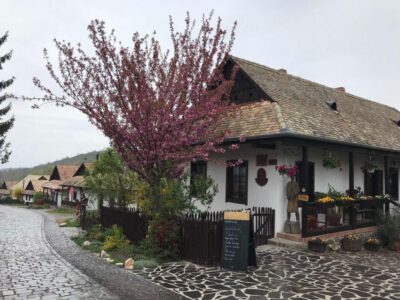
Historical Tours, compared.
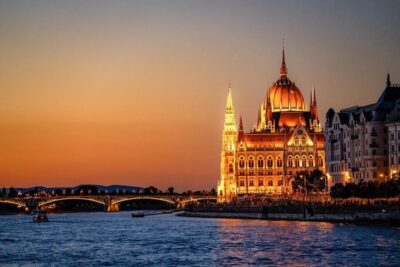 ★ 4.7Historic Cruise with Welcome DrinkFrom $126,512 reviews
 ★ 5.0Budapest Historical Sightseeing – Free Walking TourFrom $31,302 reviews
 ★ 4.5Buda Castle District Dark History, Legends and Vampire Night TourFrom $211,240 reviews
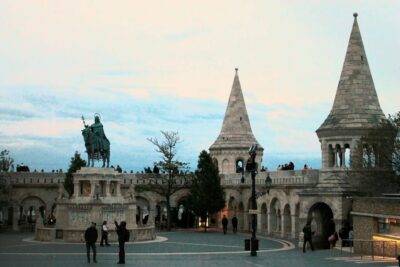 ★ 4.9BloodThirsty Hungary: Walking tour & Dark Historical StoriesFrom $21633 reviews
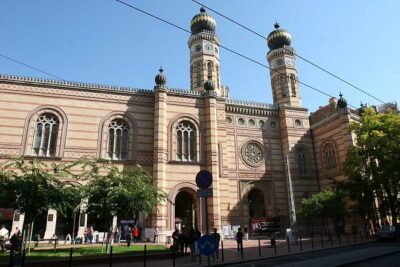 ★ 5.0Budapest Jewish Heritage Memorial Walking Tour & Synagogue EntryFrom $83568 reviews
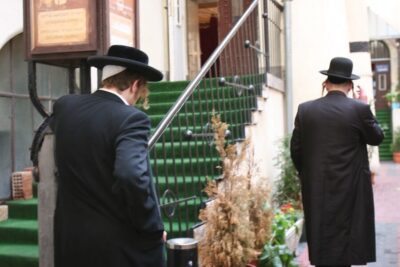 ★ 4.8Jewish Heritage Guided Tour with Synagogue TicketFrom $81533 reviews
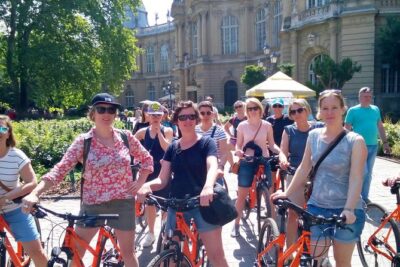 ★ 5.0Budapest Historic Downtown Bicycle Tour in small groupsFrom $41288 reviews
 ★ 5.0Historic Downtown ride on E-Bicycles Buda & PestFrom $65227 reviews
Browse the lists this tour appears in