
Tour review · BUDAPEST CITY SIGHTSEEING TOURS
8-hour private Budapest city tour by car / minivan
Budapest clicks into focus fast from a car. This private driver-guide style day lets you cover big sights without burning your legs, and you still get clear, human explanations of Hungarian history and culture. I like that you get door-to-door pickup, so you start moving right away instead of hunting meeting points.
I also like the pacing, short stops that actually fit into an 8-hour day, plus the flexibility to spend a few extra minutes where you care. One thing to consider: entrance fees add up for several interiors and viewpoints, including major churches and the baths.
Key Points That Make This Tour Worth Your Time
- A true private setup for up to 3, with your own guide and car, so you can go at your speed
- UNESCO-level architecture on Andrássy Avenue and Heroes’ Square, with minimal walking time
- Széchenyi Baths time is built in, but admission is extra, so you can choose your level of soak
- Danube memorials and bridge panoramas happen in daylight and sequence, which helps the story make sense
- Castle District highlights are grouped tightly, so you are not zigzagging across town
- Guides like Greg, Gergő (Gregory), Gergely, and Gabriel are repeatedly praised for energy and tailoring
More ways to put both banks into one city loop
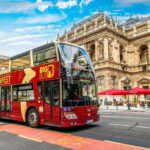
- Budapest: City Sightseeing Hop-On Hop-Off Bus Tour & Extras★ 4.1 · 4,337 reviews
- Budapest: Big Bus Hop-On Hop-Off Tour & Danube River Cruise★ 4.2 · 3,794 reviews
- Big Bus Budapest Hop-On Hop-Off Bus and Walking Tour★ 3.5 · 2,206 reviews
- Budapest: Grand City Tour with Parliament Visit★ 4.4 · 1,598 reviews
Why This Budapest Car Tour Feels Smarter Than Trying To Do It Alone
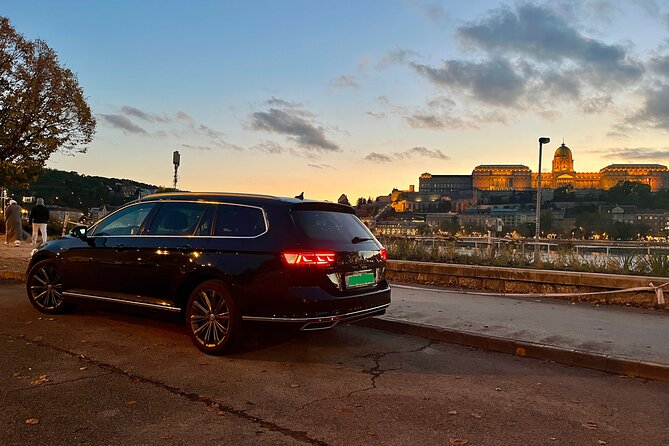
Budapest is gorgeous, but it is also spread out. Doing the full highlights list on your own means buses, stairs, and a lot of guessing which street goes where. This tour solves that with a private car or minivan and a professional guide, plus door-to-door pickup anywhere in Budapest.
What you feel during the day is not just convenience. It is context. When you bounce between Buda and Pest, a guide can connect the dots between the Danube, royal power, and 20th-century politics without you losing time. Guides named Greg and Gergő come through in recent feedback with a talent for explaining Hungary’s big shifts in plain language, including how the country navigates life in the EU while domestic politics can pull in a different direction.
The other practical win is pacing. Most stops are short, then you move by car. You still get enough time to look, take photos, and go inside if you want. And if you want breaks, you typically get them, including a chance to stop for lunch that you pay for on-site.
Andrássy Avenue and Heroes’ Square: Budapest’s Big-Sign Architecture, Without The Grind
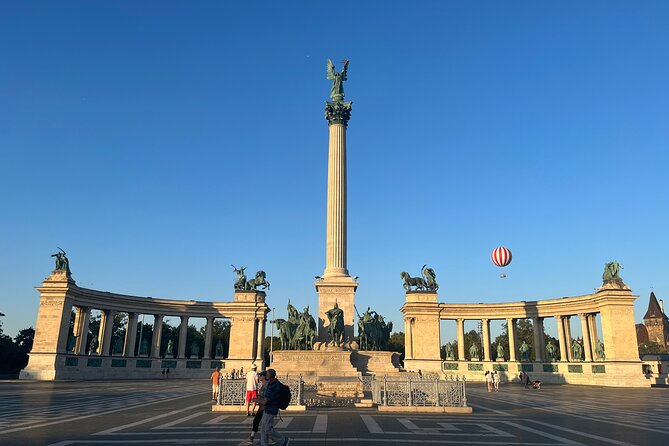
Your day starts with Andrássy Avenue, a boulevard dating back to 1872 that links the city center to Heroes’ Square. It is lined with striking Neo-Renaissance façades and townhouses, and it was recognized as a UNESCO World Heritage Site in 2002. This is one of those places where you really benefit from not having to cross half the city on foot just to see it.
You then move to Heroes’ Square, the grand stage for Hungarian national identity. The statue complex includes the Seven chieftains of the Hungarians and other key leaders, and there is also the Memorial Stone of Heroes. The square ties into modern history too, including the reburial of Imre Nagy in 1989, which is one reason the whole area feels more than decorative.
This pair of stops is especially good for first-timers because it teaches you how Budapest thinks. It is not only about pretty buildings. It is about who the city chose to honor, and how power presented itself in stone and symmetry.
A small consideration: these are major landmarks, so even with a good guide, the area can be busy. The benefit is that you are not stuck wandering for hours trying to find the right viewpoints. You are set up efficiently.
Széchenyi Baths and City Park Landmarks: A Thermal Pause That Changes The Mood
Next comes Széchenyi Medicinal Bath and Pool. This is one of the best-known thermal bath experiences in Europe, and the tour gives you a short window to check it out. The key detail is the heat. The water comes from two thermal springs, with temperatures listed at 74°C and 77°C. Even if you do not plan a long soak, the building and the idea of Budapest as a spa capital land fast.
The entrance fee for the baths is not included, so you have to decide how much time you want to spend inside. I like that the tour does not force it. You can treat this as a quick look-and-feel stop, or you can lean in and plan on paying for entry.
From there, you head to Vajdahunyad Castle in City Park. The current castle was built in 1896 for the Millennial Exhibition, celebrating 1000 years since the Hungarian conquest of the Carpathian Basin in 895. The design intentionally mixes elements from different Hungarian landmarks, so it feels like a “greatest hits” architectural lesson.
And it fits the day’s rhythm. Bath time slows you down for a moment, then the castle gives you a clear change of scenery before you go back to central sights.
House of Music and The Opera House: Where Budapest Talks About Music
After City Park, you shift back toward Andrássy Avenue and the music-related landmarks around it.
First is House of Music Hungary, a complex institution for musical initiation and an exhibition space about the history of music. It opened in January 2022, and the iconic building was selected as the winner from among 170 international project designs. That is exactly the kind of detail your guide can turn into something memorable, because it explains why modern Budapest is building cultural institutions as fast as it is restoring historic ones.
Then you get to the Hungarian State Opera House (Magyar Állami Operaház), a neo-Renaissance opera house on Andrássy Avenue. The tour includes time for a stop here, but it is marked as not including admission, so you will likely be seeing the building exterior and its immediate surroundings unless you add an interior visit.
This section works well because it balances the day. You get the “royal and national” story earlier, then you get a “culture and creativity” thread here. If you like architecture, you will enjoy how the city uses façades to communicate status.
Other Budapest days with the guide to yourself
- Budapest Essentials Private Tour Highlights and Hidden Gems
★ 5.0 · 861 reviews - Private Budapest City tour with Classic Russian Jeep or G-Wagon!
★ 5.0 · 386 reviews - Private city tour by van
★ 5.0 · 273 reviews - Budapest: Private City Tour with a Vintage Russian Jeep
★ 4.9 · 246 reviews - Budapest Private City Tour With a Vintage Russian Jeep
★ 5.0 · 198 reviews
St. Stephen’s Basilica, Liberty Square, and Parliament: Sacred Space Meets National Power
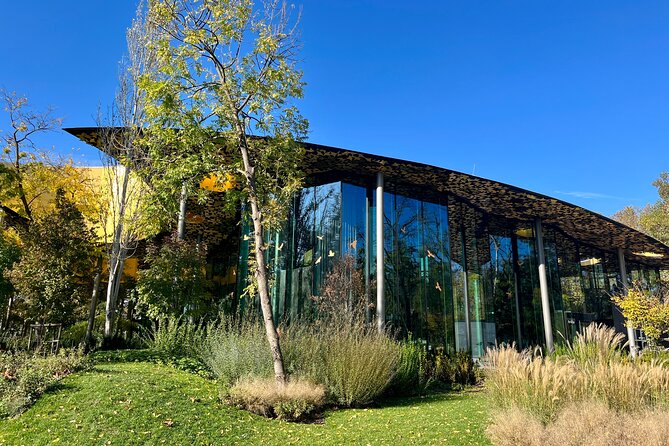
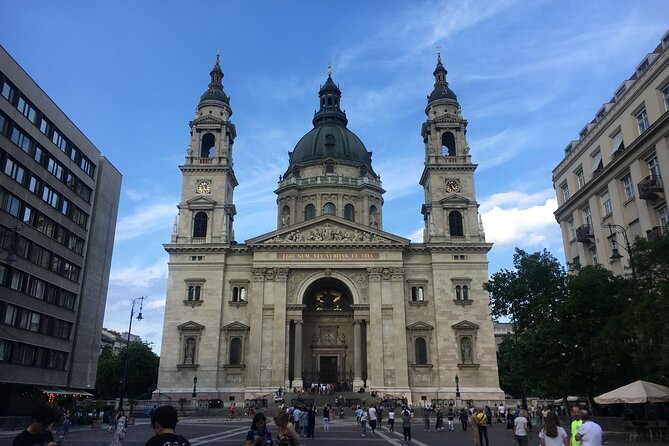
Now the tour swings into central Pest. You pause at St. Stephen’s Basilica, a Roman Catholic basilica named for Stephen, the first king of Hungary. The tour notes that Stephen’s right hand is housed in the reliquary. It is also described as the third largest church building in present-day Hungary. Admission is not included, so if you want the interior, you plan for extra cost.
Next you stop at Liberty Square in the Lipótváros neighborhood. The description here highlights a mix of business and residential buildings, plus the United States Embassy and the Hungarian National Bank headquarters nearby. Some buildings are designed in Art Nouveau style, which gives you a break from pure historic classicism.
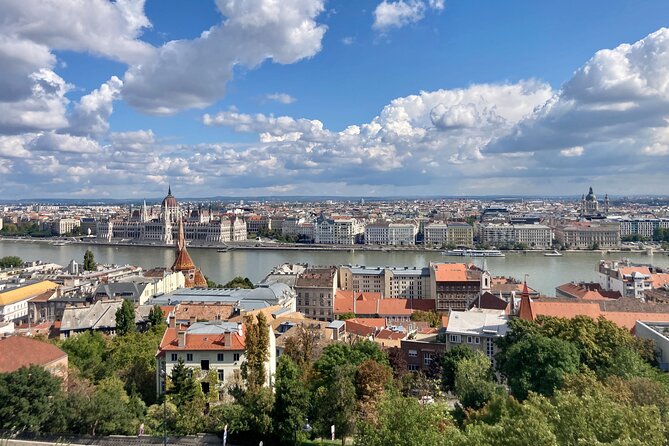
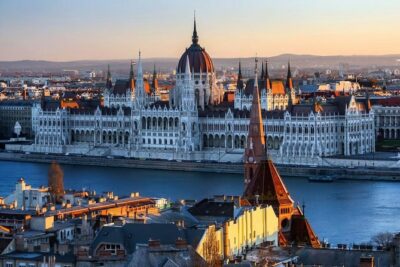
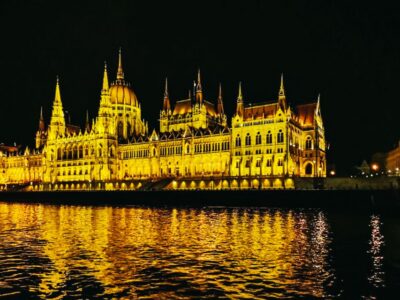
Then comes the big one: the Hungarian Parliament Building on Kossuth Square, right by the Danube on the Pest side. It is described as the largest building in Hungary, and admission is not included. That matters because it means your stop can focus on views and the scale of the structure, which is usually what you want when time is limited.
If you have ever wondered why Budapest’s sights can feel both majestic and heavy, this portion is where the mix becomes obvious. Sacred architecture, government architecture, and the river all carry different kinds of meaning.
Chain Bridge, Shoes on the Danube, and The Bridge Sequence That Teaches Timing
One of the smartest moves in the tour flow is that you do Danube sights in sequence rather than as random photo stops.
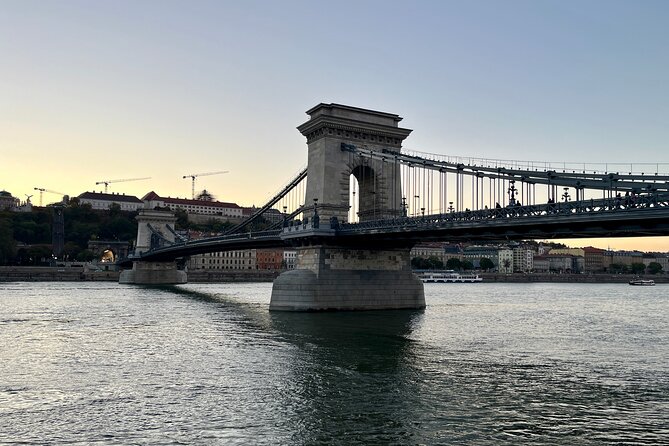
You start with the Széchenyi Chain Bridge, the first permanent bridge across the Danube in Hungary, opened in 1849. It is designed by English engineer William Tierney Clark, with construction by Scottish engineer Adam Clark. That kind of fact may sound niche, but it helps you see the bridge as an engineering milestone, not only a postcard.
Then comes Shoes on the Danube Bank, a WWII-era memorial conceived by film director Can Togay with sculptor Gyula Pauer. The memorial honors Jews killed by fascist Arrow Cross militiamen during World War II. This is not the kind of stop you rush. Even with only about 20 minutes, a good guide can help you read what you are looking at so the memorial stops being abstract.
After that, the tour includes a few “bridge and city logic” points:
- Margit Bridge, described as the second oldest bridge in Budapest (built 1876) and connecting Pest and Buda toward Margaret Island.
- The Zero Kilometre Stone, a 3 m limestone marker that marks the reference point for road distances measured from Budapest, with an inscription reading KM.
I like these adds because they turn the city into a map you can actually understand. You begin to see how Budapest organizes movement, not just where the photos are taken.
Matthias Church, Fisherman’s Bastion, and Buda Castle: The Castle District Cluster That Actually Works
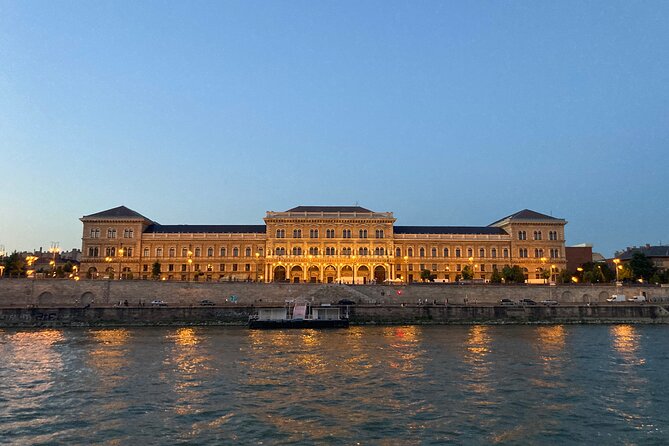
This is the part of the day where many self-guided itineraries go wrong. People plan to “just walk up to everything” and then realize their legs hate them by the time they reach the top.
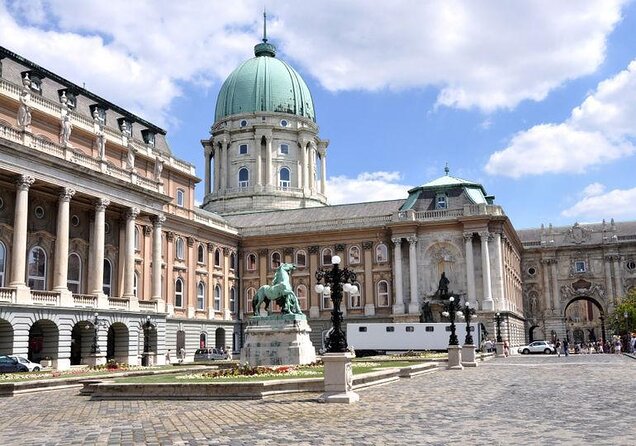
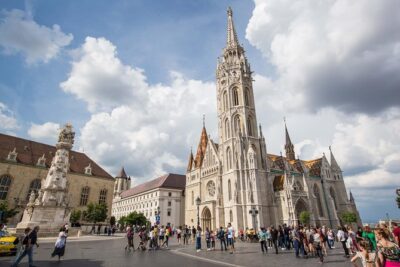
Here, the tour groups the best Castle District hits into one coherent block, starting with Matthias Church. It is the Church of the Assumption of the Virgin Mary, commonly known as Matthias Church, located in Buda Castle District in front of Fisherman’s Bastion. The current building is described as florid late Gothic, from the second half of the 14th century, with extensive restoration in the late 19th century. Admission is not included.
Next is Fisherman’s Bastion. The tour time is short but meaningful: it is known for its panoramic terraces and for its 140 m main façade parallel to the Danube. It was built between 1895 and 1902 on the base of Buda Castle walls. Admission is not included, and the tour specifically notes the upper floor requires a ticket, so you can decide whether you want the extra viewpoint access.
Then you reach Buda Castle, the historic royal palace complex. It was first completed in 1265, while the large Baroque palace occupying most of the site dates to 1749 to 1769. The complex is part of the Budapest World Heritage Site, declared in 1987. Entrance is marked as free for the tour stop.
This trio is a strong finish because it shows you Budapest from three angles:
1) religious and artistic power (Matthias),
2) royal-era city planning and modern tourist staging (Fisherman’s Bastion),
3) the long royal backbone of the city (Buda Castle).
A quick practical tip: even if you are not paying for all interiors, plan time to sit with the views for a minute. The day has been mostly “look, learn, move.” This is where you let the city calm down and absorb.
Gellért Hill and Citadella Viewpoints: End With The Best Angle On The Danube
To wrap up, the tour takes you to Citadella Lookout at the Citadella on Gellért Hill. The fortification is described as built in 1851 by Julius Jacob von Haynau, a commander of the Austrian Empire. Entrance is noted as free for the stop.
This last viewpoint matters because you have now seen the Danube from multiple sides. When you look out from Gellért Hill after the castle views, the river starts to read like a timeline. You can connect where you stood earlier with what you are seeing now, and that mental map is what makes a one-day highlights tour feel more like a beginning than a checklist.
Price, Value, and When This Tour Makes Most Sense
The price listed is $505.73 per group, up to 3 people, for about 8 hours. That can sound high until you break it down and remember you are paying for a private vehicle, private guiding, door-to-door pickup, and parking fees and taxes.
If you use the full group size of 3, the rough per-person cost is about $169. In practice, that is often comparable to paying for multiple individual taxis plus paid guides plus the time you lose stitching neighborhoods together on your own. You also get a guide who can adjust the flow as the day goes, which is a big deal in a city where distances between sights are not trivial.
This tour is a good fit if:
- you have only a day or two and want the main sights without turning it into a marathon,
- you care about stories behind the landmarks, not just photos,
- your group includes different walking levels, and you want everyone included.
It is less ideal if you want a slow, hyper-detailed museum crawl. This day is built to cover key exteriors and select interiors if you pay extra, not to spend half a day inside one building.
Should You Book This Private Budapest Car Tour?
Book it if you want maximum Budapest in minimum friction. I like that the schedule covers the city’s identity zones, UNESCO boulevards, national monuments, Danube memorials, and the Castle District, all in one connected arc. And the repeated praise for guides like Greg, Gergő, Gergely, and Gabriel points to a real strength here: the day is not only driven, it is explained.
Skip it or pair it with a later plan if you know you want lots of interior time. Several of the major stops have optional paid entry, including St. Stephen’s Basilica, Matthias Church, the upper level of Fisherman’s Bastion, and other major interiors. The good news is you can still enjoy the sights from outside, but your overall cost will rise if you add everything.
If you can be flexible and let your guide steer, this is one of the fastest ways to build a Budapest “map in your head,” so your next day can be slower, smarter, and more personal.
FAQ
How many people is the private tour for?
The tour is priced per group and is for up to 3 people.
What is included in the tour price?
The tour includes private tour guiding, door-to-door service, and private transportation by car or minivan. Parking fees and taxes are also included.
Do I need to pay for entrances during the tour?
Some stops are free, but several major sights are not included and require an additional entrance fee, including places like Széchenyi Baths, St. Stephen’s Basilica, the Hungarian State Opera House, Parliament, Matthias Church, and the upper floor of Fisherman’s Bastion.
Is lunch included?
Lunch is not included. The tour allows time for an optional lunch break, and meals are paid on-site.
How long is the tour?
It lasts about 8 hours.
Where can pickup be arranged?
Pickup is offered from any hotel or other accommodation type in Budapest.
Can I cancel and get a full refund?
Yes, free cancellation is available. You can cancel up to 24 hours in advance for a full refund.
More Private Days in Budapest





See Both Banks, Other Ways





More Tour Reviews in Budapest




Recently added around Budapest


Budapest City Sightseeing Tours, compared.
 ★ 4.6City Highlights Cruise with Welcome DrinkFrom $1435,610 reviews
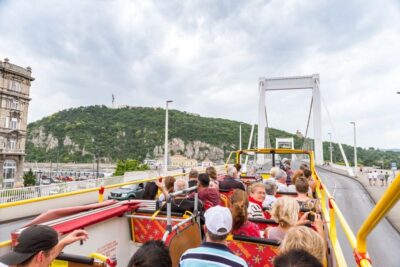 ★ 4.1City Sightseeing Hop-On Hop-Off Bus Tour & ExtrasFrom $414,337 reviews
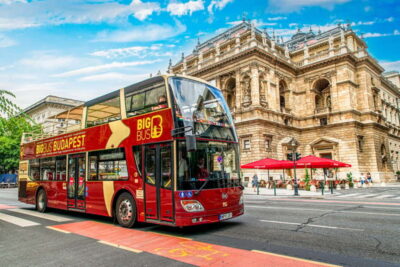 ★ 4.2Big Bus Hop-On Hop-Off Tour & Danube River CruiseFrom $403,794 reviews
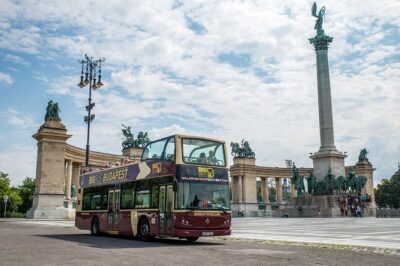 ★ 3.5Big Bus Budapest Hop-On Hop-Off Bus and Walking TourFrom $422,206 reviews
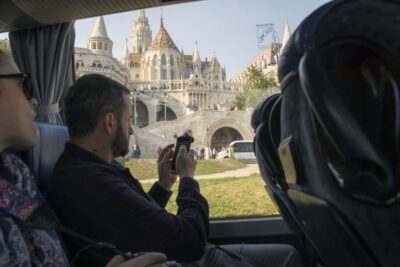 ★ 4.4Grand City Tour with Parliament VisitFrom $701,598 reviews
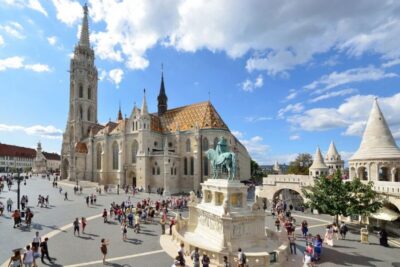 ★ 4.33-Hour Grand City Tour and Castle WalkFrom $491,437 reviews
 ★ 4.43-Hour Live Guided Sightseeing TourFrom $351,041 reviews
 ★ 5.0Budapest Highlights Bike TourFrom $39770 reviews
Browse the lists this tour appears in