Budapest: 3-Hour Walking Tour of Pest with a Historian

Tour review · BUDAPEST WALKING TOURS

Budapest: 3-Hour Walking Tour of Pest with a Historian

4.9 · 81 reviews 3 hours From $57 Operated by Budapest Explorers · Bookable on GetYourGuide
Book on GetYourGuide →

Budapest’s Pest side tells the story fast. In three hours, you’ll link big landmarks like St. Stephen’s Basilica with everyday streets, while a historian guide answers your questions about past and present Hungary. I especially like the way the tour blends major sites with street-level detail, and I like the small group size that keeps it conversational. One thing to consider: you’ll cover a lot on foot in a short time, so wear comfortable shoes and expect some steady walking.

The route is practical, not showy. You’ll start near Erzsébet tér, move through recognizable downtown sights, and end with the Millennium Underground ride plus the UNESCO walk of Andrássy Avenue and Opera area. Guides like Judit, Barbara, Monica, Andrea, Raymond, Greg, and Noemi have a shared talent for storytelling with personal context, which makes history feel less like a textbook.

If you want only a couple of stops and time to wander solo, this might feel slightly packed. But if you want a strong orientation in Pest and a clear thread through Hungary’s 1000-year arc, this is a smart use of limited time.

Key Highlights You Will Actually Feel

Budapest: 3-Hour Walking Tour of Pest with a Historian - Key Highlights You Will Actually Feel

  • St. Stephen’s Basilica entry included: you go inside, not just snap photos from the outside.
  • Heroes’ Square with a 1000-year framing: it helps the statues make sense.
  • Millennium Underground ride included: an old metro experience that still feels fun.
  • Andrássy Avenue UNESCO walk: a built-up, elegant corridor with major cultural stops.
  • Historian guide Q and A style: you can ask questions and steer the conversation.
  • Small group, max 10: better pacing and easier back-and-forth.

Budapest on foot, with a few more routes to compare

Why Pest Feels Different (And Why This Tour Makes Sense)

Budapest: 3-Hour Walking Tour of Pest with a Historian - Why Pest Feels Different (And Why This Tour Makes Sense)
Budapest can feel like two cities stitched together. Pest is the side of shops, government buildings, theaters, and long boulevards that pull you forward. Buda is more about hills and viewpoints. This walking tour focuses on Pest, so you get the Eastern, younger, city-living Budapest feel, instead of spending all your time on overlooks.

What makes the experience especially useful is the historian angle. You’re not just collecting sights. You’re building a mental map for how Hungary shifted over centuries, from older empires to world wars and the Communist period, and then into today. Guides also tend to connect the historical dots to how people live and think now, so you leave with context you can carry into museums, cafés, and even dinner conversations.

I also like that the tour encourages questions. One of the most praised parts of the experience is the guides’ willingness to talk in plain language and answer whatever you ask, whether it’s political history, architecture, or what daily life feels like. That makes a big difference when you’re trying to understand a country in a short visit.

Meeting at Kempinski Hotel Corvinus on Erzsébet tér

Budapest: 3-Hour Walking Tour of Pest with a Historian - Meeting at Kempinski Hotel Corvinus on Erzsébet tér
You’ll meet in front of the Kempinski Hotel Corvinus Budapest, facing the Ferris wheel on Erzsébet square (Erzsébet tér 7, 1051). It’s a central, easy-to-spot starting point, and it gives you a reference point for the rest of the day.

Getting there is simple by public transit. You can use the M1, M2, or M3 subway lines and get off at Deák Ferenc tér. From there, you’re within reach of Erzsébet tér by foot, bus, or tram. If you’re the type who likes arriving early, arriving 10 minutes ahead helps you settle in, especially if it’s a busy day around the square.

Because you’re starting in a major hub, you can also adapt if your timing is off. You can jump back into the day’s plan quickly by transit, and you don’t feel locked into a far-off neighborhood before the real walking begins.

St. Stephen’s Basilica Inside: What Included Tickets Change

Budapest: 3-Hour Walking Tour of Pest with a Historian - St. Stephen’s Basilica Inside: What Included Tickets Change
St. Stephen’s Basilica is the anchor stop on the tour. It’s Budapest’s largest church, and the entrance ticket is included, which is a big deal for value. Instead of standing outside and hoping you can fit it in later, you plan your time around actually going in.

Inside the basilica, the payoff is less about speed and more about attention. Your historian guide can point out what to look for and connect the building to Hungarian identity. Even if you’re not a church-history person, it helps to hear why the place matters in the country’s story.

There’s also a practical benefit: included ticketing keeps the tour moving. You are not hunting for timed entry or figuring out ticket lines while the group waits. For many first-time visitors, this is one of the smoothest ways to handle one of the city’s top interiors without wasting time.

One more small but real tip: bring your patience for crowding. A famous church can draw visitors at all hours, and going during a guided block can still mean some waiting. The guide pacing helps here.

Heroes’ Square: Making 1000 Years of Hungary Click

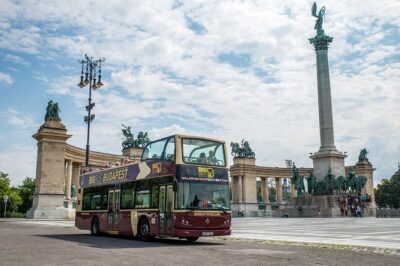
Heroes’ Square is where the tour shifts from individual buildings to a bigger timeline. You’ll explore the square and learn about influential historical persons, with the guide framing it as a 1000-year story.

This stop matters because it gives meaning to what you might otherwise see as just statues and stone. A historian guide can explain why those figures were selected, and how Hungary’s self-image evolved as the country faced empires, wars, and political change. You don’t need to memorize dates. You just need a thread, and this stop is built for that.

I like that the tour doesn’t treat history like a sealed-off chapter. It’s tied back to how people talk and think today in Hungary. In the better moments, guides also use personal context, which can make political history feel less abstract and more human. Guides such as Judit and Andrea have been praised for connecting the Communist era and later decades to real life and mindset.

If you want a quick but solid base before you hit other attractions, Heroes’ Square is a strong place to get it. If you already know Hungarian history deeply, you may still appreciate the guide’s clear structure, especially since the tour is designed to fit into three hours.

The Millennium Underground Ride: A Transit Stop That Feels Like History

One of the coolest inclusions is the ride on the Millennium Underground, described as the oldest underground railway on the continent. Even if you’re not a transit nerd, the ride is a fun break from nonstop walking, and it adds a tangible layer to the day’s theme: Hungary built things with ambition, long before modern tourism made it easy.

Because subway ticket(s) are included, you won’t spend mental energy on payment steps mid-tour. You just show up with your group and follow the guide.

What you should expect here is a short transit segment that changes your rhythm. You’ll go from streets and monuments into the underground, and then back out into Budapest’s elegant surface boulevards. That rhythm helps you remember the day as a connected journey rather than separate stops.

Also, the underground ride is a good equalizer. If one sight feels crowded or too ornate for your taste, the metro segment gives a different kind of connection, still aligned with the tour’s theme.

Walking Andrássy Avenue UNESCO Style, From Opera to Elegance

Andrássy Avenue is a highlight in the best way: you experience it on foot. It’s UNESCO listed, and that label matters because the avenue’s grandeur is part of the story of Pest’s identity as the cultural and civic center.

As you walk, you’ll pass major landmarks connected to Hungary’s artistic life, including the Hungarian State Opera. You’ll also see the kind of architecture and street scale that makes Pest feel designed for promenades and public culture.

This part works particularly well after Heroes’ Square. You’ve got the timeline in your head, and then you move into the streets that reflect the country’s aspirations, especially during periods when Budapest was shaping its status. The tour also includes the feel of cobblestones on Zrínyi Street, then transitions into broad and refined avenues, so you notice differences in texture and tempo.

Practical note: Andrássy Avenue can feel like a long, straight corridor where you might want to take quick photos while walking. Do that safely, but also keep an eye on the details your guide calls out. The best viewing moments often come when you slow down for a minute and let the architecture register.

Danube Promenade, Gresham Palace, and the Academy of Sciences

The tour weaves Pest’s major centerpieces together, and a few stops are there to broaden the picture beyond the headline monuments.

You’ll walk by the Danube Promenade, which helps you orient yourself to the river that shapes Budapest’s layout. Even if you do not spend a long time here, the promenade connection matters because so many Hungarian stories connect back to the Danube as a corridor for trade, travel, and national identity.

You’ll also see Gresham Palace, noted for its Art Nouveau splendor. That stop is valuable for understanding Pest’s style shift over time. Many visitors focus only on the big church and the square. Seeing the palace details reminds you that Pest is also an urban stage of design, commerce, and cultural confidence.

Another stop is the historic Academy of Sciences. I like these “institutional” stops because they show how a city organizes knowledge and prestige. When your historian guide ties them back to national development and political eras, you get more out of them than a quick glance.

Some tours can feel like a checklist. This one uses these architecture and institution moments to build context, so the city starts to make sense as a system, not random points on a map.

Zrínyi Street Cobblestones and the Idea of Pest vs Buda Mentality

Budapest: 3-Hour Walking Tour of Pest with a Historian - Zrínyi Street Cobblestones and the Idea of Pest vs Buda Mentality
A street stop might sound small, but it’s where the day becomes real. The tour includes the cobblestones of Zrínyi Street, and that texture is one of the easiest ways to feel the age of the city. You notice how walking changes on old surfaces. You also notice how streets influence pace and mood.

Just as important, the guide addresses the difference in mentality between Pest and Buda residents. This is one of those points that can sound like a fun local anecdote until it connects to the city’s layout and history. Pest has been shaped as a civic, commercial, and cultural hub. That tends to make it feel more outward-facing. Buda is more inward and elevated. You can feel those instincts in how people move through the city.

If you’re curious about modern Hungary, this is a good place to bring your questions. One reason this tour has such strong marks is that guides do not hide behind facts only. They connect history to what it’s like to live in Budapest now, and they bring personal context when they can, which can turn the route into a conversation.

Pace, Group Size, and Asking Better Questions

This is a 3-hour tour with a maximum of 10 participants. That size is a practical sweet spot. It keeps the guide from splitting attention too thin, and it keeps you from feeling like you are inside a loud bus tour.

The pacing is also part of the value. A number of guides have been praised for balancing landmarks with enough explanation to make it stick, without turning the walk into a lecture. In the best guides, you get a condensed overview that still leaves room to ask follow-ups.

You’ll find this especially true when you’re with a guide like Judit, Barbara, or Monica, who have been praised for warm storytelling and for providing context beyond what you can read on a sign. Andrea and Greg have also been highlighted for making Pest history easy to understand quickly, including connecting major eras like Austro-Hungarian times, WWII, and the Communist period.

My advice to you: show up with one question you genuinely care about. It can be simple, like how politics shaped everyday life, or why certain monuments feel the way they do. Then be ready for the guide to answer, and steer. That Q and A flexibility is one of the strongest reasons to book this kind of small-group historian tour instead of just doing a self-guided map.

Price and Value: What $57 Buys You in Real Terms

At $57 per person for a three-hour walk, this doesn’t feel like a bargain bargain. It also doesn’t feel inflated. The value is in the included pieces that usually cost time or money on your own.

You get:

  • A historian guide for a focused route
  • St. Stephen’s Basilica entrance ticket included
  • Subway ticket(s) included
  • The walking tour structure

If you were to do this yourself, you would likely pay for entry somewhere anyway, plus spend time figuring out transit and timing. Buying one guided package is often easier. The price also makes more sense because the group is limited to 10, which tends to improve pacing and conversation.

The other value is interpretive. A guide can explain why the landmarks matter, not just what they are called. That turns your photos into a story you understand, which is what you really want on a first visit.

If you’re budget-tight, consider the alternative of a self-guided Pest walk and pick only one paid stop. But if your priority is learning and orientation, $57 is a solid deal for a well-structured three hours.

After the Tour: How to Keep the Momentum in Pest

Once your tour ends, you’ll be positioned in a central part of Pest, near major sights. That’s helpful because you can build the rest of your day without losing time to long transit.

A good next step is to revisit one of the areas you walked through while your guide’s explanations are fresh in your mind. For many people, that means the basilica area, Heroes’ Square zone, or the broader Andrássy Avenue corridor. If you want views, return to the Danube Promenade because you now understand why it’s such a key part of Budapest’s layout.

If you crave food, one of the best subtle surprises from past departures is that some guides have added small extras like tasting popular sweets. That is not something you should count on for every departure, but it gives you an idea of how flexible the guides can be when it fits the theme and timing.

Should You Book This Pest Historian Walking Tour?

Book this tour if you want three things in one: orientation in Pest, a clear historical thread, and a guide who will answer questions in English. It’s a great fit for first-time visitors, history-minded travelers, and anyone who likes to connect architecture and politics to real daily life.

Skip it if you hate group pacing or you’re looking for lots of free wandering with no structured stops. Also skip it if you only care about one or two attractions. This tour works because it moves from basilica to square to underground to UNESCO avenue, so you’ll want to enjoy that variety.

If you’re wondering whether it’s worth it, use this simple test: do you want to understand Budapest beyond photos? If yes, this is the kind of tour that turns a short stay into something you can actually interpret.

FAQ

How long is the tour?

It lasts 3 hours.

What is the price per person?

The price is $57 per person.

What does the tour include?

It includes a historian guide, an entrance ticket to St. Stephen’s Basilica, subway ticket(s), and a walking tour.

Where does the tour meet?

The meeting point is in front of Kempinski Hotel Corvinus Budapest, facing the Ferris wheel on Erzsébet square (Erzsébet tér 7, 1051).

What sights are part of the experience?

The tour includes St. Stephen’s Basilica, Heroes’ Square, the Millennium Underground, and a walk along Andrássy Avenue, plus other inner-city stops such as the Danube Promenade, Gresham Palace, the Academy of Sciences, Zrínyi Street, and the Hungarian State Opera area.

Is the tour guided in English?

Yes, it is a live tour guide in English.

How big is the group?

It is a small group, limited to 10 participants.

Is free cancellation available?

Yes, you can cancel up to 24 hours in advance for a full refund.

Can I reserve and pay later?

Yes, there is a reserve now and pay later option.