Tour review · BUDAPEST WALKING TOURS
Budapest Historical Sightseeing – Free Walking Tour
History walks beside you in Budapest. I loved the big-picture orientation the guide provides, and I loved how the route ties the city’s Communist past to what you see today. The tradeoff is steadier-than-it-looks walking, and it is not a fit if you cannot comfortably handle about 3 miles.
This is a 2.5-hour, English-language route that mixes famous landmarks with smaller architectural moments. You will stand outside major stops like St. Stephen’s Basilica and the Hungarian Parliament, then you will get Danube views from the Pest side, including the Shoes on the Danube Bank memorial.
The tour runs on a small upfront price with the expectation of tips, so think of it as a budget-friendly guide-led history walk. One other consideration: it can be crowded, so you will want to stay close to the guide to catch the stories.
Key highlights worth your time

- National Museum gardens and the turul bird: a mythical creature statue plus key moments like the 1948 uprising.
- Unger’s House style mashup: Byzantine, Gothic, Moorish, Renaissance, and Romantic elements in one remarkable courtyard stop.
- Jewish Quarter timeline in plain language: community, ghetto during WWII, and what the area is like now.
- Liberty Square’s Communist memorial: short, memorable context for Budapest’s 20th-century shifts.
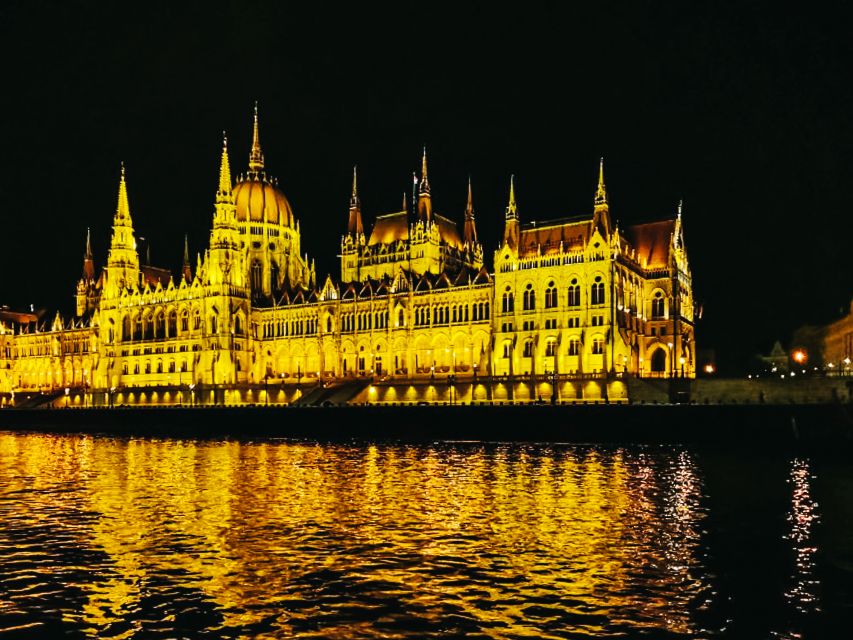
- Parliament Square viewpoints: neo-gothic exterior wow factor, plus Danube views and nearby landmarks.
- Shoes on the Danube Bank: one of the most haunting monuments in Europe, right on the water’s edge.
Budapest on foot, with a few more routes to compare
- Big Bus Budapest Hop-On Hop-Off Bus and Walking Tour★ 3.5 · 2,206 reviews
- Budapest: Buda Castle District Walking Tour★ 4.6 · 2,108 reviews
- Budapest City Landmarks Walking Tour in 2 Hours★ 5.0 · 2,048 reviews
- 3-Hour Orientation Walking Tour of Buda and Pest★ 4.8 · 1,834 reviews
Getting oriented on a 2.5-hour Pest-to-Buda loop

Budapest can feel like two different cities, and this tour helps you connect them fast. You start on the Pest side around Kálvin tér, then you work through central neighborhoods that shaped the country’s modern identity. The day ends near Lanchid, so you can keep walking into the city center after the last stop.
This tour is designed for first-day visitors who want a story, not just photos. It covers a lot in a short time, but it stays focused on meaning: why certain buildings sit where they do, what political changes did to neighborhoods, and how the city still shows those layers.
One practical point I appreciate: the tour uses a mobile ticket, and the meeting place is a clear, public landmark area. Also, the operator lists a maximum of 50 people, so it is not a tiny private chat, but it is usually manageable.
Meeting at Kálvin tér, and how the guide sets the tone

You meet at OTP Bank, Budapest, Kálvin tér 12-13. Guides are identified by a yellow outfit, which matters when the city is busy and you are trying to orient quickly. The tour is English, and confirmation comes at booking time.
A big reason this tour gets such strong ratings is the guide’s delivery. I noticed repeated praise for guides like Peter, Victoria, Elizabeth, George, and Sabi for clear speaking and fast answers. If you like a guide who can explain big topics without getting lost in academic language, this fits.
Group size can affect how loud it feels. If you are on a busy day, stand where you can see the guide and hear the next story. If you ever cannot hear, it is on you to speak up early rather than wait until you are frustrated.
National Museum gardens: turul bird, 1948 uprising, and the 8th District

The first stop is outside the Hungarian National Museum, in the gardens. The attention-grabber here is the turul bird statue, a mythical symbol with deep Hungarian roots. Even if you do not know the folklore, the guide frames it in a way that makes it feel relevant instead of decorative.
From there, you connect museum culture to real historical turning points. The tour includes discussion of the 1948 uprising and what that period meant for Hungary’s political direction and everyday life. This is not just dates. You get the “why this matters” angle that helps the rest of Budapest make sense as you walk.
Then you zoom out to neighborhood history, including the 8th District and its past grand-palace character. The gardens and museum area work well as a starting point because you are gathering context before moving into the denser streets.
Kálvin Square and John Calvin’s influence in the city

Next comes Kalvin Square (Kalvin tér). You meet the guide at Kálvin tér 12, and the stop centers on the square’s connection to John Calvin, the French Protestant Reformer.
This is a short stop, but it is useful because it teaches you how to read the city’s street names and institutions. Hungarian cities have layers of religious and political history, and this kind of pointer helps you notice details later, even when you are on your own.
The square also gives you a practical break. The area has places to sit and shelter from the elements, which is handy because the tour keeps moving.
Budapest on foot, a few more ways
- Budapest: Buda Castle Walk with Saint Stephen’s Hall
★ 4.5 · 3,012 reviews - Budapest: 3-Hour Grand City Tour and Castle Walk
★ 4.3 · 1,437 reviews - Budapest Historical Sightseeing – Free Walking Tour
★ 5.0 · 1,302 reviews - Budapest All in One Small Group Walking Tour with Strudel Stop
★ 5.0 · 1,277 reviews - Budapest: Buda Castle District Walking Tour with a Historian
★ 4.9 · 867 reviews
Unger’s House: architecture with style in every direction

Stop three is Unger’s House, in the courtyard of Miklós Ybl’s creation. This is one of those Budapest moments where the building itself looks like a conversation between eras.
The courtyard is where you learn the key point: the building mixes multiple styles, including Byzantine, Gothic, Moorish, Renaissance, and Romantic elements. You are not expected to memorize names. The guide uses them to explain how Budapest became a place of imported ideas and local ambition.
One drawback to flag: most of these stops are brief “stand and look” moments. If you are hoping for inside access, this tour is not built for that. It is about outdoor orientation and storytelling.
Elizabeth Square, the Budapest Eye, and nightlife context

At Elizabeth Square, you see the Budapest Eye and learn why the square matters. The guide also connects this location to some of the area’s best-known bars and nightlife spots.
I like this stop because it prevents Budapest from becoming a museum-only city in your head. It reminds you that after all the political drama and rebuilding, this is still a place people go out, hang out, and live.
If you plan to go out later, even just grabbing a drink, this stop helps you place where things are.
Danubius Hotel Astoria: French Empire glamour and film-era fun

You pass the Danubius Hotel Astoria, a grand building in a French Empire style. The exterior is the focus here, but the guide adds color about why it became a magnet for international attention.
One detail you get is the connection to the Josephine Baker Story, directed by Brian Gibson. Even if you do not care about film, it helps you see the hotel as more than an address. It is part of Budapest’s social and cultural image.
The Jewish Quarter: community, ghetto, and today’s scene

This is where the tour shifts into a deeper emotional track. You travel through the Jewish Quarter and learn how the district changed over time. The story includes the neighborhood as a home to a Jewish community, then its role as a ghetto during World War II.
The guide also brings it into the present, explaining how the area is now known for artists and students, along with independent shops, designers, and bars. The key value here is contrast. You see how places can carry loss and resilience at the same time.
Because this is a walking tour with standing and listening, I suggest keeping your questions in your back pocket for when the guide pauses. This stop tends to be the one you remember most afterward.
St. Stephen’s Basilica: first king, major city landmark
You make a stop outside St. Stephen’s Basilica (Szent Istvan Bazilika). The tour explains the name, linking it to Hungary’s first king. Even standing outside, it is an impressive sight, and it works as a checkpoint in the middle of the route.
This segment is also a nice reset. You are still walking and listening, but you get a calmer “look up and take it in” moment.
Szabadság tér (Liberty Square): Communist memorial context
Next is Szabadság tér, where you spend about 15 minutes and see the communist memorial. This is one of the most direct “past meets the present” moments on the route.
What you get here is not a lecture for its own sake. The guide gives you the framing you need to understand why these memorials exist in public space and how Communist-era narratives were turned into physical symbols.
If you want Budapest history that connects to what you see on walls, this is a stop you will appreciate.
Stock Exchange Palace and Ronald Reagan’s statue
You then pass the Stock Exchange Palace. The tour notes it as the largest privately owned historic landmark in Budapest, described as about 50,000 square meters.
That scale matters because it helps you understand how quickly Budapest became a financial center with grand ambitions. It is an architectural flex, and the guide uses it as a bridge between economic power and political change.
After that comes the Ronald Reagan Statue. The guide points out why Reagan appears to be walking away from Parliament looking happy, and also why the Bush statue stands waiting nearby. Even if you only catch a quick glance, the story makes the statues feel like part of Budapest’s post-Communist memory.
Hungarian Parliament Building: neo-gothic wow and Danube views
Now you hit one of the headline sights: the Hungarian Parliament Building. You stand outside and learn about the building’s electric/neo-gothic style and the Danube view from the square.
This is one of the best parts of the tour for “I finally understand where I am” moments. You get the anchor landmark, then the guide points out nearby important buildings, including:
- a chocolate museum
- the former ministry of Justice
- an agricultural museum
If you plan to keep touring after the walk, these pointers help you decide what to prioritize, because you now know what each building is and why it is there.
Fisherman’s Bastion from the Pest side: views, then stories
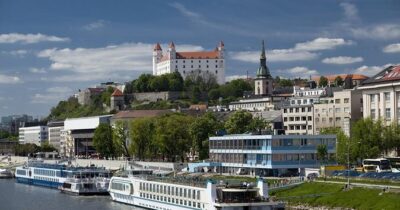
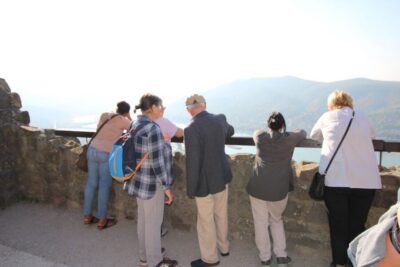
The route then moves to the Fisherman’s Bastion area, viewed from the Pest side of the river. You see the castle and Fisherman’s Bastion from across the water and learn the area’s history.
The guide also points out St. Maytas Church with its colored tiled roof, plus the Hungarian National Palace in the distance on the Pest side. You also get “from here you can see that” context for St Margit Island and Gellert Hill.
This is a good approach because you get big viewpoints without needing to cram yourself into too many steps. Just remember, you are mostly seeing from across the river, so the magic is in the view and the placement, not close-up architectural inspection.
Széchenyi Lánchíd and the Shoes on the Danube Bank
Your last stretch includes two of Budapest’s most memorable public-history stops.
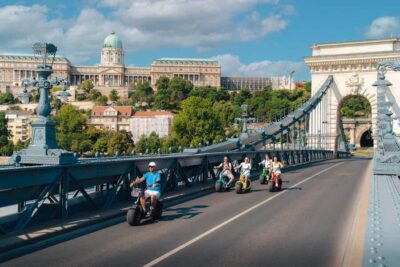
First: Széchenyi Lanchid (Chain Bridge). You learn the bridge’s history and mention its reconstruction, which helps you understand why this famous link is not just a pretty photo spot.
Then comes Shoes on the Danube Bank, the haunting memorial of 60 pairs of shoes dedicated to Holocaust victims who were lined up and shot on the banks. It is simple and brutal by design, and it lands because you are standing right there, watching the river flow.
This ending is powerful, and it also makes the whole walk feel cohesive. You began with symbols and politics, then you reached the part of history where remembering is the entire point.
Price, tips, and whether it is good value
At $3.63 per person, this is one of the lowest-cost ways to get a guided route through major Budapest landmarks. The tour is sold as a free walking tour style experience, meaning the real value is in the guide’s time and storytelling.
That also means you should plan for tipping. The listing explicitly expects tips for the guides, and reviews strongly reinforce that paying forward matters.
Think of it this way: you are paying a small fee for the setup and logistics, and your tip covers the guide’s labor and expertise. If you are a tight budget traveler, it is one of the best deals in the city. If you hate tipping, you might be happier with a standard paid tour where the guide is compensated up front.
What to bring, where the break fits, and comfort basics
There is no food served. The tour includes a short 5-minute break to buy coffee or tea and use the toilet. You will be paying for drinks on your own, and you will likely pay for public toilets too, which is listed as 100 HUF to 500 HUF.
So I recommend you bring:
- water, especially in warm or sunny weather
- sunscreen
- an umbrella or a warm jacket, depending on season
And wear comfortable shoes. Budapest has cobblestones, and you are walking for about 2.5 hours. This is not a sit-down museum day.
Also note the guide limitation: guides are not able to carry guest luggage or equipment. If you are traveling with heavy bags, you may want to store them elsewhere before you join the walk.
Who this tour suits best (and who should skip it)
This tour fits best if you want:
- a first-time orientation that connects Budapest’s political story to the streets you see
- a budget option with major landmarks like Parliament, St. Stephen’s Basilica, and Chain Bridge
- a route that mixes viewpoints and meaningful memorial stops
It is not the best choice if:
- you cannot walk about 3 miles
- you need lots of indoor time or a stop-and-shop style itinerary
- you want food included, because coffee or tea is optional and there is no served meal
Pet rules are also worth noting. Dogs are not permitted on this tour, while service animals are allowed.
Should you book this Budapest Historical Sightseeing tour?
Book it if you are arriving in Budapest and you want a guide-led map in your head, fast. The combination of Communist-era context, the Jewish Quarter story, and the Danube memorials makes this tour more than a checklist.
Skip it if you want a slow pace, inside access, or you cannot handle steady walking. If you do go, show up ready for wind and cold, stand close to the guide, and plan a tip. That is how you get the full value out of a tour like this.
FAQ
How long is the Budapest Historical Sightseeing walking tour?
The tour lasts about 2 hours 30 minutes.
What does the tour cost, and how do guides get paid?
The price listed is $3.63 per person, and tips for the guides are expected.
What language is the tour offered in?
The tour is offered in English.
Where do I meet the guide, and where does the tour end?
You meet at OTP Bank, Budapest, Kálvin tér 12-13, and the tour ends at Budapest, Id. Antall József rkp. 1, near Lanchid (the Chain Bridge).
Is food included on the tour?
No. There is a short 5-minute break to buy drinks, but no coffee, tea, or food is served on the tour.
Are there toilet stops, and do they cost money?
The tour includes a brief break where you can use facilities. The listing states public toilet costs are 100 HUF to 500 HUF.
Are pets allowed?
Dogs are not permitted on this tour. Service animals are allowed.
More Tours in Budapest
Keep Walking Budapest
More Tour Reviews in Budapest
Recently added around Budapest
Budapest Walking Tours, compared.
★ 3.5Big Bus Budapest Hop-On Hop-Off Bus and Walking TourFrom $422,206 reviews
★ 4.6Buda Castle District Walking TourFrom $142,108 reviews
★ 5.0Budapest City Landmarks Walking Tour in 2 HoursFrom $32,048 reviews
★ 4.83-Hour Orientation Walking Tour of Buda and PestFrom $411,834 reviews
★ 5.0Budapest All in One Small Group Walking Tour with Strudel StopFrom $1001,277 reviews
★ 4.9Buda Castle District Walking Tour with a HistorianFrom $63867 reviews
★ 4.9BloodThirsty Hungary: Walking tour & Dark Historical StoriesFrom $21633 reviews
★ 5.0Budapest Castle District Walking TourFrom $3630 reviews
Browse the lists this tour appears in