
Tour review · BUDA CASTLE TOURS
Buda Castle Walking Tour: A Kingdom of Many Nations
Buda Castle is more than postcard views. This small-group walk turns Budapest’s Castle Hill into a readable story, with Matthias Church and the panorama stops tied to centuries of rulers, rebuilding, and big political swings. You also get the kind of pace that makes it easy to ask questions, like you would with a good local friend.
The tradeoff is simple: some of the best-known sights on the route require tickets you pay on your own, and that can add a little planning time. Still, for the price, you are paying for a guide who helps you connect the buildings to the people and events that shaped this part of the city.
Key Things to Love About This Buda Castle Walking Tour

- Small group size (up to six), so the guide can actually tailor pace and questions
- Castle Hill UNESCO district focus, not a rushed, aimless walk
- Matthias Church time for the roof details and standout interior
- Fisherman’s Bastion viewpoints, including the Danube, Margaret Island, and Pest views
- History of changing power, from medieval fortress to Ottoman and Hapsburg eras
- Guides who add personality, with real-life context shared by locals like Peter, Kata, Judith, and Marianna
More routes across Castle Hill and its viewpoints
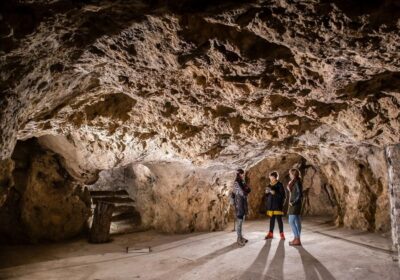
- Budapest: Buda Castle Cave Tour★ 4.7 · 5,677 reviews
- Budapest: Buda Castle District Vampires and Myths Night Tour★ 4.6 · 3,830 reviews
- Budapest: Buda Castle District Walking Tour★ 4.6 · 2,108 reviews
- Buda Castle District Dark History, Legends and Vampire Night Tour★ 4.5 · 1,240 reviews
Castle Hill Feels Like a Kingdom of Many Nations
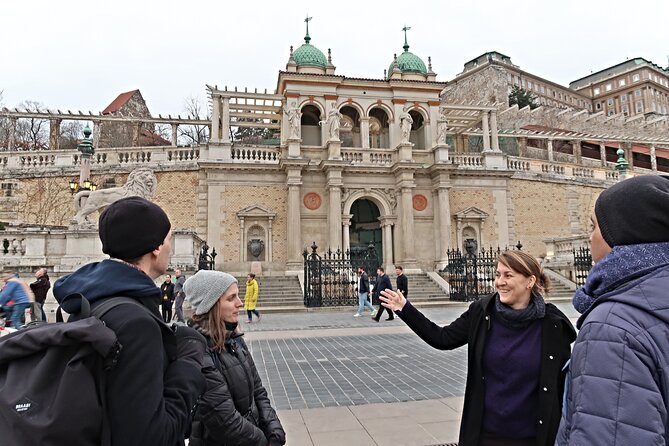
Castle Hill is Budapest’s oldest quarter, and that matters. This is where you see how Central Europe keeps reinventing itself. One moment you are looking at medieval stone and steep, cobbled lanes. The next, you are staring at a 19th-century church that looks like it belongs to a storybook of Gothic dreams.
What I like about this tour format is that it helps you stop treating the district like a set of landmarks and start seeing it as a long political chain. You’ll connect the palace, the church, and the surrounding viewpoints to who controlled Hungary at different times. That includes the Mongol invasion aftermath, the Ottoman period, and later Hapsburg rule.
And because it is a guided walk, you get the little mental shortcuts that make everything click faster, like why the skyline looks the way it does, or why one facade feels baroque while another feels Gothic. The goal is not memorizing dates. It is leaving with a map in your head that still makes sense when you look back over the Danube.
Meeting Spot, Pace, and the Sweet Spot for This Tour
You meet at Országház u. 31, 1014, near public transit. The route ends in the Castle District area at Vienna Gate, which is a smart way to finish because it gives you a view line toward Obuda, also called Old Buda.
The tour runs about three hours and is offered with morning or afternoon departures depending on the day. Expect a steady walking pace, but it is designed for most travelers to participate, and the small-group size helps a lot if someone needs extra time at a photo spot.
This is also a tour you will appreciate if you hate the chaos of big bus-group schedules. I love a group that stays small because you can hear the guide without craning your neck. Several guides in the feedback, like Peter and Kata, were praised for adapting the tour to what people cared about, including adjusting pace and answering lots of questions without rushing.
Price-wise, you are not just buying narration. You’re buying a local explainer who can connect architecture to the human story, and that saves you time that you would otherwise spend piecing things together on your own.
The Palace Quarter: What You See at Buda Castle and What It Meant
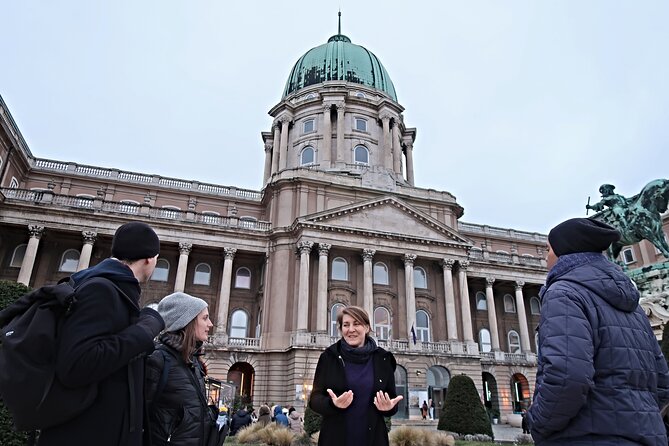
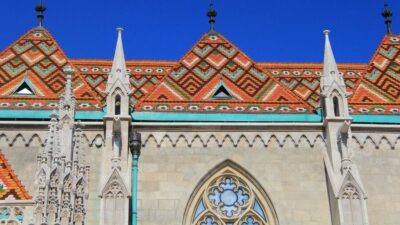
Most tours around here try to cram in everything. This one starts where Castle Hill makes the most sense, with the palace area and the two visual anchors you can spot from far and wide: the massive palace on the southern tip of the hill, and the colorful roof of Matthias Church with its pointed steeple.
You get a substantial chunk of time at the core sights, including the outer views that help you understand the shape of the hill and how the buildings relate to each other. Even if you only pay attention to facades, you will notice the mix of styles, because this site has been rebuilt again and again.
Here is the key storyline you’ll hear: the palace did not just get a makeover once. It was rebuilt, extended, changed, burned down, and rebuilt again. It took its current eclectic look largely after World War II, which is why the complex can feel like history stacked in layers.
Medieval power is part of the explanation too. Long before the castle looked like a grand palace, King Béla IV set up a fortress on this spot around 1250 after the Mongol invasion. Then King Matthias later turned it into one of Europe’s most famous courts at the end of the 15th century. After that came the Ottoman Turks ruling for well over a century, followed by the Hapsburg emperors.
This is the kind of context that makes your photos look better later, because now you know what you are actually photographing.
Matthias Church: When the Roof and Interior Earn the Ticket

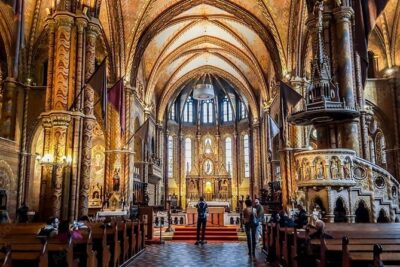
Matthias Church is the moment where Castle Hill shifts from architecture-watching to wow factor. The outside is famous for its decorated roof, but the interior is where it often clicks for people who thought they were mainly coming for views.
The church you see today is tied to a late 19th-century Neogothic reconstruction, meaning it is not medieval in a strict sense. Yet it still feels incredibly precise, with details that hold your attention longer than you expect. If you want one spot to spend your ticket time, this is the one.
This stop is also where guides can really make the building feel alive. Some guides, like Peter and Kata, were praised for stories that go beyond the usual facts. You might get little interpretations, like how style choices reflect what Hungarians wanted to project about identity and heritage in later centuries.
Practical note: Matthias Church tickets are not included, so plan for that cost on the day. It is still worth it, because the time you spend here is more than a quick peek. You get enough guided attention to understand why people keep returning to this church even after they’ve already seen the Danube from multiple angles.
Budapest on foot, with a few more routes to compare
- Budapest: Buda Castle District Walking Tour
★ 4.6 · 2,108 reviews - Budapest City Landmarks Walking Tour in 2 Hours
★ 5.0 · 2,048 reviews - 3-Hour Orientation Walking Tour of Buda and Pest
★ 4.8 · 1,834 reviews - Budapest Historical Sightseeing – Free Walking Tour
★ 5.0 · 1,302 reviews - Budapest All in One Small Group Walking Tour with Strudel Stop
★ 5.0 · 1,277 reviews
Fisherman’s Bastion: Panoramas, Symbolism, and Photo-Ready Views

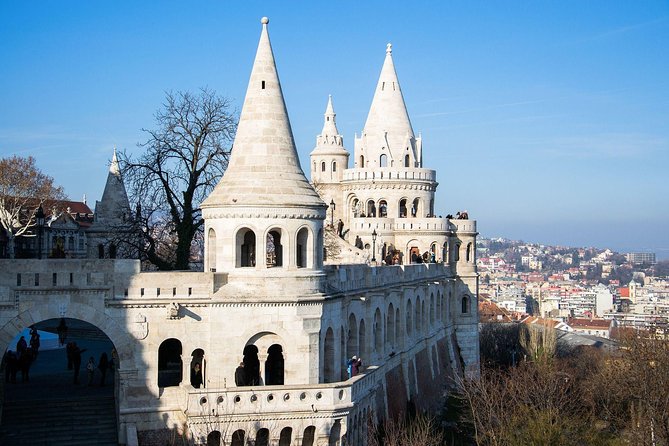
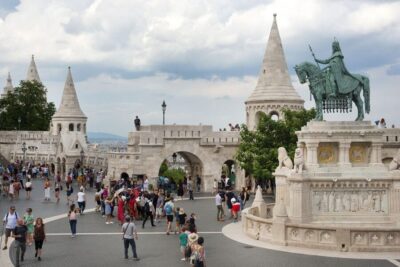
After Matthias Church, the walking flow sets you up for the district’s most famous viewpoint: Fisherman’s Bastion. This is the architectural fantasy that people instantly recognize for its fairy-tale terraces and towers.
You’ll hear the symbolism behind it. The seven towers represent the seven Magyar tribes that settled in the Carpathian Basin at the end of the 9th century. So yes, it looks dramatic, but it also has a clear message: this is about origins and belonging.
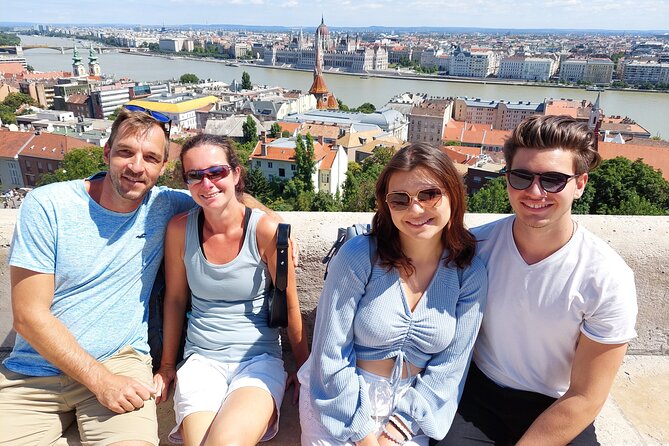
And then you get the practical payoff. From the terrace, you can see major landmarks across the river, including the Danube, Margaret Island, Pest, and Gellért Hill. Even if you’re not a “take 200 photos” person, this is where you’ll likely pause and just look, because the view is wide and the city feels layered rather than flat.
Tickets for Fisherman’s Bastion are not included, so factor that in. Still, it’s a strong use of your guided time because the guide helps you orient yourself. You stop seeing it as random scenery and start seeing it as a city you can navigate in your head.
Sándor Palace: Modern Power Meets Medieval Hill

One of the best surprises on the route is that this walk is not stuck in the past. The tour includes Sándor Palace, the official residence of the President of Hungary since 2003, and the seat of the Office of the President.
The palace you see today traces back to a Neoclassical design commissioned in 1806 by Count Vincent Sándor, an aristocrat and philosopher connected to the Austro-Hungarian Empire. So even here, you can sense the long timeline. It is another reminder that Castle Hill has repeatedly served as a stage for power, not just an old neighborhood.
This stop is shorter, but it helps you tie the story ends together. Medieval rulers lived here, Ottoman and Hapsburg power shaped the region, and now the modern Hungarian state keeps using the site to project authority.
If your guide shares extra local context, this is also a good place for it. Some guides, like Marianna, were praised for personal perspective on 20th-century Hungary. You might hear references to Soviet-era life and how that shaped what people valued afterward. You do not need a political history degree to follow along, but it can make the buildings feel less like props.
Vienna Gate Finish: Old Buda, Roman Roots, and a Clean Way to Leave
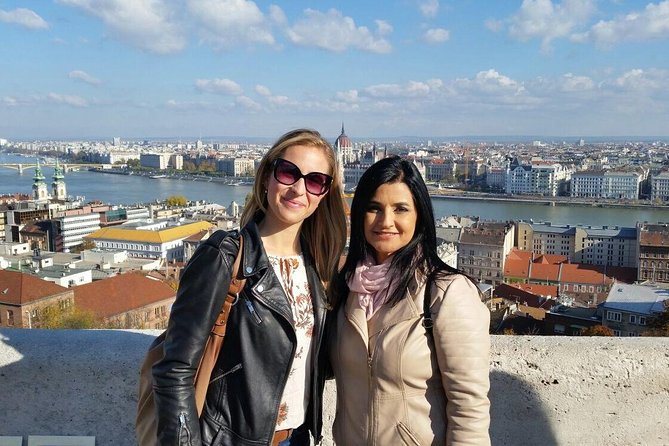
The walk ends at Vienna Gate, where the view line helps you extend your thinking beyond Castle Hill. From here you can look toward Obuda, known as Old Buda.
You’ll also hear the Roman connection. Romans founded the city there called Aquincum. That detail matters because it expands the time scale. You’re standing on a hill full of medieval and modern power, but the ground beneath your feet ties back to an even older city story.
Ending at Vienna Gate is handy because you’re not just walking back the way you came. You finish at a natural viewpoint edge, and it becomes easier to plan your next move in Budapest.
Price and Value: Is $126.15 Fair for Three Hours?
At $126.15 per person, this tour can look steep at first. But value comes from what is included and what is not.
Included:
- A 3-hour guided walk
- A professional guide
- Group discounts
- A mobile ticket
- Offered in English
- Small-group format, max six people per booking
Not included:
- Buda Castle, Matthias Church, and Fisherman’s Bastion tickets
- Hotel pickup and drop-off
- Food and drinks, unless specified
So what are you really paying for? You are paying for a guide who can make the architecture readable fast. Castle Hill is visually impressive, but it can also feel like a confusing pile of shells if you are relying only on your own notes. A good guide saves you from that blank-stare moment.
The feedback also points to a repeat pattern: guides adapt. People highlighted guides like Judith for helping them figure out public transportation systems, and Peter for tailoring the tour to personal interests. That kind of adjustment can matter more than you’d think, especially if your group includes history fans and photo fans who want different things from the same route.
You should also be comfortable budgeting for site entry tickets on the day. If you hate paying multiple separate admissions, you might prefer a route focused on exteriors only. But if you want Matthias Church and the Bastion viewpoints, the ticket costs become part of the deal.
Practical Tips to Make This Walk Feel Effortless
First, wear shoes you trust on cobblestones. Castle Hill has surfaces that turn normal walking into a balance test if you pick the wrong footwear.
Second, bring some flexibility in your schedule. Departures can be morning or afternoon depending on the day, and Matthias Church and Fisherman’s Bastion require tickets you pay on your own. If you try to stack a tight lunch reservation right after, you’ll likely feel rushed.
Third, use the guide’s orientation skills. This is one of those tours where the guide helps you understand where you are relative to the Danube and the city. When that clicks, the views feel smarter, not just pretty.
Finally, if you’re the type who likes street-level details, you’re in the right place. The district is not a single big castle you tour room by room. It is an old-town area with buildings and lanes shaped by centuries of damage and rebuilding, so you get more than grand monuments. Expect house-name style details and local storytelling that makes the neighborhood feel lived-in, not staged.
Should You Book This Buda Castle Walking Tour?
Book it if you want:
- A small-group walk through UNESCO Castle Hill with strong pacing
- The key highlights of Matthias Church and Fisherman’s Bastion
- A guide who connects architecture to real political change, from medieval kings to Ottoman rule to Hapsburg influence
- Time to see the views without losing your bearings
Pass or choose another format if you:
- Want a full, self-guided museum-style day inside multiple palace buildings
- Dislike extra ticket stops, since church and Bastion entries are not included
- Prefer a purely flexible route where you never follow someone else’s sequence
For most first-time visitors who want a high-quality overview without being swallowed by crowds, this is a strong pick. It’s also a good second-day tour if you already saw Pest and want to understand the other side of the river.
FAQ
How long is the Buda Castle walking tour?
It is about 3 hours long (approx.).
What does the tour cost?
The price is $126.15 per person.
Is the tour offered in English?
Yes, the tour is offered in English.
How large is the group?
It is a small-group tour with a maximum of six people per booking.
Where do I meet, and where does the tour end?
You start at Budapest, Országház u. 31, 1014 Hungary and the tour ends at Budapest (Vienna Gate area).
Are tickets included for Buda Castle, Matthias Church, and Fisherman’s Bastion?
No. Tickets for Buda Castle, Matthias Church, and Fisherman’s Bastion are not included, and you pay at your own expense.
Is hotel pickup and drop-off included?
No, hotel pickup and drop-off is not included.
Do I get a mobile ticket?
Yes, the tour uses a mobile ticket.
When does the tour run?
There are morning or afternoon departures, depending on the day.
Keep Walking Budapest






Keep Exploring Castle Hill




More Tour Reviews in Budapest






Recently added around Budapest




Buda Castle Tours, compared.
 ★ 4.7Buda Castle Cave TourFrom $195,677 reviews
 ★ 4.6Buda Castle District Vampires and Myths Night TourFrom $233,830 reviews
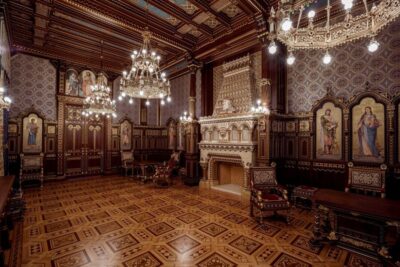 ★ 4.5Buda Castle Walk with Saint Stephen’s HallFrom $293,012 reviews
 ★ 4.6Buda Castle District Walking TourFrom $142,108 reviews
 ★ 4.5Buda Castle District Dark History, Legends and Vampire Night TourFrom $211,240 reviews
 ★ 4.9Buda Castle District Walking Tour with a HistorianFrom $63867 reviews
 ★ 4.6Classical Music Concerts in Matthias ChurchFrom $70792 reviews
 ★ 4.6Matthias Church Entry TicketFrom $25787 reviews
Browse the lists this tour appears in