
Tour review · BUDAPEST WALKING TOURS
Budapest Art Nouveau Walking Tour
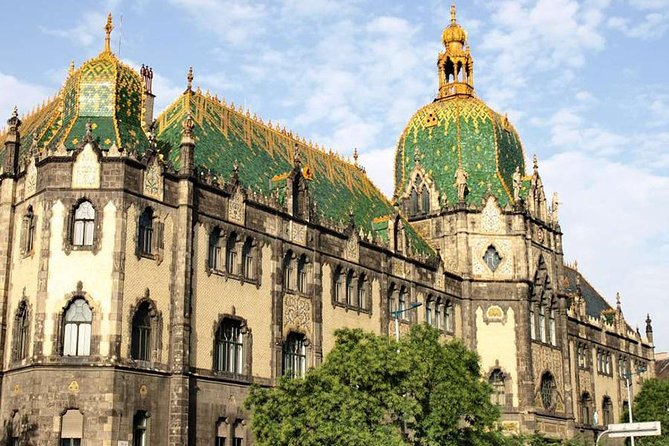
Art Nouveau is everywhere in Budapest. This walk makes it make sense, with a historian guide and hands-on architectural storytelling focused on Odon Lechner and the buildings you can actually see. I especially love how you get both close-up detail (facades, tiles, and entrance-hall design) and bigger context (how the style shaped whole neighborhoods). One thing to plan around: the Kazinczy Street Synagogue interior visit is not always available, and the synagogue admission is not included.
I also like the pace and scale. The tour runs about 3 hours, uses a mix of streets (and a bit of public transport), and keeps groups small, so questions do not get lost in the crowd. The mobile ticket helps you find the start fast at Madal Cafe.
The main drawback is not the walking, it is the ticket math. You will enjoy the exterior stops with no extra entry fees, but you may need to pay extra if the synagogue interior is open on your day.
Key Highlights You Should Know
- Odon Lechner focus: one of Hungary’s best-known Art Nouveau architects, explained in plain language
- Gresham Palace inside and out: admire both the grand facade and the richly designed interior
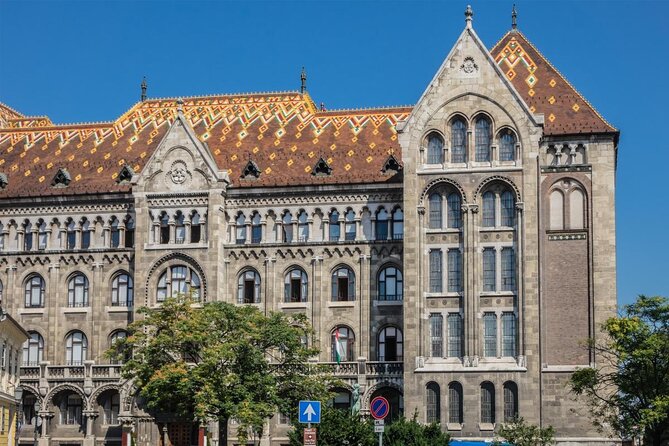
- Royal Postal Savings Bank entrance hall: see Lechner’s flamboyant style where it matters, right as you step in
- Zsolnay porcelain tile connection: learn how Hungarian Art Nouveau became famous for its tilework
- Kazinczy Street Synagogue endpoint: Art Nouveau decoration, with interior access depending on the day
Budapest on foot, with a few more routes to compare
- Big Bus Budapest Hop-On Hop-Off Bus and Walking Tour★ 3.5 · 2,206 reviews
- Budapest: Buda Castle District Walking Tour★ 4.6 · 2,108 reviews
- Budapest City Landmarks Walking Tour in 2 Hours★ 5.0 · 2,048 reviews
- 3-Hour Orientation Walking Tour of Buda and Pest★ 4.8 · 1,834 reviews
Why This Art Nouveau Walk Works in Budapest
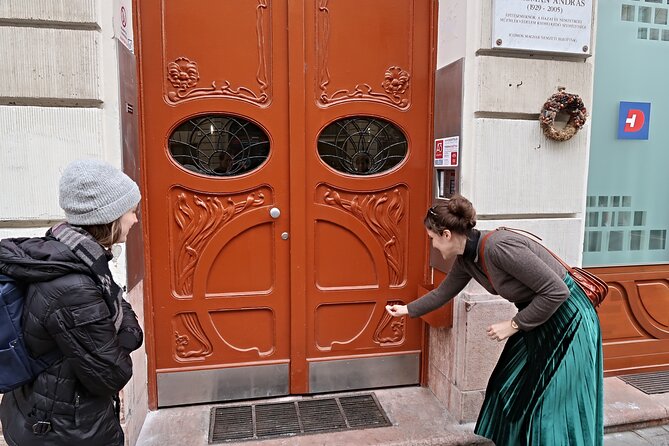
If you only glance at Budapest’s buildings, you miss the point. Art Nouveau here is not just decoration, it is identity, a visual argument for a modern Hungary at the turn of the 1900s. This tour helps you spot the design choices that make Art Nouveau feel alive, then shows you where those choices came from.
I like that the tour is practical. You are not stuck in a museum lecture. You walk between major examples and learn what to look for as you go, so by the time you reach the next stop, you already know how to read it.
And yes, it is a historian guide, not a generic sightseeing host. The difference shows in the details: why certain forms show up, what tilework and ceramics contributed, and how specific architects left fingerprints on the city.
Price and Logistics: What $126.16 Buys You
At $126.16 per person for roughly 3 hours, you are paying for three things: a trained historian guide, an organized route through high-impact buildings, and enough time at each stop to actually notice features. The stops are structured so you get multiple “wow” moments without feeling rushed.
You should also know what you are not paying for. Food and drinks are not included. Public transportation passes are not included either, and you may use public transport as part of the route, so budget for that if you do not already have a pass.
Good news: some entry tickets are effectively handled for you. At Gresham Palace, the ticket is listed as free for the stop, and at the Royal Postal Savings Bank and Thonet House, admissions are listed as free. The one pay-attention item is the synagogue interior, because that admission is not included and depends on the day.
The tour uses a mobile ticket, and there are morning and afternoon departures. It is also described as a small-group tour, with maximum group size listed as up to eight travelers, and some departures described as limited to a maximum of six. Either way, you are not doing this with a busload.
Starting at Madal Cafe: Easy to Find, Easy to Settle In
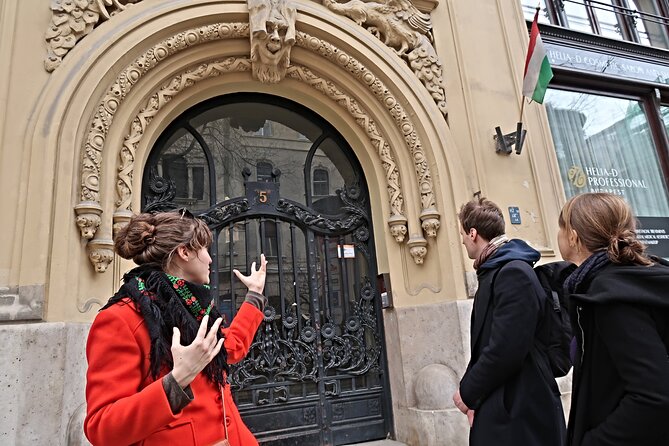
You begin at Madal Cafe, Alkotmány u. 4, 1054. This is a solid meeting choice because it is in central Budapest and close to public transportation, so you can arrive without stress.
Bring comfortable shoes. The walking is moderate, but you are on your feet for long enough that you will want support, especially if your visit also includes a lot of stairways and museum-like interiors elsewhere in the day.
One more small tip: this kind of walking tour often starts right on time, and busy meeting points can feel chaotic for the first few minutes. If you are early, hang back until the group is called, so you do not end up chasing the tour leader.
Stop 1: Gresham Palace, Luxury Hotel Facades and Interiors
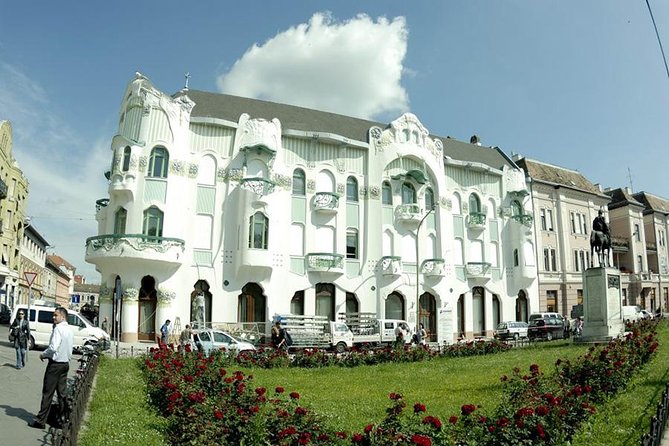
The first major stop is Gresham Palace, a building that instantly signals “center stage.” It has served as office space and luxury apartments, and today it is Budapest’s most luxurious hotel. Even if you are not checking in, the architecture is the story.
The tour’s entry here is designed to pay off quickly. You get around 20 minutes to admire the facades and then take in interior design details, with the stop listed as free for admission. That blend matters. Art Nouveau works best when you see how the outside style connects to what happens once you are inside.
What I love about this stop is the contrast. You can stand back and appreciate the overall grandeur, then go in and notice the kinds of design decisions that make a building feel cohesive. It also sets a baseline for the rest of the tour, so when the route shifts to more playful details later, you can compare.
A small consideration: if you want photos, interiors can be more restrictive than exteriors depending on how the hotel is operating that day. Keep your phone ready, but do not assume every angle will be open for long.
Budapest on foot, a few more ways
- Budapest: Buda Castle Walk with Saint Stephen’s Hall
★ 4.5 · 3,012 reviews - Budapest: 3-Hour Grand City Tour and Castle Walk
★ 4.3 · 1,437 reviews - Budapest Historical Sightseeing – Free Walking Tour
★ 5.0 · 1,302 reviews - Budapest All in One Small Group Walking Tour with Strudel Stop
★ 5.0 · 1,277 reviews - Budapest: Buda Castle District Walking Tour with a Historian
★ 4.9 · 867 reviews
Stop 2: The Royal Postal Savings Bank and Lechner’s Flair
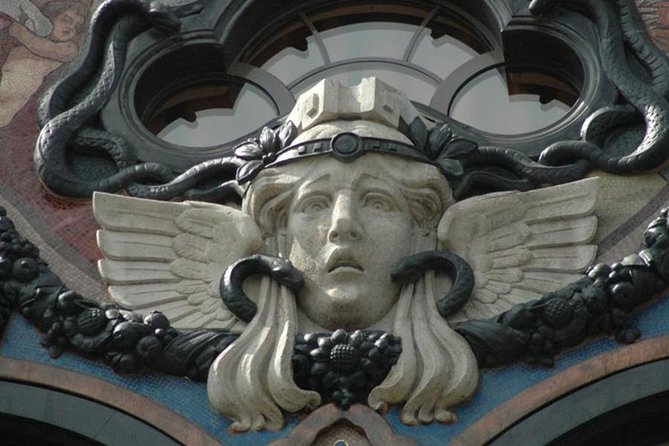
Next you are at the Postatakarek Bank, also known as the Royal Postal Savings Bank. This is where the tour’s focus on Ödön Lechner really lands. He designed it, and the building is often nicknamed the Gaudi of Hungary for a reason: the architecture feels expressive and full of character.
You spend about 20 minutes here, and the admission for this stop is listed as free. That makes it a smart value moment, because you get access to a major example without paying extra entry.
The highlight is the entrance hall. The tour pauses to discuss the interior design elements right where you naturally slow down anyway. That is exactly where Art Nouveau’s goal shows up: it wants to guide you into a mood, not just impress from the street.
As you walk through the space, look for how ornament and structure work together. Art Nouveau often uses flowing forms and decorative surfaces, but the clever part is how it still feels anchored to purpose. Seeing the design choices in the entrance hall helps you understand why this style became so influential in Budapest.
Stop 3: Thonet House, Tiles, and the Zsolnay Connection
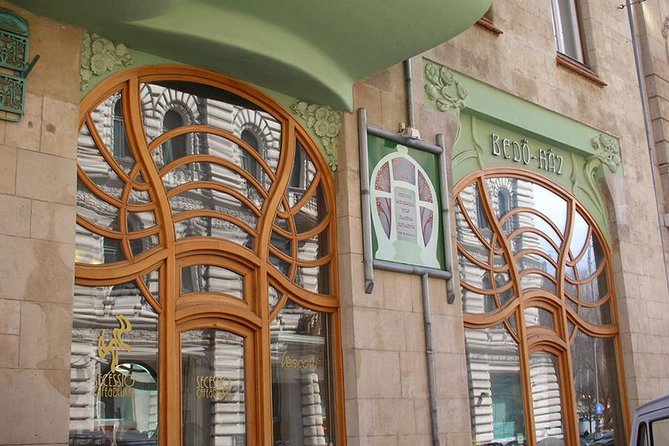
At Thonet House, the tour shifts from grand institutional design to a more material-focused explanation. This stop is about tiles on facades, which is one of the reasons Hungarian Art Nouveau became famous.
You pause for around 20 minutes. Admission for this stop is listed as free, so again, it is a good time-to-value stop if you are watching your budget.
Here is the interesting link you get from the guide: innovations by the Zsolnay porcelain and ceramics factory in Pécs, a town in southern Hungary. The Zsolnay name matters because it connects Art Nouveau in Budapest to manufacturing and regional craft, not just to one architect’s drawings.
When you look at the facade, you can start spotting how the tilework is not random. It is part of the building’s language, with surfaces designed to catch the light and keep details readable from different distances. Even if you are not a design nerd, it is easy to feel the difference once you know what you are looking for.
Stop 4: Kazinczy Street Synagogue, Art Nouveau Details at the Finish
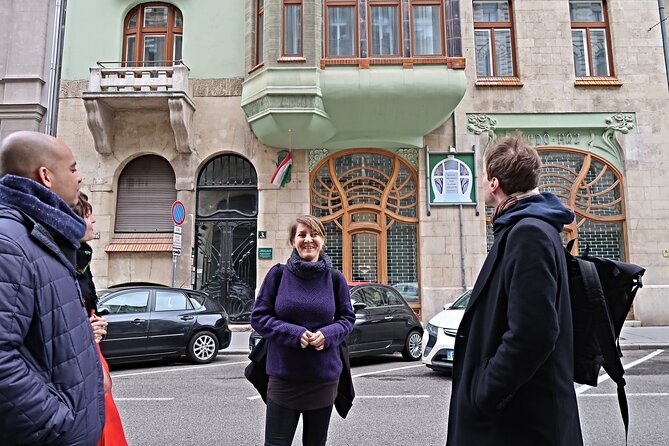
The tour ends at the Budapest Orthodox Kazinczy Street Synagogue, at Kazinczy u. 29-31, 1075. You have about 25 minutes here, and this stop is where you should pay attention to conditions.
The synagogue interior visit is included only on certain days. Except on Saturdays, you enjoy a visit to the synagogue’s interior. Admission for the synagogue is not included, and there may be additional cost if it is open on the day of your tour.
So what should you do? Plan for the exterior experience first. Then, if your day allows it, treat the interior as bonus value. Either way, the synagogue is decorated in Art Nouveau style, which gives you a strong closing image. It is a memorable way to end a tour focused on architectural expression.
Because the final stop is also the most conditional, it is smart to keep your schedule flexible. If you already booked other time-sensitive plans right after, you might want a buffer, so you are not rushing while the group is wrapping up.
How Much Value You Get for This Walking Route
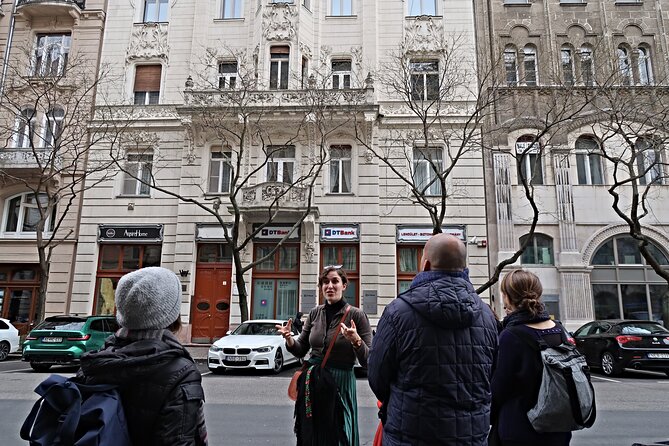
This is not a tour where you pay extra for a bunch of random small stops. The route concentrates on big-name, high-recognition Art Nouveau examples tied to Lechner, plus material innovation through the Zsolnay ceramics link. That is the value.
Also, the tour gives you time at each stop. Roughly 20 minutes at the first three major sites and 25 at the synagogue means you can actually see details without feeling like you are sprinting. A 3-hour walking window is long enough to learn, short enough to keep it fun.
The small-group format matters too. The reviews show strong satisfaction, with a 4.9 rating from 17 reviews and 100% recommending the experience. What you should take from that is not just the score, it is the consistency: people clearly felt the guide brought the architecture to life, and the route delivered what was promised.
One more value angle: several stops are listed with admission free. That keeps costs from creeping up mid-tour, aside from the synagogue interior where you should expect possible ticket fees depending on the day.
What You Learn Beyond Pretty Buildings
The best part of this kind of architecture tour is how it changes your brain. After a few stops, you start noticing patterns: how ornament supports structure, how tiles and materials create identity, and how architects like Ödön Lechner helped popularize a modern visual language.
You also get the movement’s timeline in a street-level way. Instead of reading a page and forgetting it, you watch the style evolve across different building types, from palace grandeur to bank entrance-hall design to synagogue decoration.
And you get enough context to connect the dots without turning it into a textbook. When you understand why Zsolnay ceramics mattered, the tilework at Thonet House stops being decoration and becomes a manufacturing and design story.
If you like architecture, this tour helps you move from I like this facade to I know what design choices are doing.
Who Should Book This Tour (and Who Should Skip It)
You will love this tour if you:
- want a guided Art Nouveau experience that stays outdoors and inside key buildings
- enjoy architecture details, especially tiles, facades, and entrance halls
- want a clear explanation of Odon Lechner and how his style shaped Budapest
- prefer small groups and a manageable 3-hour schedule
You might skip it if:
- you only care about broad city views and would rather do a panoramic photo walk
- you strongly dislike paying extra on the day, since synagogue interior access is not guaranteed and admission is not included
Should You Book This Budapest Art Nouveau Walking Tour?
Yes, if your goal is to understand Art Nouveau in a practical, building-by-building way. The combination of a historian guide, focused stops, and the chance to see major works tied to Ödön Lechner gives you more than sightseeing. You leave with a mental map of what makes Budapest’s Art Nouveau distinct.
If you can be flexible about the synagogue interior, this becomes an easy recommendation. Even with the conditional interior access, the exterior and the route’s core landmarks are strong enough to justify the trip.
If you are on the fence, compare what you want most. For me, this is the best kind of walking tour, the kind that teaches you how to see, not just where to stand.
FAQ
Where does the Budapest Art Nouveau Walking Tour start and end?
The tour starts at Madal Cafe, Alkotmány u. 4, 1054 Budapest. It ends at the Budapest Orthodox Synagogue on Kazinczy u. 29-31, 1075 Budapest.
How long is the tour?
The tour lasts about 3 hours.
Is the tour offered in English?
Yes, the tour is offered in English.
What’s included in the price?
The historian guide is included. Some stops are listed with admission ticket free, but not all sites have admission included.
Are public transportation passes included?
No. Public transportation passes are not included, and any transport passes are at your own expense.
Is Kazinczy Street Synagogue interior access included?
Except on Saturdays, the tour includes a visit to the synagogue interior. Synagogue admission is not included, and there may be an additional cost if the Orthodox Synagogue on Kazinczy street is open on your tour day.
How large is the group?
The tour is described as small-group with a maximum of six for some departures, and the maximum group size is also listed as up to eight travelers.
Is there free cancellation?
Yes. You can cancel for a full refund up to 24 hours in advance of the experience start time. If you cancel less than 24 hours before, the amount you paid will not be refunded.
More Tours in Budapest






Keep Walking Budapest





More Tour Reviews in Budapest






Recently added around Budapest




Budapest Walking Tours, compared.
 ★ 3.5Big Bus Budapest Hop-On Hop-Off Bus and Walking TourFrom $422,206 reviews
 ★ 4.6Buda Castle District Walking TourFrom $142,108 reviews
 ★ 5.0Budapest City Landmarks Walking Tour in 2 HoursFrom $32,048 reviews
 ★ 4.83-Hour Orientation Walking Tour of Buda and PestFrom $411,834 reviews
 ★ 5.0Budapest Historical Sightseeing – Free Walking TourFrom $31,302 reviews
 ★ 5.0Budapest All in One Small Group Walking Tour with Strudel StopFrom $1001,277 reviews
 ★ 4.9Buda Castle District Walking Tour with a HistorianFrom $63867 reviews
 ★ 4.9BloodThirsty Hungary: Walking tour & Dark Historical StoriesFrom $21633 reviews
Browse the lists this tour appears in