

Tour review · BUDA CASTLE TOURS
Budapest: Castle District Walking Tour
Castle Hill grabs you fast. This guided walk through Buda’s historic heights is built to help you get your bearings fast and learn what matters. I especially love the time-saving route and the way the guide turns landmarks into real stories you can actually remember, like the cross meanings and the Walt Disney connection. One thing to plan for: it is hilly, with stairs, and you will need a moderate fitness level for the uphill stretch.
I also like that you do not just follow a checklist. You move from the Royal Palace area to Matthias Church, Fisherman’s Bastion, and the viewpoint terraces with practical context about wars, occupations, and everyday life for the German, Jewish, and Hungarian communities. Guides I noticed in the tour style, like Gary and Dora, tend to keep questions flowing, which makes the history feel less like a lecture.
If you dislike climbs, this might test you. The route includes a 10-minute uphill walk plus steps, and it is not suitable for wheelchair users. Strollers are also likely to be awkward on the stair-heavy sections.
Key things to look forward to
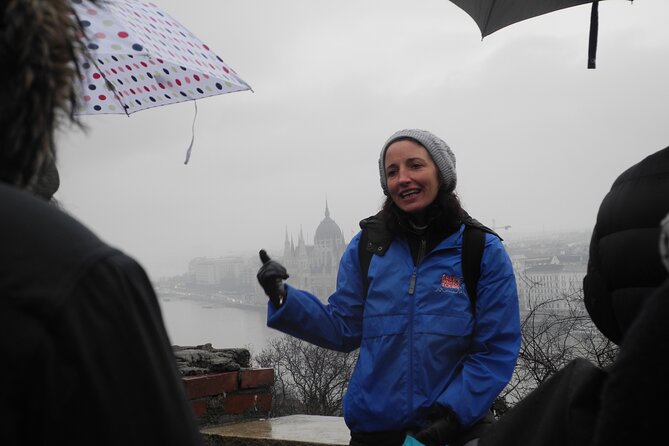
- Guided Buda Castle Hill route that helps you skip the maze and focus on the right spots
- Matthias Church, Fisherman’s Bastion, and more in a tight 2-hour loop
- Underground defenses and cave system talk, including labyrinth-style history
- WWII destruction and occupation stories tied to specific locations
- Photo and viewpoint time over the Danube toward Pest
- Fun, interactive moments like tricky questions about Castle District landmarks
More routes across Castle Hill and its viewpoints
- Budapest: Buda Castle Cave Tour★ 4.7 · 5,677 reviews
- Budapest: Buda Castle District Vampires and Myths Night Tour★ 4.6 · 3,830 reviews
- Budapest: Buda Castle District Walking Tour★ 4.6 · 2,108 reviews
- Buda Castle District Dark History, Legends and Vampire Night Tour★ 4.5 · 1,240 reviews
Why this 2-hour Castle Hill walk works so well
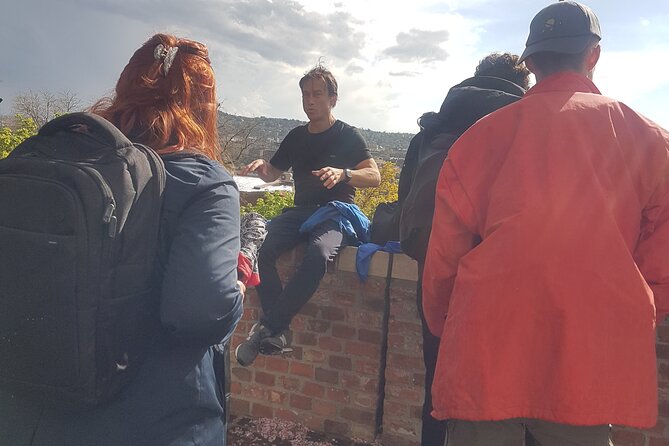
If you only have a short time in Budapest, Buda Castle District can feel like it keeps pulling you up stairs and around corners until you forget why you started. This tour solves that problem with a guided route that’s designed for orientation and momentum. You cover the core sights and the viewpoints without spending your energy figuring out the best order to see them.
I like pacing that feels realistic. Two hours is long enough to hit the big names, but short enough that you are not exhausted before the best views. That matters on a hill like this, where you will likely walk uphill more than you expect.
The guide portion is also a big part of the value. You are not just looking at buildings, you are learning how the district functioned over centuries: defense, conflict, rebuilding, and daily life. The tour also includes a chance to ask questions at the end, which is where you usually get the most useful, personalized tips for the rest of your stay.
Where you start at Batthyány tér (and how to spot your guide)
You meet at Batthyány tér metro exit, about 15 meters from St. Anna Church. The easy cue is a tour guide holding a blue flag, so you do not waste time hunting for the group.
This start location is practical. It puts you near public amenities in the area, including public toilets and a food market near the meeting point zone. If you need water before the climb, this is the moment to grab it.
The tour runs with small groups, up to 30 people. That size is big enough to keep the energy up, but small enough for a guide to manage questions without the whole thing turning into a herd.
First climb goals: Royal Palace area and Matthias Church
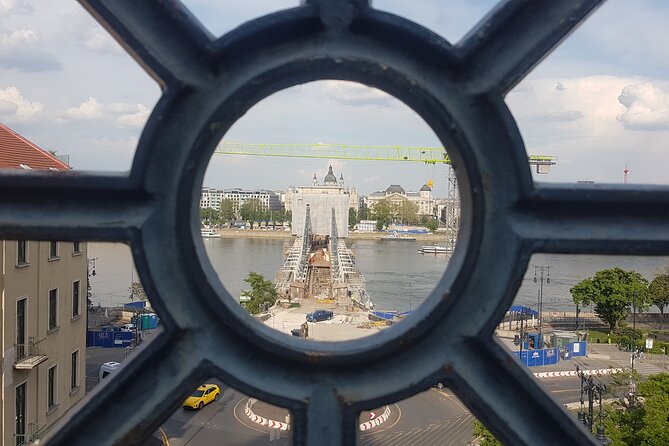
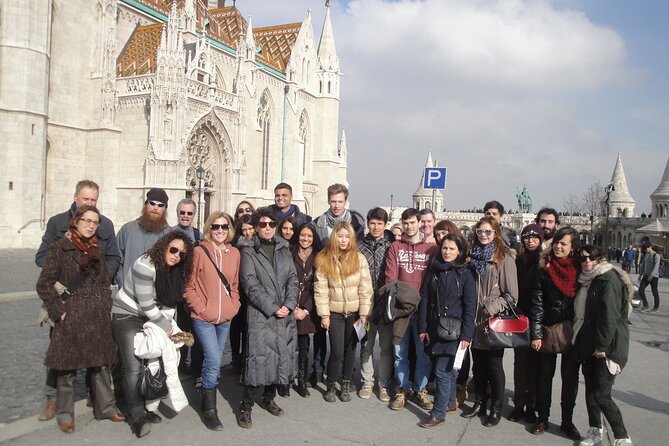
Right away, you are headed into the Castle District’s defining scenery. You explore key buildings in the area that shaped Budapest’s story for centuries, including the Royal Palace complex and Matthias Church.
This is where a guided walk really pays off. The exterior views are stunning on their own, but the tour adds context so you know what you are actually looking at. The guide ties the architecture to the district’s long rhythm of destruction and rebuilding, including the heavy impact of WWII.
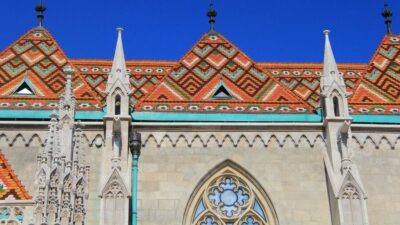
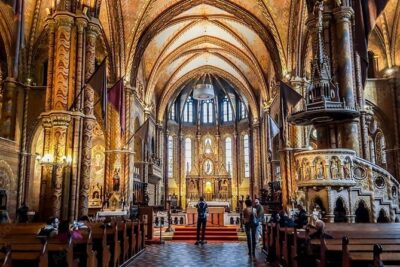
Matthias Church is also a stop where details can be easy to miss when you are doing it solo. On this tour, you get the kind of explanation that helps you notice why certain elements look the way they do, not just that they look pretty. And because the guide welcomes questions, you can ask what you are not sure about as you go, instead of saving it for later and forgetting.
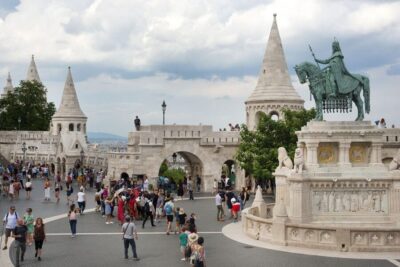
Fisherman’s Bastion: views, myths, and the cross lesson
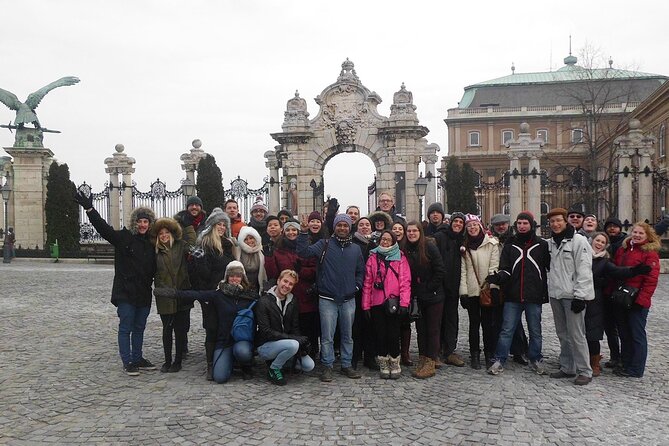
Then you reach one of Budapest’s most famous viewpoint zones: Fisherman’s Bastion. Even if you have seen photos, it is worth going in person because the perspective is deeper when you stand there looking out over the Danube and the Pest side panorama.
What makes this stop more than a photo stop is the guided angle. You get the story about the connection between Walt Disney and Fisherman’s Bastion, plus a lesson about the differences between crosses with one, two, or three strips. These are the kinds of details that are hard to learn from a museum sign, but easy to remember once someone puts them into simple terms while you are standing in the right place.
This is also a great section for short breaks and regrouping. If your legs need a breather, you are usually moving through areas where you can pause without losing the group entirely.
Budapest on foot, with a few more routes to compare
- Budapest: Buda Castle District Walking Tour
★ 4.6 · 2,108 reviews - Budapest City Landmarks Walking Tour in 2 Hours
★ 5.0 · 2,048 reviews - 3-Hour Orientation Walking Tour of Buda and Pest
★ 4.8 · 1,834 reviews - Budapest Historical Sightseeing – Free Walking Tour
★ 5.0 · 1,302 reviews - Budapest All in One Small Group Walking Tour with Strudel Stop
★ 5.0 · 1,277 reviews
Underground Castle Hill: caves, defense, and a different side of the district
Castle District is not only castles above ground. You also learn about the underground side of the hill: labyrinths, an underground cave system, and the district’s role in defense over the centuries.
This part of the tour changes your mental picture of where you are. Instead of thinking of the hill as a pretty backdrop, you understand it as a strategic system that mattered during wars and occupations. The guide’s explanations also help connect why certain paths and fortification patterns exist.
You also hear about massive changes across time, including where the Nazi stronghold was. That kind of specificity can feel heavy, but it gives shape to the ruins and scars you see around the district. You start to recognize how the landscape holds evidence of what happened, even when everything has been rebuilt.
The Medieval Jewish Prayer House and surrounding baroque streets
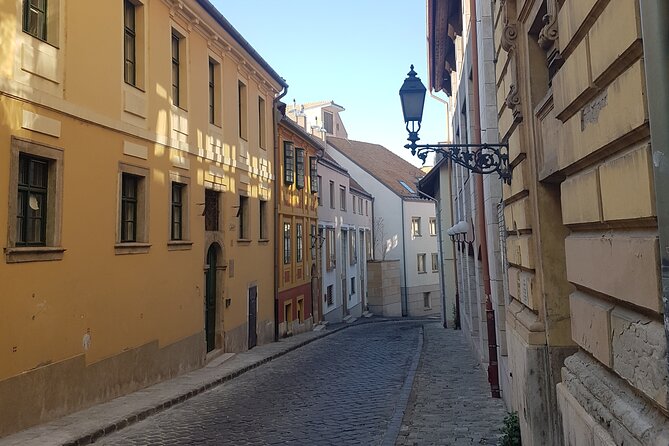
Next, you shift to the layers of community life, not just royal monuments. The tour includes the Medieval Jewish Prayer House and the surrounding baroque residential buildings.
This matters because so much Castle District storytelling focuses on rulers and wars. Here, you also learn about everyday life in the district and how different populations lived side by side through shifting eras. You get context about the German, Jewish, and Hungarian communities and what that meant on the ground, not just in textbooks.
The route around the prayer house and nearby streets is also where you can slow down and notice the tone of the neighborhood. It helps you understand the district as a living place across centuries, not only as an open-air set of monuments.
WWII scars, occupation history, and where the district’s story turns
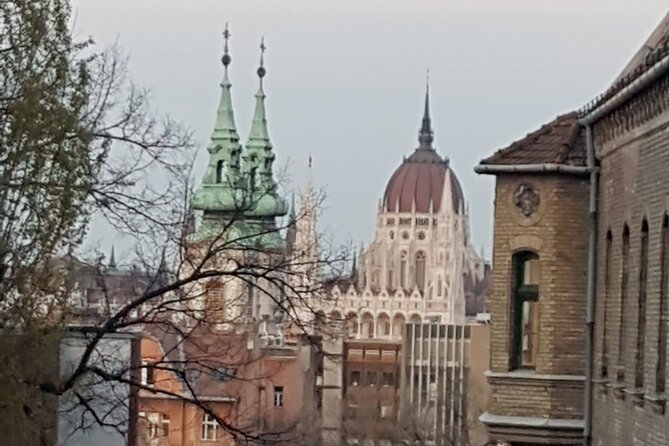
Budapest’s Castle Hill did not stay untouched through history. The tour explicitly covers the massive destructions of WWII and also points to where the Nazi stronghold was.
It can be tempting to skim over dark parts of a city tour, especially when you are standing in a scenic area. I like that the guide brings it into the walk in a structured way, so the story feels connected to actual locations you can look at while you listen.
You also learn about the 800 years of history of the area, including wars and occupations. The guide keeps it grounded, with explanations that help you connect long time spans without drowning you in dates.
Gül Baba and the Ottoman trail through the district
One of the more interesting cultural contrasts on this route is Gül Baba, tied to the Ottoman Turkish monk and soldier. The tour also points you to the Muslim site of pilgrimage connected to him.
This stop gives you a reminder that Castle District history is not one single chapter. It is a stack of different eras, beliefs, and influences, layered through architecture and sacred sites. Even if you have never heard the Gül Baba story before, the guide frames it in a way that is easy to follow while you keep moving through the district.
Huszár statues, funny details, and quirky Budapest you can actually spot

Budapest has a streak of humor, and this tour tries to capture it. You will see public art and mini monuments, including what the guide describes as some of the funniest public statues in Budapest.
You also learn about the huszar, the womanizer light cavalry fighters, and where those references show up in the district. The payoff is that later, when you notice these figures on your own, you have a handle on what you are looking at instead of guessing.
That kind of humor plus history is a strong mix. It keeps the tour from turning into constant seriousness and makes it easier to stay engaged for the full two hours.
Viewpoints over Pest and the best way to time your photos
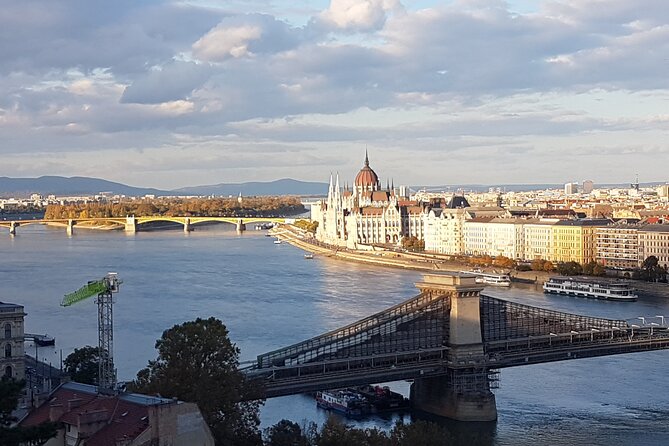
You end with practical viewpoint time. The tour includes terraces and the panorama across the river toward Pest, which is the payoff many people come for.
Here is how I’d approach it: stand where the guide tells you, then shift your angle slightly for a second photo. That small adjustment helps because the Danube and city blocks create different layers depending on your spot. If you want a clean shot, water and weather matter too, so bring water and dress for whatever the sky is doing.
The tour also includes a fun way to check if things stuck. If you are lucky, you get asked tricky questions about major Castle Hill landmarks and what you learned about the life of Hungarians. It is a light moment, but it also functions like a memory test.
Price, value, and what to expect on the tip culture side
The tour price is listed at about $2.27 per person, which looks almost too good to be true. The catch is that there is a booking fee paid to the platform that covers administration and marketing, and the experience is designed for international travelers visiting Budapest rather than Hungarian residents.
The bigger reality is how the guide is supported. The tour encourages tipping, with a common amount mentioned as €10 per person, and some people give more. If you come in expecting a high-ticket formal tour, you might be surprised. If you come in understanding this is a low-cost walking tour model that relies on guide tips, it feels like strong value.
In practical terms, you are paying for:
- a 2-hour structured route on a hill full of stairs
- live English guiding
- history explanations tied to places you are standing by
- time saved versus DIY navigation
- viewpoints you can actually reach without second-guessing your route
That is why the value works, even with the low posted price. It is not only about the sightseeing, it is about reducing wasted time and confusion in the one district where getting lost costs you energy.
Who this tour suits best (and who should think twice)
This walk is best for people who want an organized introduction to Castle District and like learning as they walk.
It fits well if you:
- have moderate stamina and can handle a 10-minute uphill walk
- wear comfortable shoes
- want a guide-led route that hits Matthias Church and Fisherman’s Bastion without scrambling
- enjoy stories that connect history to specific locations
- like interactive moments and question time
Think twice if you:
- use a wheelchair (not suitable)
- strongly dislike stairs and steep sections (the tour is hilly and stair-heavy)
- need an effortless, flat walk (this is not that)
- are with very young children in strollers, because the stair sections can be hard to manage and keep up on
Also note the group policy: groups of 8 or more people are not allowed to book this tour.
Should you book the Budapest Castle District Walking Tour?
I would book this if you want the fastest path to understanding Castle District, while still getting real time for views and photos. The combination of big landmarks, underground defense stories, and specific history context makes it feel like a guided orientation, not a rushed sightseeing lap.
But if your main goal is a slow, fully accessible stroll with minimal climbing, this probably will not be your best match. The tour is short, yet it is still a climb, so let that be your decision point.
If you go, I’d show up early with comfy shoes, water, and the mindset that you are trading a little leg effort for a lot of clarity about where you are.
FAQ
Where is the tour meeting point?
The tour starts at the Batthyány tér metro exit, about 15 meters from St. Anna Church. Look for your guide holding a blue flag.
How long is the walking tour?
It lasts about 2 hours.
Is the tour guided in English?
Yes, the tour is led by a live guide in English.
What are the main sights included?
You will visit major Castle District highlights including Buda Castle, Matthias Church, Fisherman’s Bastion, Maria Magdalena Church Tower, and the Medieval Jewish Prayer House, plus other important buildings and viewpoint areas.
How much walking and climbing is involved?
The tour includes a 10-minute uphill walk and you should have moderate physical fitness. Comfortable shoes are strongly recommended.
What should I bring?
Bring comfortable shoes, water, and weather-appropriate clothing.
Is the tour wheelchair accessible?
No, it is not suitable for wheelchair users.
Are there toilets or food nearby at the meeting point?
Yes. There are public toilets and a food market available near the Batthyány tér meeting area.
What about cancellation and flexibility?
You can cancel up to 24 hours in advance for a full refund. You can also reserve now and pay later.
Keep Walking Budapest






Keep Exploring Castle Hill




More Tour Reviews in Budapest






Recently added around Budapest




Buda Castle Tours, compared.
 ★ 4.7Buda Castle Cave TourFrom $195,677 reviews
 ★ 4.6Buda Castle District Vampires and Myths Night TourFrom $233,830 reviews
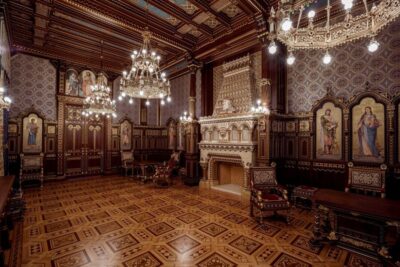 ★ 4.5Buda Castle Walk with Saint Stephen’s HallFrom $293,012 reviews
 ★ 4.6Buda Castle District Walking TourFrom $142,108 reviews
 ★ 4.5Buda Castle District Dark History, Legends and Vampire Night TourFrom $211,240 reviews
 ★ 4.9Buda Castle District Walking Tour with a HistorianFrom $63867 reviews
 ★ 4.6Classical Music Concerts in Matthias ChurchFrom $70792 reviews
 ★ 4.6Matthias Church Entry TicketFrom $25787 reviews
Browse the lists this tour appears in