
Tour review · CONCERTS
Budapest: Concert on the Oldest Working Organ in the City
Want a quiet night with serious music?
This Budapest concert pairs live organ in St. Michael’s Church with a performer who can go from gentle to thunderous without losing control. I like that it is a 70-minute format, so you get high-quality classical music without turning your evening into a long commitment. I also like the built-in wayfinding, a short intro in English and Hungarian plus a leaflet you can follow. One drawback to plan for: no video or audio recording is allowed, so keep your phone put away.
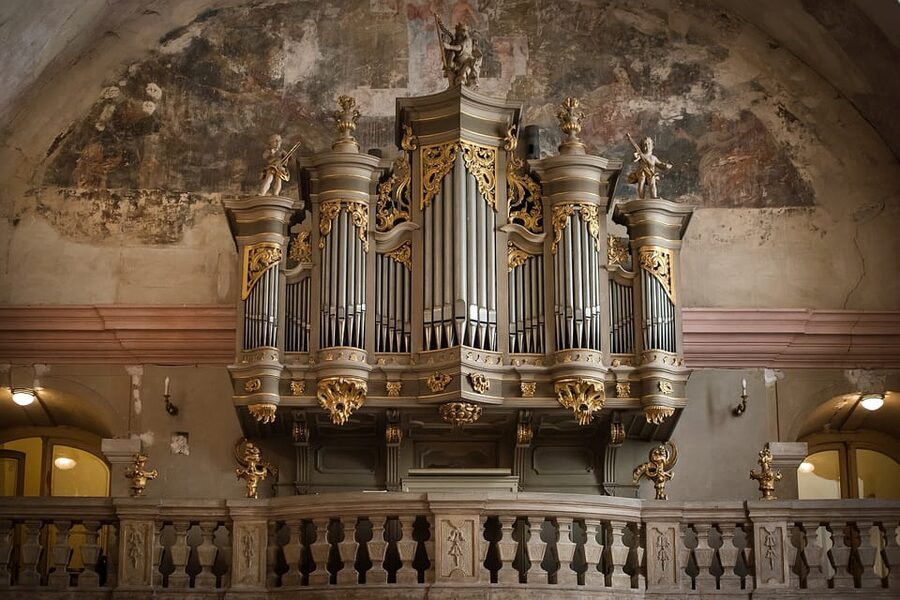
The setting does most of the work for you. You meet near the Danube in the 5th District, step into a Baroque church, and spend the next hour listening to organ and chamber pieces built around familiar names like Bach, Mozart, Handel, and Liszt, with other surprises mixed in depending on the date. If you want the biggest cathedral-organ spectacle, this is not that. It is a smaller, beautifully tuned 25-pipe instrument, and the payoff is detail and clarity more than sheer scale.
Key points to know before you go
- Budapest’s oldest working organ plays in a Baroque church setting at St. Michael’s Church
- Miklós Teleki is the series creative director and main organist on most dates, with other top organists on specific days
- Short English intro plus printed program leaflet, and the organist can be seen on a screen
- Solo organ or chamber music depending on the concert date, including performances with soprano Nóra Ducza
- A fixed 70-minute concert makes it easy to fit into a sightseeing day
More Budapest ideas for the space still left in the itinerary
- Budapest: City Highlights Cruise with Welcome Drink★ 4.6 · 35,610 reviews
- Budapest: City Sightseeing Hop-On Hop-Off Bus Tour & Extras★ 4.1 · 4,337 reviews
- Budapest City Landmarks Walking Tour in 2 Hours★ 5.0 · 2,048 reviews
- Budapest: Danube River City Lights Express Cruise★ 4.1 · 1,608 reviews
A quiet evening in Budapest, powered by the oldest working organ
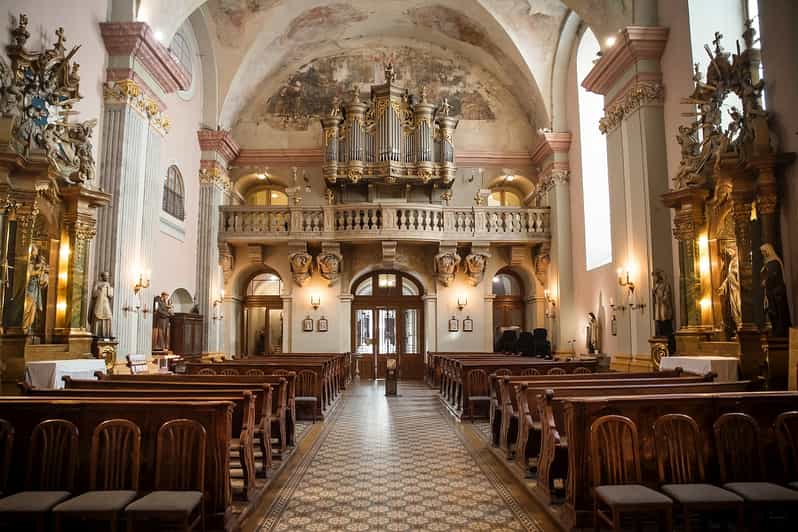
Budapest has no shortage of music, but this one has a special feel. You are not chasing a loud venue. You are going for calm, focus, and craft, in a church that has Budapest’s oldest working organ still in use. That matters because you are not hearing a novelty. You are hearing an instrument that has been doing its job for a long time, and it gives the sound a grounded, human quality.
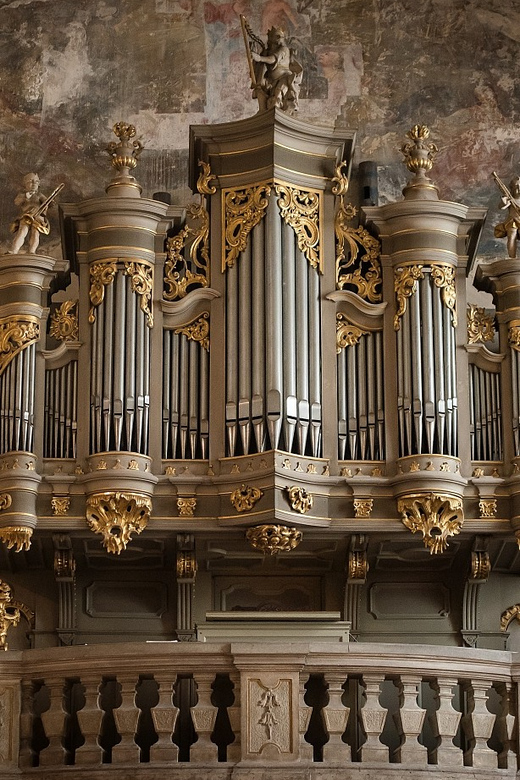
I also like that the church experience is not trying to impress you with size. The organ is described as a 25-pipe beauty, not a huge cathedral monster. In practice, that tends to mean clearer lines, faster musical detail, and less “fog” in the sound. If you have ever loved the way chamber music feels up close, this is the organ version of that same idea.
The vibe is “sit back and listen.” The goal is relaxation, not crowd performance. That makes it a great fit if you want a night that balances the city’s faster pace.
Miklós Teleki, and the rotating organists you might hear
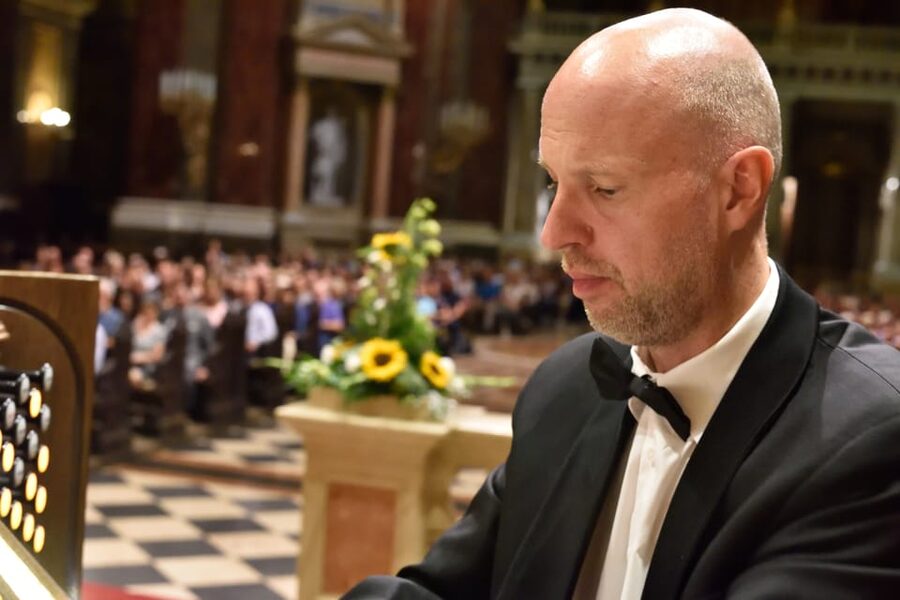
The series behind these concerts is led by Miklós Teleki, the creative director and main organist. He is described as award-winning and active at a huge pace, giving about 120 organ and piano recitals a year. In plain terms, that translates into confidence. When a musician performs that often, they tend to know exactly how to pace a program and shape the sound for an audience.
Teleki performs at almost all recitals, with a few date-specific swaps. If your visit lines up, you might catch:
- Andres Uibo on 4 July (the organist for that date)
- Tamás Lozsányi on 31 October
There is also a chamber music element on certain dates, where you will hear a soprano, Nóra Ducza, paired with Teleki. The listed dates for those chamber concerts are 30 May, 18 July, 29 August, 17 October, and 23 December.
So your experience can vary a bit by date. The good news is that the “series style” stays the same: strong classical programming, delivered with musical control.
St. Michael’s Church, where acoustics and a 25-pipe organ do the heavy lifting
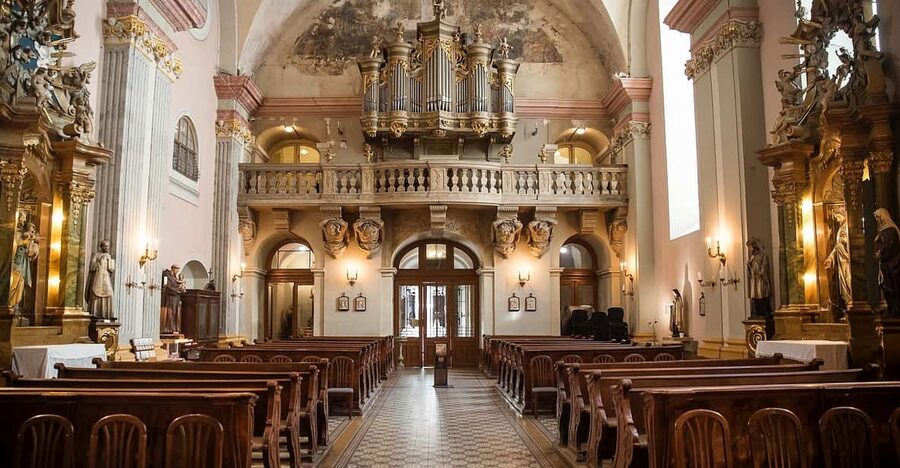
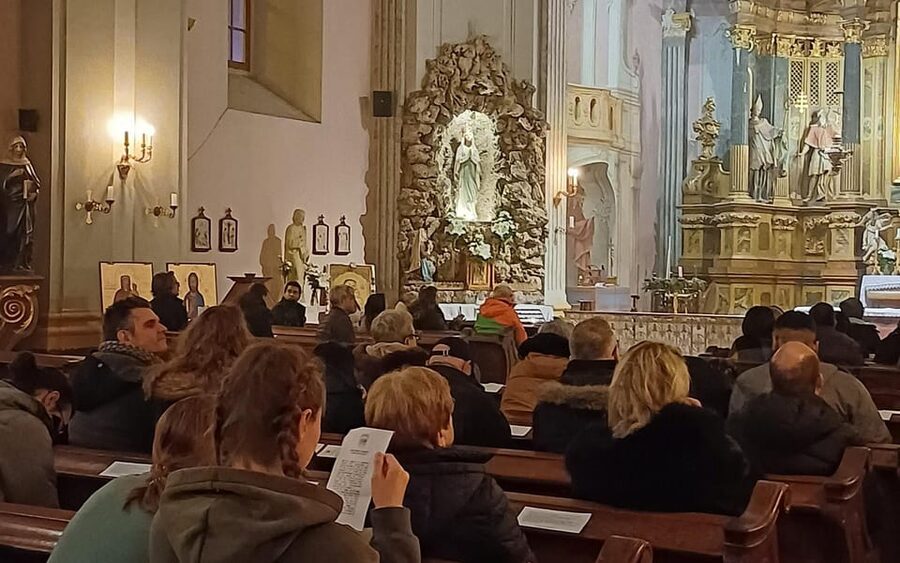
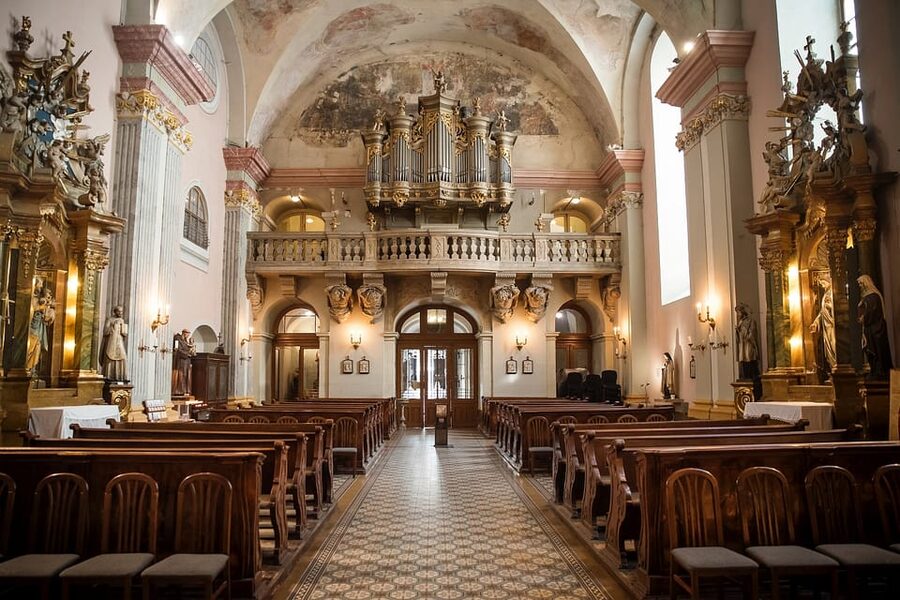
St. Michael’s Church is your venue, and it is not just a backdrop. The information points out a fusion of acoustics and aesthetics, and that is exactly what you should expect. Even if the organ is not enormous, the church setting can make the sound feel present, shaped, and full.
In many big venues, organ music can feel far away or swallowed. Here, the organ is installed in a church space designed to support that kind of resonance. You do not need to be in the front row to get the detail, because the music is performed with enough clarity that you can follow it even as it swells.
Also, this is a Baroque church, which helps explain why the program leans into composers known for structure and emotional phrasing. Organ works from Bach and others have strong “architecture.” A Baroque space tends to respect that architecture.
What happens in the 70 minutes, solo organ or chamber music
The concert experience is designed to be straightforward. The duration is 70 minutes, and the exact starting time depends on your date, so check availability for the time slots offered.
Here is how the flow works, based on what is included:
- A short introduction happens in English and Hungarian
- You get a programme leaflet in English and Hungarian with information about the organ
- The program can include either solo organ or chamber music, depending on the date
- The organist playing can be seen on a screen, so you do not have to guess what the hands and feet are doing while listening
That intro is one of the small touches that makes a big difference. If you are not an organ expert, you still get context. If you are a classical listener, it refreshes your ears and helps you notice what changes when a theme returns.
More Budapest ideas for the space still left in the itinerary
- Budapest Danube Cruise and Dinner Options, Live Music and Dance
★ 4.5 · 7,428 reviews - Budapest: Evening Cruise including Drinks and Live Music
★ 4.1 · 5,512 reviews - Budapest: Candlelit Dinner River Cruise with Live Music
★ 4.7 · 2,154 reviews - Budapest: Dinner Cruise with Live Music and Folk Dance Show
★ 4.4 · 2,090 reviews - Budapest Danube River Candlelit Dinner Cruise with Live Music
★ 4.5 · 1,770 reviews
Solo organ dates vs chamber dates
You should think of it like this:
- If your date features Teleki solo, you will get the organ as the main voice throughout.
- If your date includes Nóra Ducza, you will hear chamber music textures where the human voice changes the way the program lands emotionally.
Both formats are worth your time, but the chamber nights are a nice option if you want a little more variety beyond organ-only music.
The composers you can expect, and how to listen without overthinking
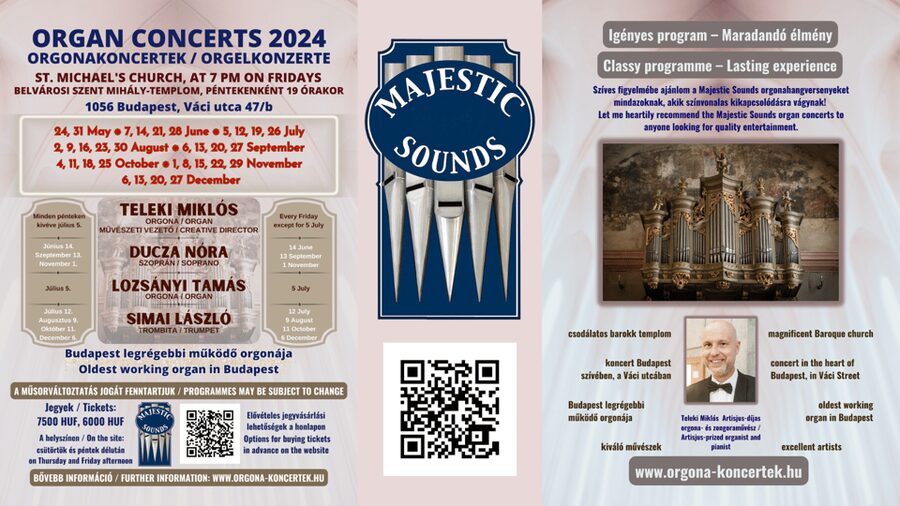
The concert programs rotate, and the works listed can give you a clear sense of what you are signing up for. You can hear major composers of the instrument, plus old Hungarian organ compositions in certain programs.
One sample programme includes J. S. Bach pieces such as:
- Prelude and Fugue in B minor (BWV 544)
- Trio Sonata in E-flat major (BWV 525)
- Concert material via Bach arrangements like Vivaldi-Bach (BWV 593)
- Pastorella (BWV 590)
- Prelude and Fugue in E-flat major (BWV 552)
Another sample programme shifts the mood and shows how the series mixes styles:
- Mozart Fantasy in f minor
- Old Hungarian organ compositions from Kilián Szigeti’s collection
- Liszt Consolation in D-flat major
- Liszt Choral, Nun danket alle Gott
- Théodore Dubois pieces like In Paradisum and Toccata in G
There are also Bach staples like Nun komm, der Heiden Heiland (BWV 659) and Toccata and Fugue in D minor (BWV 565) on some dates.
How I suggest you listen
You do not need to memorize anything. Your advantage is to listen for contrasts the program is built around:
- Fugue sections tend to feel like musical conversation, with the same idea passed around different voices
- Prelude and toccata moments often feel more free, with faster motion and dramatic dynamics
- When you hear Hungarian organ pieces, you get a chance to hear tradition beyond the standard German-and-Italian keyboard lineup
- If the programme includes chamber work, listen for how the voice changes the organ’s role, from background resonance to equal partner
If you go in expecting “one long organ sound,” you may miss the way these programs keep switching gears. The point is variety, even when the instrument stays the star.
Price and value, $24 for 70 minutes of focused classical performance
$24 per person for a 70-minute concert in a real church setting is good value, especially when the series is led by an award-winning main organist performing at a serious schedule. You are paying for several things at once:
- a live performer who can handle technical demands and musical pacing
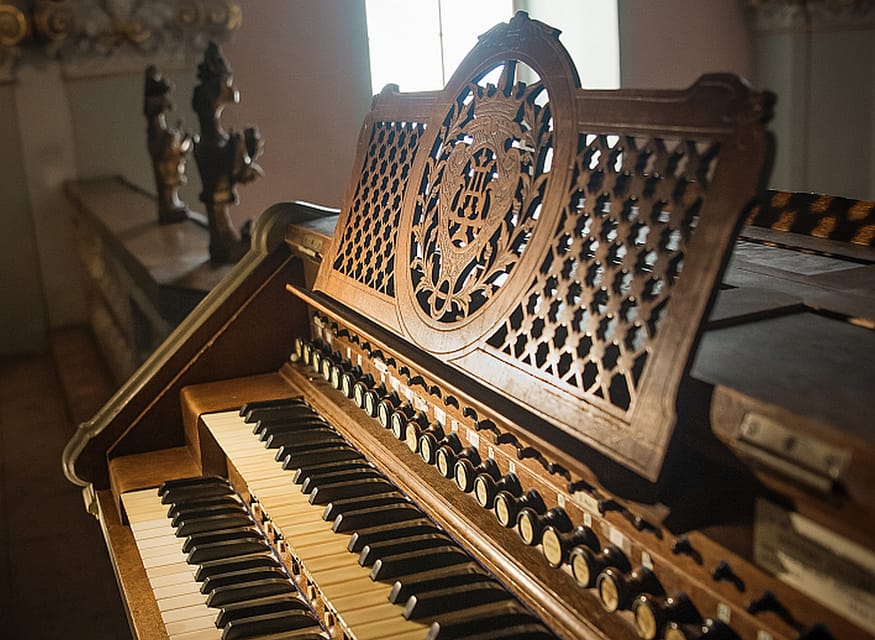
- an authentic instrument setup, not a staged sound-alike
- a setting that does not require extra travel across town for one short event
The reviews rating is high, and the themes are consistent: the performances come across with strong range and skill, the organ and venue combination feels impressive, and people like that the experience is easy to enter and enjoy.
You should also be aware of what is not included. There is no guide. That is not a problem, because you do get the intro and the leaflet, both in English and Hungarian, and you can follow along. But if you want a full narrated tour, this is not that kind of experience. This is the music, plus a helpful on-ramp.
Getting there near Váci út, simple meeting point, low hassle
The meeting point is at the corner of Váci utca and Nyáry Pál utca in Budapest’s 5th District, postal code 1056. It is quite near the Danube, so it is an easy anchor point if you are already spending time along that river area.
The experience starts there and ends back at the meeting point, which matters because you are not left wondering where to go next. You also get a small practical perk: skip the ticket line. That keeps things calm and prevents your evening from getting stretched out before the music even starts.
If you are planning dinner, I would schedule it either before you head in or after the concert finishes. The safest plan is to keep the hour before the start time flexible, so you can settle in.
Who should book this organ concert, and who should skip it
This is a strong choice if you:
- want a low-stress evening with live music that does not demand a deep background
- love classical names and want a mix of familiar favourites plus some variety like old Hungarian pieces
- appreciate the craft side of performance, where technique and musical structure matter
It also works well for couples, solo travelers, and anyone who wants a break from constant sightseeing.
You might skip it if:
- you are expecting a huge cathedral organ spectacle, because this is a 25-pipe instrument experience
- you want an interactive, guided storytelling tour, because the format includes a short introduction, not a full guide-led walk-through
- recording matters to you, since video and audio recording are not allowed
If your goal is a calm, cultured night in Budapest with real live music, this hits the mark.
Should you book this Budapest oldest working organ concert
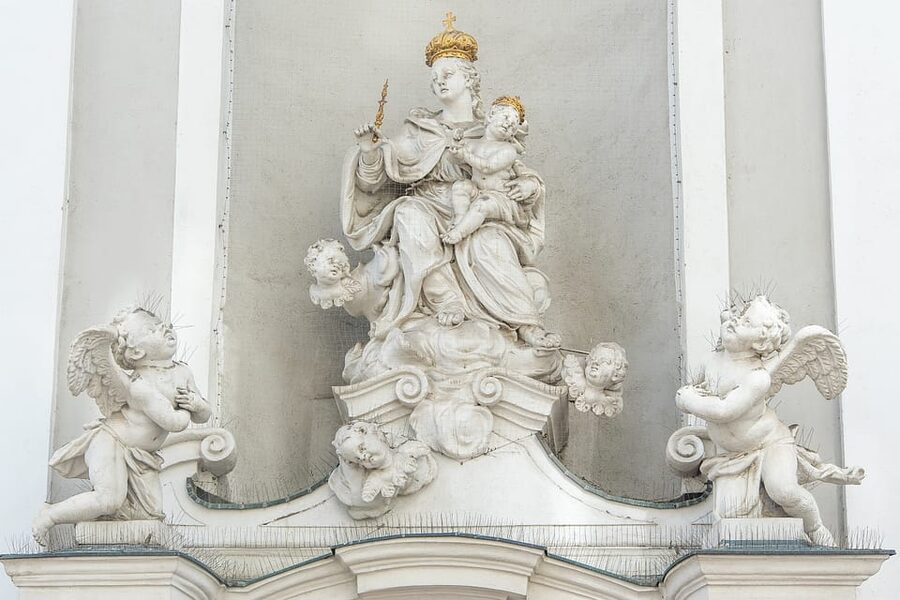
I think it is an easy yes for the right mood. Book it if you want a short evening program that combines an authentic instrument, a focused 70-minute format, and classical music delivered with real control. The rotation of artists also gives you something to look forward to, whether it is Miklós Teleki on most dates or a different organist on specific days, plus the chamber options with Nóra Ducza.
I would pause before booking if you are only interested in the biggest, most visually dramatic venues. This experience is more about sound, phrasing, and listening than spectacle.
If that sounds like your kind of night, reserve your spot for the date you are in town and plan on enjoying the church for what it is: a quiet room where the music takes the lead.
FAQ
How long is the concert?
The concert lasts 70 minutes.
Where does the concert take place?
It takes place at St. Michael’s Church, Budapest, at the meeting area near the corner of Váci utca and Nyáry Pál utca (1056), 5th District.
Who performs the organ?
The main organist is Miklós Teleki on most dates. On specific dates, other organists play, including Andres Uibo on 4 July and Tamás Lozsányi on 31 October.
Is it always solo organ, or can it be chamber music?
Depending on the date, the series offers solo organ or chamber music. Chamber concerts may include soprano Nóra Ducza with Miklós Teleki on the listed dates.
What languages are available for the introduction and leaflet?
There is a short introduction in English and Hungarian, and the programme leaflet is also available in English and Hungarian.
Can I record video or audio during the concert?
No. Video recording and audio recording are not allowed.
What is included in the ticket price?
Your ticket includes entry, the organ concert, access to the oldest working organ in Budapest, the classy program, and the programme leaflet and introduction in English. A guide and transportation are not included.
More Concerts in Budapest






More City Tours in Budapest






More Tour Reviews in Budapest



Recently added around Budapest



Concerts, compared.
 ★ 4.5Budapest Danube Cruise and Dinner Options, Live Music and DanceFrom $547,428 reviews
 ★ 4.1Evening Cruise including Drinks and Live MusicFrom $245,512 reviews
 ★ 4.7Candlelit Dinner River Cruise with Live MusicFrom $1292,154 reviews
 ★ 4.4Dinner Cruise with Live Music and Folk Dance ShowFrom $932,090 reviews
 ★ 4.5Budapest Danube River Candlelit Dinner Cruise with Live MusicFrom $1331,770 reviews
 ★ 4.7Classical Music Concerts in St Stephen’s BasilicaFrom $701,479 reviews
 ★ 4.4Prosecco Dinner Cruise with Live MusicFrom $1031,299 reviews
 Organ Concert in St. Stephen’s Basilica1,299 reviews
Browse the lists this tour appears in