
Tour review · BUDAPEST FOOD TOURS
Budapest Essential Walk&Food tasting
Budapest starts clicking fast on foot. This private 3 to 4 hour walk stitches together the city’s must-sees with real context, plus a proper food moment at the Strudel break. I especially liked the way the guide keeps things moving even when the weather turns nasty, and how a simple stop like a poppy seed strudel becomes part of the day instead of an afterthought. One thing to consider: it’s a lot of walking, and the schedule leans on decent weather.
The route is built like a story map, from Deák Ferenc Square through Heroes’ Square and City Park, then on to thermal-bath vibes, basilica viewpoints, and the Danube landmarks. After that, you head up to Castle Hill and finish near the Chain Bridge area. It’s priced at $90.11 per person, and for that you’re paying for a guide’s time and pacing, not paid admissions, since most stops are free.
Key highlights worth planning around

Private guide time, just you and your group
That matters when the day is rainy, windy, or you want the pacing adjusted.
Metro rides that connect the sights
You do not just walk the whole way. The Underground and Metro are part of the route.
City Park to Vajdahunyad Castle, by architecture lessons
You get a guided look at why these buildings look the way they do.
Thermal-bath history without making it a long spa detour
You focus on what Széchenyi Baths means to Budapest, plus quick pool glimpses if possible.
A focused food break at a strudel stop
It’s not a random snack. You get a planned stop for strudel and coffee.
Castle Hill views, then the Chain Bridge area
You finish with big panoramas and the stories behind iconic spots.
Still hungry? More Budapest tables and market stops
- Budapest Centre Food Tour with 10+ Tastings, Wine & Street Food★ 5.0 · 810 reviews
- Budapest Cooking Class & Market Tour with Local Guide & Wines★ 5.0 · 553 reviews
- Budapest Food Tour: Market to Tavern with 14+ Tasters & Wines★ 5.0 · 434 reviews
- Budapest Guided Food Tour with Drinks Included★ 4.8 · 320 reviews
A private afternoon built for big Budapest sights
This tour is designed for the afternoon, with daily hours listed from 3:00 PM to 9:00 PM. You meet at Deák Ferenc tér at the Lutheran church, then the walk starts right away with a short lead-in toward Elizabeth Square and the Opera House area. The vibe is efficient, but not rushed. It feels like someone showing you where to stand, what to notice, and why those buildings matter.
Because it’s private, the guide can slow down for questions, speed up when you’re keen, and handle weather changes without throwing the day into chaos. In one case, the plan kept going in a downpour and strong winds, and the guide even stayed in the game without acting like the city was personally offended by the weather.
Deák Ferenc tér, Elizabeth Square, and Opera House sights
Stop 1 starts at Deák Ferenc tér, at the stairs of the Lutheran church. From there, you do a short walk to Elizabeth Square and to the Opera House exterior area. You’re not trying to cram in a museum. You’re getting orientation.
What I like about this opener is that it sets the tone. Budapest’s center is about elegance and layers, and this first stretch helps you recognize style from the street. The Opera House is a great example. Even if you do not go inside, your guide can point out the kind of power and ambition that led to buildings like this, and how this district became a civic stage.
Practical note: this is a good section to ask any basic questions you have early on. Since you’re still near the start, you can recalibrate your timing and energy for the longer walking stretches later.
Heroes’ Square and City Park, with Vajdahunyad Castle in view
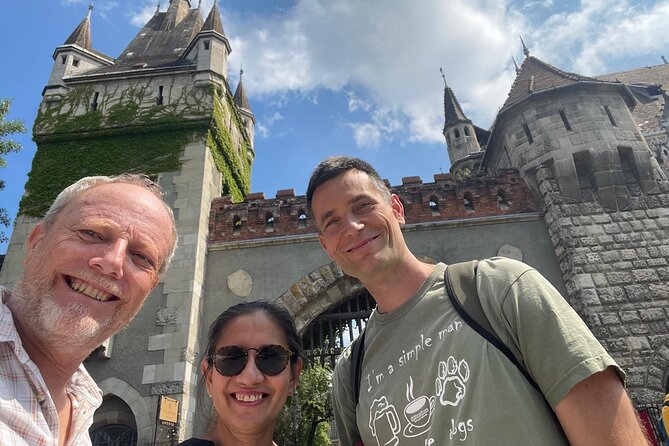
Next comes Heroes’ Square, plus a walk toward City Park. This is one of those spots where Budapest suddenly looks grand on purpose. You spend time learning about the opulent buildings you see from the outside, then move to City Park and Vajdahunyad Castle.
One of the most useful touches here is the transit piece. You hop onto the Millennium underground, described as Europe’s first underground. Even if you’ve never used it before, this is the kind of ride that teaches you where you are in the city. It breaks up the day and turns “getting there” into part of the experience.
Vajdahunyad Castle is the perfect match for this section because it rewards attention. It’s not just a pretty form. Your guide talks about the architecture, so you start seeing connections and influences rather than just shapes.
What to watch for: this stop can feel long if you’re tired, because it’s outdoors and exposed. If you know you fade after several hours on your feet, bring a light layer and plan water breaks.
Széchenyi Baths and Pool: thermal-bath history, quick and visual
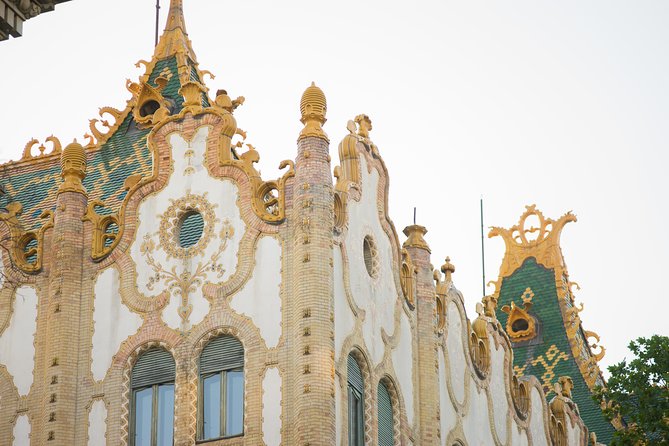
Stop 3 is Széchenyi Baths and Pool. The focus here is the history of Budapest’s most visited thermal bath. You learn why Széchenyi is such a cornerstone of the city’s identity, then you may get a glimpse of the outdoor pools by entering the side entrance, if possible.
This is a smart choice for a walking tour. It gives you the thermal-bath angle without turning your afternoon into a full spa program. You’ll come away knowing why people keep returning to these baths, not just that they exist.
If you’re the type who loves to understand the “why” behind famous places, this is where you’ll feel the guide’s strengths. You’re not stuck reading plaques. You’re getting context tied to the city’s evolution.
Consideration: if the weather is bad, the pool area view might be limited. Still, the history discussion and the overall visual cues around the complex usually work even when conditions aren’t perfect.
Budapest on foot, a few more ways
- Budapest: Buda Castle Walk with Saint Stephen’s Hall
★ 4.5 · 3,012 reviews - Budapest: 3-Hour Grand City Tour and Castle Walk
★ 4.3 · 1,437 reviews - Budapest Historical Sightseeing – Free Walking Tour
★ 5.0 · 1,302 reviews - Budapest All in One Small Group Walking Tour with Strudel Stop
★ 5.0 · 1,277 reviews - Budapest: Buda Castle District Walking Tour with a Historian
★ 4.9 · 867 reviews
St. Stephen’s Basilica, the founder story, and Hungary’s big figures
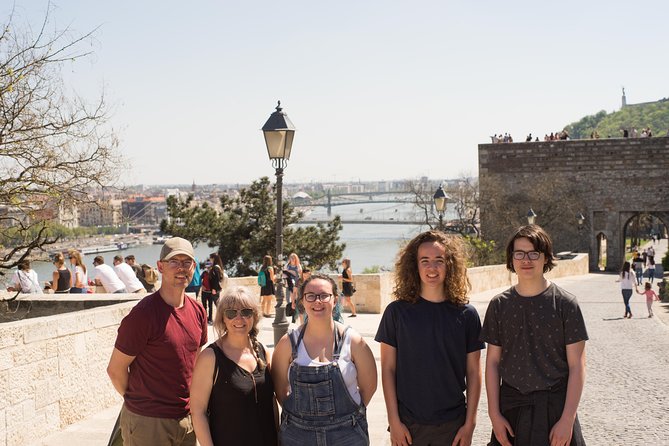
From Széchenyi Baths, the route brings you back underground toward St. Stephen Basilica. Stop 4 is the basilica itself, where you learn about the Catholic roots of Hungary and the state founder, King Stephen. You also get introductions to other major figures in Hungarian history, including Ferenc Puskás.
This stop works because it connects a religious landmark with national identity. You’re not only looking at a church. You’re learning how a country frames its story, who it credits, and how those narratives shape what people see as important.
Practical tip: basilicas often have rules around dress and behavior. Keep an eye on your clothing and plan for a quiet, respectful moment. The guide can help you know where to look for the most telling details.
Szabadság tér and the Strudel break with a coffee pause
Stop 5 moves you to Szabadság tér. Before heading into the bank district area, you take a short break at the Strudel house for strudel and coffee. This is where the day’s food part becomes concrete.
Here’s what makes it satisfying: it’s not a rushed snack between train platforms. It’s planned downtime right at the midpoint of the route. If you’ve been walking for a while, that coffee is not a luxury, it’s a reset button.
After the break, you walk toward the river-adjacent squares area and learn about last remaining Soviet statue, the American embassy, and the memorial of the German occupation. Even if you’re not a politics person, this is a strong place to connect architecture and symbolism.
What I’d suggest: keep your eyes up and your questions ready. When the guide points out the meanings behind monuments, you’ll start seeing the city differently. Hungary’s 20th century is written in public spaces.
The Parliament Building, Kossuth tér, and Shoes on the Danube
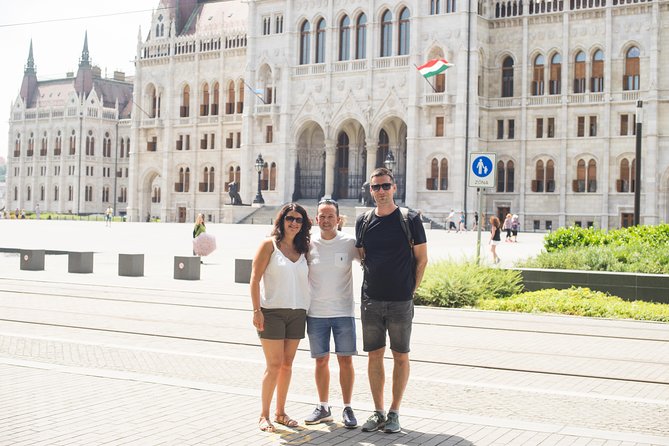
Stop 6 is Hungarian Parliament Building, with Kossuth tér as your viewpoint. You spend time on architecture, history, and politics of past and present issues. Then you visit the Shoes on the Danube Promenade close to the Parliament area.
This pairing is effective. Parliament is about power and design, and the Shoes memorial is about human cost. Together, they make the city feel real, not just scenic.
If you like tours that make you stop and look instead of just walking past, this section delivers. The guide can explain what you see around the river and why the placement matters. You end up with a clearer picture of how the Danube is both scenery and witness.
Consideration: this area can get busy, even in the afternoon. If you want the best photos, listen to the guide’s timing cues and step where they recommend.
Castle Hill by Metro 2: Fisherman’s Bastion panoramas and Royal Palace area
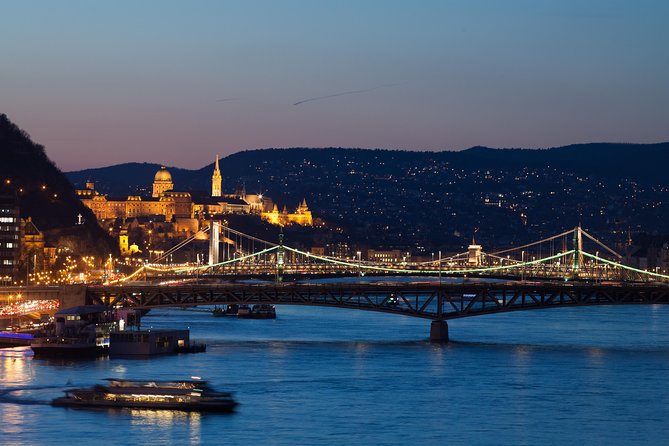
After Parliament, you take Metro 2, the red line under the Danube, to reach the top of Castle Hill. Stop 7 is Fisherman’s Bastion. You start with a panoramic view from the lookout terrace, then continue your historical walk toward the Royal Palace area.
This is one of those “you’ll thank yourself later” sections. Views from Fisherman’s Bastion give you a sense of how the neighborhoods stack and why Castle Hill became the city’s natural crown. It also helps you connect what you saw downstairs at the Danube with what you see up here among the towers.
The historical journey matters too. You’re not just snapping photos and moving on. You learn how the place fits into the larger picture of Budapest’s past.
Practical tip: Castle Hill means stairs and steep terrain. Even if the route includes a funicular later, wear shoes with decent grip. Your legs will notice the difference.
Széchenyi Chain Bridge finale, plus funicular and lion stories
Stop 8 is Széchenyi Chain Bridge. You walk down from Castle Hill along the funicular. The guide shares stories about the iconic first permanent bridge of Budapest, including the lions.
Finishing near the bridge is a smart way to end. The city opens up again, and the walk feels like it returns you to street level where Budapest is all movement, trams, and river views.
One small detail to confirm before you go: the tour’s end point is listed as Széchenyi Lánchíd, but the narrative also frames the finish near Szentháromság tér just off Matthias Church. Either way, you’re finishing in the Castle district zone, close enough to get great evening photos once you’re on your own.
Price and value: what $90.11 buys you
At $90.11 per person for about 3 to 4 hours, the value depends on what you want. You are not paying for multiple paid attractions. Most listed stops have free admission. Instead, you’re paying for:
- A private guide’s time and pacing
- Context that turns landmarks into a story
- Transit planning between districts using metro and underground lines
- A built-in food stop for strudel and coffee
That mix is why it’s a solid deal for short visits. If you only have one afternoon and you want the big highlights, guided walking beats hopping randomly from place to place. The free admissions also make the math cleaner, since you are not constantly paying entry fees on top.
Also, the private format changes the experience. You can ask about architecture while you’re standing in front of it, and you can get clarification during the metro or tram segments instead of waiting until later.
Weather and timing: how to plan so the day stays fun
This experience requires good weather. If it gets canceled due to poor weather, you are offered a different date or a full refund. The good news is that the schedule is flexible in the sense that the guide can keep the route moving when possible, even if you get soaked.
Timing runs within the operator’s posted hours (3:00 PM to 9:00 PM). Even though the walk is listed as 3 to 4 hours, a real-world day can stretch longer depending on pace and conditions. In one example, the walking period ran until close to 6:00 PM and the guide helped get the participants back to their hotel afterward.
If you hate late finishes, keep that in mind. For many people, an evening start is actually ideal in Budapest because you get softer light for photos near key viewpoints.
Who should book this walk-and-food tasting?
This is a great fit if you want:
- A private guide for one afternoon
- A mix of classic landmarks, architecture talk, and meaningful monuments
- A short food moment that feels planned, not random
- Efficient use of the city’s metro lines, including the Millennium underground and Metro 2
It may not be the best choice if you have limited mobility or dislike stairs and uneven pavement. The tour is listed as suitable for most people and service animals are allowed, but it is still a walking-heavy route through varied terrain.
Should you book Budapest Essential Walk and Food Tasting?
If you’re trying to get your bearings quickly and you like walking tours that actually connect the dots, I’d book it. The price works well because most stops are free and the guide makes the time count, from church exteriors to Castle Hill panoramas and the Danube memorial.
Pick it especially if you want a guide who can handle real conditions, including rain, and keep the story going. If you’re also excited by the idea of a planned strudel and coffee break, this tour nails that mid-day reset.
On the flip side, if your priority is sitting in museums for hours or you want lots of guaranteed indoor time, you might prefer a more indoor-focused day. For most people, though, this is a practical, very Budapest-style afternoon plan.
FAQ
How long is the Budapest Essential Walk and Food tasting?
The tour is listed as lasting about 3 to 4 hours.
What does the tour cost?
The price is $90.11 per person.
Is the tour private?
Yes. It is a private tour/activity, meaning only your group participates.
Where do we meet and where does the tour end?
You meet at the Lutheran Church of Ferenc Deák Square, Budapest, Deák Ferenc tér 4, 1052 Hungary. The experience end point is listed at Széchenyi Chain Bridge, Budapest, Széchenyi Lánchíd, 1051 Hungary.
What kind of tickets are used?
You receive a mobile ticket.
What should I expect regarding admissions?
The stops listed include free admission at each listed stop, including Heroes’ Square, the thermal-bath stop, St. Stephen’s Basilica, and the major monuments along the route.
Is the tour affected by weather?
Yes. This experience requires good weather. If it is canceled due to poor weather, you are offered a different date or a full refund.
What is the cancellation policy?
Free cancellation is available. You can cancel up to 24 hours in advance for a full refund. If you cancel less than 24 hours before the start time, the amount paid is not refunded.
More Walking Tours in Budapest




More Budapest Food Tours





More Tour Reviews in Budapest





Recently added around Budapest




Budapest Food Tours, compared.
 ★ 5.0Budapest Cooking Class & Market Tour with Local Guide & WinesFrom $99553 reviews
 ★ 5.0Budapest Food Tour: Market to Tavern with 14+ Tasters & WinesFrom $76434 reviews
 ★ 4.8Budapest Guided Food Tour with Drinks IncludedFrom $67320 reviews
 ★ 5.0Budapest Food Tasting Tour with Nelli & her local guidesFrom $240190 reviews
 ★ 4.5The Award-Winning Private Food Tour of Budapest: 6 or 10 TastingsFrom $133185 reviews
 ★ 4.8Hungarian Cuisine in the Market Hall (german)From $28146 reviews
 ★ 5.0Budapest Street Food Tour with Local Snacks, Dessert and BeerFrom $139121 reviews
Browse the lists this tour appears in