
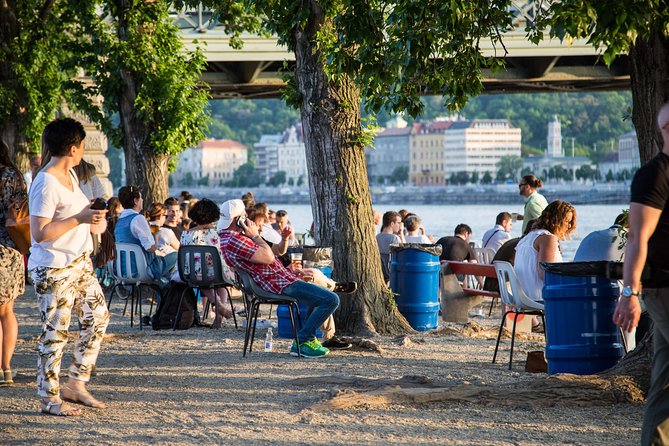
Tour review · WALKING TOURS
Budapest Grand Walk
Budapest makes sense on foot. This 4-hour small-group walk packs major Pest sights and meaning-filled stops like the Shoes on the Danube Memorial, with a local guide telling you what actually shaped the city. You also start with Hungarian sparkling wine and get a coffee break along the way, so the route feels like a real afternoon, not a sprint.
The main thing to consider is pace. You will do a moderate amount of walking, and the tour can run a bit long if you are chatting and not rushing.
Key highlights at a glance
- Sparkling wine aperitif at the start, plus an included coffee or tea during the tour
- Pest big sights by foot, including St. Stephen’s Basilica and Andrássy Avenue landmarks
- Old metro line moment, a quick ride on continental Europe’s oldest metro system
- Jewish Quarter area stops, with views near the Grand Synagogue area and Király utca
- Danube promenade panoramas, including Parliament and the Chain Bridge from the river side
- Hard history on the riverbank, with the Shoes on the Danube and other monuments
Budapest on foot, a few more ways
- Budapest: Buda Castle Walk with Saint Stephen’s Hall★ 4.5 · 3,012 reviews
- Big Bus Budapest Hop-On Hop-Off Bus and Walking Tour★ 3.5 · 2,206 reviews
- Budapest: Buda Castle District Walking Tour★ 4.6 · 2,108 reviews
- Budapest City Landmarks Walking Tour in 2 Hours★ 5.0 · 2,048 reviews
Starting at Tasting Table Budapest with wine and quick orientation

Your tour begins at Tasting Table Budapest (wine shop) in the Palace district, at Bródy Sándor u. 22, 1088. It is a mid-afternoon start, which is a smart time to do Budapest on foot. The light is nicer for photos, and you are not fighting the early-day crowds that can make a walking day feel like a chore.
Before you head out, you start with a glass of Hungarian sparkling wine. That little moment matters more than it sounds. It sets a relaxed tone right away, and it is a good way to wake up your brain for history and street-level details. In my experience, tours like this work best when you start feeling like you are on a stroll with a friend who happens to know how the city was made.
Right away, your guide also frames what you are going to see. This tour is not just a list of sights. It is a moving timeline across Pest, the Jewish Quarter area, and over to the Danube, with context about how Hungary’s ups and downs shaped what you see today.
Pest highlights on foot: Andrássy Avenue, Opera House, and the National Museum
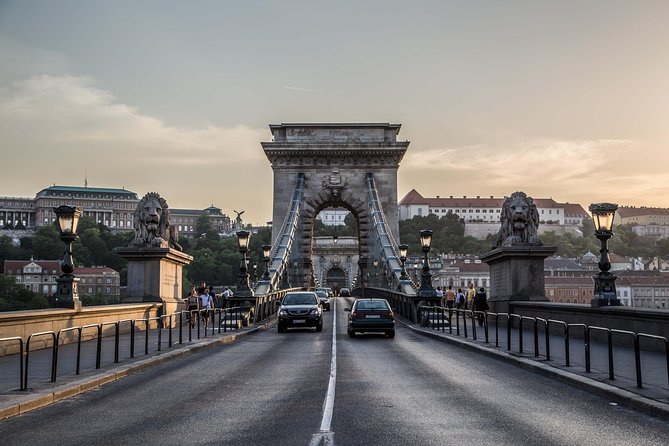
After the wine, you walk through Pest’s handsome streets, with your guide pointing out both major landmarks and smaller, easy-to-miss details. This is the part that makes a “grand walk” live up to the name. Budapest’s layout rewards you for slowing down. You start to notice how neighborhoods connect, how views open and close, and how the architecture changes the mood block by block.
You pass by Andrássy Avenue, one of the city’s signature streets. Along the way you get a close look at the Hungarian State Opera House, a neo-Renaissance building on Andrássy út designed by Miklós Ybl. Even if you are not an opera person, this stop is useful because it teaches you how the city expresses pride and status through grand public buildings.
You also see the National Museum area and buildings in the Palace district that have definitely seen better days. That is not a flaw. It is part of the story. The city did not get shaped by perfect eras only. You get a more honest picture of Budapest when you can see both the famous fronts and the places where time has left its mark.
Then comes an important thread of modern history. You pass the Hungarian National Radio Building, described as an important site during the 1956 Revolution. This is the kind of stop where a guide earns their fee. A landmark becomes more than a photo when someone explains why it mattered.
St. Stephen’s Basilica and the oldest metro line ride
One of the classic Budapest anchors is St. Stephen’s Basilica (Szent Istvan Bazilika). You get a stop here long enough to orient yourself with the church’s role in the city and why it is named for the first King of Hungary. There is also a detail that often draws people in: the mummified right hand of Stephen is housed in the church.
This stop can be purely visual if that is your style, but it is also a useful reset. After walking and street-level history in Pest, you get a chance to slow down at a huge, meaningful landmark. Even short visits like this can help you understand the city’s spiritual and national symbolism.
Then you hop onto a small transit slice. The tour includes a few short trips on public transportation, including the continent’s oldest metro line. This is one of those “tour facts” that becomes practical in real life. It helps you understand how the city moves and how transit shapes daily life, not just tourism routes.
You also take a coffee break at a favorite local café during this stretch. Since coffee or tea is included, this is one less budget headache. And if you do not drink coffee, you can still use the pause to refuel and regroup, which is exactly what you want in a 4-hour walking day.
Jewish Quarter stops: Grand Synagogue area, Gozsdu udvar, and Király utca
The tour shifts into the former Jewish Quarter area, where the city’s story becomes heavier, then more human again. The route focuses on notable places and the street energy around them, not on a museum-style experience. That is a good match for a walking tour, because the area is meant to be understood at street level.
You see the Grand Synagogue area, described as Europe’s largest. Even if you view it from outside, it is still a strong moment because your guide ties it to why the neighborhood mattered. You also pass the Gozsdu udvar complex and walk by Király utca, a lively street that helps you visualize everyday life, not only historical events.
Important note: this is one of those parts where you should pay attention to how the guide frames what happened in the area during the 20th century. Your tour connects this section with the later Danube memorial stops, so you are not just seeing sights. You are also learning how the city remembers loss.
From a value standpoint, this is where the walking tour format really shines. You get a coherent story linking architecture, streets, and memory, without needing to switch plans or buy separate tickets for multiple locations.
- Budapest: City Highlights Cruise with Welcome Drink
★ 4.6 · 35,610 reviews - Budapest: Unlimited Prosecco, Beer and Aperol Spritz Cruise
★ 4.8 · 25,310 reviews - Budapest: Széchenyi Spa Day Ticket with Optional Upgrades
★ 4.3 · 23,911 reviews - Budapest: Nighttime or Daytime Sightseeing Cruise
★ 4.2 · 21,062 reviews - Budapest: 1-Hour Evening Sightseeing Cruise with Drink
★ 4.5 · 8,330 reviews
Heroes Square and the Danube side: Parliament, Chain Bridge, and Buda Castle views
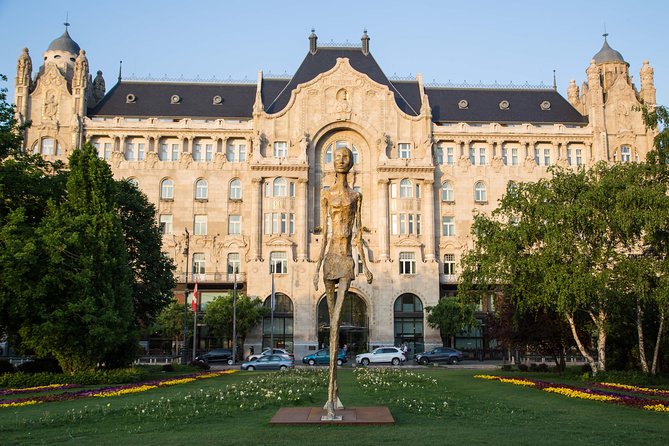
After the Pest core, the tour brings you to the Danube corridor. Along this stretch you get the kind of views that make Budapest look like a movie set, especially if you have just arrived and need to get your bearings fast.
You admire Parliament on the neo-Gothic Danube bank. It is one of the obvious “must sees,” but what your guide does well is connect the building to the city’s identity and public life. Then you get the Chain Bridge area, with strong river panoramas that put Pest and Buda in the same frame.
Heroes Square is also part of the day. It is included for a reason. It helps you anchor your understanding of Hungarian national symbolism at a large scale, before you move into more intimate, street-level history.
Then, at the end of the guided portion, you finish near the Chain Bridge. The idea is practical: you get a launch point for what comes next, especially if you want to wander into the Buda Castle area on your own right after the tour.
If you have the energy, this makes your day efficient. Instead of finishing somewhere random, you end where you can naturally continue. If you are tired, it still works because the hardest “where do I go now?” question is solved for you.
Danube memorials and the Soviet monument: how the tour handles hard topics
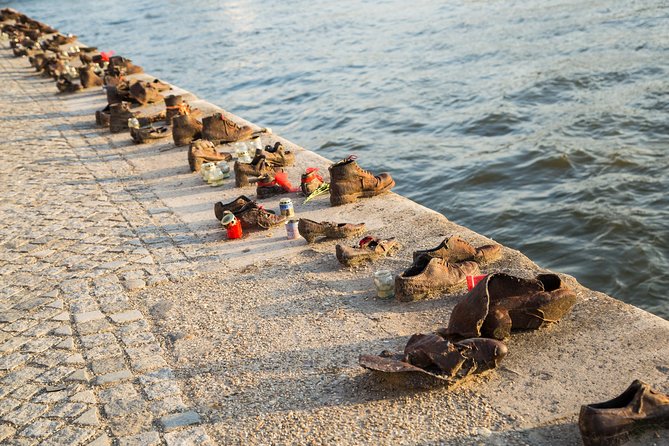
One of the most powerful parts of this experience is the segment along the Danube where monuments focus on tragedy and remembrance. The highlight is the Shoes on the Danube Holocaust Memorial. This is not a quick glance-and-go stop. Your guide explains what you are seeing and why it matters.
You also encounter other memorials and monuments in the same riverbank area, including a Soviet Monument. You even get context for why memorials reference specific figures, including a US major and Ronald Reagan. That may sound random until your guide connects it to the broader story of how remembrance works in public space.
This is a tour that respects the weight of the subject. You should still think of it as a guided walking experience, not a documentary. But the payoff is real: your photos become more meaningful when you understand the why behind them.
In terms of how this affects your overall trip planning, this section is why I think the tour earns its price. You are not paying only for sights. You are paying for an interpretive thread that makes the difficult parts coherent.
Price and value: what $125 buys in a 4-hour “grand walk”
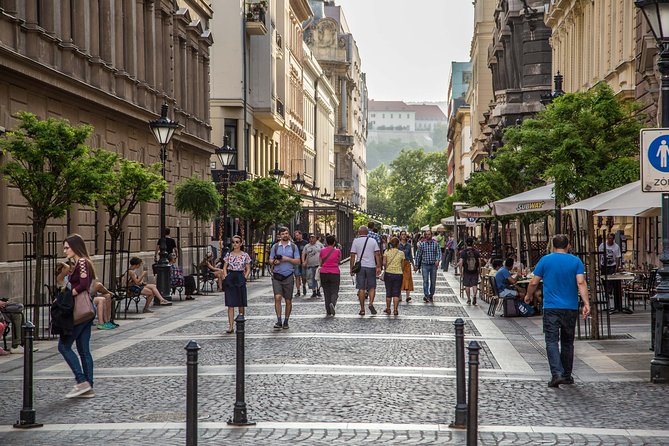
At $125 per person for about 4 hours, the price is middle-of-the-road for a guided, multi-sight walking tour in a major European capital. What makes it feel like value is not just the guide. It is the mix of inclusions and transportation.
You get:
- English-speaking local guide
- a glass of Hungarian sparkling wine at the start
- coffee or tea during the tour
- short public transportation rides, including the oldest metro line
- plenty of stops for photos and questions
- mobile ticket convenience
Add that up and you are getting more than a walking lecture. You are getting a guided route that connects neighborhoods and landmarks efficiently, plus small “life in Budapest” touches like wine and coffee that would otherwise turn into extra purchases.
Group size also affects value. The tour runs as a shared small group, with 2 to 8 guests. Smaller groups usually mean better questions and less time spent waiting at each corner. If you prefer more room or a fully tailored route, you can choose the private tour option.
Timing matters, too. Because you start mid-afternoon and end near the Chain Bridge, you can often pair this with a later evening plan without having to rework your day.
Group size, shoes, and who this tour fits best
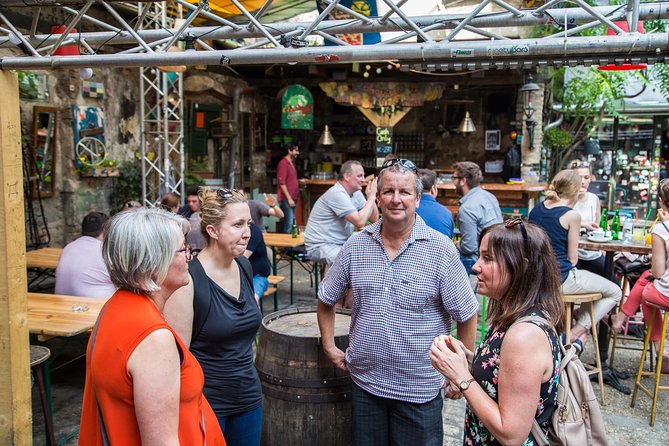
This tour works best if you like to learn while you walk. If you want a strict museum timetable, you might find some stops too short. If you want city context and an efficient way to see Budapest’s major landmarks and key neighborhoods in one go, this format is a strong match.
Wear comfortable shoes. The walking is described as moderate, but it is still a lot of ground in four hours, especially if you stop often for photos. If you are the type who likes to linger at every viewpoint, you might end up feeling the tour running long. That is not bad. Just go in with the right expectations.
It also helps if you are doing Budapest as a first visit or as a short stopover. The structure gives you instant orientation: Pest icons, the Jewish Quarter area, the Danube memorial zone, then a finish where you can keep going toward Buda Castle.
Finally, consider your comfort with history. This day includes reminders tied to the Holocaust and other political eras. The guide’s job is to keep it understandable and respectful, but you should still be ready for emotionally heavy moments.
Should you book Budapest Grand Walk?

Book this if you want a single, well-structured guided walk that blends major Pest sights, Danube viewpoints, and neighborhood context, with real money-saving inclusions like wine and coffee. It is especially worth it when you want to connect the dots between places that look beautiful in photos and the history behind them.
Skip it or swap to a different style if you hate walking, or if you prefer self-guided wandering with no scheduled stops. Also, if you want deep museum time, this tour is designed more for streets, viewpoints, and quick orientation than for long indoor visits.
If you are in Budapest for the first time, or you just want to get your bearings while someone makes the story make sense, this “grand walk” is a smart way to start.
FAQ
What is the duration of the Budapest Grand Walk?
It is about 4 hours.
How much does the tour cost?
The price is $125.00 per person.
Where do I meet the guide?
You meet at Tasting Table Budapest, Bródy Sándor u. 22, 1088 Hungary.
Where does the tour end?
The tour ends near the Chain Bridge, at Széchenyi Lánchíd, Budapest, Hungary.
What is included in the tour price?
An English-speaking local guide is included, plus a glass of Hungarian sparkling wine at the start, a coffee break (one coffee or drink included), and coffee and/or tea. The tour also includes short trips on public transportation.
Does the tour include public transportation?
Yes. It includes a few short trips on public transportation, including a ride on Europe’s oldest metro line.
What language is the tour offered in?
It is offered in English.
How big are the groups?
This is a shared small-group tour with a maximum of 8 travelers, and options exist for larger group tours or a private tour.
Can I get a refund if I cancel?
This experience is non-refundable and cannot be changed for any reason.
More Walking Tours in Budapest






More Tour Reviews in Budapest






Recently added around Budapest




Walking Tours, compared.
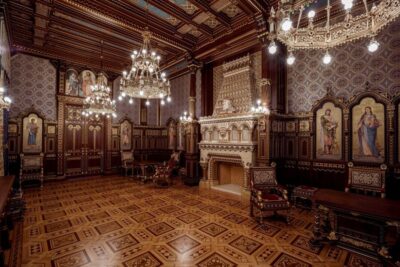 ★ 4.5Buda Castle Walk with Saint Stephen’s HallFrom $293,012 reviews
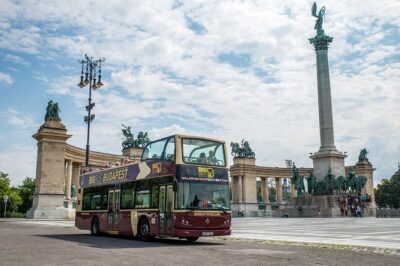 ★ 3.5Big Bus Budapest Hop-On Hop-Off Bus and Walking TourFrom $422,206 reviews
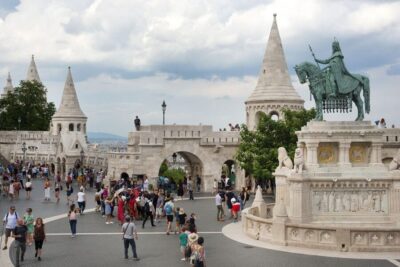 ★ 4.6Buda Castle District Walking TourFrom $142,108 reviews
 ★ 5.0Budapest City Landmarks Walking Tour in 2 HoursFrom $32,048 reviews
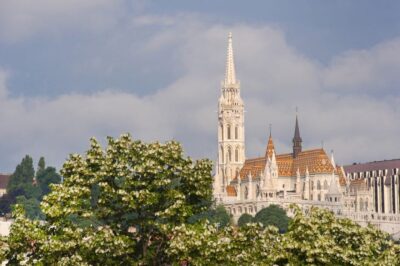 ★ 4.83-Hour Orientation Walking Tour of Buda and PestFrom $411,834 reviews
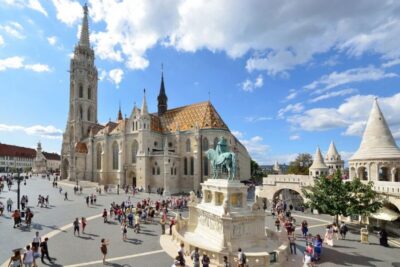 ★ 4.33-Hour Grand City Tour and Castle WalkFrom $491,437 reviews
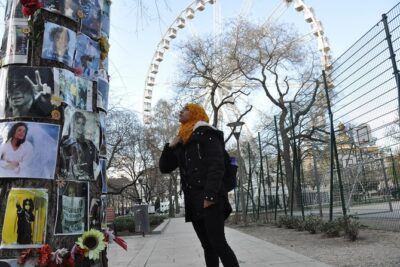 ★ 5.0Budapest Historical Sightseeing – Free Walking TourFrom $31,302 reviews
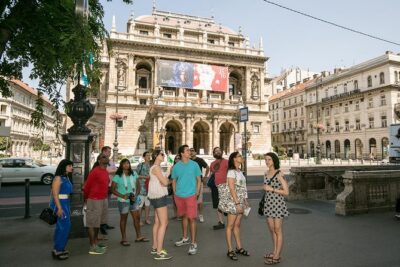 ★ 5.0Budapest All in One Small Group Walking Tour with Strudel StopFrom $1001,277 reviews
Browse the lists this tour appears in