
Tour review · GUIDED
Budapest: Guided Tour of the House of Music, Hungary
Budapest’s sound lives in the building.
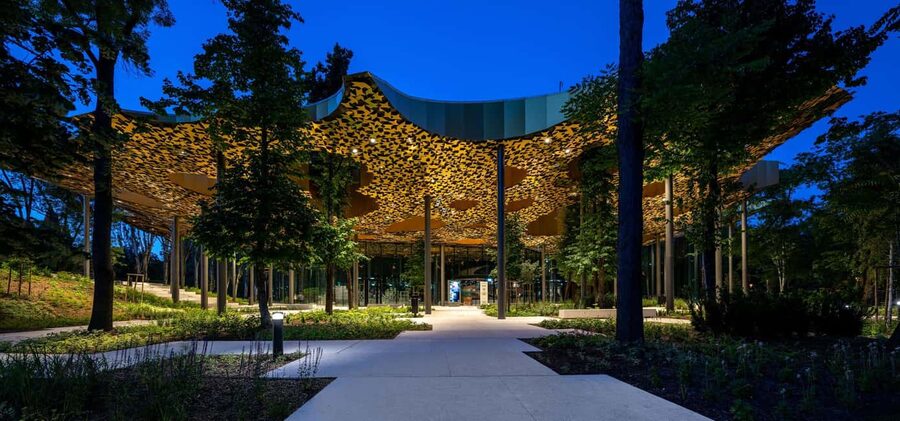
This guided tour is a smart way to see Sou Fujimoto’s House of Music and appreciate why the architecture feels like part of City Park. I particularly love the undulating metal roof that shapes light and acoustics, and the spiral staircase that feels like public art. One thing to consider, you will not get inside the exhibitions or special audio rooms, so this is more architecture and spaces than museum time.
The experience starts in the roomy foyer and keeps you moving through open levels, lots of glass, and warm interior details like exposed concrete and wood. If you land on a guide like Dora (a name I saw tied to consistently high praise), you are in for clear, upbeat explanations and good question time, not a rushed lecture.
Quick hits before you go
- Floating roof canopy made of thousands of leaf-like metal elements, designed for both look and sound.
- Glass and open levels that connect inside and City Park, with natural light doing most of the work.
- Spiral staircase highlighted as a true architectural showpiece.
- Concert hall and public spaces included, but you skip the exhibition galleries.
- Sustainability by design, including geothermal energy and rainwater harvesting.
Other tours with a local leading the way
- Budapest: Parliament Building Entry Ticket and Audio Guide★ 4.5 · 3,844 reviews
- Budapest: Opera House Guided Tour★ 4.6 · 1,533 reviews
- Budapest Small-Group Guided Tour on MonsteRoller e-Scooter★ 5.0 · 1,517 reviews
- Budapest: Guided Tour of the Parliament Building in Spanish★ 4.6 · 1,240 reviews
House of Music Budapest: the architecture-first kind of tour
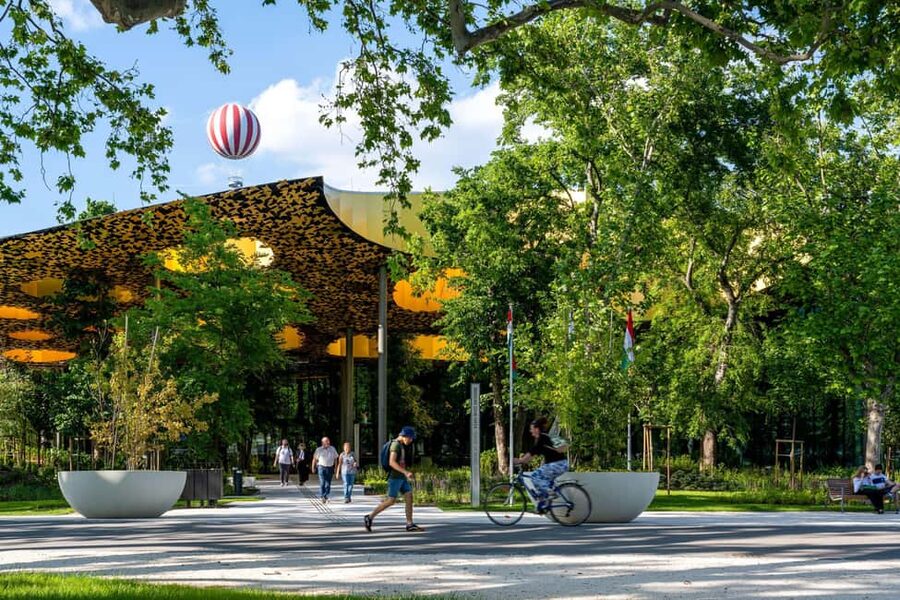
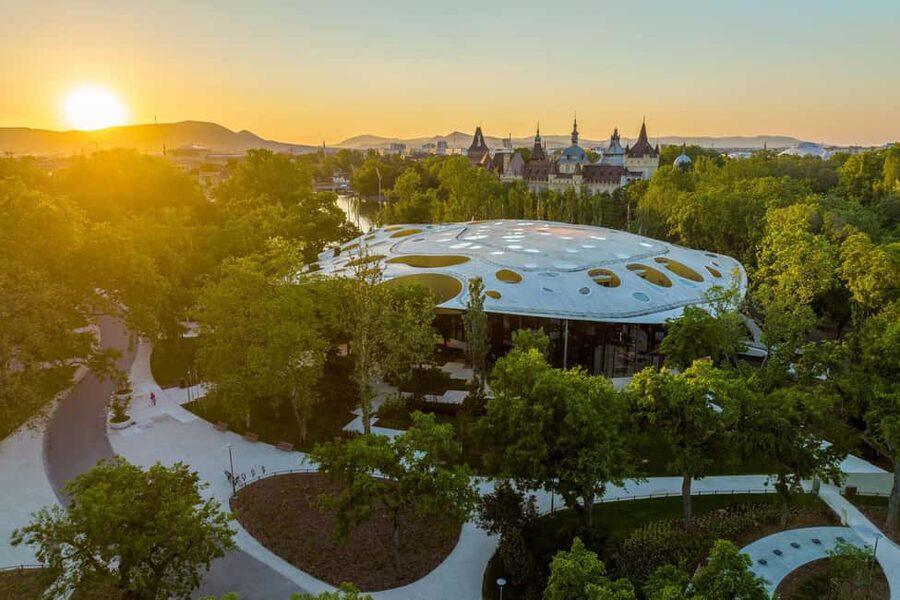
The House of Music in Budapest is not trying to be subtle. It is a cultural building that behaves like a landscape feature. From outside, you notice the roof right away: an undulating, almost floating canopy made up of thousands of leaf-like metal elements. It looks light and sculptural, but the tour explains it also has practical jobs, like shaping acoustics and bringing natural light into the building.
Inside, the vibe is open and airy. You move through broad spaces with lots of glass, so the park light spills in. The tour also points out textures that would be easy to miss on your own, like exposed concrete and detailed wooden elements that soften the modern look. If you care about how form affects function, this is a rare kind of stop. It is architecture you can read, not just architecture you glance at.
The 1-hour format is one of the best parts of the value. For a little over an hour, you get the building’s main ideas, and you get them from a live guide who can connect the dots between design, sound, and community use.
Where you start: the foyer, glass, and getting oriented fast
You begin inside the foyer, and that matters more than you might think. The foyer is spacious, and it gives you a quick mental map of how the building is layered. You are not thrown directly into a maze of rooms. Instead, you get a comfortable launch point where you can see the circulation paths and the way the park is pulling in through those big glass areas.
There is also a café in the mix. Even if you are not there to linger, it helps you understand the building as a public place, not only a ticketed venue. The guide typically uses the foyer vantage to frame what you will see next: roof shapes outside, then structure and light effects inside.
One practical tip: if you want the best photos, treat the foyer as your first stop for wide shots. With glass around you and a view toward the park direction, you can usually build a clean composition early, before crowds shift and people filter into the levels.
The floating roof canopy and the circular openings idea
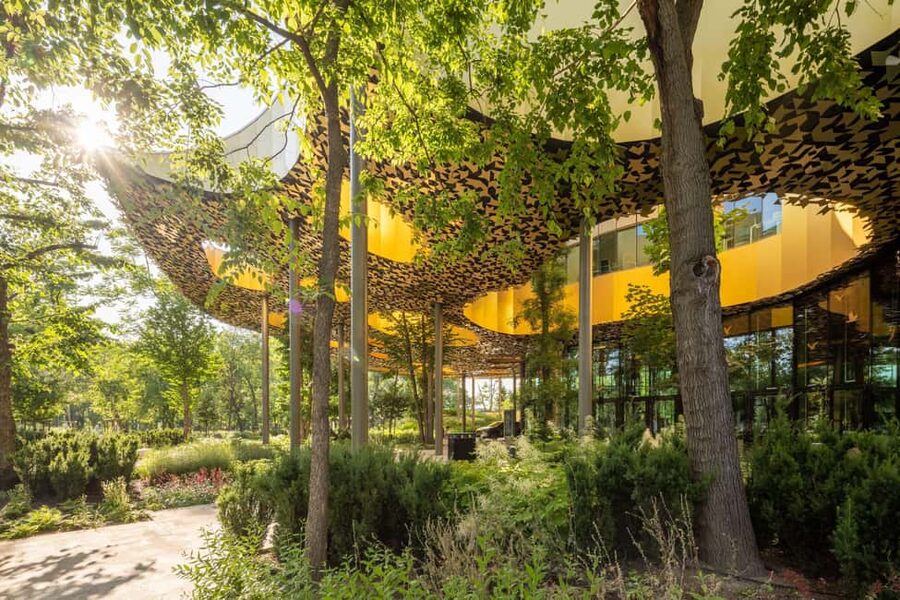
The tour pulls you outdoors early to set context. The roof is the centerpiece. Those leaf-like metal elements are not random decoration, the guide explains how the roof works with the building’s purpose. It affects acoustics and helps with natural lighting. Even when you are just walking through a guided circuit, you end up understanding why the building looks like it is moving.
You will also hear about the roof being described in inventive terms like a floating roof. The design language is playful, but it is also engineered. You see how the canopy creates a rhythm overhead and gives the façade a softer, organic feel.
Then comes a detail that makes this stop feel less generic: the building includes circular openings that echo the overall design logic. They are small enough that you might miss them on a quick self-guided walk, but during the tour they get pointed out as part of the structure and the flow of space.
If you care about design, this roof section is a highlight because it gives you an anchor for everything else you see inside.
Inside the structure: exposed concrete, warm wood, and lots of light
After the exterior orientation, you move back inside, where the tour shifts from sculptural roof effects to the building’s bones. You will see exposed concrete surfaces, and you will also notice the careful warmth of wood elements. That contrast is a big reason the interior feels inviting, even though the overall architecture is modern and bold.
The guide typically emphasizes how the building connects indoors and outdoors. Glass walls and large openings make the park feel like part of the room. You are not looking at a building surrounded by nature. Instead, you are seeing a building shaped like it grew out of the site.
This part matters for first-time visitors because it helps you stop thinking of the House of Music as one isolated building. You start to see it as a layered set of spaces, shaped for sound, people, and movement.
- Budapest: City Highlights Cruise with Welcome Drink
★ 4.6 · 35,610 reviews - Budapest: Unlimited Prosecco, Beer and Aperol Spritz Cruise
★ 4.8 · 25,310 reviews - Budapest: Széchenyi Spa Day Ticket with Optional Upgrades
★ 4.3 · 23,911 reviews - Budapest: Nighttime or Daytime Sightseeing Cruise
★ 4.2 · 21,062 reviews - Budapest: 1-Hour Evening Sightseeing Cruise with Drink
★ 4.5 · 8,330 reviews
The spiral staircase: the Instagram moment with real design purpose
The spiral staircase is treated like a centerpiece. It is not just a way to get from one level to another. During the tour, it is described as an artful structure, and that is exactly how it plays in real life. You can watch people drift toward it without being asked. It gives the tour a physical focal point, a place where you naturally pause.
The staircase also reinforces the theme of movement and acoustics. You are seeing how the building organizes vertical space while keeping the flow open. Instead of hiding circulation behind a wall, the design exposes it. That is part of the experience, and it is part of the building’s identity.
If you want to take photos, take a moment here to check angles. The spiral gives you repeating shapes, and glass around you can reflect light in ways that can make photos look cleaner or messier depending on where you stand.
City Park views and why the setting is part of the story
The House of Music sits in Budapest’s City Park area, and the tour repeatedly returns to the setting. You get panoramic views through openings and glass sections, and you also hear how the design is framed as a continuation of the park, blurring the boundary between inside and outside.
This is one of those details that can sound poetic until you see it. When you stand where the guide suggests, you feel how the building’s curves and roofline echo outdoor forms. The park stops being background, and starts behaving like part of the interior environment.
For planning, this means the tour fits nicely into a broader day in the park. If you are already walking City Park, this makes a strong companion stop because the building’s whole identity is tied to the outdoors.
Concert hall, library, archives, and outdoor spaces: what you do see
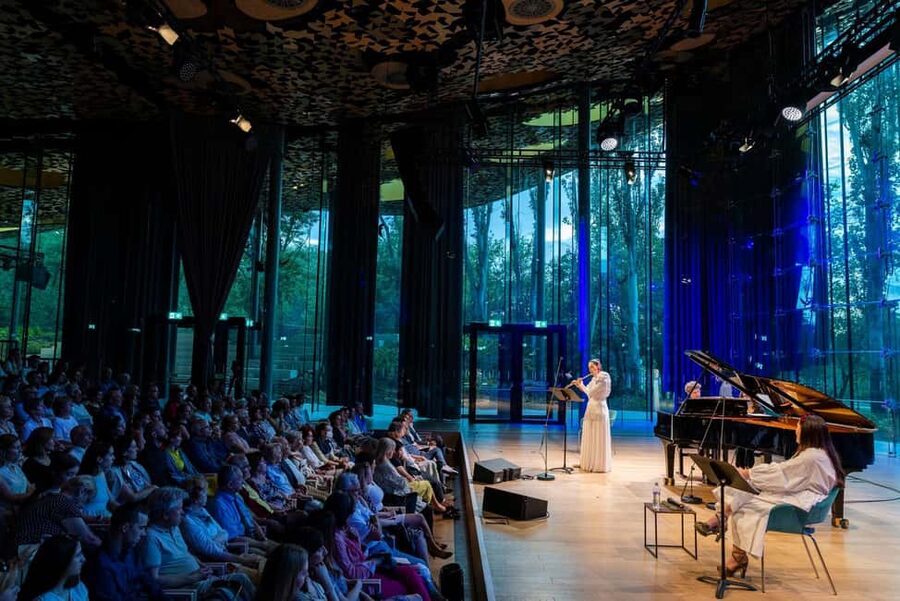
The tour includes several named areas and functional spaces. The guide shows you the concert hall, the library and archives, plus the beautiful outdoor spaces around the building and a gift shop at the end.
Here is how that usually plays for your time. You are not getting a long, in-depth museum session. Instead, you get a guided walk through key rooms and levels, with the guide explaining what the spaces are meant to do for music and community life.
The concert hall inclusion is valuable because it ties the architecture to the building’s main purpose. You hear how the shape, materials, and roof structure were carefully designed to optimize sound quality in performance spaces and public areas. Even if you are not experiencing a performance during the tour, it is still the closest thing to understanding the building as an instrument.
The library and archives stop is also a nice balance. It reminds you this is not only about sound during a performance. It also supports music learning and preservation. If you like buildings that serve multiple roles, you will appreciate that the tour points out open levels intended for music education and community engagement, even without access to exhibitions.
The sound rooms you skip: why that might be fine
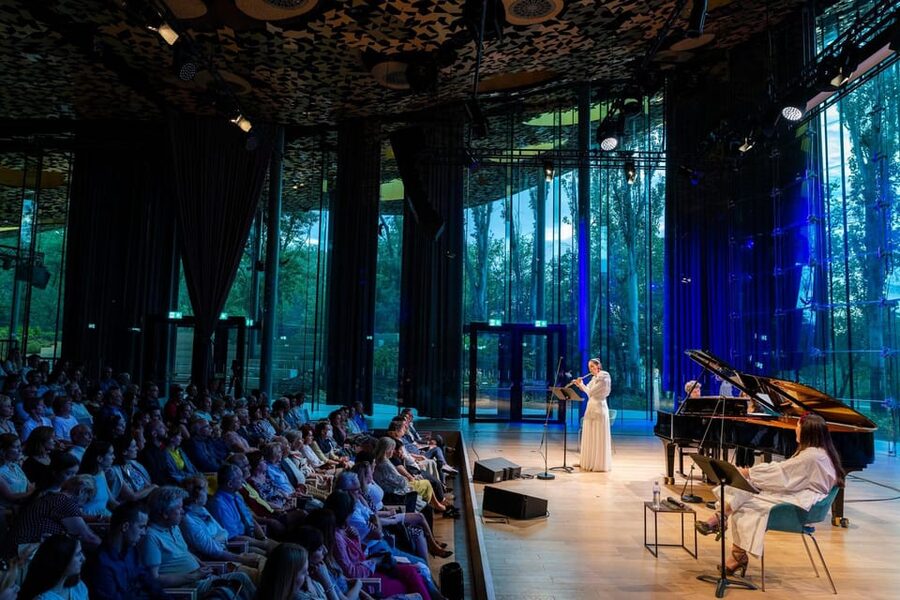
A clear heads-up: the tour does not include entry to the exhibitions, the Sound dome, or the Creative sound space. That means the experience stays focused on the architectural walkthrough, the concert hall context, and the public interior and outdoor design.
For some people, that is a deal-breaker. If you came specifically for interactive audio exhibits or a long museum-style visit, you might feel shorted. For others, it is the perfect fit. If you want the fast, high-value architectural overview, skipping those areas keeps the tour at an efficient 1-hour length.
If you are the type who likes to see the building first and then decide what to add later, this tour is a strong starting point. You can always come back for exhibitions on a separate visit if you feel curious after you understand the design.
Sustainability notes: geothermal and rainwater harvesting
One of the more satisfying parts of the tour is when the guide connects design to environmental thinking. You will hear about sustainability features, including geothermal energy and rainwater harvesting.
Even if sustainability is not your main travel interest, these details change how you view the building. They help you see that the architecture is not only trying to impress with form. It is also built to function responsibly. That adds weight to the guided explanations, especially when they already connect roof structure to acoustics and light.
How the guide experience affects the whole tour
The best part about this tour is not just the building. It is how the guide makes the building understandable. English tours have live guides, and the feedback tied to guide names like Dora stands out for a reason: she is described as energetic, friendly, and able to answer questions while keeping things engaging.
You should expect a tone that mixes clear explanations with room for back-and-forth. That matters in an architecture-focused tour, because good questions help you notice the details that otherwise pass by.
There is also mention of other guides being highly professional and kind, including one tour lead described with white hair and colorful highlights. Even without knowing the exact details of every guide, the pattern is consistent: the tour is meant to feel fun and human, not stiff.
Price and value: why $13 makes sense for an architecture stop
At about $13 per person, this is priced like an affordable orientation tour, not a premium, long museum ticket. For an hour with a live guide in English, that is a good value if you like to travel efficiently.
You are paying for three things that matter:
- A guided reading of the architecture, especially the roof and materials.
- Access to key areas like the concert hall, library and archives, and outdoor spaces.
- The time-saving structure, so you do not need to guess what to look for.
If you want a full museum day with exhibitions and special sound experiences, you will likely want to pair this with a separate self-guided or ticketed entry for those areas. But if your goal is to understand the building quickly and enjoy the City Park setting, the price feels reasonable.
Who should book this tour, and who might skip it
This tour is a great match if:
- You like architecture and want more than a quick photo stop.
- You enjoy hearing how design affects sound and public space.
- You want a guided introduction that fits into a busy Budapest itinerary.
- You are visiting City Park anyway and want a building visit that feels connected to its surroundings.
You might skip it if:
- You are mainly interested in exhibition content and interactive sound spaces.
- You want a longer stay in the building, not a focused 1-hour walkthrough.
- You are traveling with children under 15, since it is not suitable for that age group.
It is also wheelchair accessible, which makes it a practical pick for travelers who want an architecture experience without complicated logistics.
Practical planning tips for your day in Budapest
If you are combining this with other City Park plans, aim to give yourself a little buffer around the tour. The building’s best moments are tied to moving between exterior context and interior levels, and time pressure can make it harder to pause at the spiral staircase and glass viewpoints.
Also, plan for weather. The roof and park views are part of the experience. If it is raining, you may still enjoy the architecture through glass, but you might not get the same rooftop and outdoor impact.
Finally, bring your curiosity. The design is unusual, and the tour works best when you let the guide point out details like circular openings, roof acoustics, and the reason exposed concrete and wood are used together.
Should you book the House of Music guided tour of the building?
I think you should book this tour if you want a focused, English-language architecture and design walkthrough in one hour. The price is low enough to take the chance, and the building is worth it. The roof canopy, the spiral staircase, and the way the structure ties into City Park are exactly the kind of things you learn more from with a guide than by wandering alone.
I would pass if your priority is exhibitions, the Sound dome, or the Creative sound space. This tour does not include those, so you would want a different ticket plan for a longer, more interactive visit.
If you are on the fence, treat this as your “get the building story first” stop. After you understand what Sou Fujimoto built and why, the rest of Budapest will make even more sense.
FAQ
How long is the House of Music guided tour?
The tour lasts 1 hour.
Where do we meet for the tour?
You start inside the foyer, and the tour ends back at the same meeting point.
Is the tour offered in English?
Yes, the live tour guide is English.
What does the tour include?
It includes a guided look at the House of Music building’s architectural features, the concert hall, the library and archives, outdoor spaces, and the gift shop.
Are the exhibitions included?
No. Entry to exhibitions is not included.
Does the tour include the Sound dome or Creative sound space?
No. Entry to the Sound dome or the Creative sound space is not included.
Is the tour wheelchair accessible, and are pets allowed?
It is wheelchair accessible. Pets are not allowed, though assistance dogs are allowed.
Is this tour suitable for children?
It is not suitable for children under 15 years.
More Guided Tours in Budapest





More Tours in Budapest





More Tour Reviews in Budapest






Recently added around Budapest





Guided, compared.
 ★ 4.5Parliament Building Entry Ticket and Audio GuideFrom $453,844 reviews
 ★ 4.6Opera House Guided TourFrom $331,533 reviews
 ★ 5.0Budapest Small-Group Guided Tour on MonsteRoller e-ScooterFrom $721,517 reviews
 ★ 4.6Guided Tour of the Parliament Building in SpanishFrom $411,240 reviews
 ★ 4.9Bar Crawl with a Local GuideFrom $441,112 reviews
 ★ 4.43-Hour Live Guided Sightseeing TourFrom $351,041 reviews
 ★ 4.5Budapest Danube Cruise with Drink, Audio Guide, Margaret IslandFrom $241,036 reviews
 ★ 4.1Danube River Sightseeing Cruise with Audio GuideFrom $141,002 reviews