
Tour review · BUDAPEST JEWISH QUARTER TOURS
Budapest Jewish Heritage Tour
Synagogues and memorials shape this walk. This private half-day tour in Budapest takes you through the Jewish quarter’s key landmarks, starting at the Great Synagogue and ending at the Shoes on the Danube Bank, all explained in plain, human terms by György Rashad Salamon and his team.
I particularly love how you get both the heavy, solemn parts and the everyday texture of District VII, plus practical transit along the way. I also love the stop at the Hungarian Jewish Museum and Archives, where small objects carry big meaning. The one drawback to plan around is that admission tickets are not included for several major stops, so you will want to budget a bit extra and accept that the Rumbach Street Synagogue visit may be affected since it is under reconstruction.
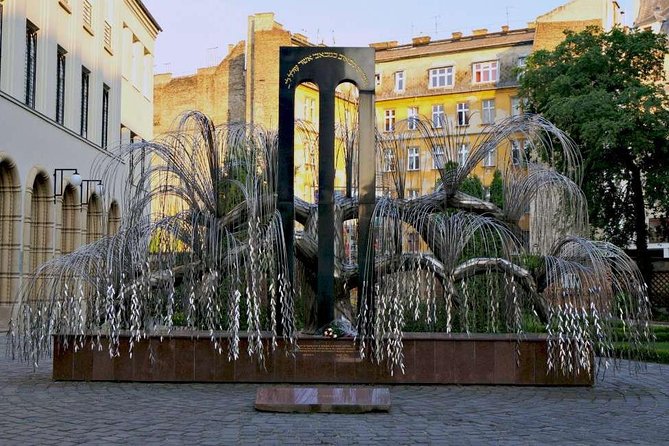
Memorials and meaning at Dohány Street Synagogue, including the Holocaust Memorial and the Tree of Life with Wallenberg Memorial Park
Museum time that actually pays off, with rare artifacts like an old Torah finial
A focused stroll in District VII, a World Heritage area with art, boutiques, and ruin bar energy
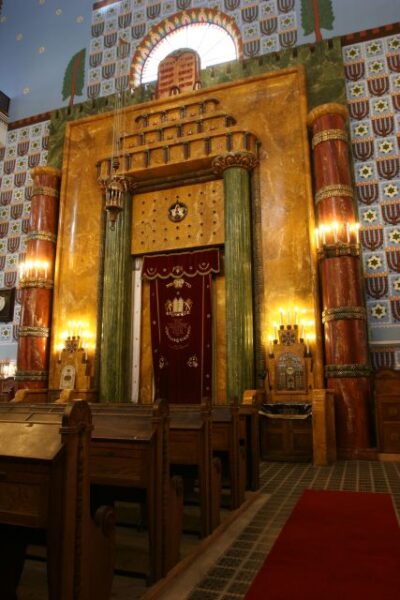
Quiet contrast at Kazinczy and Rumbach synagogues, including a small orthodox community stop
Shoes on the Danube Bank, short, sobering, and hard to forget
A Private 4-Hour Walk With Hotel Pickup and Public Transit
This is the kind of tour that works well when you want depth without spending your whole day in “research mode.” It runs about 4 hours and starts at 2:30 pm, which is a smart time to beat the rush and still have daylight for the riverside. It’s also private, with up to 10 people per group, so you are not stuck listening to a crowd funnel through doorways.
You get hotel pickup (so you can skip the scramble), plus transportation tickets. The plan uses walking and public transport, which matters because Budapest is built for this style of movement. You will often get a better route than trying to map it all yourself, and your guide can point out what to notice as you go.
Moderate physical fitness is all you need. This is not a marathon, but it does involve multiple streets and indoor stops. If you have mobility concerns, consider that you will be spending time stepping in and out of sites and walking between them.
More stories from the Jewish Quarter and District VII
- Budapest Jewish Heritage Memorial Walking Tour & Synagogue Entry★ 5.0 · 568 reviews
- Budapest: Jewish Heritage Guided Tour with Synagogue Ticket★ 4.8 · 533 reviews
- Jewish Quarter of Budapest Walking Tour★ 4.7 · 369 reviews
- Budapest: Best of Downtown and Jewish Quarter Tour★ 5.0 · 312 reviews
Entering Dohány Street’s Great Synagogue and Its Memorial Map
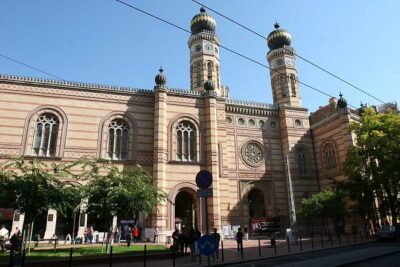
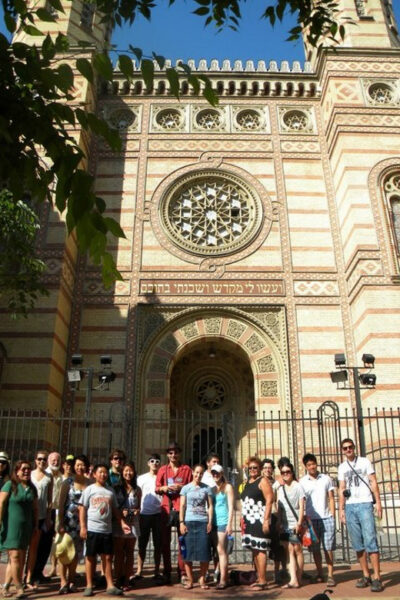
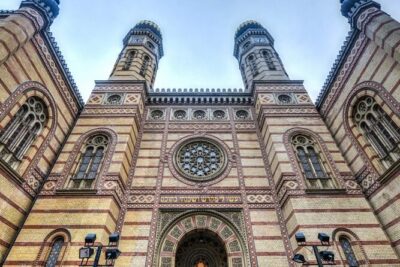
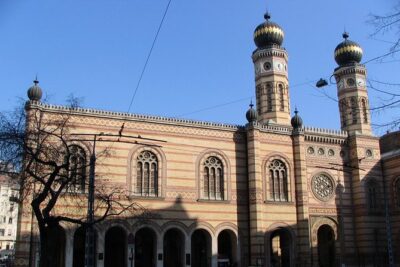
The tour kicks off at the Great / Central Synagogue on Dohány Street, also known as the Dohány Street Synagogue. This is the world’s second largest synagogue, and even before you hear the story, the scale sets the tone. The guide frames it as more than a landmark building. You come to understand it as a place where community identity, loss, and memory all live side by side.
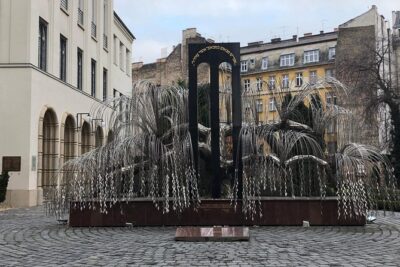
What I like here is that you do not only see the synagogue. You also get a guided “memorial map” feel, because the area includes multiple layers of remembrance. The stop includes time for exhibitions and memorials, such as the Holocaust Memorial, the Cemetery of Heroes, and the Tree of Life with the Wallenberg Memorial Park.
Two practical notes matter for your planning. First, admission is not included, so you will pay separately at your own cost. Second, this is one of the emotional anchors of the whole tour, so it helps to go in with a little openness. You will hear stories that can be heavy, but the guide’s job is to help you follow the timeline clearly rather than just throw facts at you.
If you are the type who likes context, this first stop is a strong start. It gives you the framework for everything else you see later in the Jewish quarter and by the river.
The Hungarian Jewish Museum and Archives: Small Objects, Big Meaning
Next comes the Hungarian Jewish Museum and Archives, where the vibe shifts from grand architecture to quieter interpretation. You get about 30 minutes here, which is short enough to be efficient, long enough to actually leave with a few lasting images.
This museum is known for its collection of Jewish artifacts, including standouts like the world’s oldest Torah finial. Even without technical detail, your guide can connect items like that to the rhythms of community life and the way cultural objects carry memory across generations.
The value of a museum stop on a walking tour is simple: it gives you language for what you are about to see outdoors. After this, District VII will not just look like streets and buildings. You’ll start noticing how the community’s presence, traditions, and disruptions shaped what is still visible today.
Again, admission is not included, so plan to pay at the museum. It is also a stop where you can choose your pacing. If you like to read, use your time wisely. If you prefer listening, lean into the guide’s commentary so you do not lose the thread.
District VII Jewish Quarter: World Heritage Streets With a Local Pulse
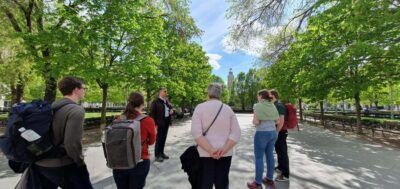
District VII is where Budapest’s Jewish quarter comes alive. You spend about 1 hour walking through highlights of this area, a World Heritage site, with plenty to see and talk about beyond just the obvious memorials.
What makes this segment worth your time is the mix of historical framing and modern-day reality. You will hear about the long history of the Hungarian Jewish community, while also getting pointed out local details like local art, eclectic boutiques, and the famous ruin bar culture that draws people in today. In other words, you do not experience District VII as a museum street. You experience it as a neighborhood that still functions.
This is also a free stop, so you are not paying admissions for the walking portion. The tradeoff is that you need to stay attentive, because this part is spread across streets. Shoes help. If you are wearing something tight or new, switch them out ahead of time.
If you want a Budapest tour that explains the past but still gives you a sense of what the area feels like now, this is the right middle chapter.
Kazinczy Street Synagogue: A Small Orthodox Community Stop
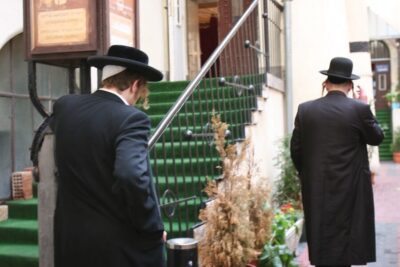
After District VII, you go to the Kazinczy Street Synagogue, with about 20 minutes at this stop. This is a smaller setting, and the change in pace is noticeable in the best way. The guide focuses on daily life habits and customs of the small orthodox community, not just the building.
That matters because so many visitors rush through religious architecture like it is only a photo opportunity. Here, you are shown what makes the space meaningful in everyday practice. It also helps you see religious continuity as something lived, not only something preserved.
Admission is not included for this stop. Also, because the time is shorter, you want to be ready to listen. This is not the place to step back and scroll for 10 minutes. The payoff comes from staying present.
More Budapest ideas for the space still left in the itinerary
- Budapest: Historic Cruise with Welcome Drink
★ 4.7 · 6,512 reviews - Budapest Historical Sightseeing – Free Walking Tour
★ 5.0 · 1,302 reviews - Buda Castle District Dark History, Legends and Vampire Night Tour
★ 4.5 · 1,240 reviews - BloodThirsty Hungary: Walking tour & Dark Historical Stories
★ 4.9 · 633 reviews - Budapest Jewish Heritage Memorial Walking Tour & Synagogue Entry
★ 5.0 · 568 reviews
Rumbach Street Synagogue: A Visit That May Be Limited by Reconstruction
The last synagogue stop is the Rumbach Street Synagogue, scheduled for about 15 minutes. The tour frames it as part of the Jewish Triangle, with stories that round out your understanding of the area.
Here’s the important practical consideration: the Rumbach Street Synagogue is under reconstruction. That can affect what you can see, how you enter, or how long certain areas are open. Since you are only there for a short segment, you will likely get the key context even if access is restricted.
Admission is not included for this stop either. The good news is that the rest of your tour is structured so you still get a full experience even if this final site is more limited than you hoped. In fact, that under-reconstruction reality is part of the current story. Religious and historical sites keep living through change.
Shoes on the Danube Bank: Short Visit, Heavy Impact
The tour ends at the Shoes on the Danube Bank memorial, with about 15 minutes here. This is a landmark that feels simple at first glance, then gets more intense the longer you stand there.
Your guide explains the story behind the memorial, turning it into something you can connect emotionally and historically. The memorial is free to visit, so this is one of the easiest stops to budget for.
If you are expecting a casual photo stop, you will probably feel the tone shift quickly. I recommend slowing down here. Stand for a minute, look, then let the guide’s explanation settle. After that, you can take photos if you still want them, but try not to rush the moment.
Price and Logistics: Where the Value Actually Comes From
The tour price is $272.20 per group, for groups of up to 10 people. It’s private, so that is not a per-person ticket. The value depends on who you bring.
If you fill the group size, the cost per person can be low. For example, at 10 people, it works out to about $27.22 each. If it is just two of you, it becomes about $136.10 per person. So this is a good deal for families or friend groups, and it can still be worth it for solo travelers if you strongly value a private guide for a sensitive subject like Jewish heritage and Holocaust-era memorials.
What you get in the price is also part of the value equation. You receive a local guide, plus a professional guide, hotel pickup, and transportation tickets. You also get a mobile ticket. What you do not get are food and drinks, and the biggest cost add-ons are admission tickets for several indoor stops.
That admission structure is why your budgeting matters. You can think of the tour as paying for guide time, routing, and context, then paying separate entry fees for the sites themselves. If you want an easy day with less decision-making, keep your wallet flexible.
Duration is about 4 hours, so it is not a time commitment that will derail your other plans. It also starts at 2:30 pm, which helps it fit into a sightseeing day that might include morning activities elsewhere.
Who This Tour Fits Best (and How to Make It Even Better)
This Budapest Jewish Heritage tour is a great match if you want history with human stories, not just bullet points. It is also a strong choice if you like the guide to stitch together what you see, so you leave with a clear sense of how the Jewish community shaped Budapest and what the memorial sites are asking you to remember.
You should also consider this tour if you:
- Want a private setting for a topic that deserves attention
- Prefer a mix of major sites and smaller stops like Kazinczy Street
- Like using public transit with a guide rather than doing all the route figuring yourself
To make the day smoother, plan the simple stuff:
- Wear comfortable shoes for walking
- Keep some cash or card ready for admission tickets at the synagogue and museum stops
- Expect the tone to get serious. If you want light moments too, you will likely get small breaks in the pacing, but the core theme stays weighty.
One more tip from how the tour is structured: because you have several indoor sites, you might feel a bit “stop and start.” If you get cold in churches and museums, bring a light layer.
Should You Book This Budapest Jewish Heritage Tour?
If you care about Jewish history in Budapest and you want a guide who can connect the dots, I would book it. The strongest reasons are the careful sequencing: you start at the Great Synagogue with its memorial landscape, you get museum context right after, you walk through District VII to see how culture persists, and you end by the Danube where the memorial hits hard.
The biggest reason to hesitate is the admissions add-on. If you are trying to keep everything strictly budget-only, know that you will pay for several stops and the Rumbach Street Synagogue may be affected by reconstruction. Still, that is usually manageable because the guided experience and routing are what you are really paying for.
If you can bring a group, this tour often becomes an excellent value. If you are solo, it can still be worthwhile when you want privacy and a guide who can tailor the walk to your questions.
FAQ
How long is the Budapest Jewish Heritage Tour?
It runs for about 4 hours.
What time does the tour start, and is pickup available?
The start time is 2:30 pm, and hotel pickup is offered.
Is this tour private, or do I join other groups?
This is a private tour/activity, so only your group participates.
Are admission tickets included for the synagogues and museum?
No. Entry fees are not included for the Great / Central Synagogue, the Hungarian Jewish Museum and Archives, the Kazinczy Street Synagogue, and the Rumbach Street Synagogue. Some stops are free, like the District VII walking portion and the Shoes on the Danube Bank memorial.
What’s included in the tour price?
The price includes a local guide and a professional guide, hotel pickup, and transportation tickets.
Can I cancel for a full refund?
Yes. You can cancel up to 24 hours in advance for a full refund. If you cancel less than 24 hours before the start time, the amount paid is not refunded.
More Tours in Budapest





More of the Jewish Quarter


More Tour Reviews in Budapest






Recently added around Budapest



Budapest Jewish Quarter Tours, compared.
 ★ 5.0Budapest Jewish Heritage Memorial Walking Tour & Synagogue EntryFrom $83568 reviews
 ★ 4.8Jewish Heritage Guided Tour with Synagogue TicketFrom $81533 reviews
 ★ 4.7Jewish Quarter of Budapest Walking TourFrom $2369 reviews
 ★ 5.0Best of Downtown and Jewish Quarter TourFrom $23312 reviews
 ★ 5.0Budapest City Walk in Jewish QuarterFrom $356218 reviews
 ★ 4.5Budapest Dohany Synagogue & Hungarian Jewish Museum & free extrasFrom $44218 reviews
 ★ 5.0Budapest Dohany, Heroes’, Rumbach synagogues & Jewish Ghetto TourFrom $63200 reviews
 ★ 4.8Budapest Grand Half-Day Jewish Heritage TourFrom $116135 reviews
Browse the lists this tour appears in