
Tour review · BUDAPEST WALKING TOURS
Budapest: Street Art and Underground Movements Walking Tour
Street art turns Budapest into a living map. On this 2-hour walk with ET Alternative, I love the wall-to-meaning storytelling and how it starts at Telep-Art Galéria, a place soaked in sticker culture. One thing to consider: this is not a traditional monument tour, so if you want polished, predictable sights, the street-art scene can feel more random than museum-style.
What also makes this tour work is the format. It is a small group, limited to 8 people, and the guide keeps it interactive, answering questions as you go. English is the working language, it is wheelchair accessible, and it is family-friendly, so you are not forced into a “serious history lecture” mood for two hours.
Key highlights worth planning around
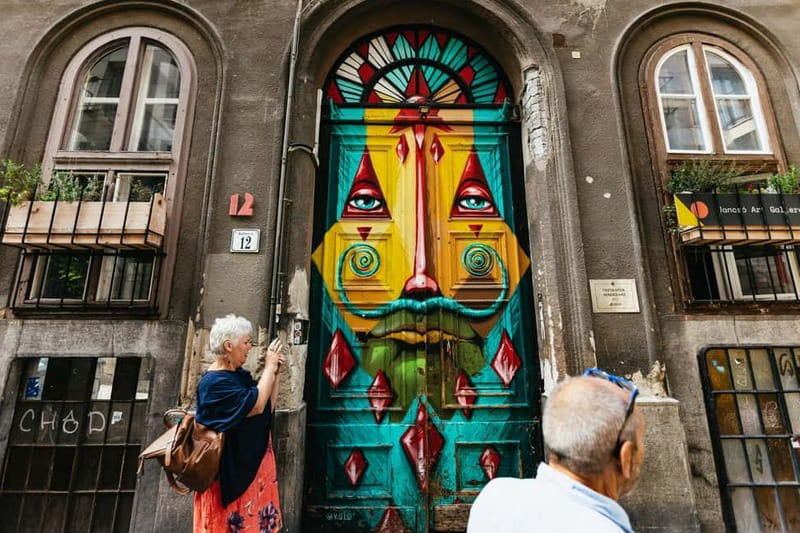
- Telep-Art Galéria as your jump-off point, with stickers and an alternative vibe before you even hit the streets
- A tight small group (up to 8), which means you actually get to ask questions
- Underground culture talk, connecting street art to social and political messages
- A secret stop mid-walk, where the guide slows down and explains what you might have missed
- Techniques and story behind each piece, not just pretty photos
- A recap summary after the tour, so the ideas stick after you’re done walking
Budapest on foot, with a few more routes to compare
- Big Bus Budapest Hop-On Hop-Off Bus and Walking Tour★ 3.5 · 2,206 reviews
- Budapest: Buda Castle District Walking Tour★ 4.6 · 2,108 reviews
- Budapest City Landmarks Walking Tour in 2 Hours★ 5.0 · 2,048 reviews
- 3-Hour Orientation Walking Tour of Buda and Pest★ 4.8 · 1,834 reviews
Street art in Budapest: the city’s unofficial bulletin board
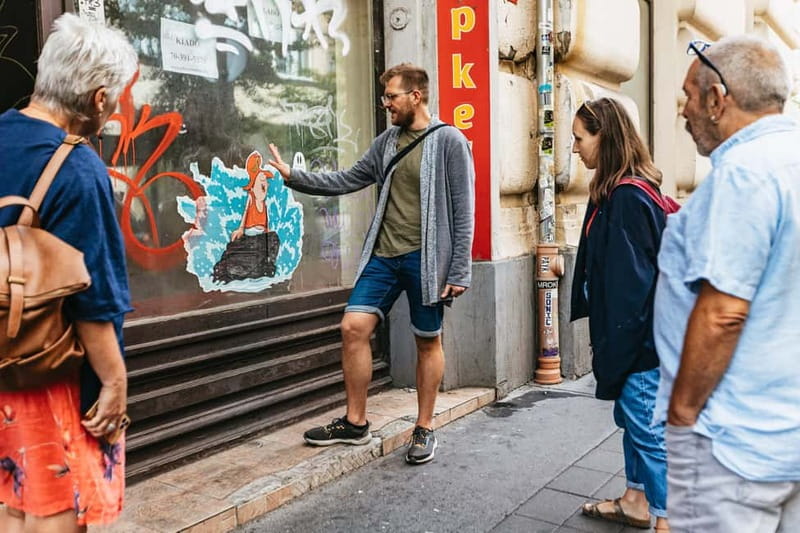
Street art in Budapest is not just decoration. It is a public conversation, sprayed or pasted onto walls where ordinary people actually walk, shop, and wait for buses. The guide frames it that way from the start: street art becomes a way to communicate social issues, political ideas, and cultural identity, often in a more immediate voice than official channels.
I like that this tour treats street art as part of the city’s history, not as a separate “cool side quest.” You learn how the images work, how artists build meaning through style and symbolism, and why the messages land differently depending on the neighborhood. You also get a sense that the city’s street-art scene is alive and changing, not frozen in time like a statue.
If you come in expecting a greatest-hits list of famous murals, you might feel slightly misaligned. The tour is more about teaching you how to see, so you’ll start noticing layers you would normally walk past. By the end, your brain has a new filter: “What is this saying, and why here?” That is the real payoff.
Telep-Art Galéria: where the tour teaches you to look first
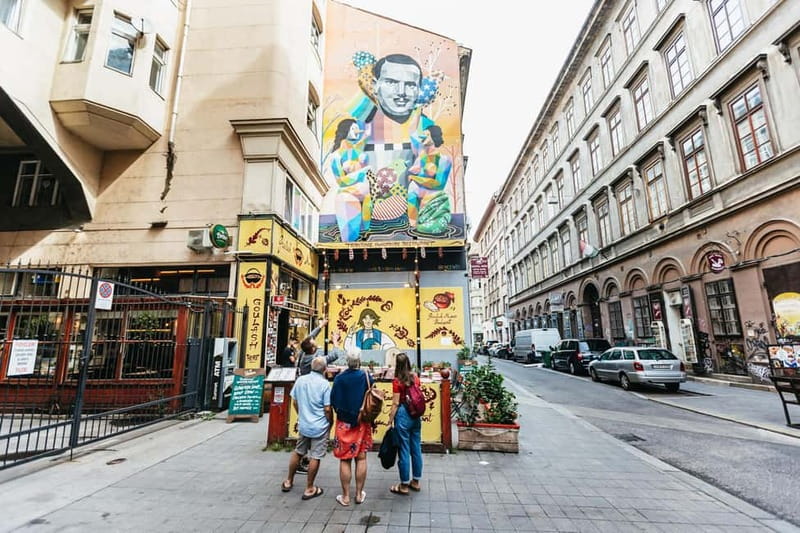
Your meeting point is Telep-Art Galéria, a cool bar that functions like a warm-up before you walk. It is not just a location on a map. It is a statement. The walls are covered with stickers, and that texture matters, because it tells you what to expect outdoors too: lots of small marks, quick statements, and community signatures.
This is where I’d recommend you do two things. First, take a quick minute to scan the walls before the group gathers, so your eyes calibrate to street-level detail. Second, ask the guide one early question, even if it feels basic. The pace of this tour is built around conversation, and the small group size makes it easy to steer the discussion toward what you care about.
Starting here also changes the tone. You are not wandering in from a big tourist plaza and trying to “get” street art on the fly. You arrive in a place that already understands the medium. That makes the rest of the walk click faster, especially if you are new to street art.
The 2-hour wall hunt: a secret stop that makes the meaning stick
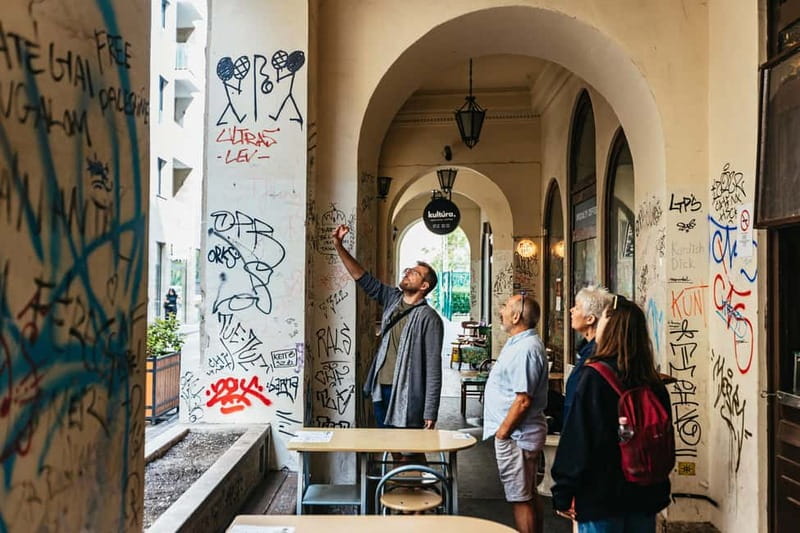
Most of your time is spent walking and searching for artworks by local and global street artists. The guide leads you from piece to piece and explains what you are seeing: the story, the techniques, and the cultural messages behind it. Expect to hear context that turns a wall image into something you can actually interpret.
The itinerary includes a secret stop during the guided portion. That is where the tour tends to feel most rewarding, because the guide usually slows down and helps you read the artwork more carefully. You might learn how certain symbols connect to the city’s social mood, how street art can function like commentary, or how underground movements use visual language to signal identity and resistance.
This is also the moment where the interactive format helps. In many walking tours, the guide talks, you nod, and everyone moves on. Here, you can ask questions and get answers right away. That matters because street art is often layered and slang-like in its references. If you want clarity, you get it without feeling embarrassed about not knowing the background.
Practical note: you are outdoors and moving. Two hours is long enough to cover real ground but short enough that you are not trapped. If you are used to fast-paced city sightseeing, this should feel manageable. If you prefer slower museum wandering, the constant stopping will still give you enough breaks to catch up.
What underground movements look like in real life
The best part of this tour is the way it connects street art to underground culture, not as a vague concept but as something you can recognize through imagery and place. Street artists are often reacting to what’s happening in society, and the guide keeps pointing out the connections between the artwork and the messages behind it.
You’ll likely hear explanations about how street art spreads and evolves, why some pieces appear in certain areas, and how public reactions can shape what artists create next. Street art also has its own rules, like a visual “language” of styles, materials, and techniques. The guide talks about those elements so you learn how to spot patterns, even when the artwork looks chaotic at first glance.
One thing I really appreciate is that the tour is built to be welcoming even if you do not consider yourself a street-art person. More than once, people have said they joined as skeptics and left able to recognize artists’ styles around the city. That is a good sign. It means the guide does not assume you already know the scene. You start learning on day one, right on the pavement.
And because street art can include political and social messages, you get a different lens on Budapest than the one you’d get from a classic guidebook route. You’re not just collecting facts. You’re understanding why certain images show up when and where they do.
Budapest on foot, a few more ways
- Budapest: Buda Castle Walk with Saint Stephen’s Hall
★ 4.5 · 3,012 reviews - Budapest: 3-Hour Grand City Tour and Castle Walk
★ 4.3 · 1,437 reviews - Budapest Historical Sightseeing – Free Walking Tour
★ 5.0 · 1,302 reviews - Budapest All in One Small Group Walking Tour with Strudel Stop
★ 5.0 · 1,277 reviews - Budapest: Buda Castle District Walking Tour with a Historian
★ 4.9 · 867 reviews
Places you’ll understand better after the walk
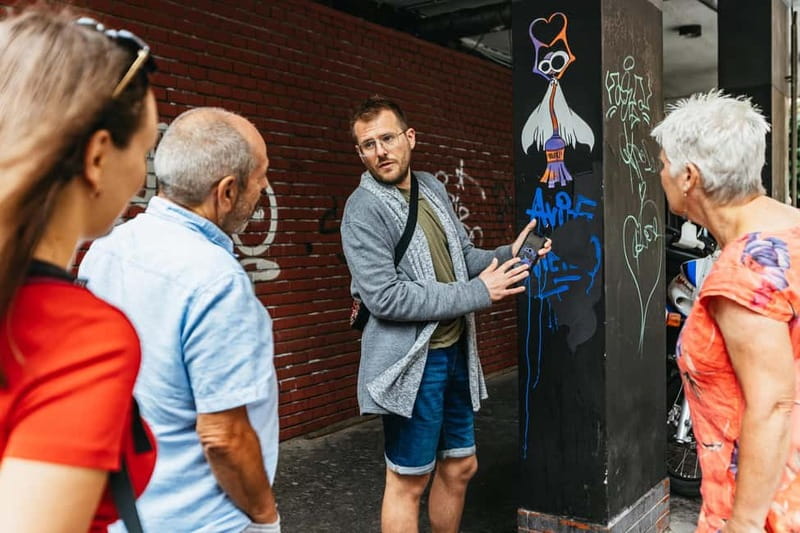
This tour does not treat the city like a photo backdrop. It treats Budapest like a network of neighborhoods with different voices, and your route helps you see that. Even without being told, you start noticing that the same city can feel totally different block to block.
There is also a strong “go beyond the main route” angle. The guide brings you to local places and helps you connect what you see on walls to the broader alternative scene of Budapest. Some groups also mention stopping at or seeing a ruin bar during the experience. That makes sense given the overall vibe, but keep your expectations flexible, since the exact emphasis can shift with the guide and what is currently on the streets.
By the end, you should walk away with two useful outcomes:
- You have a better sense of Budapest’s contemporary culture, not just its older landmarks.
- You have a method for spotting and understanding street art anywhere you go next.
That second outcome is underrated. Most tours end, and you remember a few highlights. This one trains your eyes, so your next walk around the city becomes richer without extra effort.
Pacing, group size, and what to bring for comfort
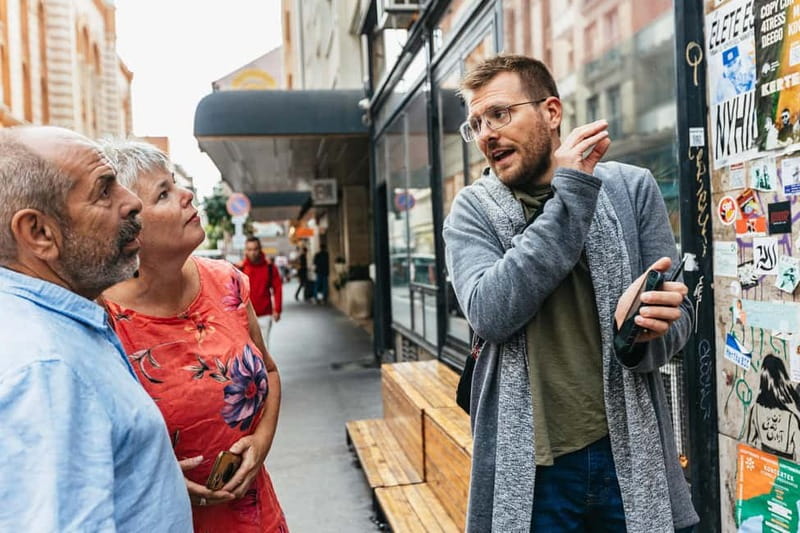
A small group capped at 8 people is a big deal on a street art tour. It keeps the conversation human. When you can hear the guide clearly and ask questions without waiting your turn, the explanations land better. You also avoid the “photo line” feeling that can happen on larger tours, where everyone’s just trying to capture the same wall quickly.
The tour is designed to be interactive and relaxed. Based on feedback, the guide stays patient, answers questions, and adjusts the flow if people are curious. That is especially helpful if you’re traveling with kids, because street art tends to spark questions. The tour is described as suitable for families, so it’s not pitched as adults-only culture immersion.
What to bring:
- Comfortable walking shoes, because you’re outside and on foot for the full session
- A curiosity mindset, not a street-art homework assignment
- A charged phone for photos, but also give yourself time to look without the camera in front of your face
Wheelchair accessibility is included, which is a good starting point. Still, you should be prepared for normal street realities like uneven sidewalks. If you use a wheelchair, it can help to consider your mobility needs ahead of time.
Price and value: why $27 works for this format
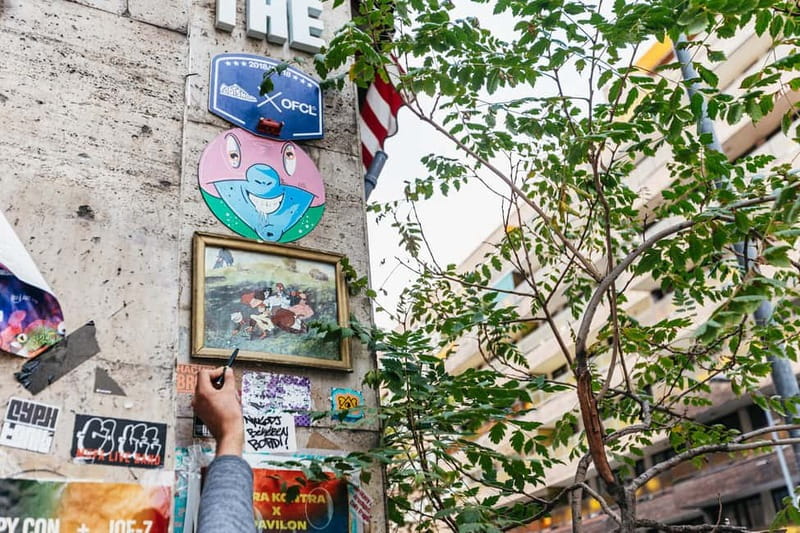
At $27 per person for about 2 hours, this tour is priced like a focused city experience rather than a long, multi-stop day. For me, the value comes from two things.
First, the small group size. You are paying for access to a guide who can explain details and handle questions, not just for movement through the city. With up to 8 participants, you are more likely to get personal interaction.
Second, you get more than “art facts.” You get story plus interpretation: what the artwork is saying, how it’s constructed, and what social or political messages it connects to. That kind of context is what changes the tour from entertainment into learning you can use later.
Add in the included live guided tour and a summary after the walk, and the price starts to look fair for what you’re actually getting. You also get English guidance, which removes a common friction point for visitors.
If you are on a tight schedule, this is also a smart choice. Two hours is enough time to reset your view of Budapest without sacrificing a whole afternoon.
Who should book this Budapest street art walk
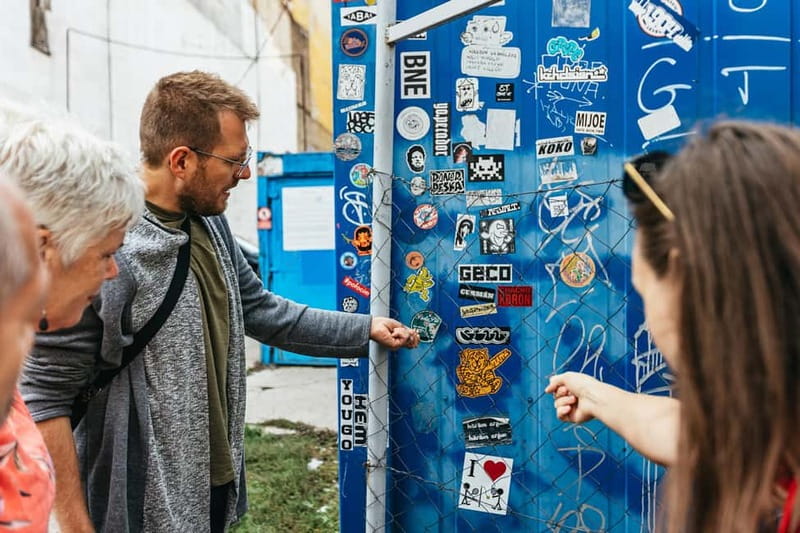
Book this tour if you want Budapest through a contemporary lens. It’s a great fit for:
- Street art lovers who want context, not just photos
- Curious travelers who prefer off-main-track experiences
- People who enjoy discussions about politics, society, and culture through everyday media
- Families looking for an activity that feels like exploring, not sitting
I’d also say it’s ideal if you’ve grown a bit tired of the standard history rhythm. This walk offers a refreshing alternative, and it teaches you how to see the city in a new way, even if you’re not sure you care about street art right now.
If you hate walking, want only indoor stops, or expect fixed “famous works” guaranteed on the day, you might find it less satisfying. The street scene changes, and the tour is about understanding what you see, not chasing a checklist.
Should you book it? My take
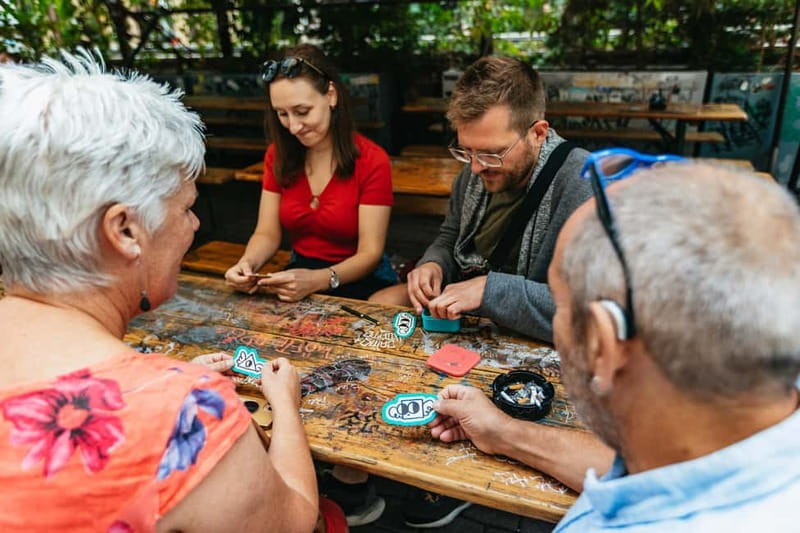
Yes, I’d book it if you like getting meaning from a city, not just ticking off sights. The standout strength here is the guide-led interpretation paired with a small group. You leave with better street-reading instincts, and that makes your remaining Budapest time more fun.
If you’re even a little interested in how art connects to society and identity, this tour is a strong use of two hours. It is also a good entry point into Budapest’s alternative side, starting at Telep-Art Galéria and finishing back around the central meeting area (with Központ mentioned as the finish point). Just come with comfortable shoes and an open mind, and you’ll likely enjoy how the city turns into a story you can actually read.
FAQ
How long is the Budapest street art walking tour?
The tour lasts 2 hours.
What does the tour cost?
The price is $27 per person.
What language is the tour offered in?
The live tour guide speaks English.
How many people are in each group?
The group is limited to 8 participants.
Where do we meet for the tour?
You meet at Telep-Art Galéria, a bar used as the meeting point.
Where does the tour end?
The activity ends back at the meeting point, and the itinerary also mentions finishing at Központ.
Can I book it as a private experience or change my plans?
Yes, you can book a private experience. You can also reserve now and pay later, and you can cancel up to 24 hours in advance for a full refund.
More Tours in Budapest






Keep Walking Budapest





More Tour Reviews in Budapest






Recently added around Budapest




Budapest Walking Tours, compared.
 ★ 3.5Big Bus Budapest Hop-On Hop-Off Bus and Walking TourFrom $422,206 reviews
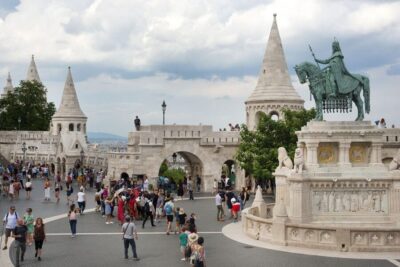 ★ 4.6Buda Castle District Walking TourFrom $142,108 reviews
 ★ 5.0Budapest City Landmarks Walking Tour in 2 HoursFrom $32,048 reviews
 ★ 4.83-Hour Orientation Walking Tour of Buda and PestFrom $411,834 reviews
 ★ 5.0Budapest Historical Sightseeing – Free Walking TourFrom $31,302 reviews
 ★ 5.0Budapest All in One Small Group Walking Tour with Strudel StopFrom $1001,277 reviews
 ★ 4.9Buda Castle District Walking Tour with a HistorianFrom $63867 reviews
 ★ 4.9BloodThirsty Hungary: Walking tour & Dark Historical StoriesFrom $21633 reviews
Browse the lists this tour appears in