
Tour review · BUDA CASTLE TOURS
Budapest: The WWII Siege of Buda Castle & Bomb Shelter Tour
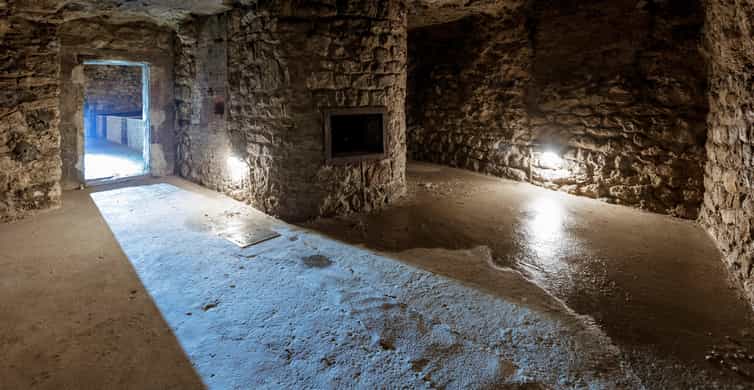
WWII comes closer than you expect. This tour takes you from Castle District streets into the Buda Castle caves, where the siege of Budapest is told through survivor-style recollections and real underground spaces.
Two things I especially like: you get the story in layers, starting above ground with the Castle Hill setting, then shifting into cellars and an authentic WWII bomb shelter. And you can expect guides who bring the details to life, with standouts including Rita, Jonas, Kopp, Cop, and Balacsz known for clear pacing and lots of specific local context.
The main drawback to plan around is physical and mental fit: the route includes steep stairs, narrow corridors, and damp surfaces underground, and it is not suitable if you have claustrophobia.
Key things to know before you go
- Above and below ground in 90 minutes: you are not stuck in only one world.
- Authentic WWII shelter experience: cellars and a real bomb shelter in the cave system.
- A siege story tied to place: the 52-day encirclement is anchored to what happened right here on Castle Hill.
- Cobbled streets plus underground walking: it is a proper walking tour, not just a quick stop.
- Guides can point out visible traces: bullet holes, secret doorways, and ventilation shafts may show up on the above-ground walk.
- Cool underground temps: about 12°C (54°F) year-round, so layers matter.
More routes across Castle Hill and its viewpoints
- Budapest: Buda Castle Cave Tour★ 4.7 · 5,677 reviews
- Budapest: Buda Castle District Vampires and Myths Night Tour★ 4.6 · 3,830 reviews
- Budapest: Buda Castle District Walking Tour★ 4.6 · 2,108 reviews
- Buda Castle District Dark History, Legends and Vampire Night Tour★ 4.5 · 1,240 reviews
WWII Siege of Buda Castle, Told in the Right Place
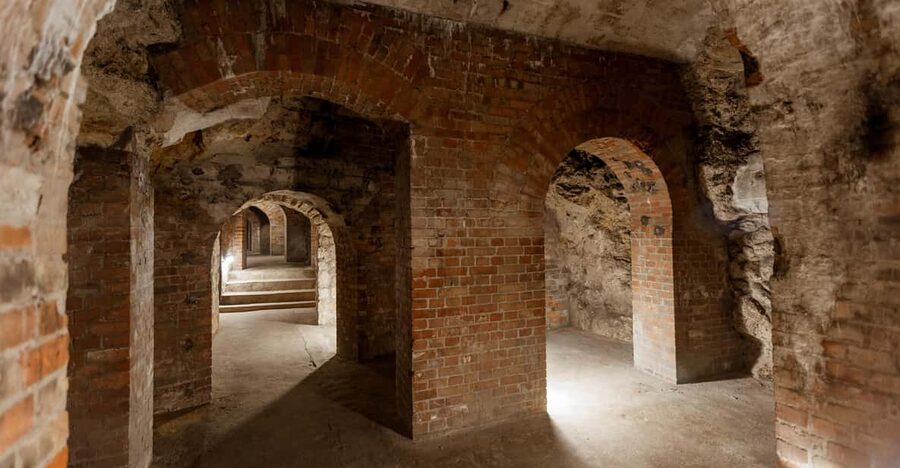
If you think you already know the Siege of Budapest, this is the kind of tour that helps you correct that fast. It links the big events you might have read about to the specific underground refuge system under the Buda Castle district, so the history feels physical, not abstract.
I like that it is not only a dramatic story. It is also practical: you learn what people were dealing with day after day, cold and darkness and overcrowding, and you see how the Royal Palace area and the cave and cellar network became a last-ditch survival space. The comparison to Stalingrad comes up because the siege was brutal and drawn out, and here you understand why that analogy shows up again and again.
Starting at Dísz Square: Finding Your Guide and the Castle Mood
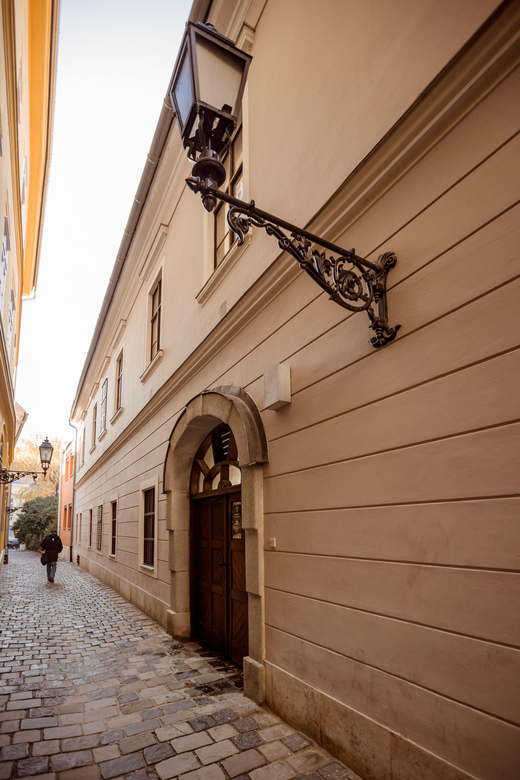
The tour begins at De la Motte-B. Palace, Dísz tér 15, right next to the “Posta” building by a big green gate. Look for the guide with the turquoise umbrella and the Buda Castle Walks logo.
This first segment matters more than it sounds. You are getting your bearings on Castle Hill before you go underground, and that helps later when you are imagining where people moved, where they sheltered, and why certain spaces mattered. It also sets the tone: you are walking through a real historic district, not a museum hallway.
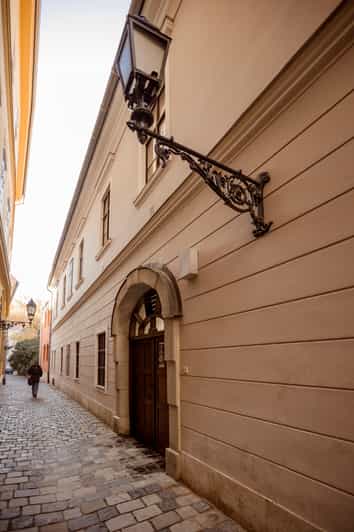
You will then move along Castle District streets, including Úri Street and the route toward Lovas Way, before the underground portion. The cobbled streets and the steady walking rhythm are part of the “travel through time” effect, and they also mean you will want comfortable shoes right from the start.
Above-Ground Stops on Castle Hill: What the Siege Left Behind
The tour spends time above ground, and it is not just filler. This is where you connect the wartime story to the architecture and layout you can actually see today.
Some guides go beyond the general context and point out traces that can still be seen in the built environment. In particular, Kopp is praised for highlighting things like bullet holes, secret doorways in buildings, and ventilation shafts rising from public shelters. If your guide does similar pointing, it is a big plus because you start “reading” the district as a battlefield landscape.
Even if you do not catch those exact items, you still get the key value: you learn what the Castle district represented during the siege, and you understand why people crowded into underground spaces instead of staying exposed outside.
Down Into the Buda Castle Cave and the WWII Cellars
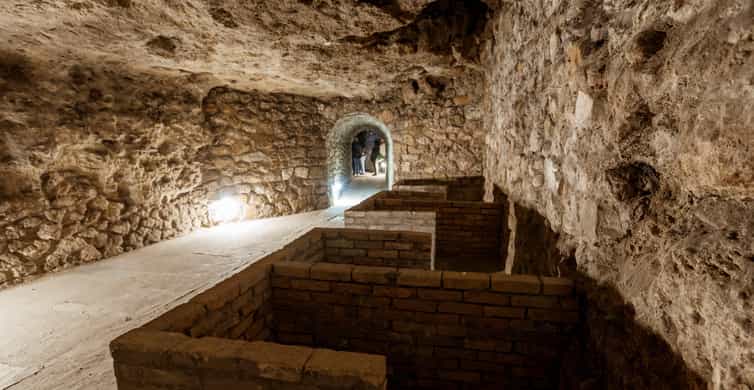
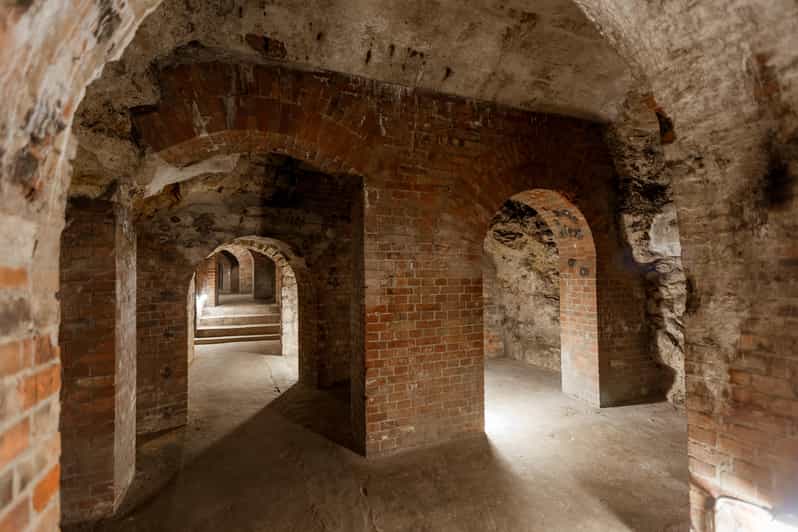
The underground portion is the heart of this tour. You visit the Buda Castle Cave area, and you also see a cellar from an older dwelling plus an authentic Second World War bomb shelter inside the cave system that stretches beneath the district.
Temperature is a real factor here. The cellar and cave sections run at about 12°C (54°F) all year, so even in mild weather above ground, you will feel the chill once you go in. I strongly suggest dressing in layers, not a single hoodie and hope.
Expect a true “walk through underground space” feel, not a slideshow. The corridors and passages can be narrow, and the route can include steep stairs. Surfaces may be solid but sometimes wet, so your shoes need grip. If you are the type who gets anxious in tight, dim spaces, take that seriously before booking.
- Budapest: City Highlights Cruise with Welcome Drink
★ 4.6 · 35,610 reviews - Budapest: Unlimited Prosecco, Beer and Aperol Spritz Cruise
★ 4.8 · 25,310 reviews - Budapest: Széchenyi Spa Day Ticket with Optional Upgrades
★ 4.3 · 23,911 reviews - Budapest: Nighttime or Daytime Sightseeing Cruise
★ 4.2 · 21,062 reviews - Budapest: 1-Hour Evening Sightseeing Cruise with Drink
★ 4.5 · 8,330 reviews
The Human Story: Christmas Eve 1944 and the 52-Day Siege
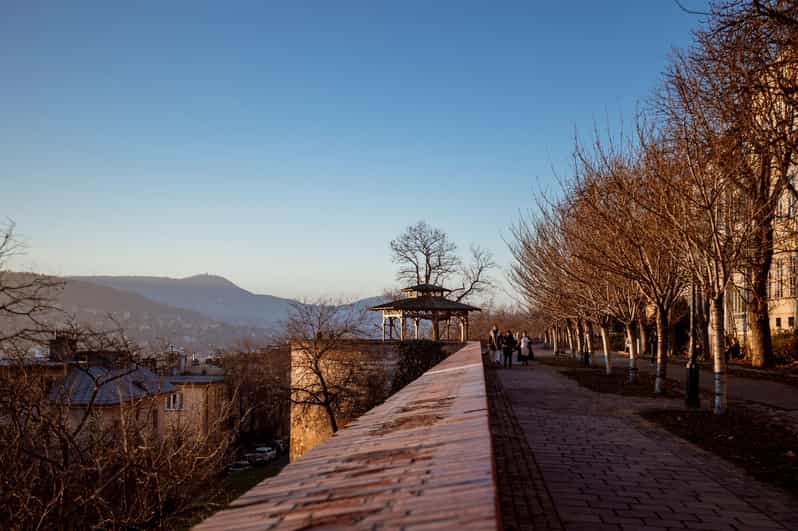
The tour’s WWII narrative starts with Christmas Eve 1944, when the Soviet Red Army encircled German-occupied Budapest. The siege of the Hungarian capital then lasted 52 days, and the Castle district became one of the major refuge points.
What makes this section work is how it frames shelter as both hope and horror. You are not only hearing that people hid. You learn that tens of thousands sought refuge in Buda Castle, including German and Hungarian soldiers, the wounded, and civilians.
Inside the underground spaces, people faced cold, lack of water and food, darkness, overcrowding, and disease. At the same time, they were trying to salvage their lives and possessions, and even the treasures connected to the Royal Palace. That tension, survival mixed with loss, is the emotional engine of the tour.
Sarah’s feedback is a good heads-up in this regard. She found it sad and emotionally difficult, but she was glad she did it. If that sounds like your kind of learning, plan for heavy feelings, not a casual afternoon story.
Why the Underground Layout Matters (More Than Just the Drama)
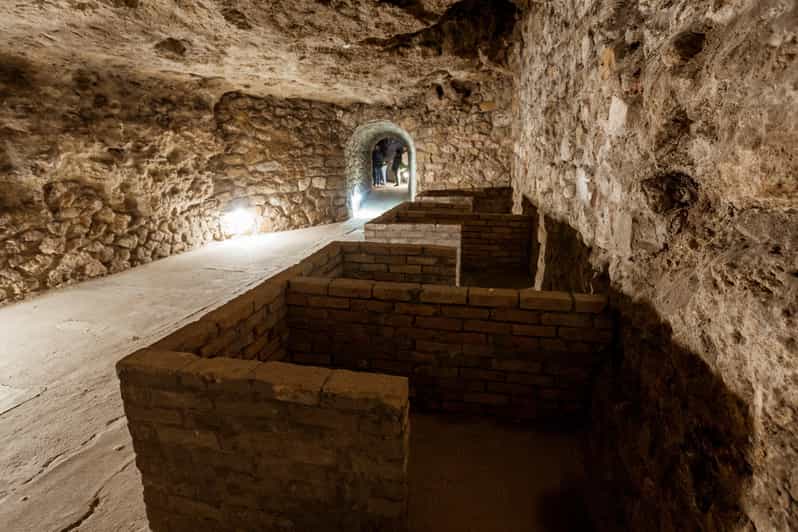
One reason I think this tour has lasting value is that it teaches you to see underground shelter as a system. The cave and cellar network is not random. It is a set of connections that shaped how people moved, waited, and endured.
When you walk that labyrinth, you start to grasp why these spaces became essential under siege conditions. It also clarifies the Stalingrad comparison. Like Stalingrad, Budapest’s siege was not short or clean. It ground people down over time, and shelter became a desperate routine rather than a brief escape.
You also come away with a sharper mental map of where the Castle district’s importance came from. It was not only symbolic power. It was practical terrain, literally turned into a survival landscape.
How Guides Keep It Understandable: Rita, Jonas, Kopp, and Cop
This tour lives or dies by the guide, and the feedback here is consistently strong. Names that show up repeatedly in standout experiences include Rita, Jonas, Kopp, and Cop, plus Balacsz.
The praise is not only about being passionate. It is about making the narrative easy to follow. Several comments mention staying engaged throughout, covering phases before, during, and after WWII, and keeping the pacing reasonable.
I also like that some groups use personal headphones. If you are walking and listening in dim areas and you want to catch every word, that kind of audio support can make a real difference. Even if you end up in a standard setup, the tour is designed for an English-speaking experience with a live guide.
Fit and Comfort: What You Need to Bring and Wear
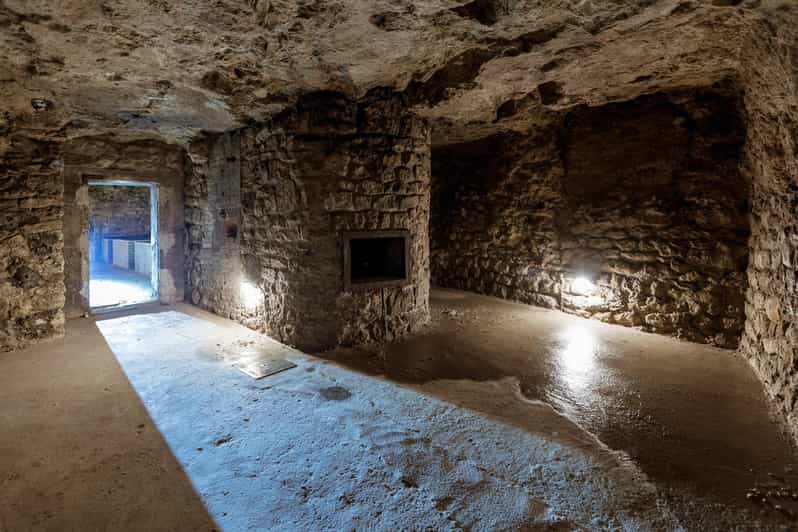
This is a mixed outdoor and indoor tour, and you should plan as if you will spend real time outdoors and then transition into cool, dim underground spaces.
Bring:
- Comfortable shoes with grip
- Warm clothing, plus a layer for underground
- Snacks and water
- Anything you need to stay alert on a nonstop 90 minutes
Dress for the underground temperature of about 12°C (54°F). Even if you are comfortable above ground, you will likely feel cooler below.
The tour is held in all weather conditions, including rain, and that matters because you will be walking on cobbled streets and sometimes on wet surfaces underground. If it has rained recently, traction matters even more.
Timing, Group Energy, and How Prompts Affect You
The tour lasts about 90 minutes and starts promptly at the listed time. Latecomers can miss the start, and the tour cannot wait.
On timing, I like that the length is just right for busy travel days. You get a full story arc plus the underground spaces without turning it into a half-day commitment. And because the tour ends around Szentháromság tér, you can usually keep exploring the Castle district right after.
Small-group or even private-feeling tours can happen when bookings are limited. One solo traveler even described it as effectively private. You should not count on that, but it suggests the experience can feel personal rather than like a cattle-line version of WWII.
Who This Tour Is Best For (And Who Should Skip It)
Book this if:
- You like WWII history, but want it tied to real places you can walk through
- You enjoy guided storytelling with specific local details
- You want a 90-minute plan that includes both outdoor context and underground exploration
- You are the type who likes seeing how people lived under extreme conditions
You should skip it if:
- You are under 14
- You use a wheelchair or need mobility support (steep stairs and narrow corridors are part of the route)
- You have claustrophobia (the caves and tunnels can feel tight)
If you fit the audience, you will likely appreciate what one reviewer called a perfect length, and you will probably enjoy the mix of historical information plus the practical feeling of being inside a WWII shelter environment.
Price and Value: Why $24 Can Make Sense Here
At $24 per person, this is priced like an affordable guided experience, not a premium museum ticket. And the value comes from what you get for that price: English narration, a structured walk through meaningful Castle District streets, plus entry to underground cave and shelter spaces.
You are paying for time with a live guide plus access to underground areas that you would not easily explore on your own. If you are already spending time in the Castle Hill area, this is also an efficient add-on that turns normal sightseeing into something more grounded in lived wartime reality.
Should You Book the Budapest Siege of Buda Castle Tour?
I think you should book if you want a historically serious experience with real place-based impact. The tour is short enough to fit into a visit, and the combination of above-ground context with inside-the-shelter walking is exactly what helps the siege stop being a headline and start becoming understandable.
Go in prepared for heavy subject matter and for physical conditions underground. Bring layers, wear grippy shoes, and take claustrophobia seriously. If you do those things, this is one of the more memorable ways to understand why Budapest’s WWII siege is often compared to Stalingrad, because you will feel the constraints that made survival so hard.
FAQ
How long is the tour?
The tour lasts 1.5 hours (90 minutes).
Where do I meet the guide?
Meet at De la Motte-B. Palace, Dísz tér 15 (next to the “Posta” building) at the big green gate. Look for the colleague with the turquoise umbrella and the Buda Castle Walks logo.
Where does the tour end?
The tour ends at Szentháromság tér.
Is the tour in English?
Yes, the live guide provides the tour in English.
Is the tour mostly outside or inside?
It is both an outdoor and indoor program.
What should I wear and bring?
Wear comfortable walking shoes and warm clothing. Bring snacks and water. Underground areas are about 12°C (54°F) year-round.
Does the tour run in bad weather?
Yes, it runs in all weather conditions, including rain.
Is it suitable for children?
It is recommended for ages 14 and upwards, and it is not suitable for children under 14.
Is it suitable if I have mobility issues?
No. It is not suitable for people with mobility impairments or wheelchair users due to steep stairs, narrow corridors, and sometimes wet surfaces.
Is it suitable for claustrophobia?
No. It is not suitable for people with claustrophobia.
What is the cancellation and payment policy?
You can cancel up to 24 hours in advance for a full refund. You can also reserve now and pay later.
More Tours in Budapest





Keep Exploring Castle Hill




More Tour Reviews in Budapest






Recently added around Budapest




Buda Castle Tours, compared.
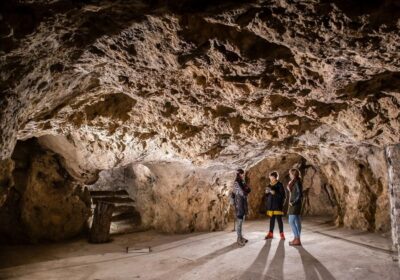 ★ 4.7Buda Castle Cave TourFrom $195,677 reviews
 ★ 4.6Buda Castle District Vampires and Myths Night TourFrom $233,830 reviews
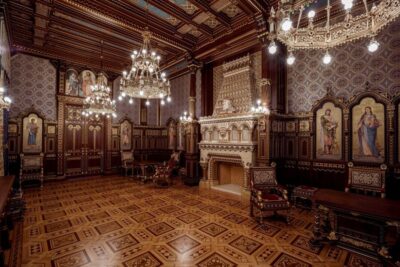 ★ 4.5Buda Castle Walk with Saint Stephen’s HallFrom $293,012 reviews
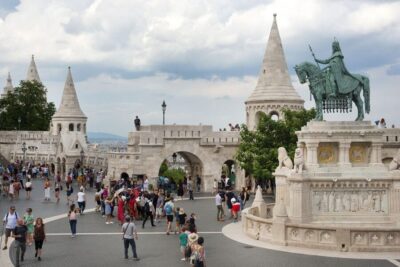 ★ 4.6Buda Castle District Walking TourFrom $142,108 reviews
 ★ 4.5Buda Castle District Dark History, Legends and Vampire Night TourFrom $211,240 reviews
 ★ 4.9Buda Castle District Walking Tour with a HistorianFrom $63867 reviews
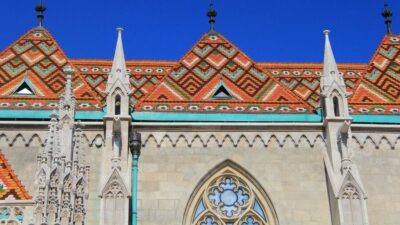 ★ 4.6Classical Music Concerts in Matthias ChurchFrom $70792 reviews
 ★ 4.6Matthias Church Entry TicketFrom $25787 reviews
Browse the lists this tour appears in