
Tour review · TOURS
Budapest: Virtual Reality Tour in 8 Languages
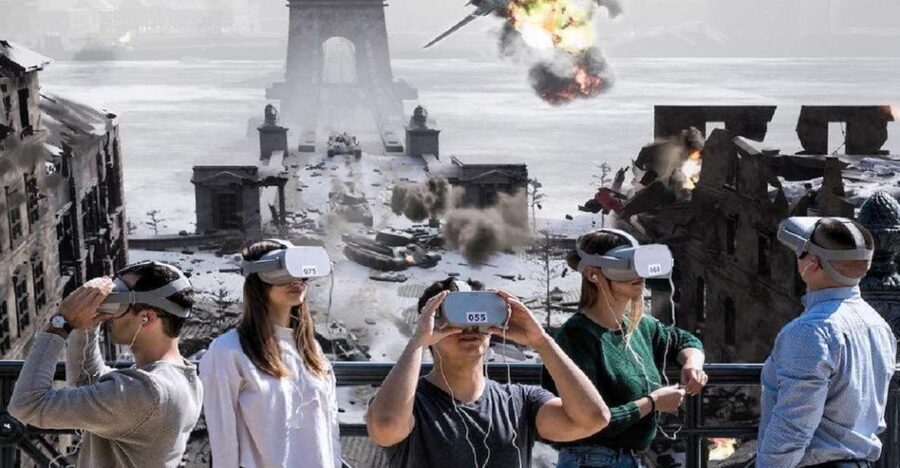
Budapest history gets a sci-fi makeover. This VR walking tour helps you see Buda Castle and the Royal Palace area through time jumps, and then adds real context with a live guide. I like the way the VR displays make the past feel physical, with battles and destruction shown in a way your brain can actually sort through. The big caution: it is not a good fit if you get migraines, have epilepsy, or feel uneasy with heights.
You start on the Buda side near the Chain Bridge and walk into the Castle District. You’ll do short stretches on foot, then stop for VR about six times, with an audioguide that runs in English, Chinese, German, Hungarian, Spanish, Russian, Italian, and French. One more practical note: expect a light hike, comfortable shoes help a lot.
Key things that make this VR tour work
- Buda Castle District through six VR stops, so you are never just standing and watching
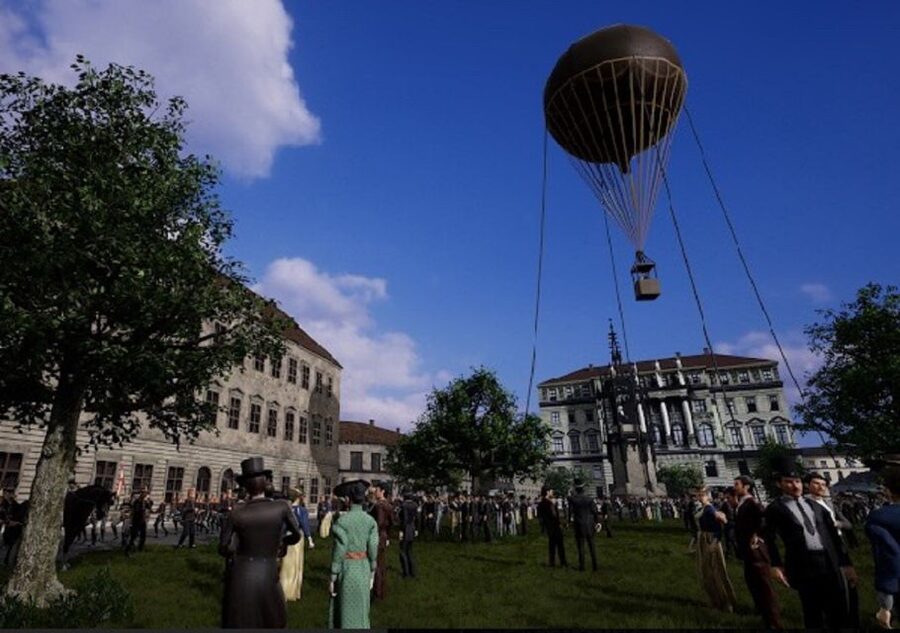
- Time jumps across centuries, from medieval building to WWII and 1956
- A live guide that helps you keep moving, plus audioguide narration through each display
- A bird’s-eye view over Budapest, giving you orientation when you’re back on the streets
- Hygiene-minded headset setup, with a sterile headset and hygienic mask option
Before the plan settles, compare this with a few more ways to spend time around Budapest.
- Budapest: City Highlights Cruise with Welcome Drink★ 4.6 · 35,610 reviews
- Budapest: Unlimited Prosecco, Beer and Aperol Spritz Cruise★ 4.8 · 25,310 reviews
- Budapest: Széchenyi Spa Day Ticket with Optional Upgrades★ 4.3 · 23,911 reviews
- Budapest: Nighttime or Daytime Sightseeing Cruise★ 4.2 · 21,062 reviews
Getting to Lánchíd u. 23 and climbing into the Castle District
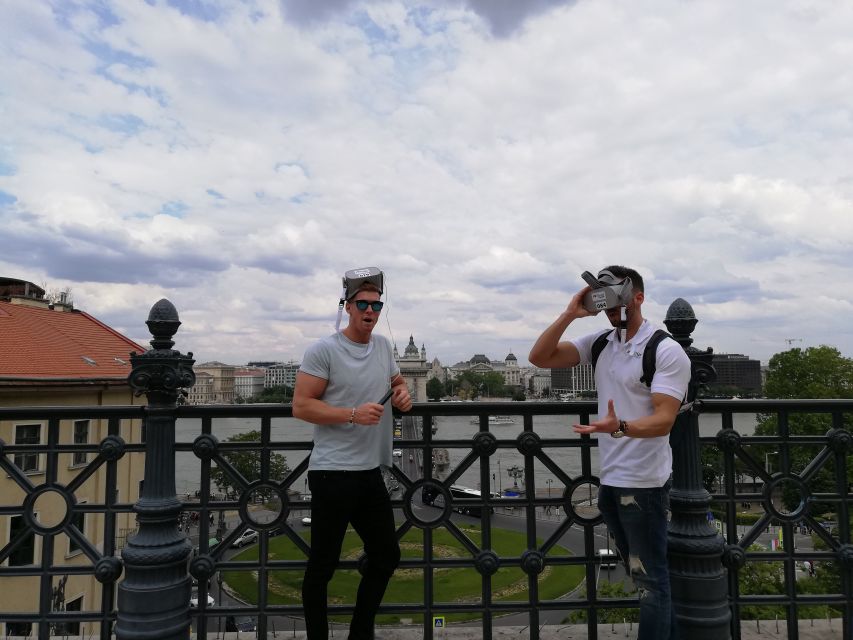
This tour starts at Budapest, Lánchíd u. 23, 1013 Magyarország. Look for the VR Tour flags facing the street, and plan to arrive 15 minutes early. That early arrival matters because you’ll check in, get fitted with the headset, and settle in before the group sets off.
From there, you head toward the Castle District, starting on the Buda side close to the Chain Bridge and Clark Ádám Square. You’re not stuck underground in a dark room. The tour keeps the setting real: you walk in a historic area, and then the VR overlay takes you somewhere else. That mix is the point. Budapest is easier to understand when you can still look around at the skyline and then compare what you see with what the past looked like.
Bring comfortable shoes, because the tour includes a light hike. In hot summer tours, bring something to drink too. Also, if you think you might be tempted to stroll up in sandals, don’t. The Castle District is a place where your feet will quietly file complaints if you ignore this.
Six VR stops: how the tour keeps you moving and learning
The rhythm of this experience is simple and smart. You meet your guide, put on the gear, then pause for VR about six times across the evening. Between stops, you walk, your guide helps the group get around, and the narration helps you connect what you’re seeing to Hungarian history.
At each VR stop, the audioguide does the heavy lifting. It explains what is happening in the moment in a way that makes the big picture clearer, not just a list of dates. That matters in Budapest, because the city has layers. Streets and buildings can look steady, but the stories underneath them changed fast.
Here’s what the sequence is built around:
- Medieval era, tied to the construction of the castle complex
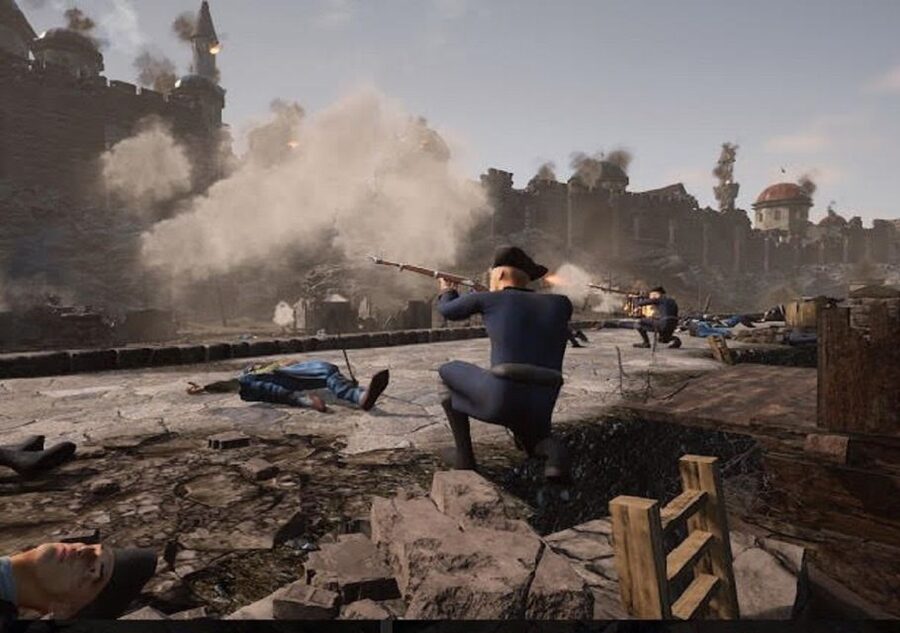
- Major conflicts, including brutal battles and major destruction
- World War II, shown as a turning point you can grasp rather than just read about
- The Hungarian Revolution of 1956, a defining moment in modern national identity
- A citywide, bird’s-eye view, which helps you place the story on the map
Not every stop is the same theme, but the structure stays consistent. You get a clear “watch and understand” segment, then a walk-and-orient segment. By the time you’re done, you typically leave with less of that classic tourist fog, where the city looks pretty but the timeline stays blurry.
Two practical tips I’d give you based on how this kind of tour tends to feel:
- Plan to look away from your phone while you walk between stops. Your guide’s cues and the street-level context help the VR make sense.
- If you are sensitive to motion or light, mention it before you start. You are wearing a headset and experiencing simulated scenes, so it’s better to be cautious early.
Medieval Buda Castle and the WWII scenes: what you actually see in VR
The centerpiece for the medieval portion is the Buda Castle and Royal Palace area, viewed through VR as the castle is under construction. In regular sightseeing, castles are monuments. In this format, they turn into a lived workplace, and the story becomes about people building, moving, and defending what they’re making.
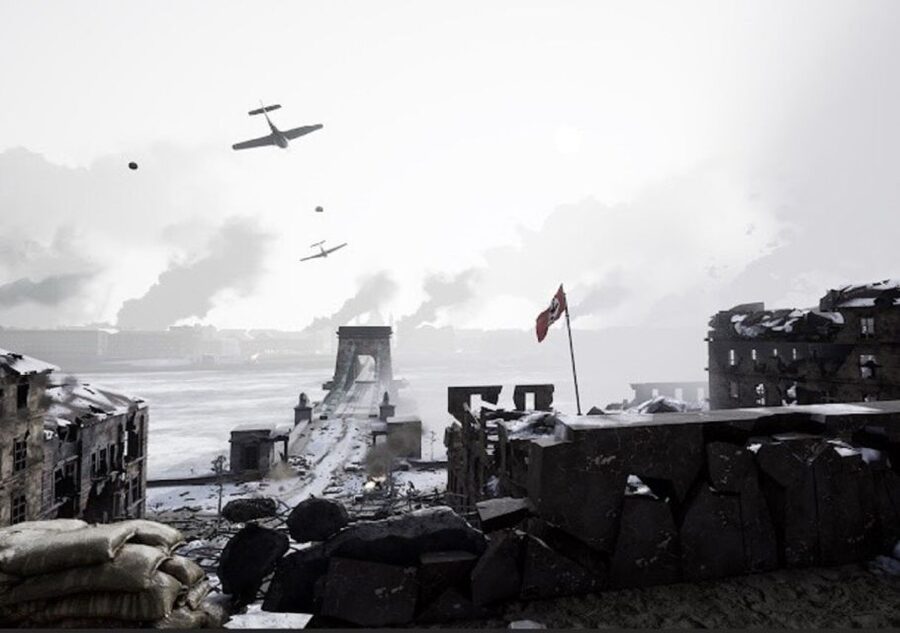
Then the tour does something that many “history” experiences avoid because it is hard to explain in a friendly way. It moves you into the reality of large-scale destruction during World War II. The VR isn’t just showing a war scene. The audioguide adds why it mattered and what it did to the country and its people. You’re not forced to memorize facts while also trying to enjoy a view. Instead, you get the narrative handed to you while you watch.
I especially like that the tour doesn’t stop at “look at this dramatic thing.” It keeps the meaning attached. When you see something destroyed or chaotic in VR, you also hear why those events reshaped Hungary. That connection is what turns the experience from spectacle into learning you can carry around the city later.
One more detail worth knowing: between VR stops, your guide leads you and helps you get around. That reduces the “where do we go now?” stress that can ruin the flow of short group tours. In this case, the tour design is built to keep you with the storyline.
1956 and a bird’s-eye sweep over Budapest
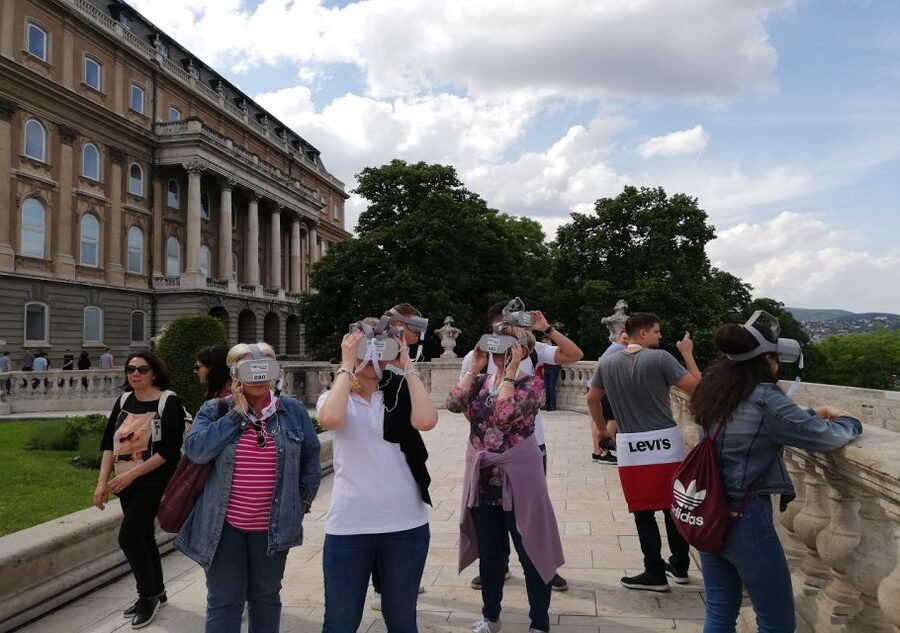
If you want modern history that still feels personal, the Hungarian Revolution of 1956 is a highlight. The VR scenes show the outbreak and the intensity of that period, then the narration contextualizes the significance for Hungarian history. Even if you do not know much coming in, the audioguide framing helps you understand why 1956 is not just another date.
Then, there is the payoff for your sense of place: a bird’s-eye view over the whole city. This kind of panorama does more than look cool. It helps you reconnect the VR scenes to what you can see today, which is crucial on a city like Budapest where neighborhoods stack on top of each other geographically and historically.
Here’s how you can get the most out of that bird’s-eye moment:
- Pay attention to orientation. Where you are standing on foot should match what you see above.
- Notice the Castle District placement. It’s easy to think of the area as just a hill with viewpoints, but the tour’s timeline helps you see why that spot mattered.
- After the VR, keep your head up during the walk. Your brain likes to compare.
As a bonus, the live guide adds human commentary as you move between stops. Audioguides do the explaining, but the guide is what keeps the experience from turning into a solo head-trial.
- Budapest: City Highlights Cruise with Welcome Drink
★ 4.6 · 35,610 reviews - Budapest: Unlimited Prosecco, Beer and Aperol Spritz Cruise
★ 4.8 · 25,310 reviews - Budapest: Széchenyi Spa Day Ticket with Optional Upgrades
★ 4.3 · 23,911 reviews - Budapest: Nighttime or Daytime Sightseeing Cruise
★ 4.2 · 21,062 reviews - Budapest: 1-Hour Evening Sightseeing Cruise with Drink
★ 4.5 · 8,330 reviews
What’s included, what to bring, and why $39 can be fair value
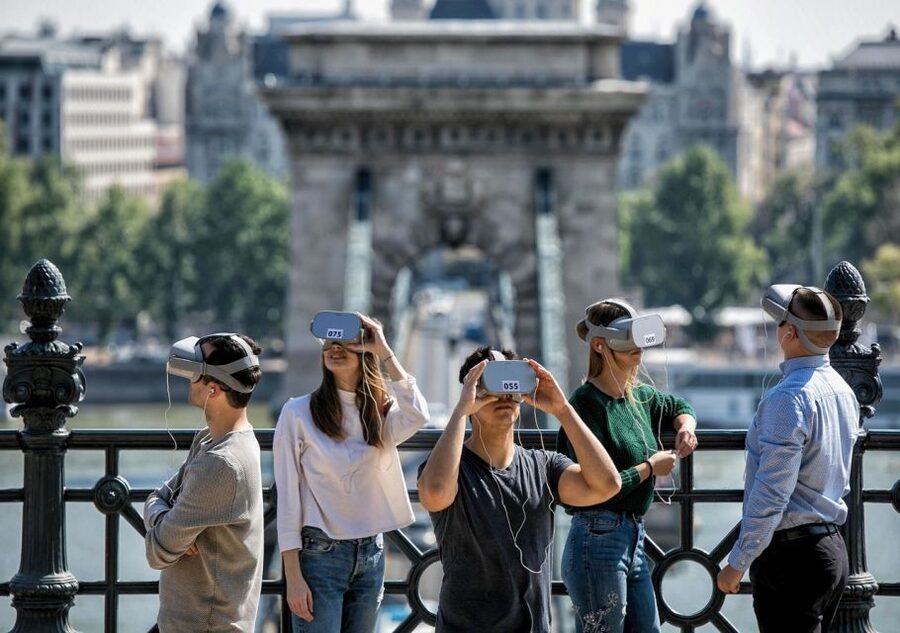
The headline price is $39 per person. Whether that feels like a good deal depends on what you want out of Budapest.
You’re paying for several things at once:
- Virtual reality gear, including a sterile headset
- A hygienic mask option upon request
- A tour guide
- Audioguides in eight languages (English, Chinese, German, Hungarian, Spanish, Russian, Italian, French)
- A format that combines VR with guided walking across a historic area
If you’re the type of traveler who loves “see it, then understand it,” this pricing can make sense. You are getting guided context, not just a headset experience. For some people, the cost is worth it because it compresses a lot of historical storytelling into a tight, structured evening format.
Now the practical stuff you should plan for:
- Bring passport or ID card, or 200 euros as a deposit for the VR headset.
- Wear comfortable shoes.
- If you’re visiting in hot weather, bring something to drink.
- It includes a light hike, so plan for some uphill walking in the Castle District.
Language coverage is also a big value point. Your live guide is available in English and Hungarian, while the audioguide includes eight languages. That means groups with mixed language needs are less likely to feel left out of the story.
One key caution from the tour’s own guidance: it is not recommended for people with migraines, and it’s not suitable for people with heart problems, epilepsy, mobility impairments, or people afraid of heights. Also, because you wear a headset for the VR segments, it can be a tough choice if you dislike simulation or get discomfort with visual effects. If any of those apply, skip the VR option and consider a more traditional walking tour where you stay fully in control.
Should you book this VR history tour?
Book it if you want a guided way to understand Budapest’s layers, especially the Castle District’s changing roles across centuries. I’d also recommend it if you like the idea of learning through a story format, not just reading plaques. The live guide plus audioguide narration is the sweet spot here, and the reviews emphasize how much people enjoy the fun, history-driven setup and the VR quality.
Skip it if you have any of the health and comfort flags listed, or if you strongly dislike VR and headset experiences. And if you hate walking, this one may feel annoying because it includes a light hike and you move between six VR stops.
If you match the basics, this tour is a clever way to put Budapest’s biggest historical turning points into your mental map. You’ll walk away with scenes you can picture, and with a clearer sense of why the Castle District is more than a postcard backdrop.
FAQ
Where does the tour start?
The tour starts at Budapest, Lánchíd u. 23, 1013 Magyarország. Look for the VR Tour flags facing the street.
How long is the Budapest VR tour?
It runs for about 1.5 hours based on the booking duration, and it feels like roughly 2 hours on the ground due to the time spent walking and stopping for VR.
What languages are available during the tour?
The live tour guide is available in English and Hungarian. An audioguide is included in English, Chinese, German, Hungarian, Spanish, Russian, Italian, and French.
Is the VR headset hygienic?
Yes. You receive a sterile headset, and you can request a hygienic mask.
What do I need to bring for the VR headset deposit?
Bring your passport or ID card. If you prefer, you can bring 200 euros as a deposit for the VR headset.
Is there walking involved?
Yes. The tour includes a light hike, and you will walk between VR stops.
Can I bring a drink during hot weather?
Yes, and it is recommended. The tour guidance suggests bringing something to drink during hot summer tours.
Is this tour suitable for mobility impairments?
No. The activity is not suitable for people with mobility impairments.
Who should avoid this tour?
It is not recommended for people with migraines, and it is not suitable for people with heart problems, epilepsy, or people afraid of heights.
More Tours in Budapest






More Tour Reviews in Budapest






Recently added around Budapest




Tours, compared.
 ★ 4.7Buda Castle Cave TourFrom $195,677 reviews
 ★ 4.1City Sightseeing Hop-On Hop-Off Bus Tour & ExtrasFrom $414,337 reviews
 ★ 4.6Buda Castle District Vampires and Myths Night TourFrom $233,830 reviews
 ★ 4.2Big Bus Hop-On Hop-Off Tour & Danube River CruiseFrom $403,794 reviews
 ★ 4.3Floating Bus Tour by Land and WaterFrom $283,342 reviews
 ★ 3.5Big Bus Budapest Hop-On Hop-Off Bus and Walking TourFrom $422,206 reviews
 ★ 4.6Buda Castle District Walking TourFrom $142,108 reviews
 ★ 5.0Budapest City Landmarks Walking Tour in 2 HoursFrom $32,048 reviews