
Tour review · BUDAPEST PARLIAMENT TOURS
Budapest walking tour: Parliament and Shoes Memorial
A walk that pairs icons with uncomfortable truth. This Budapest tour connects Hungary’s best-known landmarks with stories most guidebooks only hint at, from the Parliament area to the Shoes on the Danube Bank.
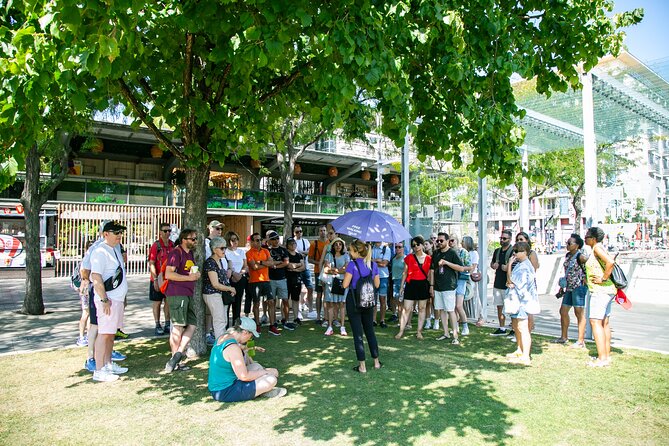
I really like the small-group setup, which keeps the pace easy and your questions actually get answered. I also like the mix of history plus legends, including the kind of local detail guides share when they know their audience has limited time.
One consideration: the Shoes memorial stop is emotionally heavy, so if you prefer light sightseeing only, this part may feel like a sudden shift.
Key things I’d zero in on
- Max 10 people, so you are not just a blur in a big crowd.
- English guide who can explain both famous sights and lesser-known legends.
- A thoughtful memorial stop at the Shoes on the Danube Bank, with context that matters.
- Downtown Pest flow, you will cover a lot of landmarks in about two hours.
- Local tips after the walk, helpful when you are trying to plan the rest of your trip.
Other ways inside and around Parliament
- Budapest: Parliament Building Entry Ticket and Audio Guide★ 4.5 · 3,844 reviews
- Budapest: Grand City Tour with Parliament Visit★ 4.4 · 1,598 reviews
- Budapest: Guided Tour of the Parliament Building in Spanish★ 4.6 · 1,240 reviews
- Budapest: Skyline Sightseeing Cruise with Parliament View★ 4.2 · 1,183 reviews
Price and value for a 2-hour Parliament and Shoes route
At about $3.63 per person for a roughly 2-hour guided walk, the pricing feels unusually friendly for what you get. You are paying for more than photos. You are paying for someone local to connect the dots between buildings, political identity, and the darker chapters that shaped Budapest.
The value gets even better because this is a guided small-group experience. That means you can ask follow-up questions while you are right in front of the place, instead of trying to figure it out later with a phone and a search bar. It also helps that the tour includes history, legends, and no-taboo conversations, which often translates to a guide who does not just read facts off a sign.
Do note one practical point: tips are not included, and if you like your guide, you will probably want to budget for that.
Meeting at St. Stephen’s Basilica, and how to actually find your guide
The tour starts at Szent István Bazilika (Szent István Basilica), with the walk ending at Kossuth Lajos tér. The start time is 11:00 am, so I’d treat this like a meeting, not a casual stroll.
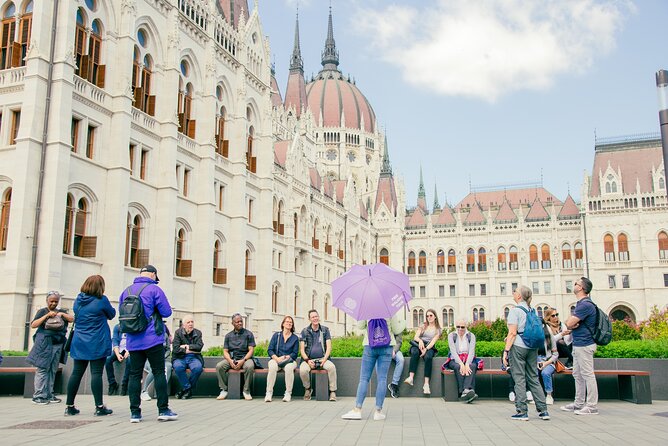
The basilica area can get crowded. A useful detail from real experience: the meeting point is not necessarily at the church front. It can be around the other side to your left when you look at the basilica façade. If you cannot spot your guide fast, one smart move is to ask other guides with colored umbrellas, since they are often familiar with where their colleagues are positioned.
If you want the smoothest start, arrive a little early and scan for the small-group feel. When the group is only up to 10 travelers, you will usually notice it quickly once you are in the right spot.
Stop 0: St. Stephen’s Basilica, legends before you even reach the Danube
Before you get to the Parliament and the riverbank, you spend about 15 minutes around St. Stephen’s Basilica. This is not a random warm-up. It helps you understand what Budapest considers foundational, both religiously and culturally.
The guide shares the basilica’s history and legends while you walk around for the short orientation portion. This matters because your later stops are loaded with symbolism. Once you have that “what does this represent” lens, you will notice it again and again as you move through the downtown core.
Also, this first stop sets the tone. Several guides on this route use humor and invite interaction, so it feels like a real conversation rather than a lecture. If you are visiting for a first time, this makes it easier to remember what you see next.
Hungarian Parliament Building: the golden dome and why you pause
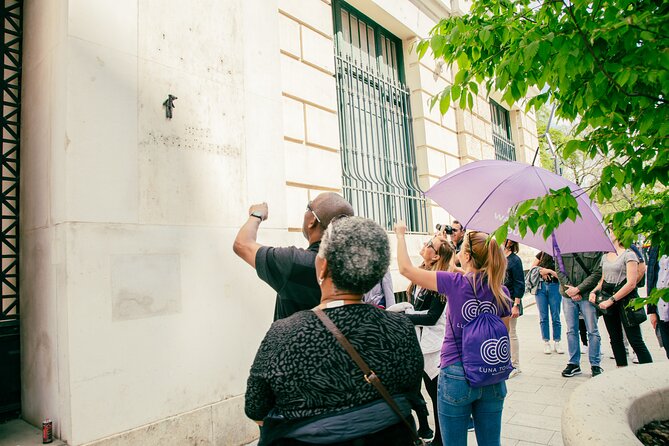
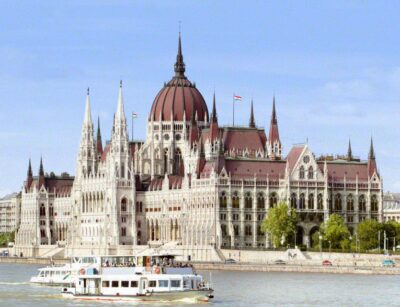
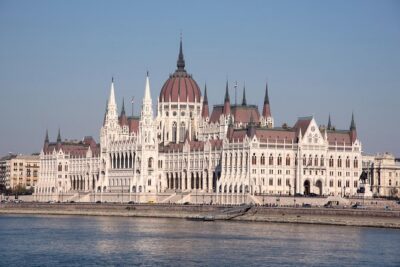
The Hungarian Parliament Building stop is about 15 minutes, and it is a natural highlight. The golden dome and intricate façade are the obvious draw, but the guide’s job is to help you read the place like a story.
You can look at the exterior and still miss the meaning. A good guide points out how the building reflects Hungary’s spirit, heritage, and resilience, which is especially relevant when you later visit the Shoes memorial. In other words, this stop sets up the emotional contrast of the route.
Important practical note: the admission ticket is not included. In a short walking tour like this, you should assume you’re mostly experiencing the Parliament from the outside. That is fine. If you want interior access, you will likely plan that separately.
Budapest on foot, with a few more routes to compare
- Budapest: Buda Castle District Walking Tour
★ 4.6 · 2,108 reviews - Budapest City Landmarks Walking Tour in 2 Hours
★ 5.0 · 2,048 reviews - 3-Hour Orientation Walking Tour of Buda and Pest
★ 4.8 · 1,834 reviews - Budapest Historical Sightseeing – Free Walking Tour
★ 5.0 · 1,302 reviews - Budapest All in One Small Group Walking Tour with Strudel Stop
★ 5.0 · 1,277 reviews
Shoes on the Danube Bank: visiting a Holocaust memorial with real context
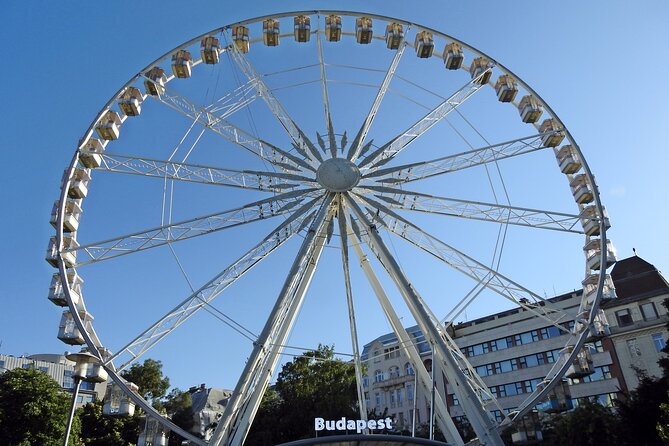
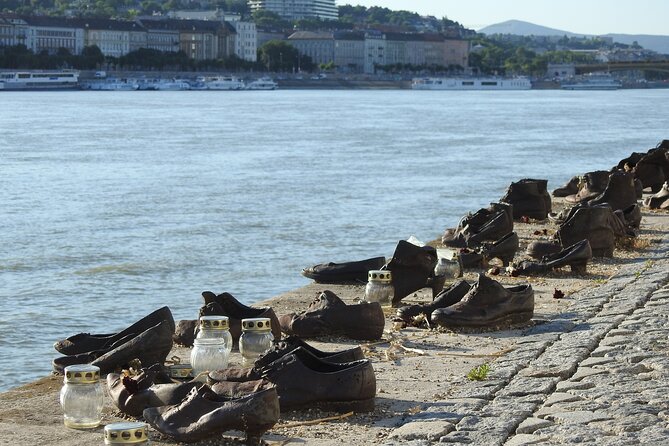
Then you reach one of the most powerful stops in the whole city: Shoes on the Danube Bank. This is another 15-minute pause, and the memorial is free.
This spot is intentionally stark. The memorial honors Holocaust victims in Budapest, using the image of shoes to make the loss feel immediate. Without context, it can feel like a quick photo stop. With context from a guide, it becomes something else: a moment that forces you to slow down and actually think.
Plan for the emotional tone here. This is not “sad statue, next stop.” The guide’s explanation turns it into a place you can understand, not just stare at. If you are traveling with kids or people who dislike heavy topics, you might consider how they handle emotionally intense moments before you book.
Vörösmarty Square and Café Gerbeaud: the sweet pause in the middle of town
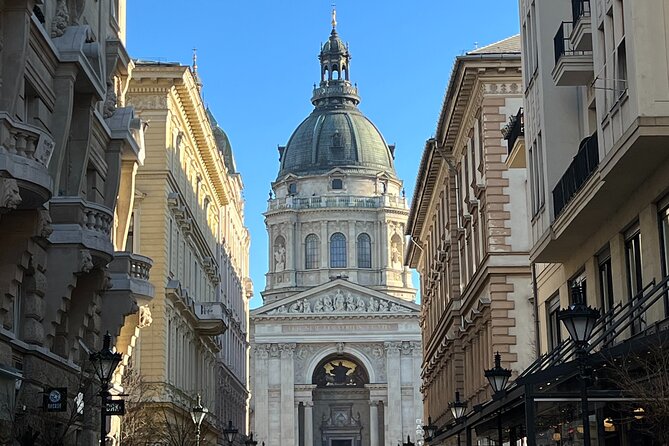
After the memorial, you move to Vörösmarty Square for about 10 minutes. The square is described as a historic meeting point and it sits in Budapest’s UNESCO-listed area. The key value here is that you get a breather from the emotional intensity while still staying in the heart of downtown.
Right there, you also stop at Café Gerbeaud for another 10 minutes, with no admission ticket required for this stop. The café is famous for its Gerbeaud family legacy and the classic Gerbeaud slice, plus an ornate, old-world interior vibe.
This stop is practical even if you do not sit down. You get an easy moment to refocus, stretch your legs, and decide whether you want a snack during the rest of your day. It also helps you shift from “memorial and monument” mode into “living city” mode.
Szechenyi Lánchíd (Chain Bridge): lions, unity, and construction lore
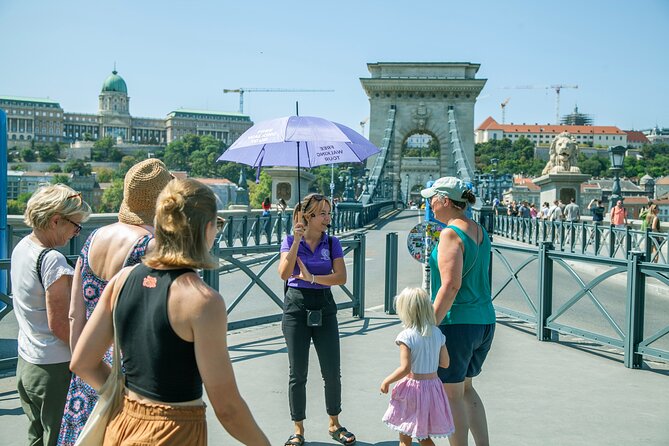
Next is Szechenyi Lánchíd, about 10 minutes. The Chain Bridge is one of Budapest’s most recognizable links between Buda and Pest, guarded by stone lions.
A good guide will not just say what you can see. They will share the legends and history around the bridge, including stories tied to its construction and the symbolism of connecting two sides. When you look at the arches after hearing that kind of context, the bridge stops being a generic postcard bridge and becomes a city story written in stone.
If you love photo moments, this is a strong place for it. Just remember: you are walking, so you might want to keep your phone ready but your head up.
Pesti Vigadó: Romantic architecture on the Danube side
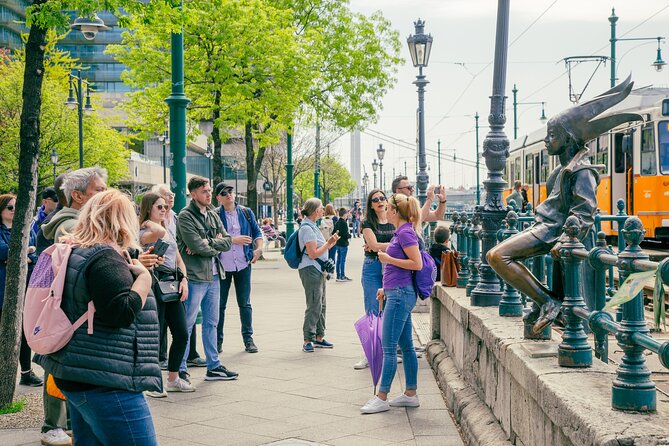
You then reach Pesti Vigadó (Vigadó) for about 10 minutes. This is Budapest’s grand concert hall on the Danube, known for Romantic architecture and an ornate façade.
The guide’s angle here is the cultural role of the building. You get the idea that this place has long been a gathering spot for emperors and artists, and today it continues to host events. Even if you never go inside, a guided look makes the exterior feel meaningful, not just decorative.
This stop is also useful for pacing. After the bridge, it gives you a different kind of landmark to process, one that connects Budapest to arts and performance.
Hungarian Academy of Sciences: language pride and inventions you might recognize
The route continues with about 10 minutes at the Hungarian Academy of Sciences. This stop is for the neoclassical architecture, yes. But the more important value is what the guide explains: the Academy’s role in preserving the Hungarian language and supporting science and innovation.
The guide also ties Hungary’s contributions to inventions many people already know, with examples like the Rubik’s Cube and the ballpoint pen. That is the kind of connecting detail you tend to miss when you only read standard travel blurbs.
This stop works well if you like your travel to include more than landmarks. You walk away understanding why intellectual pride is part of Hungary’s public identity.
Erzsébet tér, Danubius Fountain, and the Danube as the city’s heartbeat
From there it’s around 10 minutes at Erzsébet tér (Elizabeth Square), then about 5 minutes at the Danubius Fountain. Both are free stops.
Erzsébet tér is described as the main square, with the Budapest Eye Ferris wheel and fountains. The Danubius Fountain gives you a visual interpretation of the river itself, with sculptures meant to represent the Danube and its tributaries. The guide frames it as Hungary’s lifeblood, which helps you see the city’s layout as more than street grid and bridges.
If you want one practical takeaway, it’s this: the Danube is not just scenery. The river shows up in architecture, public spaces, and the way Budapest tells its story.
Gresham Palace: a luxurious landmark that still feels historic
The last stop is Gresham Palace for about 10 minutes, now a Four Seasons hotel. The guide notes its long association with luxury and elite visitors, naming big names like Winston Churchill, Queen Elizabeth II, Clint Eastwood, Catherine Zeta-Jones, and Jennifer Lawrence.
Even if you never step inside, the exterior view and the context help you understand how power and wealth have shaped Budapest’s “public face.” It is a good closing note after the Parliament and the memorial, because it shows another side of the same city: how Budapest presents itself to the world.
Who this tour fits best, and who might want a different plan
This is a smart choice if:
- You want an efficient first-day walk across major Pest landmarks.
- You like asking questions and getting direct answers, not just hearing a monologue.
- You enjoy local legends and humor mixed with real historical context.
- You want help with planning after the walk. The guide is expected to share personal recommendations for restaurants, bars, museums, and spas.
It may be less ideal if:
- You want only light, purely scenic sightseeing.
- You dislike emotionally heavy topics, since the Shoes memorial is part of the route.
- You need long stops for photos or inside visits, because the pacing is designed for a two-hour overview.
One more useful detail: the walking is described as flat and manageable, which makes it easier for people who do not want steep hills or long uphill tramps.
Should you book the Budapest Parliament and Shoes walking tour?
If you are choosing between a generic landmarks walk and a guided route that connects landmarks to meaning, I’d lean toward this one. The combination of a small-group pace, a guide who mixes history with legends, and the inclusion of the Shoes on the Danube Bank with context gives you more than a checklist.
Book it if you want to understand Budapest faster. You will still get your classic icons, but you’ll also get the human stories and the local framing that makes the city feel real.
Skip it only if heavy history would genuinely ruin your mood. Otherwise, it is a solid use of two hours, especially on day one when you want to get your bearings.
FAQ
How much does the Budapest walking tour cost?
The price is listed as $3.63 per person.
How long is the tour?
The tour lasts about 2 hours.
Is the tour offered in English?
Yes, it is offered in English.
What is the group size?
This experience has a maximum of 10 travelers.
Where does the tour start and end?
It starts at Szent István Bazilika and ends at Kossuth Lajos tér.
What time does the tour start?
The start time is 11:00 am.
Is the Hungarian Parliament Building admission included?
No, the Parliament stop notes that the admission ticket is not included.
Is the Shoes on the Danube Bank stop free to enter?
Yes, the Shoes on the Danube Bank stop is listed as free.
Are tips included in the tour price?
No, tips are not included.
Is there free cancellation?
Yes. You can cancel for a full refund up to 24 hours before the experience starts.
Keep Walking Budapest






More Ways to See Parliament






More Tour Reviews in Budapest





Recently added around Budapest




Budapest Parliament Tours, compared.
 ★ 4.5Parliament Building Entry Ticket and Audio GuideFrom $453,844 reviews
 ★ 4.4Grand City Tour with Parliament VisitFrom $701,598 reviews
 ★ 4.6Guided Tour of the Parliament Building in SpanishFrom $411,240 reviews
 ★ 4.2Skyline Sightseeing Cruise with Parliament ViewFrom $141,183 reviews
 ★ 4.0Parliament Tour in Budapest with Audio GuideFrom $43814 reviews
 ★ 4.0Budapest Guided Half-Day Grand City Tour with Parliament VisitFrom $71213 reviews
 ★ 5.01 Hour Budapest Segway Tour – Parliament HightailsFrom $47172 reviews
 ★ 4.55 Hours Private Budapest First Class Tour with Parliament optionFrom $25819 reviews
Browse the lists this tour appears in