
Tour review · BUDAPEST CITY SIGHTSEEING TOURS
Cinematic Virtual Reality City Tour in a Russian Jeep
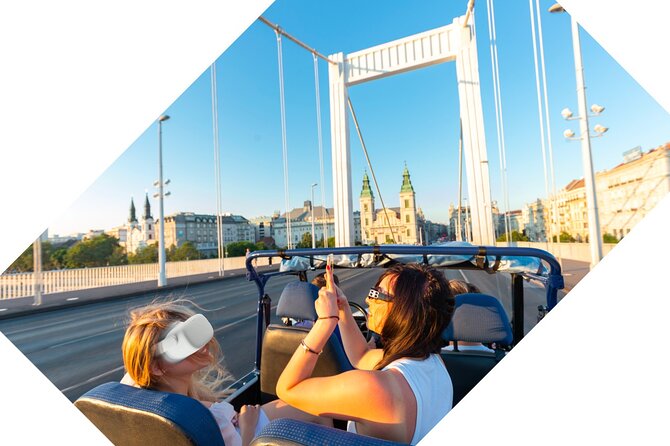
Budapest feels cinematic in a Jeep. This Cinematic VR tour lets you swap guidebooks for a VR headset, then watch 2D video scenes at major landmarks as you roll through the city in a Russian Jeep. I especially like how the drive keeps the pace relaxed, and how the stops line up with what you would want to see anyway.
I also like the human touch, since you travel with an in-person English guide, plus a private setup that feels more like your own small group plan than a crowded bus route. One possible drawback to note is that VR headsets are not recommended for people with epilepsy.
Key points worth knowing before you go
- Russian Jeep ride plus hotel pickup: you spend less time figuring out transit and more time looking at Budapest.
- Cinematic 2D VR at each stop: you watch landmark-linked scenes instead of just reading plaques.
- Private, family-friendly feel: it is set up for a smaller group experience.
- A packed route in about 2 hours: you cover Castle Hill through the Danube, then out toward Andrássy Avenue and major squares.
- Small ticket caveats: Matthias Church is not included, and only the upper level of Fisherman’s Bastion requires admission.
A Jeep Ride With Cinematic VR, 2D Videos Included
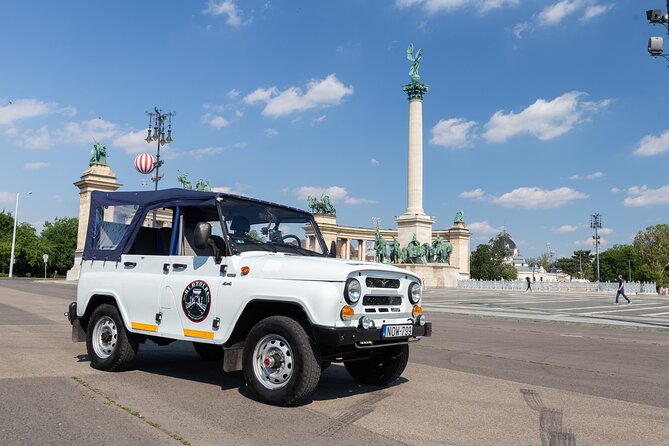
This tour is simple to understand and fun to experience: you ride in a Russian Jeep, then at carefully chosen viewpoints you put on a VR headset and watch cinematic 2D scenes that connect each place to moments in Budapest’s past. Instead of standing on a street corner trying to imagine what used to be there, the visuals do the heavy lifting. The result is faster context, and usually less effort for your brain.
The “best value” part here is the pairing. Budapest landmarks can be amazing, but they can also feel like disconnected postcard backdrops. With this format, you get both the real-world setting and the time-layered story at the same moment. And because the day is short, the VR format helps you get something meaningful without turning the trip into a long walking test.
You should still know what this is not. It is not a museum ticket day, and it is not a deep, inside-the-building kind of program. If your dream is to go inside every site you pass, you will want to add separate visits on your own.
Also, you will get the basics covered for comfort. You have bottled water, and in winter you get hot tea. That matters more than it sounds when you are outside for viewpoints, putting on the headset, then riding to the next stop.
More ways to put both banks into one city loop
- Budapest: City Sightseeing Hop-On Hop-Off Bus Tour & Extras★ 4.1 · 4,337 reviews
- Budapest: Big Bus Hop-On Hop-Off Tour & Danube River Cruise★ 4.2 · 3,794 reviews
- Big Bus Budapest Hop-On Hop-Off Bus and Walking Tour★ 3.5 · 2,206 reviews
- Budapest: Grand City Tour with Parliament Visit★ 4.4 · 1,598 reviews
Castle Hill: Castle Garden, Fisherman’s Bastion, Matthias Church
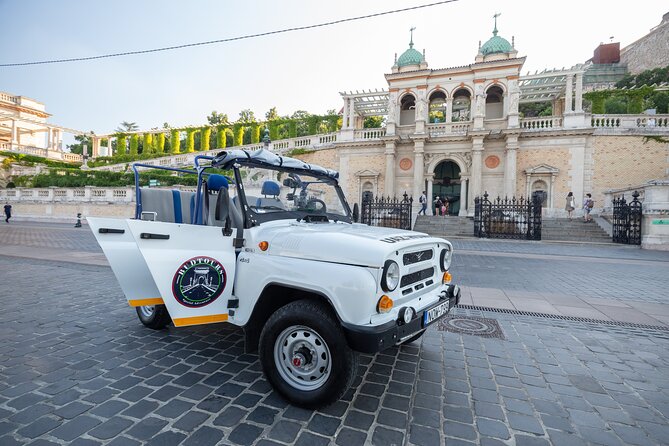
Castle Hill is one of the best places to start, and this route commits to it. You begin at the Castle Garden Bazaar area inside the wider Buda Castle complex. This is a Neo-Renaissance style spot that often feels like a mix of historic architecture and everyday culture. The payoff for you is timing: it is a good first stop because you are still fresh, and you can orient yourself for the bigger Castle Quarter climbs and views later.
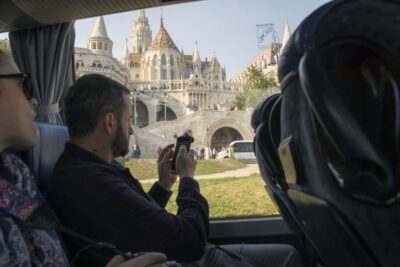
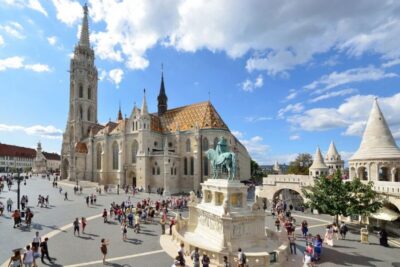
Next up is the Chain Bridge area, but before you leave Castle Hill, the tour plans for one of Budapest’s most photogenic viewpoints: Fisherman’s Bastion. This place looks ancient, but the story you learn while you are there is that it was built in the early 20th century to celebrate Hungary’s 1000th birthday. That contrast is exactly the kind of “wait, really?” detail that makes the VR scenes feel worth it. You get skyline views over the river and the city, then a visual time-shift to connect the look with the story.
Matthias Church is included on the itinerary, but the key detail for your planning is that entry is not included. So you can still appreciate what you see from the outside and from your stop timing, but if you want to go inside, budget extra for the ticket. The church interior is described as a striking mix of styles, with an interior that blends different influences and finishes, plus a Neo-Gothic vibe on top. Even if you skip the interior, it is still a meaningful stop because it is a focal point in this area.
Why I think these stops work together: Fisherman’s Bastion gives you the view anchor, Matthias Church gives you an architectural anchor, and the VR scenes give you the missing “why this matters” piece in a way that feels direct.
Danube Landmarks: Chain Bridge, St. Stephen’s Basilica, Old Erzsébet Bridge
If Castle Hill gives you the postcard angles, the Danube crossings give you the drama. The tour hits the Széchenyi Chain Bridge, one of Budapest’s signature sights. The story thread you get here is tied to Count István Széchenyi, the name behind the bridge, and the bridge’s engineering significance at the time. When you stand by it, the VR helps you understand how landmark-scale projects were tied to national ambition, not just transportation.
After the Chain Bridge moment, the route keeps moving through Pest and toward big civic and religious landmarks. You will also pass St. Stephen’s Basilica area as part of the overall plan. It is noted as honoring Hungary’s first king and as the third largest church in Hungary, with the tallest church in Budapest. The tour framing focuses on its World Heritage Site status, and that gives you a reason to see it as more than just a pretty dome from the street.
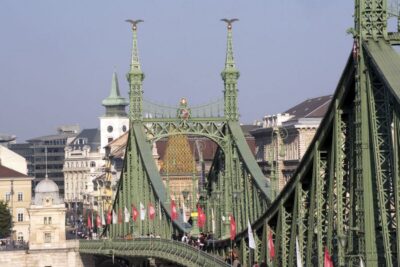
Later, you get another bridge time comparison: the old Erzsébet Bridge. The tour points out that it stood from 1903 to 1945, and you learn about the construction period and the long run of holding records in its category for 25 years, plus being Danube-record-holder for 70 years. That is a lot of technical bragging power, but it also explains why this bridge mattered for decades.
For your experience, the bridge sequence is a practical win. You will notice how the Danube is not just scenery. It is a “story spine” that links Buda and Pest, plus it shapes how Budapest grew.
One tip: when you pause at bridge viewpoints, keep your phone and bags secure before putting on the headset. Headsets make you a little less aware of your surroundings, and you want the only surprise to be the time shift in the video.
Parliament and Big City Sights From the Road
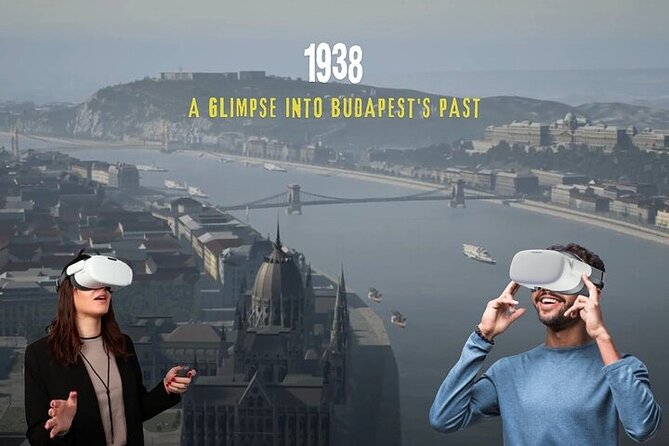
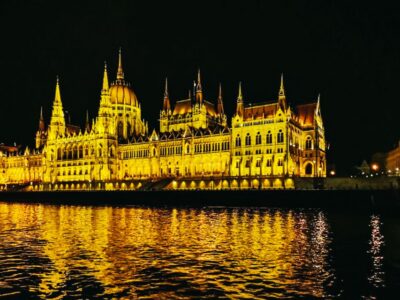
The Hungarian Parliament Building is one of those places where even seeing it from the outside feels important. This tour includes a pass by the Parliament along the Danube. You learn the building’s neo-Gothic design identity and that it has been the country’s largest building since construction. The guide-led VR component here is about turning the building into a character in the city story, not just a backdrop for photos.
The value of doing Parliament by pass-by is timing. In about two hours, you cannot realistically do everything. By keeping it as a guided moment, you get the meaning fast. You also avoid the common trap of spending time in lines for inside views when you came for quick context.
This same “see the key from the outside” approach applies across other road moments, including the House of Terror area on Andrássy Avenue. The tour frames the House of Terror as a museum and memorial tied to Hungary’s 20th-century struggles under fascist and communist regimes, and it highlights that the site remembers people who were imprisoned, interrogated, tortured, or lost their lives. Since the itinerary includes it as a pass-by, this is not your full museum day, but it is still a strong moment to register why the avenue has such historical weight.
If you want to go deeper later, this tour acts like a first chapter. It helps you decide whether you want to return for a longer, ticketed visit.
Andrássy Avenue to the Opera: UNESCO Boulevard Stops and Pass-By Sights
Andrássy Avenue is the kind of street where the buildings are part of the story. The tour includes a stop here, describing the boulevard as UNESCO World Heritage Site territory and lined with Neo-Renaissance buildings. You also get the “real-life” layer: the avenue is known for boutiques, cafes, and elegant restaurants, plus major cultural institutions.
The highlight on this stretch is the Hungarian State Opera House. The tour plan includes it as a stop, with architecture details such as symmetrical design and composer statues on the facade. Inside details are mentioned too, including marble sphinxes, frescoes, and gold accents. You then add the VR layer to step back into the opera’s golden age through cinematic scenes.
The practical advantage is that Andrássy Avenue is a long, scenic corridor. Walking the whole thing can take time, and public transport logistics can feel annoying when you are trying to keep a tight schedule. Here, you get the corridor experience without committing to a full walking day.
Also, this is where your headset moments become a contrast exercise. You look at the street and buildings in daylight, then you watch the older scenes and try to “match” what you see. That is the kind of mental puzzle that makes short tours feel longer and more satisfying.
More Budapest ideas for the space still left in the itinerary
- Budapest City Landmarks Walking Tour in 2 Hours
★ 5.0 · 2,048 reviews - Budapest: Danube River City Lights Express Cruise
★ 4.1 · 1,608 reviews - Budapest: 3-Hour Grand City Tour and Castle Walk
★ 4.3 · 1,437 reviews - Budapest: Hungarian Chimney Cake Workshop in the City Center
★ 4.8 · 885 reviews - Budapest: Guided City Discovery Bike Tour
★ 4.7 · 702 reviews
Heroes’ Square, Blaha Lujza, and Ferenciek Square in Time-Shift
The tour does not stay only on the tourist-heavy beats. It threads through key squares that show different Budapest moods.
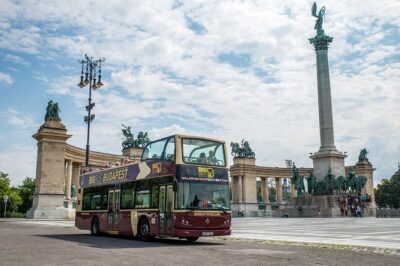
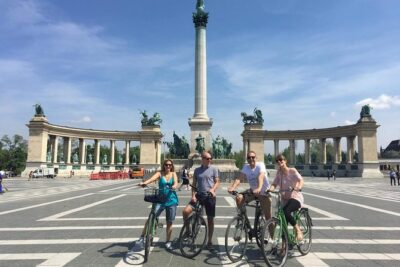
At Heroes’ Square, you learn what makes the place recognizable: the Millennium Monument, statues of important Hungarian leaders, and the Seven Chieftains of the Magyars. It is a big composition, and in a short tour, it is a smart inclusion because it gives you a national “scale” feeling. You also get the location context, since it sits at the end of Andrássy Avenue near City Park.
Then the route heads to Blaha Lujza tér, one of the busier areas in Budapest. The tour frames it historically through the area’s earlier identity, including the National Theatre that once stood there. In the present, the square links into the modern Corvin Plaza area. The VR time shift is the point: you see the place as a living setting, not just a place you walk through.
Ferenciek Square and nearby Paris Garden get a more relaxed angle. The tour notes Paris Garden as one of Budapest’s charming hotel cafes, plus Klotild Palace as a royal family property. You also get another time-shift VR moment to show what the square looked like in its former glory. This segment is a nice pace change. After monuments and major avenues, you get something more human-scaled.
Finally, there is a built-in cafe stop option, New York Palace, which the tour notes as a frequently recognized cafe, chosen as cafe of the year several times. The tour does not promise a full sit-down meal. Still, it is a convenient place to grab a coffee or tea if you want to round out the day.
Value at $3, Timing, and Ticket Notes
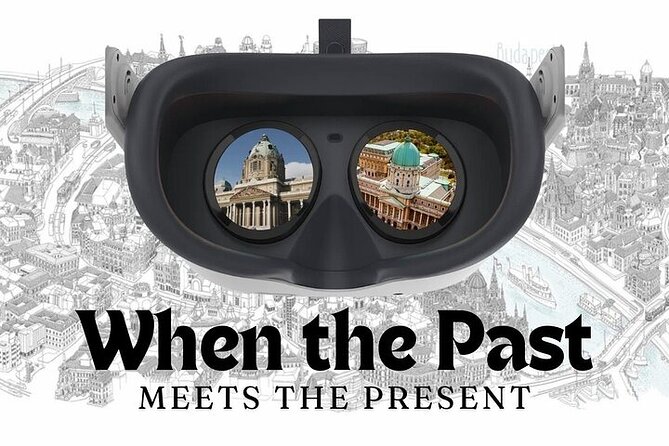
Let’s talk value, because $3 sounds almost too good. The price makes sense only if you look at what is actually included: private transportation, hotel pickup and drop-off, VR equipment, bottled water (and hot tea in winter), plus an in-person English guide and private guidance.
In other words, you are paying for a guided, time-saving circuit plus a VR add-on that turns your stops into mini story sessions. Two hours is short enough that the cost feels easier to justify, especially if you are trying to see the main arcs of Budapest without spending half a day in lines.
The trade-off is that the tour is not trying to replace every ticketed attraction. Matthias Church is listed as admission not included. Fisherman’s Bastion is mostly free in terms of view access, but only the upper level requires an admission fee. Opera and Parliament are also handled in a pass-by or exterior stop format, with no promise of paid interior access in the tour inclusions.
So my practical advice is this: treat it as a high-impact orientation tour. If you later want a longer, ticketed church visit, a museum session, or an inside look at any major building, this VR ride helps you choose what matters most to you.
Also, because this is a private tour/activity, you are not stuck in someone else’s pace. It is designed around your group.
And one more value note, based on real-world feedback: the ride itself feels like part of the fun. One named driver, Zsombor, is described as attentive and funny, with lots of questions answered and scenic routing mentioned through Gellért Hill. That kind of driver energy can turn a simple circuit into a memorable ride, even with a headset on.
Should You Book This VR Jeep Tour in Budapest?
I think this is a smart booking if you want a quick, story-led overview of Budapest that feels playful instead of lecture-heavy. You are likely to enjoy it most if you:
- like visual storytelling and want context fast
- want to cover major highlights in about two hours
- prefer a private setup with hotel pickup instead of figuring out transit
- are comfortable using VR headsets during short stops
You might skip it if you need to be inside lots of buildings, since the plan is built around viewpoints, pass-bys, and VR story moments rather than full ticketed attractions. You also should not book it if you have epilepsy, since it is not recommended for people with that condition.
If you do book, you will probably come away with something useful, not just photos. You will remember how bridges connect Buda and Pest, why Castle Hill looks the way it does, and how Andrássy Avenue’s architecture ties into the city’s modern identity.
If your goal is to understand Budapest quickly, then use the rest of your trip for deeper independent exploration, this is a great start.
FAQ
How long is the Cinematic Virtual Reality City Tour in a Russian Jeep?
The tour lasts about 2 hours.
Is hotel pickup and drop-off included?
Yes. Hotel pickup and drop-off are included.
What drinks are provided during the tour?
You get bottled water, and in winter you also get hot tea.
Do I need to pay for Matthias Church or Fisherman’s Bastion?
Matthias Church entry is not included. For Fisherman’s Bastion, only the upper level requires an admission fee.
How much does the tour cost?
The price is $3.
Is the tour recommended for people with epilepsy?
No. It is not recommended for travelers suffering from epilepsy.
More Tours in Budapest





See Both Banks, Other Ways



More Tour Reviews in Budapest





Recently added around Budapest



Budapest City Sightseeing Tours, compared.
 ★ 4.6City Highlights Cruise with Welcome DrinkFrom $1435,610 reviews
 ★ 4.1City Sightseeing Hop-On Hop-Off Bus Tour & ExtrasFrom $414,337 reviews
 ★ 4.2Big Bus Hop-On Hop-Off Tour & Danube River CruiseFrom $403,794 reviews
 ★ 3.5Big Bus Budapest Hop-On Hop-Off Bus and Walking TourFrom $422,206 reviews
 ★ 4.4Grand City Tour with Parliament VisitFrom $701,598 reviews
 ★ 4.33-Hour Grand City Tour and Castle WalkFrom $491,437 reviews
 ★ 4.43-Hour Live Guided Sightseeing TourFrom $351,041 reviews
 ★ 5.0Budapest Highlights Bike TourFrom $39770 reviews
Browse the lists this tour appears in