
Tour review · HISTORICAL TOURS
Classic Walk in Budapest Historical Center
Budapest in a short walk is a gift. This classic 2-hour stroll through Pest gives you a fast, friendly introduction to the area’s top sights and the big story behind them. I like that the tour keeps things practical while still making time for the postcard views along the Danube.
Two things I especially like: the tour feels small and manageable, and the guides pace it for real people, not tour-book robots. In one example, Oliver was reported as friendly and attentive, and another guide was careful about shade and comfort during the walk. The second big plus is the way you get context, especially around major Hungarian events, so the places you see feel connected, not random.
One possible drawback to consider: the pace can include longer stops where the guide explains and you stand and look. If you prefer nonstop walking and shorter commentary, you might wish for slightly less time paused at each stop.
Key highlights worth knowing before you go
- Small group feel that helps you ask questions and keep your bearings without a crowd crush
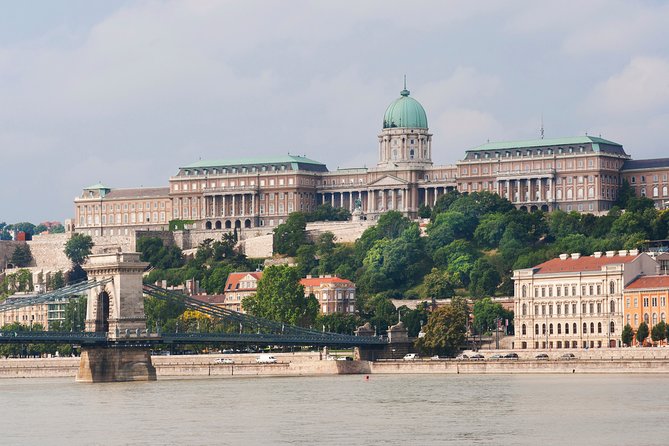
- Danube views with Buda Castle across the river, framed by the famous bridges
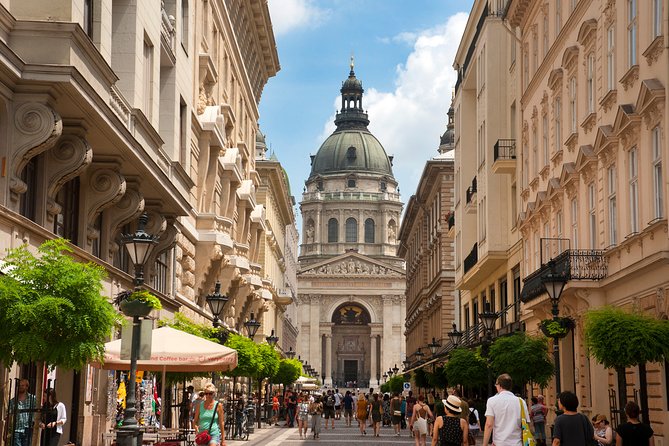
- St Stephen’s Basilica and Parliament area finishes, great for first-timers who want a legible route
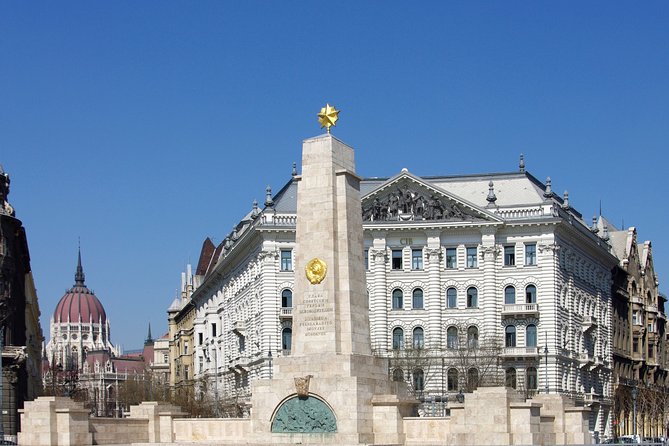
- Squares tied to 20th-century Hungary, including occupation monuments and the 1956 revolution
- Food-friendly stops near classic pastry shops and café terraces along the pedestrian zone
Budapest on foot, a few more ways
- Budapest: Buda Castle Walk with Saint Stephen’s Hall★ 4.5 · 3,012 reviews
- Big Bus Budapest Hop-On Hop-Off Bus and Walking Tour★ 3.5 · 2,206 reviews
- Budapest: Buda Castle District Walking Tour★ 4.6 · 2,108 reviews
- Budapest City Landmarks Walking Tour in 2 Hours★ 5.0 · 2,048 reviews
Getting oriented fast in Pest, the walk that ties sights together
If it’s your first time in Budapest, Pest can feel like a lot at once. This walk helps you connect the dots quickly, starting in the busy pedestrian core and working toward the Danube and the major civic landmarks.
You’re out for about 2 hours, and the focus is “overview, not everything.” That’s a smart approach if you want to understand where things sit and what to prioritize later. You get a local guide’s recommendations too, which is often where the real value shows up, like knowing what area is best for a sweet stop or a relaxed café pause.
This also works well if you like history but don’t want a lecture that eats your entire day. The route keeps circling back to how Hungary’s past shows up in the street scene.
Meeting at Váci Street, and why this start matters
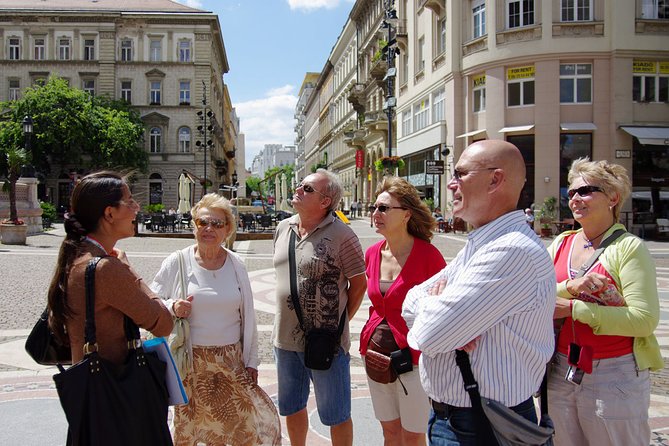
The tour begins at Molnár’s kürtőskalács, at Váci u 31, 1052. That location is handy because you’re immediately in the pedestrian shopping zone, where you can actually feel Budapest’s everyday energy.
From there, you hit Váci Street, the famous car-free shopping street. The short stop is intentional. You get atmosphere first, then you move on before the “interesting but crowded” part turns into exhaustion.
One practical tip: kürtőskalács is a classic Hungarian chimney cake, and even if you do not buy anything right away, the area is a good reference point later. If you find the group moves fast, you can still comfortably retrace your steps on your own afterward.
Danube views and Pesti Vigadó, where architecture does the talking
After Váci Street, you walk toward the river and along the “Blue Danube” area. What you want here is the view line: the historical bridges in front, the water channeling your attention, and Buda Castle across the river.
This is one of those spots where a guide’s quick framing helps. You’re not just staring at water, you’re seeing how the city’s geography shapes the whole experience, even if you never cross to Buda on this particular tour. If you plan photos, aim to keep your eyes up and scan for bridge silhouettes, because that’s where the best compositions usually sit.
Next up is Pesti Vigadó, the 1860s dance palace in a Hungarian Romantic style. You get about 10 minutes here, and the point is appreciation without pressure. You can look for the building’s ornate character and take in why it mattered to Hungarian aristocratic culture at the time.
A note about access: any interior time is not the goal. Admission for this stop is listed as not included, so expect mostly exterior viewing and explanations rather than a full museum visit.
The pedestrian street ending, pastries in your peripheral vision
As the walk reaches the end of the pedestrian street, you land at a square bordered by some of the best pastry shops and café terraces in the city. Even with a short stop, this is valuable because it gives you a realistic “what now?” moment.
When you travel, it’s easy to waste time asking, Where should I eat? This tour gives you timing and context so you can plan your next bite while you’re still in the right neighborhood. If you want a sweet break, this is one of the most logical points in the route to do it.
The downside is simple: if you’re hungry and the group keeps moving, you might not get long sit-down time. That’s why it helps to decide ahead of time if you want a quick snack or a proper café pause.
More Budapest ideas for the space still left in the itinerary
- Budapest: Historic Cruise with Welcome Drink
★ 4.7 · 6,512 reviews - Budapest Historical Sightseeing – Free Walking Tour
★ 5.0 · 1,302 reviews - Buda Castle District Dark History, Legends and Vampire Night Tour
★ 4.5 · 1,240 reviews - BloodThirsty Hungary: Walking tour & Dark Historical Stories
★ 4.9 · 633 reviews - Budapest Jewish Heritage Memorial Walking Tour & Synagogue Entry
★ 5.0 · 568 reviews
Elizabeth Square: fountain monument and a giant ferris wheel
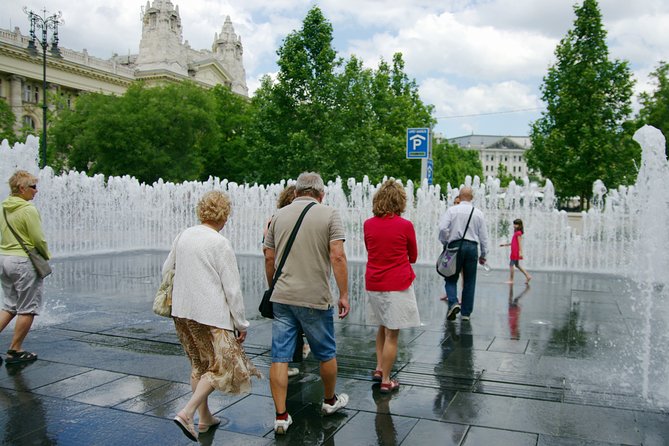
Your next anchor is Elizabeth Square, where you have about 15 minutes. You cross the park area and take in the Danube Fountain monument and the giant ferris wheel.
This stop is not only pretty, it’s also a strong “feel” moment. You shift from shopping-and-architecture energy into a more open public-space mood. That makes it easier for your legs, too, because you’re not only weaving through tightly packed streets.
From a planning angle, it also sets you up for a more relaxed second half of the walk. After this point, you begin to lean into political and memorial themes in the squares that follow, so the park break helps your brain reset.
If you’re tempted to wander further on your own after the tour, this is a great neighborhood zone to do it. You already have a key square and landmark in your mental map.
St Stephen’s Basilica: big exterior impact without entry time
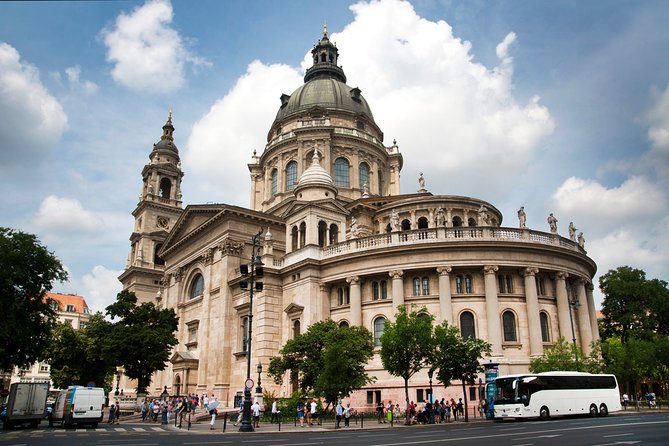
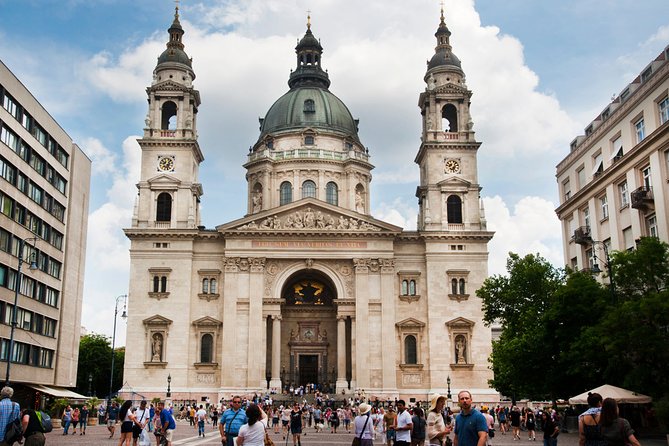
Next is St. Stephen’s Basilica (Szent Istvan Bazilika) for roughly 20 minutes. The tour is set up so you can admire the huge basilica and hear the story of its building and symbolism.
Admission for entry is not included, so treat this as an exterior and storytelling stop. That can be a good thing. You still get the landmark moment, but you avoid the time sinks that come with ticket lines and museum-like pacing.
The “symbolism” part matters. Even without going inside, you’ll likely understand what you’re looking at more clearly: why the structure was built the way it was, and how it became part of Hungary’s national identity in people’s minds.
If you want to go inside later, save it for a separate plan. This tour gives you the broad understanding so your later visit feels more intentional.
Szabadság tér and Kossuth Lajos Square, where occupation monuments explain the streets
This section is the heart of why the walk goes beyond sightseeing. You move into Szabadsag ter for about 25 minutes, a longer stop where the meaning is the main attraction.
You’ll see the monuments and dramatic markers tied to the Nazi and Soviet occupations and the dictatorships that shaped Hungary’s 20th century. You also get a mention of the miraculous fountain during warm season, which you can use as a seasonal reminder for when to visit Budapest.
Then it continues to Kossuth Lajos Square for about 15 minutes. Here you focus on memories of Hungarian freedom heroes and the 1956 revolution against the Communist dictatorship.
This is where a guide’s pacing really matters. Too fast, and it turns into a list of walls and statues. Too slow, and it becomes emotionally heavy without enough breathing room. A good guide keeps the tone balanced and helps you interpret what each memorial is trying to say.
If you’re the kind of traveler who likes to understand what you’re seeing before you move on, you’ll likely enjoy this part. If you’re hoping for a light, purely visual stroll, you can still appreciate it, but go in prepared for more serious themes.
The Hungarian Parliament finish: a satisfying end point
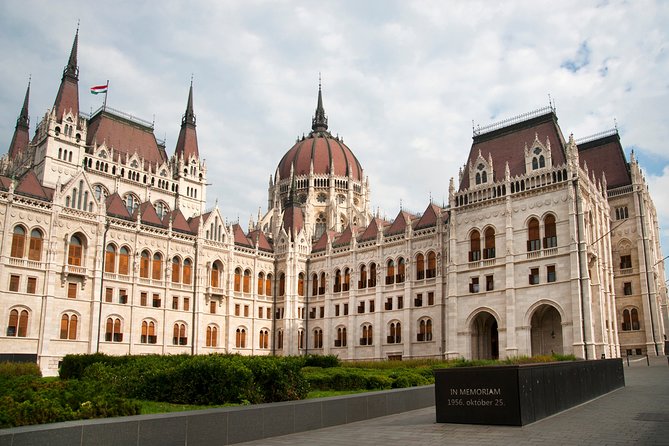
The tour ends at the Hungarian Parliament Building area, with about 10 minutes to admire it. The final address is listed at Kossuth Lajos tér 1-3, 1055.
This ending works for two reasons. First, it’s a major landmark, so you feel like the tour “lands” somewhere iconic. Second, it places you at a natural hub for continuing your day without needing to figure out your next big move immediately.
Also, walking from the memorial squares toward Parliament gives you a stronger sense of civic Budapest. You are not only touring buildings, you’re seeing the rhythm of how public power, national identity, and history show up in the same city blocks.
If you want to keep exploring after the tour, this is a straightforward starting point. You already finish at a place that’s easy to orient from.
Price and value: why $3.60 can still make sense
The price is listed at $3.60 per person for an approximately 2-hour guided walk. That is strikingly low for a live guide, especially with multiple landmark stops and time for questions.
What you should know about value is this: you are paying for direction and context more than for paid entries. Church and museum admissions are clearly marked as not included at stops like Pesti Vigadó and St Stephen’s Basilica, so the “economy” comes from focusing on the outdoor parts of the sights.
For me, the value is in the combination:
- a guided route that keeps you from wandering randomly
- history context tied to what you’re seeing
- small-group pacing that helps you ask questions
- practical local advice that can save you time later
The only watch-out is the earlier concern about pace. If you’re very sensitive to long explanations or longer stand-and-look segments, you may feel like you wanted more walking minutes. That said, for most first-timers, the stopping points are the point.
Small group size and the pace, what to expect from the guide style
The group size caps at 30 travelers, which helps keep the atmosphere from feeling chaotic. Based on reported guide approaches, the better tours here are the ones that respect comfort, like adjusting pace and being thoughtful about shade when weather matters.
One name that came up is Oliver, described as friendly and attentive to interests. Another guide was described as careful about shade and pace for everyone. That tells you the tour tends to be flexible, not rigid.
Still, flexibility does not always mean short stops. If you prefer less talking, ask a question early and keep your own photo momentum moving. If the guide pauses for context, you can treat it like a chance to understand what you’re about to see next rather than a break from the walk.
The tour is offered in English, and it works for most travelers, with a note that service animals are allowed.
Practical tips so you get the most from the 2 hours
This is a walking tour, so wear shoes that can handle city pavement and frequent turns. You’ll also be outside for most of the time, so plan for sun and hydration, especially during warmer months since the “miraculous fountain” note matters seasonally.
If you want great photos, think about timing. The Danube viewpoint and the Parliament area are usually where you’ll want your best shots. Leave yourself a minute to step aside from the group line without blocking others.
Food planning helps too. Because the route passes through the pedestrian shopping zone and later lands near pastry and café areas, you can treat the walk as the first half of a food plan. Grab a snack when the group allows it, then do a longer break after the tour.
Finally, since entry to churches and museums is not included, decide in advance if you want to book separate visits. The tour will give you enough context to choose wisely, but it will not replace ticketed time inside major sites.
Should you book Classic Walk in Budapest Historical Center?
I’d book this tour if you want a smart, low-stress way to orient yourself in Pest. The route hits the pedestrian core, the Danube views with the bridges and Buda Castle across the water, and then it lands at the Parliament area. You also get the story thread connecting major Hungarian events to the squares you pass.
Skip it or treat it as light scheduling only if you strongly prefer nonstop movement. One drawback signal is longer stops with more explanation than some people want, so it may feel slower than you expect.
If you’re a first-timer, traveling on a tight timeline, or you want history without a full-day grind, this walk is a solid bet. At this price, you are buying direction and context, not ticketed museum time, and that is a very practical way to start a Budapest trip.
More Historical Tours in Budapest




More Walking Tours in Budapest






More Tour Reviews in Budapest






Recently added around Budapest




Historical Tours, compared.
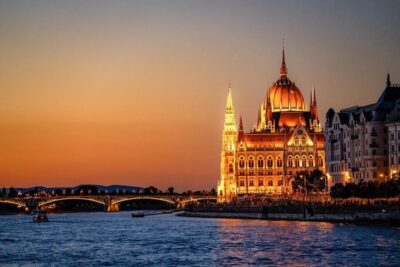 ★ 4.7Historic Cruise with Welcome DrinkFrom $126,512 reviews
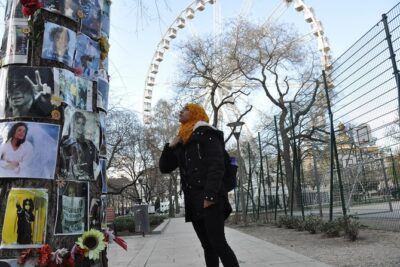 ★ 5.0Budapest Historical Sightseeing – Free Walking TourFrom $31,302 reviews
 ★ 4.5Buda Castle District Dark History, Legends and Vampire Night TourFrom $211,240 reviews
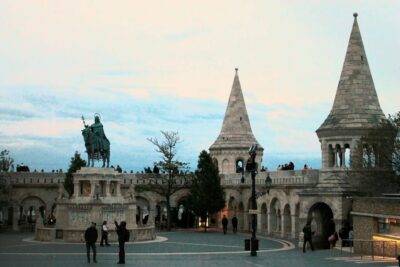 ★ 4.9BloodThirsty Hungary: Walking tour & Dark Historical StoriesFrom $21633 reviews
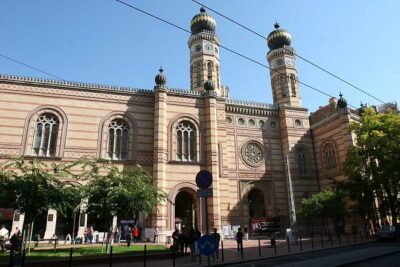 ★ 5.0Budapest Jewish Heritage Memorial Walking Tour & Synagogue EntryFrom $83568 reviews
 ★ 4.8Jewish Heritage Guided Tour with Synagogue TicketFrom $81533 reviews
 ★ 5.0Budapest Historic Downtown Bicycle Tour in small groupsFrom $41288 reviews
 ★ 5.0Historic Downtown ride on E-Bicycles Buda & PestFrom $65227 reviews
Browse the lists this tour appears in