
Tour review · BUDAPEST WALKING TOURS
Downtown Pest Walking Tour
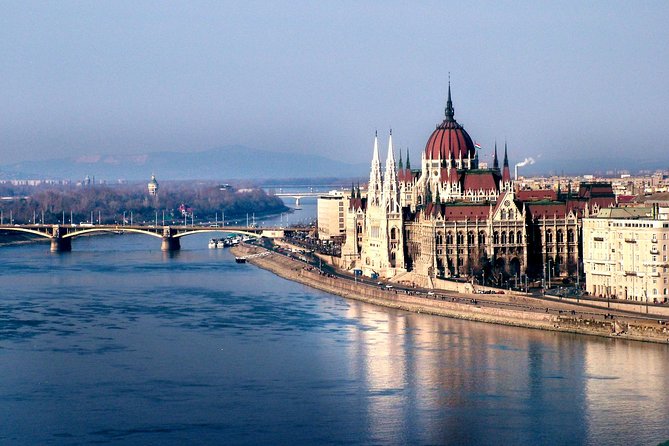
Pest turns 19th-century drama into a walk. This downtown Pest tour lets you follow how the city became the political, financial, and religious heart of Hungary in the late 1800s, with a historian guiding the story as you move city block by city block.
I love the architectural punch of the route, especially the big landmark moments like the Hungarian Parliament and the Stock Exchange Palace area. You’ll also like the pacing, since the guide is built for questions and explanation, so the walk stays clear instead of turning into a blur of dates.
One thing to consider: it is a steady 3-hour walking route in the center of town, so plan for cobblestones, crowds around major sights, and weather that can change your comfort fast.
Key Points Before You Go
- Historian guide focus: you get context for why these places mattered, not just what they look like.
- Major landmarks in a short walk: Parliament, Holocaust Memorial, Freedom Square, Heroes Square, and more.
- Art Nouveau and grand boulevards: Pest’s late 19th-century style shows up at multiple stops.
- Jewish and Catholic stories included: you’ll encounter monuments tied to Budapest’s Jewish community and Cardinal Mindszenty.
- Andrássy Avenue route: you walk along (and under) a planned esplanade designed for Hungary’s nobility.
- Small group or private options: ideal if you want a calmer pace and more direct Q&A.
Budapest on foot, with a few more routes to compare
- Big Bus Budapest Hop-On Hop-Off Bus and Walking Tour★ 3.5 · 2,206 reviews
- Budapest: Buda Castle District Walking Tour★ 4.6 · 2,108 reviews
- Budapest City Landmarks Walking Tour in 2 Hours★ 5.0 · 2,048 reviews
- 3-Hour Orientation Walking Tour of Buda and Pest★ 4.8 · 1,834 reviews
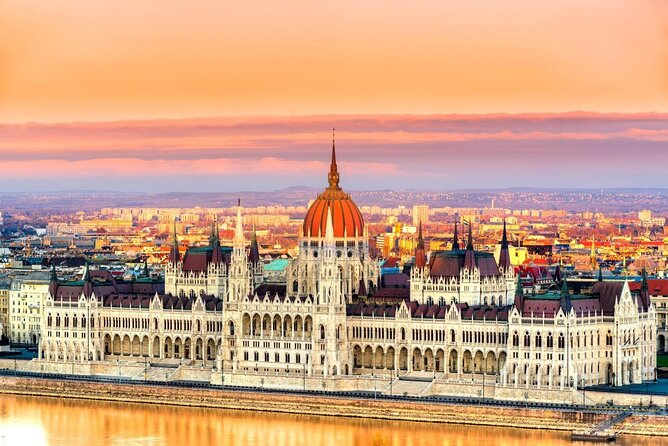
The Parliament at Kossuth Square: Where Hungary Showed Off
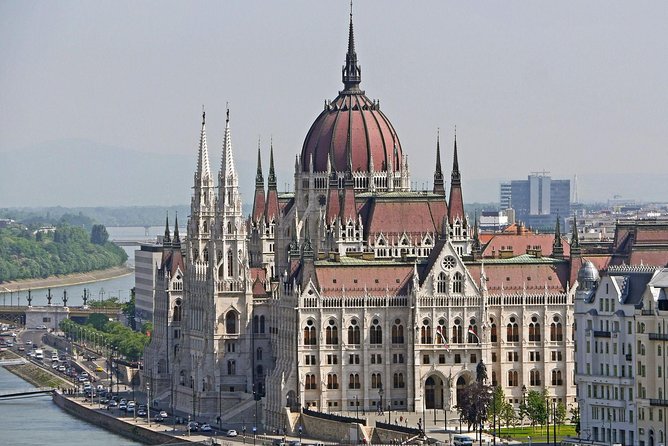
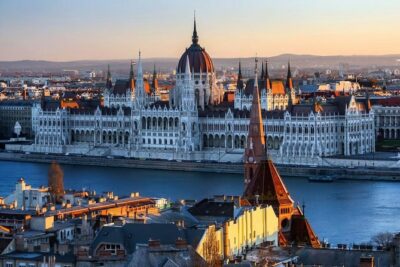
Your tour starts at Szamos Café (Kossuth Lajos tér 10), and the walk quickly orients you to Kossuth Square and the Hungarian Parliament. In 1896, at its inauguration, it was described as the largest and most costly structure built in Hungary, and that scale still hits you right away.
From the outside, it’s massive and ceremonial. Your guide will also point out what makes the Parliament special on the inside, including the way it’s decorated with works of art representing nearly every famous Hungarian painter and sculptor of the time. In practice, that detail matters because it turns the building from a photo stop into a symbol of national confidence.
If you enjoy art, politics, and the way governments use symbolism, you’ll get a lot out of this opening stretch. It also sets up the tour’s main theme, Pest’s rise as a center for power and prestige during the second half of the 19th century.
Holocaust Memorial Views by the Danube: Remembering in a Specific Place
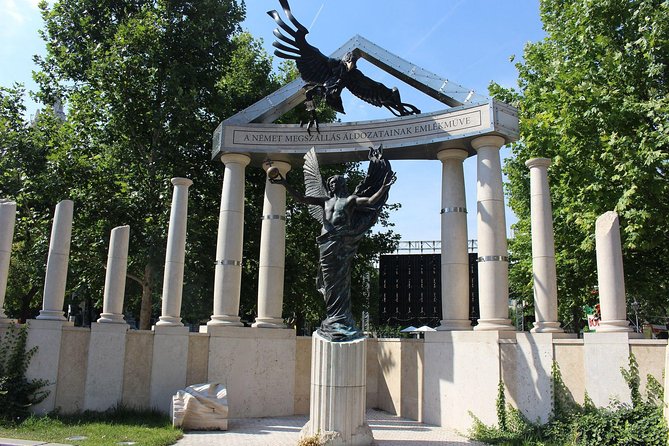
Next comes one of the most emotionally heavy stops: the Holocaust Monument on the banks of the Danube River, behind Parliament. This isn’t a generic remembrance spot. The monument pays tribute to thousands of Jewish citizens of Budapest who were tragically killed on that same site in the last months of World War II.
What I like about including this here, early in the walk, is that it prevents the tour from staying in the realm of architecture and pride alone. You quickly see the contrast between late-1800s ambition and the devastating realities that followed in the 1900s. Your guide’s historian framing helps you connect the location to the human story without rushing past it.
A practical note: this is the kind of stop where you’ll probably want a quiet moment. Build that into your mindset, even if the group keeps moving.
Freedom Square and the Stock Exchange Palace: Money Made Visible
Then you shift to Freedom Square, a space that was originally built as the city’s financial center and is often considered one of Budapest’s most beautiful squares. Even if you only know Budapest for its big views and thermal baths, this area shows you a different side of the city, one built on commerce, banking, and influence.
The star here is the Stock Exchange Palace, one of the massive anchors of the square. Your guide connects the building’s presence to Pest’s identity as a place where capital and decision-making gathered. Surrounding buildings still house banks, so the square feels like it has kept one foot in the old world while adapting to today.
This stop is also a good reminder that “downtown” isn’t just practical. In Budapest, the downtown core was planned to project stability and stature. If you care about urban design and what money does to a city’s look and feel, you’ll enjoy this part.
Cardinal Mindszenty and St. Stephen’s Basilica: Faith, Power, and Resistance
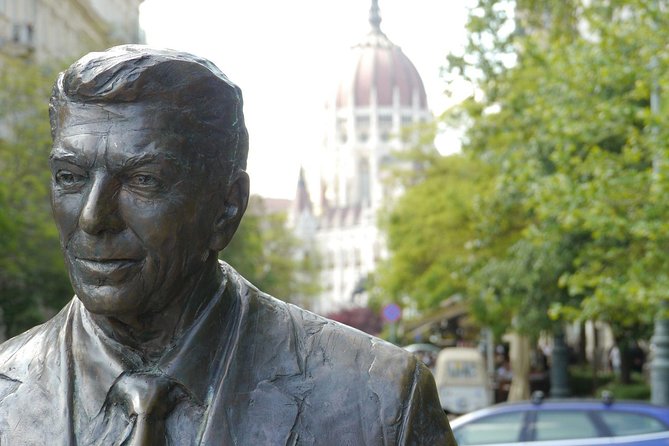
From Freedom Square, you’ll see the statue of Cardinal Mindszenty, tied to a story of the Catholic Church under communism. Mindszenty, the head of the Catholic church in Hungary, lived hidden for 15 years in the U.S. embassy while on the run from the communists. Even if you don’t know the name yet, your guide will give you the context that makes the statue feel personal, not just ornamental.
As you move on toward St. Stephen’s Basilica, you also pass multiple Art Nouveau buildings that Budapest is famous for. This is where the tour becomes visually satisfying in a different way than the Parliament. Instead of one grand government landmark, you get a sequence of designed details, facades, and street-level beauty.
Drawback to be aware of: these city-center streets can get busy, so sometimes you’ll be looking at architecture from the sidewalk edge. Still, with a guide setting expectations and slowing down at the right spots, it stays enjoyable rather than frustrating.
Budapest on foot, a few more ways
- Budapest: Buda Castle Walk with Saint Stephen’s Hall
★ 4.5 · 3,012 reviews - Budapest: 3-Hour Grand City Tour and Castle Walk
★ 4.3 · 1,437 reviews - Budapest Historical Sightseeing – Free Walking Tour
★ 5.0 · 1,302 reviews - Budapest All in One Small Group Walking Tour with Strudel Stop
★ 5.0 · 1,277 reviews - Budapest: Buda Castle District Walking Tour with a Historian
★ 4.9 · 867 reviews
The Second-Largest Synagogue and the Role of Budapest’s Jewish Bourgeoisie
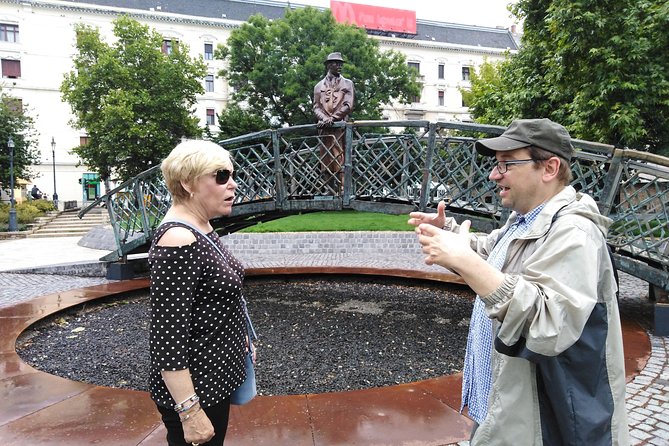
A bit farther along, you’ll reach another major cultural marker: the second-largest synagogue in the world. This building is presented as a monument to the vital role that Budapest’s Jewish population and its wealthy bourgeois played in developing the city.
I like how this stop adds balance. The tour has already covered remembrance at the Holocaust Monument, so you also see what life, community, and civic growth looked like before tragedy and political upheaval. Your guide’s storytelling helps you understand why architecture can represent both prosperity and identity, not just worship.
If you want Budapest’s story told with more than one lens, this part is a strong reason to book. It gives you a fuller picture of who built the city’s 19th-century prominence and why certain neighborhoods and institutions mattered.
Andrássy Avenue, the Opera House, and a Planned Street for Nobility
Now you get to one of the most distinctive stretches: travel along and under Andrássy Boulevard. This esplanade was designed for Hungarian nobility, and you can feel that intention in the way the street functions as a formal corridor rather than a random road.
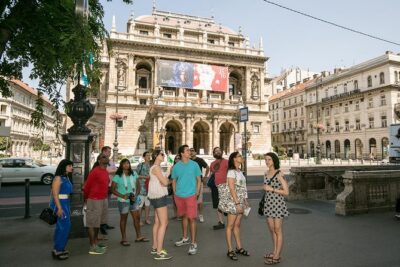
You’ll also make a short stop at the Opera House, which fits the tour’s theme of prestige. When a city plans grand public spaces for the elite, it’s not only about comfort. It’s about creating a stage for culture, status, and national image.
This section is also where the walking route’s structure becomes practical. With a guide, you don’t just see impressive things. You also understand why they were placed where they are and how the street layout supports the social story.
Andrássy Avenue is one of those routes where your photos will be better if you slow down. Let the guide tell you what to look for. You’ll spot architectural cues more easily once you know what they mean.
Heroes Square: 1,000 Years Celebrated in Stone
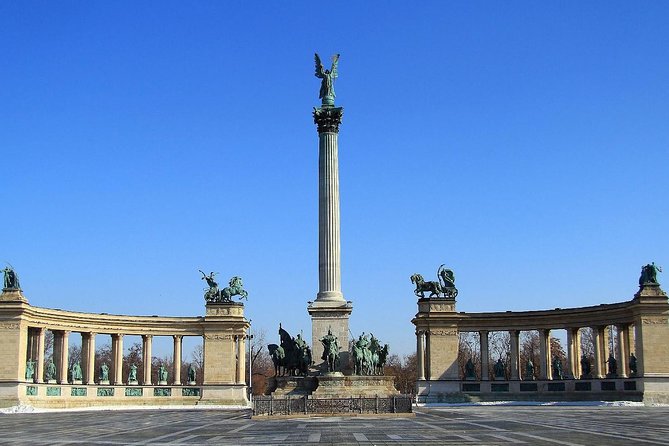
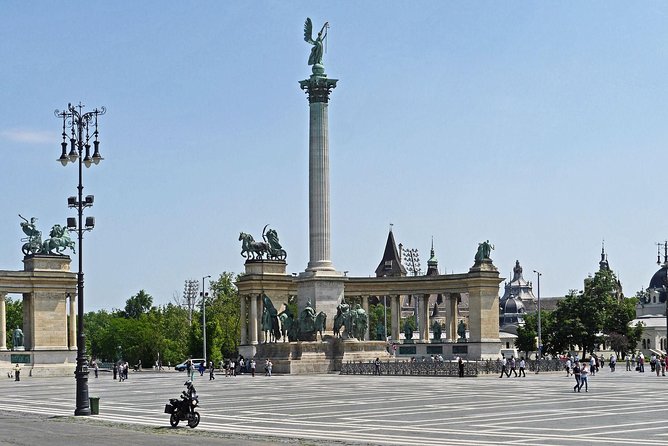
The tour ends at Heroes Square, the place where in 1896 Hungarians celebrated the 1,000-year anniversary of the founding of their kingdom. This is the kind of finale that feels like a national statement, because the design is built for spectacle, memory, and pride.
By the time you reach Heroes Square, you’ve already seen the main ingredients that shaped Pest’s late-1800s role: political power at Parliament, financial influence at Freedom Square and the Stock Exchange Palace, faith and political pressure around St. Stephen’s Basilica and Cardinal Mindszenty, and cultural identity through the synagogue and Art Nouveau streets.
That is why the ending works. It doesn’t feel like a random big photo spot. It feels like the last chapter of a clear narrative.
Even if you’ve seen Heroes Square before, doing it at the end of a guided story usually changes how you look at it.
How Much Value You’re Really Getting for $123
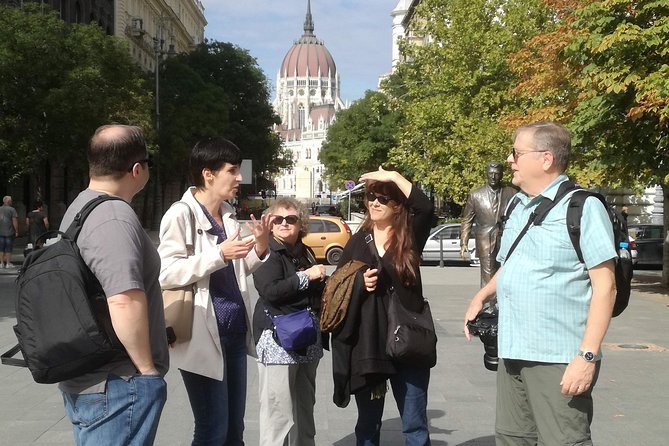
At $123 per person for a 3-hour guided walk, you’re paying for three things: a historian guide, a tight route through high-impact landmarks, and interpretation that connects art, politics, and social life.
If you prefer to wander with zero structure, this could feel pricey, since Budapest is easy to explore on foot. But if you like context, the cost makes more sense. You’re not paying just to visit sights, you’re paying to understand why these specific buildings and monuments line up with Pest’s transformation during the late 19th century.
Small group or private options also help value. A smaller group usually means your guide can slow down at the spots that need explanation, instead of racing ahead for the next landmark.
A Word on the Guides: When the Storytelling Matters
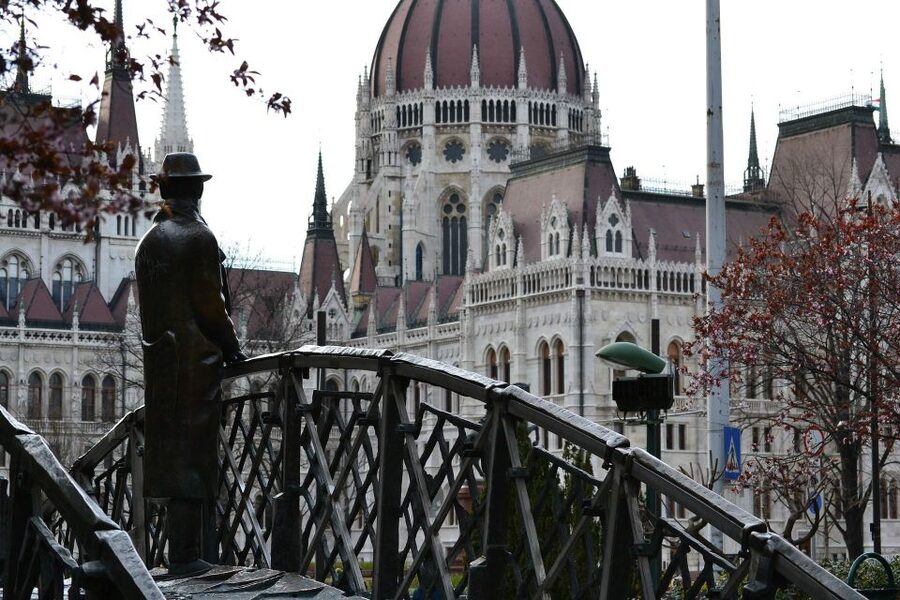
The experience depends a lot on the guide’s delivery. For this tour, I’ve seen strong English-language storytelling tied to guides such as András and Zsofia, with a style that is patient and question-friendly. That matters because some stops here are emotionally heavy and some are visually complex, like Art Nouveau streets and monumental buildings.
You’ll enjoy the walk more if your guide is willing to answer follow-up questions and stay objective about the historical threads. This tour’s format is built for that, and it tends to keep the three hours from feeling like a lecture.
Who This Tour Suits Best
This is a great fit if you want:
- Big architecture with meaning, not just snapshots
- A 19th-century focus on how Pest became a national center
- Stories that include politics, religion, finance, and community identity
- A guided pace that helps you connect the dots across multiple neighborhoods
It might not be ideal if you:
- Want a totally casual stroll with no structured stops
- Dislike walking for 3 hours in busy central streets
- Prefer to enter every site, since the emphasis here is on landmarks and what they represent
Should You Book This Downtown Pest Walking Tour?
If your Budapest wish list includes Parliament, Freedom Square, Art Nouveau streets, major Jewish heritage sites, and Heroes Square, booking makes sense. For $123, you’re getting a historian-led route that turns a handful of famous places into a coherent story about Pest’s rise, then ties that story to remembrance and identity.
I’d book this if you like understanding what you’re looking at, and if you want your time in Pest to feel purposeful instead of random. Skip it only if you’re planning to focus solely on self-guided exploring or you want a shorter, low-walking option.
FAQ
Where does the tour meet?
The meeting point is Szamos Café, Budapest Kossuth Lajos tér 10.
How long is the Downtown Pest walking tour?
The tour lasts 3 hours.
What language is the tour guide?
The tour is offered in English.
What are some of the main stops on the route?
You’ll see the Hungarian Parliament at Kossuth Square, the Holocaust Monument near the Danube, Freedom Square with the Stock Exchange Palace, the statue of Cardinal Mindszenty, St. Stephen’s Basilica, a major synagogue, Andrassy Boulevard, the Opera House, and Heroes Square.
How much does the tour cost?
The price is $123 per person.
Is free cancellation available?
Yes. You can cancel up to 24 hours in advance for a full refund.
Can I book if I want to pay later?
Yes. You can reserve now and pay later, with the option to book your spot and pay nothing today.
More Tours in Budapest






Keep Walking Budapest




More Tour Reviews in Budapest






Recently added around Budapest


Budapest Walking Tours, compared.
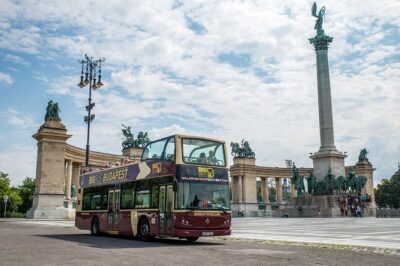 ★ 3.5Big Bus Budapest Hop-On Hop-Off Bus and Walking TourFrom $422,206 reviews
 ★ 4.6Buda Castle District Walking TourFrom $142,108 reviews
 ★ 5.0Budapest City Landmarks Walking Tour in 2 HoursFrom $32,048 reviews
 ★ 4.83-Hour Orientation Walking Tour of Buda and PestFrom $411,834 reviews
 ★ 5.0Budapest Historical Sightseeing – Free Walking TourFrom $31,302 reviews
 ★ 5.0Budapest All in One Small Group Walking Tour with Strudel StopFrom $1001,277 reviews
 ★ 4.9Buda Castle District Walking Tour with a HistorianFrom $63867 reviews
 ★ 4.9BloodThirsty Hungary: Walking tour & Dark Historical StoriesFrom $21633 reviews
Browse the lists this tour appears in