
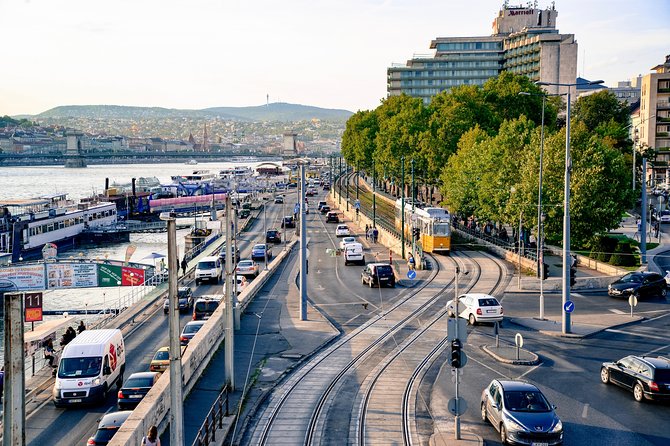
Tour review · TOURS
Explore Budapest from the Local’s Perspective – Public Transportation Tour
Riding transit feels like sightseeing in Budapest. This 3-hour public transportation tour turns the city’s smart system into an easy game plan, with landmarks along the way. You also get a 24-hour pass so your tickets are handled in one clean move.
I especially like two parts. First, the tour gives you real-world practice using the city’s trams, metro, and more, not just facts from a podium. Second, you leave with a rider’s booklet and map, so you can keep moving after the walk ends, even if you only have a couple days in town.
One thing to consider is the pacing. Three hours covers a lot of territory, and food and drinks are not included, so plan a snack or plan dinner right after.
Key takeaways from this Budapest transit tour
- 24-hour transit pass you can use beyond the tour, turning your day into a smoother route
- Expert guidance designed to help you figure out the system fast, with practical tips from the team (including Miklós)
- 5 modes of transportation so you learn how different lines work in real life
- Landmarks plus orientation, including Heroes’ Square, Margaret Bridge, and Buda Castle area viewpoints
- Private group format, so you can ask questions instead of waiting for a big group
Before the plan settles, compare this with a few more ways to spend time around Budapest.
- Budapest: City Highlights Cruise with Welcome Drink★ 4.6 · 35,610 reviews
- Budapest: Unlimited Prosecco, Beer and Aperol Spritz Cruise★ 4.8 · 25,310 reviews
- Budapest: Széchenyi Spa Day Ticket with Optional Upgrades★ 4.3 · 23,911 reviews
- Budapest: Nighttime or Daytime Sightseeing Cruise★ 4.2 · 21,062 reviews
Why a 24-Hour Transit Pass Makes Budapest Feel Manageable
Budapest can look intimidating at first, mostly because the city is split by the Danube and it has more than one way to get anywhere. The magic here is the 24-hour pass, which reduces decision fatigue. Instead of asking, Can I afford this ride, you start thinking, Where should I go next?
You are given a mobile ticket, plus a rider’s booklet that works like a simple guide to using Budapest public transport. That matters because the system is efficient, but you still need to know what to look for. Once you learn what the guide points out, you stop feeling like you are guessing.
I also like that the tour is built around the way people actually move through the city. You are not only seeing views, you are learning how to reach them again tomorrow. That is the real travel win, especially if you want to do one or two big sights and then spend the rest of your time wandering.
The Value Math Behind $118.58 for 3 Hours (Plus Real Tools)

At $118.58 per person for about 3 hours, you are paying for three things: expert time, problem-solving, and transport value. The pass is valid for any means of transportation during its window, and you get help connecting the dots while you are still fresh and learning. If you plan to use transit anyway, this can be a smart way to avoid wasting hours figuring out routes.
On top of that, the tour includes the basics that make independent travel easier: a map of the route, a notebook, and even a souvenir pen. It is small stuff, but it supports the main goal, helping you navigate without stress.
One more practical detail I like is the pickup from your accommodation. That saves you time at the start and lets you get into the rhythm right away. And since it is private, you are not stuck with a loud group where questions go unanswered.
Andrássy Avenue to Heroes’ Square: Grand Budapest, No Stress
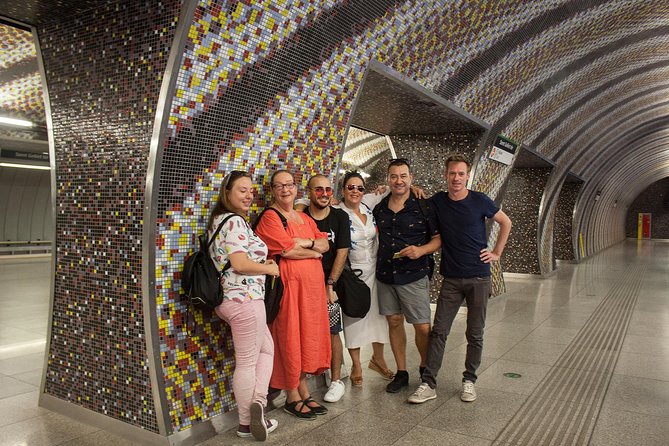
You begin on Andrássy Avenue, a grand boulevard dating back to 1872 and recognized as a World Heritage Site in 2002. The street is lined with Neo-Renaissance mansions and townhouses, and it is also a major shopping and dining strip with theaters and embassies. Even if you are not shopping, it helps to see the city’s “statement street” early, so the rest of your sightseeing feels more connected.
Then you move toward Heroes’ Square, one of the city’s big symbolic spaces. The statue complex features the Seven chieftains of the Magyars and other national leaders, plus the Memorial Stone of Heroes, which people sometimes confuse with the Tomb of the Unknown Soldier. Learning that little detail gives you an instant story thread as you look around.
You also get a quick culture-and-architecture moment without museum tickets. That matters because it keeps the tour moving, and it gives you landmarks you can later reference when you are planning your own route.
City Park Art Stops: Vajdahunyad Castle, Fine Arts, and the Oldest Ice Rink
In City Park, you get a cluster of sights that feel different from the grand political squares. Vajdahunyad Castle is a fun one because it was built in 1896 for the Millennial Exhibition celebrating 1,000 years since the Hungarian Conquest. It was designed as copies of landmarks from across the Kingdom of Hungary, with special emphasis on Hunyad Castle in Transylvania.
Near it, you can see the Museum of Fine Arts facing the Palace of Art. The museum building is eclectic-neoclassical and the collection includes international art through many European periods, with more than 100,000 pieces. Even if you do not go inside, just standing there helps you understand why this area feels like a cultural stage set.
Right by Heroes’ Square is also the Budapest Hall of Art, a contemporary art museum in a historic building. There is a café here too, so you have an easy “pause” option if your feet need a breather.
And if you are visiting in colder months, the City Park Ice Rink is worth noting. It opened in 1870 and is described as the largest and one of the oldest ice rinks in Europe. It is not every season’s focus, but knowing it exists adds context to what you are seeing.
- Budapest: City Highlights Cruise with Welcome Drink
★ 4.6 · 35,610 reviews - Budapest: Unlimited Prosecco, Beer and Aperol Spritz Cruise
★ 4.8 · 25,310 reviews - Budapest: Széchenyi Spa Day Ticket with Optional Upgrades
★ 4.3 · 23,911 reviews - Budapest: Nighttime or Daytime Sightseeing Cruise
★ 4.2 · 21,062 reviews - Budapest: 1-Hour Evening Sightseeing Cruise with Drink
★ 4.5 · 8,330 reviews
Jászai Mari tér to Margaret Bridge and the Nagykörút Tram Loop
This is where the tour starts feeling more like a local pattern than a sightseeing checklist. Jászai Mari tér acts like a hub at the easier foot of Margaret Bridge, a place where transport and everyday social life mix. It is practical to learn because it is the kind of intersection where you need to know which direction to head.
From there, you cross toward Margaret Bridge, a three-way bridge connecting Buda and Pest and linking Margaret Island to the city banks. This bridge is both useful and scenic, which makes it a great “orientation” moment. You start to feel how the Danube shapes movement.
Then comes one of my favorite transit learning points: the Nagykörút ring road and its major tram lines. The legend says it might be the busiest tram line in the world, with frequent service. At normal times, the intervals are up to about 15 minutes, and during rush hours they run every 2 minutes. You do not just hear the numbers, you get to see how often the city keeps things moving.
This part is valuable because Budapest transit works best when you stop thinking of lines as routes and start thinking of them as systems.
Nyugati and Deák Ferenc tér: Learn the Junctions That Save Time
You then reach Budapest Western Railway Station, known as Nyugati pályaudvar or simply Nyugati. It is one of the city’s main terminals on the Pest side, and it sits near tram lines and the M3 metro line. The station area has become a busy meeting point with restaurants, bars, and stores around it.
Why this matters for you is simple. Stations are where you gain optionality. If you know how one big terminal connects to tram and metro lines, your entire plan gets easier.
Next is Deák Ferenc Square, named for Ferenc Deák, the Wise Man of the Nation. This is a major transport junction where three metro lines converge under the square, and trams and bus routes also originate here. When you learn this kind of hub on foot with a guide, you reduce the chances of getting stuck in a wrong direction, especially on a tight travel schedule.
I also like that the tour keeps pointing out how the city layers transit. Metro below, trams and buses above, and bridges and squares acting as connectors. It makes Budapest feel less like a puzzle and more like a set of shortcuts.
Elizabeth Square to the Road Toward Buda Castle
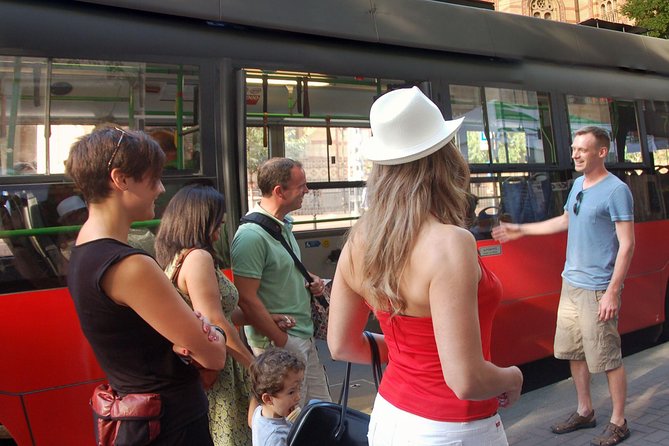
From the big junction energy, you shift to a more relaxed pocket: Elizabeth Square. It is a park near Deák Ferenc tér and it is popular for young people. Alcohol is sold in the grassy area, and Deák Ferenc tér often stays active until midnight. You are not being sold on a party, but you are seeing how locals use public spaces after sightseeing hours.
From here, the tour sets up your move toward Buda Castle. You spend time in the Buda Castle area, and there is also an option tied to how you approach the hill. The tour notes a funicular option if you want to use that approach rather than focusing on the Gellért hill side.
This is a smart choice for different bodies and different days. If you want the view with less uphill grind, the funicular option can help. If you want to connect the terrain directly, the hill approach adds more scenery and story.
Szent Gellért Square, Gellért Thermal Baths, and the Water-Themed Metro Stop
You then reach Szent Gellért Square, where the focus shifts from grand squares to design details. The station area is described as water-themed, with wavy benches and a small fountain and pond decorating the entry. That kind of design cue is exactly why this tour works. Transit in Budapest is not just a means to an end, it is part of the city experience.
Not far from this area is the Gellért Thermal Baths and swimming pool at Hotel Gellért. Even if you do not enter, it helps to understand where the iconic baths sit in the bigger city map. If you do want to plan a soak later, you now know the spot without hunting it down.
One more highlight is the hill viewpoint. Gellért Hill rises about 235 meters and is described as the best panorama point above the capital. The hill is named after Bishop Gellért, with a story about his arrival around the year 1000 and the dramatic legend of him being rolled in a barrel into the Danube in 1046. Stories like that help you remember places, not just photos.
Gellért Hill Views and Liberty Bridge Crossing Into a Better Orientation
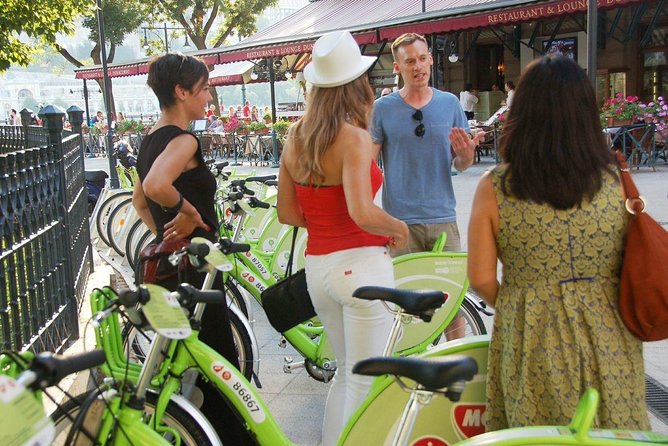
After seeing the hill area, you walk across Liberty Bridge, the Szabadság hid. It is a beautiful Danube crossing, and it is also a useful move for orientation. Crossing a major bridge gives you a new map view, and Budapest is a city where that matters.
This part is especially helpful if you want your next day to feel easier. Once you have seen how bridges connect the districts, you stop thinking that “getting over the river” is a separate mission. It becomes just another step in the plan.
Also, the tour’s headline promise includes big landmarks like the Chain Bridge and the Royal Palace. Even when you are not spending hours on any single sight, having those targets on your mental map keeps you from wandering randomly. You can later choose to return for a deeper look, or you can move on knowing you already got the core geography.
Kálvin tér for Finishing: A Central Junction With a Built-In Story
You end with Kálvin Square, Kálvin tér, a major intersection and transport hub in the center. The square is named after John Calvin, the French Protestant reformer, because of the large Reformed Church located there.
Kálvin tér is also practically useful. Tram, bus, and trolleybus routes all serve the square, and the Hungarian National Museum is near it. That means it is not just a scenic place to glance at, it is a starting point you can use for future days.
If you have ever finished a walking tour with sore feet and no clear plan for the rest of the trip, you will like this ending. You are leaving with a place you can use immediately to go somewhere specific, like a museum, a neighborhood dinner spot, or a bridge crossing back toward your hotel.
One small but smart bonus: the tour hands you the tools to get your bearings fast. You are not only leaving with pictures, you are leaving with a way to act.
Should You Book This Budapest Public Transportation Tour?
Book it if you want Budapest to feel easier on day one. This tour is a strong fit when you plan to use transit anyway, and you appreciate a guide who helps you learn the system without making it feel like homework.
It is also a good choice if you dislike vague “hop on hop off” sightseeing. Here, the route has a clear logic: big landmark squares, then transit hubs, then the Danube and hill viewpoints. You get both the sights and the movement skills.
I would skip it only if you already feel fully confident in Budapest transit and you prefer to spend your limited time inside museums or in long, slow wandering sessions. Otherwise, the 24-hour pass, the multiple transport modes, and the practical tools add up to good value for a short visit.
FAQ
How long is the Budapest public transportation tour?
It runs for about 3 hours.
What is included in the price?
You get a local guide, a notebook and souvenir pen, a map showing the route, a rider’s booklet manual for Budapest public transport, a 24-hour transportation pass for any means of transportation, and a mobile ticket.
Does the tour include pickup from my accommodation?
Yes. Pickup is offered from your accommodation. You are asked to provide your address in the special requirements box.
Is the tour offered in English?
Yes, the tour is offered in English.
Can I cancel for a full refund?
Yes, you can cancel for a full refund if you cancel up to 24 hours in advance. If you cancel less than 24 hours before the experience starts, the amount paid will not be refunded.
Are service animals and children allowed?
Service animals are allowed. Children must be accompanied by an adult.
More Tours in Budapest




More Tour Reviews in Budapest






Recently added around Budapest



Tours, compared.
 ★ 4.7Buda Castle Cave TourFrom $195,677 reviews
 ★ 4.1City Sightseeing Hop-On Hop-Off Bus Tour & ExtrasFrom $414,337 reviews
 ★ 4.6Buda Castle District Vampires and Myths Night TourFrom $233,830 reviews
 ★ 4.2Big Bus Hop-On Hop-Off Tour & Danube River CruiseFrom $403,794 reviews
 ★ 4.3Floating Bus Tour by Land and WaterFrom $283,342 reviews
 ★ 3.5Big Bus Budapest Hop-On Hop-Off Bus and Walking TourFrom $422,206 reviews
 ★ 4.6Buda Castle District Walking TourFrom $142,108 reviews
 ★ 5.0Budapest City Landmarks Walking Tour in 2 HoursFrom $32,048 reviews