
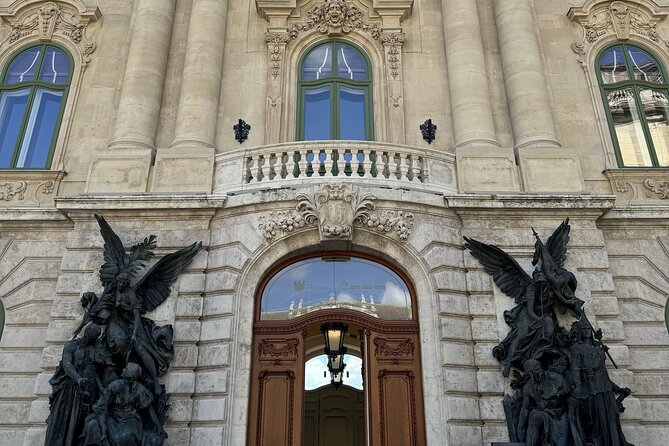
Tour review · BUDA CASTLE TOURS
Gems of the Budapest Castle District Walking Tour
Matthias tales, Ottoman ghosts, and castle views. This is a 2-hour walk that turns monuments into a readable story, with built-in photo breaks at Fisherman’s Bastion and excellent English guidance from Antel. The only real catch is the pace, because you cover a lot of ground on steep streets, so comfortable shoes matter.
I like that the experience is built for value. The tour costs just $3.61 per person, and the stops are marked free to enter, so most of what you pay for goes toward the live guide and the explanations you might miss on your own.
One more consideration before you go: this activity needs good weather. If rain or poor conditions hit, your plans can shift, so pack layers and stay flexible.
Key highlights you will actually feel on the ground
- Free-entry stops across a tight circuit so you spend your time looking, not buying tickets
- Story-first explanations that connect symbols to Hungarian history, not just architecture
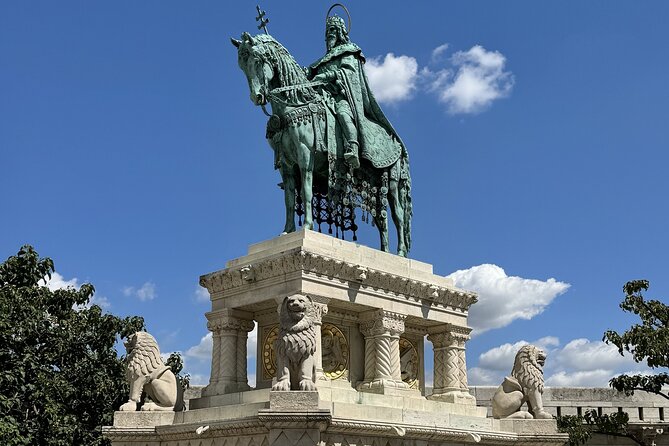
- A long-ish pause at Fisherman’s Bastion for statues, legends, and Pest views
- WWII, 1848, and Ottoman-era references in one walk so the Castle District feels like one timeline
- A small-to-medium group size (up to 45) which keeps things moving without feeling chaotic
- An ending at Castle Garden Bazaar near Varkert Bazar that’s great for your next wander
More routes across Castle Hill and its viewpoints
- Budapest: Buda Castle Cave Tour★ 4.7 · 5,677 reviews
- Budapest: Buda Castle District Vampires and Myths Night Tour★ 4.6 · 3,830 reviews
- Budapest: Buda Castle District Walking Tour★ 4.6 · 2,108 reviews
- Buda Castle District Dark History, Legends and Vampire Night Tour★ 4.5 · 1,240 reviews
Why this Castle District loop feels so efficient
The Castle District can be overwhelming. You can bounce from church to courtyard and still feel like you missed the point. This tour keeps you oriented by treating each stop like a chapter, with a live guide who focuses on what the monument is saying.
You also get a smart “value for time” mix. With a duration of about 2 hours 10 minutes and a schedule that starts at 3:00 pm, you are set up nicely for late-afternoon light on stone, views over the river, and a less harsh midday heat level. Plus, it is priced at $3.61 per person, which is low enough that you should feel comfortable spending your money on the guide rather than separate entrances.
Finally, you do not get stuck waiting around forever. The stops are short and frequent, with a notable photo window at Fisherman’s Bastion. That format is ideal if you like structure, hate “what do I do next?” moments, and want to see more in less time.
From Holy Trinity Statue to Matthias Church, get the symbols fast
You start at the Holy Trinity Statue on Szentháromság u. in the Castle District area. The guide sets the scene with background on the construction of the column and then points out what the figures mean. This matters because you are not just looking at a sculpture, you are learning a vocabulary for the rest of the walk.
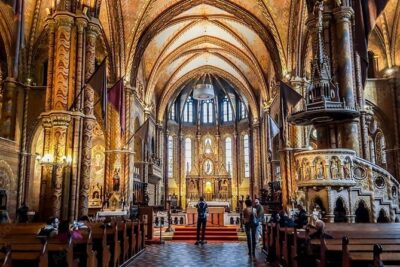
Next comes Matthias Church, where you get foundation context and attention to architectural details. The key is that you are primed to notice the building as a historic statement, not just a pretty exterior. Even in five minutes, you leave with a better eye for what you are seeing.
What I like about this early stretch is how it avoids the common problem of Castle District tours. You do not wander in blind for the first hour. Instead, you get symbolic and architectural framing right away, so every later stop lands harder.
Fisherman’s Bastion: statues, the double cross, and Pest views
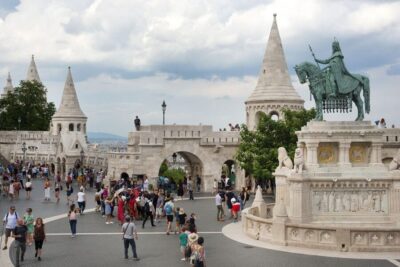
Fisherman’s Bastion is usually the loudest stop in the Castle District. Here, it is also the most organized. You spend about 20 minutes, which is long enough to actually look closely and not just snap a photo and run.
You will spend time on the statues and on the relationship of the double cross to the Hungarians. You also get panoramic views toward Pest, which is the real reason this spot goes viral on cameras. The guide shares intriguing legends too, so your brain has something to hold onto besides the view.
Then there is the practical part: a short break built in for photos. If you want the classic angles over the river, this is where you should slow down, adjust your shots, and stop trying to rush the light.
If you are sensitive to crowds at viewpoints, treat this as your “arrive ready” moment. The view is worth it, but the area can be busy. Go with patience, not urgency.
Pope statues, the National Archives, and church ruins that explain eras
After Fisherman’s Bastion, the tour moves to a cluster of monuments that feel like a timeline in stone.
At the Statue of Pope Innocent XI, you get the names and connections behind what you see, including Pope Sylvester II and a coronation statue of King Matthias. The stop also highlights the idea of the oldest building of Hungary, which gives you a sense of how deep the district’s layers go.
Then you pivot to the National Archives of Hungary. This is a great contrast stop, because it shifts from churches and bastions to a more official, documentary side of national identity. You get architectural wonders, the Vienna gate, and golden signatures by Uri street. The guide also points out statues nearby and shares their tales, which makes the building feel like a living monument rather than a background facade.
Next is the Church of Saint Mary Magdalene. Here the focus is on the monument of the coronation mantle of the Hungarian kings, plus ruins connected to World War II. That WW2 angle matters because it reminds you that this district did not only survive centuries, it also absorbed modern conflict. You are looking at scars, not just ornaments.
For this whole stretch, the biggest payoff is context. You start to understand why the district mixes religious symbols, rulers, and war memory in one compact walking zone.
Budapest on foot, with a few more routes to compare
- Budapest: Buda Castle District Walking Tour
★ 4.6 · 2,108 reviews - Budapest City Landmarks Walking Tour in 2 Hours
★ 5.0 · 2,048 reviews - 3-Hour Orientation Walking Tour of Buda and Pest
★ 4.8 · 1,834 reviews - Budapest Historical Sightseeing – Free Walking Tour
★ 5.0 · 1,302 reviews - Budapest All in One Small Group Walking Tour with Strudel Stop
★ 5.0 · 1,277 reviews
WWII on the promenades, then Dracula stories in the Labyrinth
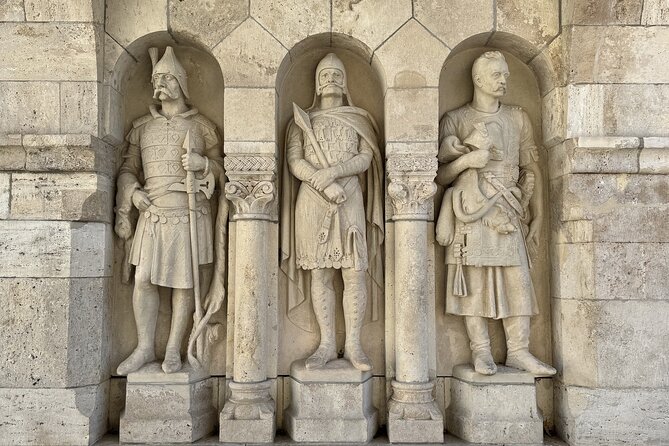
One of the tour’s strongest strengths is how it refuses to stay in the Middle Ages. You start seeing 20th-century Hungary clearly, without turning the walk into a grim lecture.
At Arpad Toth Promenade (Setany), you get a direct WWII storyline. You learn about the first flag after WWII, a row of cannons, and a view of the Buda hills. There is also the statue of the Szekely Knight, which gives the whole scene a local face, not just a military one.
The guide also connects the promenade to the siege of Budapest. That’s a lot of meaning for one five-to-ten minute stop, but it works because you are physically in the place where the district’s memory is visible.
From there, you move to the Statue of Mounted Andras Hadik, described as the most famous Hungarian knight. You also get local trends tied to the area and a note about the oldest Hungarian confectionery. It is a nice tonal shift that keeps the walk from becoming heavy and lets you see how people actually experience places, not only what historians write.
Then comes Labyrinth, where you are told it is a natural cave used as a dungeon. The guide brings in Dracula and Vlad the Impaler legends, which is exactly the kind of story you need when the walk suddenly dips into myth. Even if you are not chasing horror tales, it makes sense of why visitors keep returning to this corner.
Tip for this segment: if you have a phone camera, set it before you reach the cave area. Cave zones can be darker, and you will want time for one good shot, not frantic fiddling.
1848 to the present: independence symbols, Houdini, and the funicular area
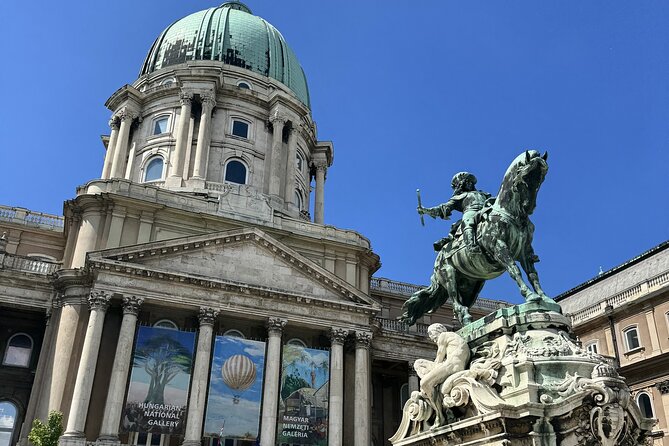
The Statue of Independence War is one of those stops where the guide acts like a translator. You get background on the Hungarian revolution of 1848 and then a link that connects symbolisms of the statues to the original war. That approach helps you read the monuments like evidence.
In the same vicinity, you also hear about the House of Houdini. This is one of those interesting “why is this here?” notes that makes the district feel human and surprising, not museum-only.
Next is Szent György Street. You get offices of the president and prime ministers and also ruins of medieval castles. The guide shares secret stories too, and that blend is exactly why this street segment works. It sits at the hinge between modern government and older power structures.
Then you reach Buda Hill Funicular, which is identified as the second oldest funicular. You also learn about a zero kilometer stone and the oldest bridge of Hungary. Even if you are not riding anything at that exact moment, this stop is useful because it grounds the district in infrastructure and movement, the real plumbing of a city built on hills.
Turul bird, Matthias fountain, and the Castle courtyard you can read
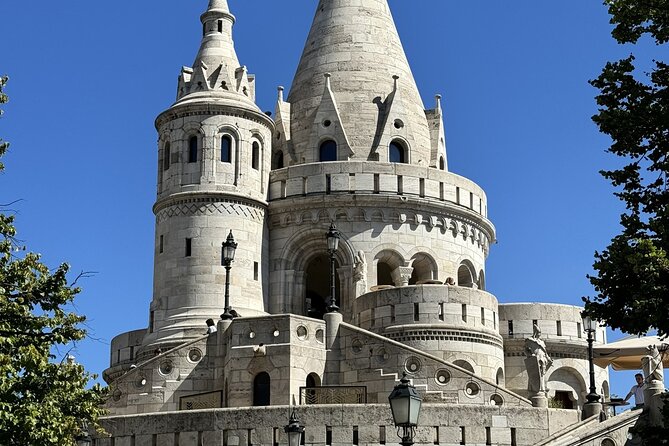
Now you start getting more myth and more royal symbolism.
At the Turul Bird Statue, you learn that it represents the national bird of Hungary. You also get background on the bird and a storyline tied to the naming of Hungarians. It is short, but if you pay attention, this stop gives you a cultural reference point you will recognize in other parts of the country.
Then you go to the Fountain of King Matthias, described as the prettiest fountain of Budapest. The guide also connects it to a romantic-tragedy. Even if you only catch the gist in five minutes, the tragedy angle changes how you see a fountain. It is not just decoration.
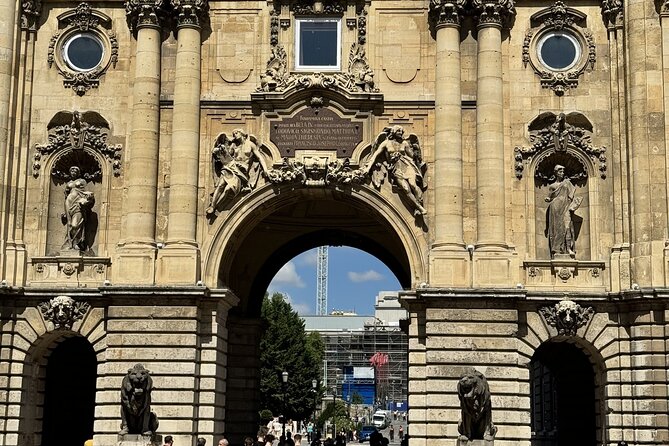
The tour continues with Lions Court – Buda Castle, where you get a courtyard experience. You see mythical statues and hear explanations of what is on the facade. This is the moment where the walk feels less like a checklist and more like you are learning to interpret stonework.
After that is the Royal Riding Hall, the royal Hungarian stable. Again, it is quick, but you get interesting local trends, which helps the site feel like a lived-in part of Budapest, not a sealed-off relic.
Prince Eugene and the Big statue moment, plus Mary Mother of God
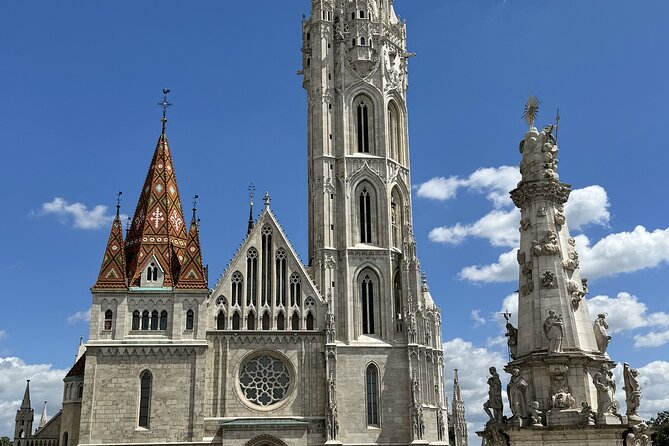
A favorite visual anchor on the route is the Prince Eugene of Savoy’s Equestrian Statue. It is described as the biggest statue of the castle district, and the guide connects Prince Eugene as a liberator of Hungarians from the Ottomans. You also get fun facts that keep it from turning into a standard war summary.
This is a good place to reset your brain and let the district’s scale hit you. After church details, archives, and memorials, a big equestrian monument can feel like a full stop in the conversation.
Then you move to S. Maria Mater Dei. You get a statue of Virgin Mother Mary and baby Jesus, with a note about bridges in Budapest and their relation to Hungarian monarchs. The bridge connection is one of those details that makes your next walk across town more meaningful. Instead of seeing bridges as pure transit, you start seeing them as links to who Hungary remembers and honors.
Castle Garden and the Varkert Bazar finish: unwind with good architecture
You end with a shift toward open-air and strolling.
At Castle Garden, the guide highlights the garden setting, plus a spiral staircase tower and a Triton fountain. You also get a gentle breather after the tighter monument stops. For a tour that runs about 2 hours 10 minutes, this ending pacing is smart.
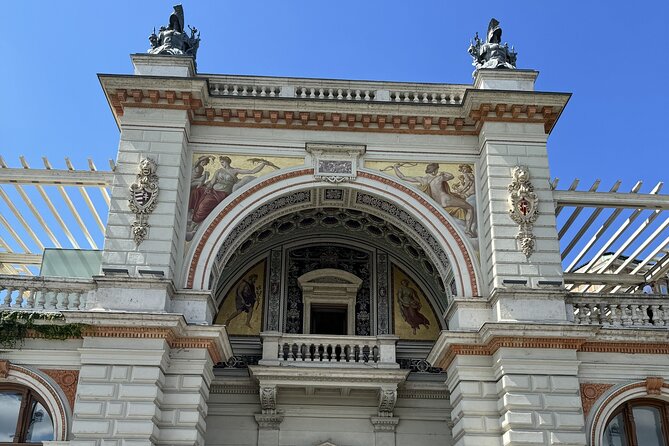
Then comes Castle Garden Bazaar, where you get architecture of the Varkert Bazar and attention to statues on the facade. You finish at the Castle Garden Bazaar area near Varkert Bazar, so you have a natural next step. You can keep wandering, grab a snack nearby, or just enjoy the street life without having to navigate another “where do I go now?” problem.
Price and pacing: what $3.61 buys you (and what it does not)
Let’s be blunt: $3.61 per person is shockingly low for a live guided walking tour. The value comes from two things. First, you have a live guide doing the heavy lifting in interpretation. Second, the listed stops are marked as free-entry, so your money is not competing with admission fees.
What it does not buy is a slow, museum-style afternoon. This route is efficient, with many stops that last around five minutes, plus one longer segment for Fisherman’s Bastion and another for the Labyrinth area. If you want to sit down for long, this is not that tour.
Pacing also means physical readiness. You are walking through a hilly district with stairs and uneven surfaces. You can participate if you are generally comfortable walking, but I would not call it a casual stroll.
Weather matters too. This tour requires good weather, which is a polite way of saying you should be ready for changes if skies turn sour.
If you want to get the most out of it, plan to bring:
- good walking shoes (seriously, the stone will test you)
- a camera or phone with enough storage for Pest views
- a layer you can adjust as the light changes after 3:00 pm
Who should book, and who should skip
Book this if you want structure. You like photo stops, you like explanations, and you want the Castle District to feel like a story instead of a pile of monuments. It also fits well if you appreciate accurate English narration, since reviews specifically praised the guide’s English and presentation and the friendly, enthusiastic style.
It also makes sense if you like the big themes: Hungary’s medieval power, Ottoman-era memory, WWII siege context, and 1848 independence symbolism, all in one compact walk.
Skip it if you need a very slow pace, or if you are looking for deep, indoor museum time. This is a walking tour with quick stops. You will get highlights, not long sittings.
Should you book this Gems of the Budapest Castle District Walking Tour?
Yes, if your goal is to see a lot of meaningful sights in a short window and you value interpretation. The tour’s strongest appeal is its blend of free-entry stops and a live guide who can connect symbolism, architecture, and national stories in plain language. The Fisherman’s Bastion photo time is a real plus, and the route ending near Varkert Bazar gives you an easy place to keep exploring afterward.
If you have limited time in Budapest’s Castle District, this kind of guided loop is one of the best ways to get bearings fast and walk away understanding what you saw.
FAQ
What time does the tour start?
The start time is 3:00 pm.
How long is the walking tour?
It lasts about 2 hours 10 minutes.
Where does the tour begin and end?
It starts at Holy Trinity Statue (Szentháromság u., 1014 Hungary) and ends at Castle Garden Bazaar (Ybl Miklós tér 2-6, 1013 Hungary), right next to Castle Garden near Varkert Bazar.
Is the tour in English?
Yes, it is offered in English.
How much does it cost?
The price is $3.61 per person.
Are admissions included for the stops?
The tour details list admission ticket free for the stops on the route.
Do you get a mobile ticket?
Yes, the tour includes a mobile ticket.
Is there a live guide?
Yes, the tour includes a live guide.
What is the group size?
The tour has a maximum of 45 travelers.
Is cancellation free?
Free cancellation is available. You can cancel up to 24 hours in advance for a full refund. If you cancel less than 24 hours before the start time, it will not be refunded.
Keep Walking Budapest






Keep Exploring Castle Hill





More Tour Reviews in Budapest






Recently added around Budapest




Buda Castle Tours, compared.
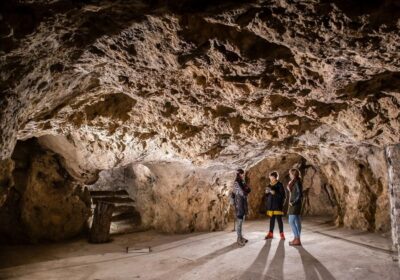 ★ 4.7Buda Castle Cave TourFrom $195,677 reviews
 ★ 4.6Buda Castle District Vampires and Myths Night TourFrom $233,830 reviews
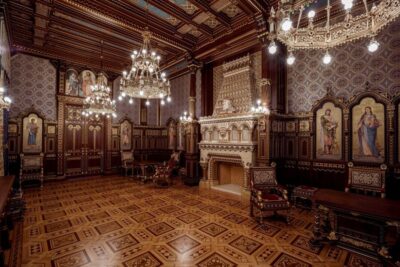 ★ 4.5Buda Castle Walk with Saint Stephen’s HallFrom $293,012 reviews
 ★ 4.6Buda Castle District Walking TourFrom $142,108 reviews
 ★ 4.5Buda Castle District Dark History, Legends and Vampire Night TourFrom $211,240 reviews
 ★ 4.9Buda Castle District Walking Tour with a HistorianFrom $63867 reviews
 ★ 4.6Classical Music Concerts in Matthias ChurchFrom $70792 reviews
 ★ 4.6Matthias Church Entry TicketFrom $25787 reviews
Browse the lists this tour appears in