
Budapest’s highlights click into place fast. This private walk through Buda and Pest is a smart way to connect monuments to the bigger story of Hungarian life, from kings to Communism, with a guide who keeps it friendly and human. I especially love the private-group feel, where guides can slow down when you have questions, and the Buda Castle segment sets you up with the views and details you want later.
What I like most is the way the day crosses the Danube and keeps switching perspectives. One minute you’re in the Castle District, the next you’re on Chain Bridge looking over the river, and it helps you understand Budapest as one city split into two moods. The route also feels flexible, and that’s not just theory, guides like Katalin, Susan, and Zsuzsanna are praised for tailoring the walk so it does not repeat what you already have booked.
One consideration: it’s a long, mostly walking day (about 7 hours) with moderate fitness needed, and some stops have admission not included. If you hate walking or want every ticketed museum experience, this might feel rushed, so go in with comfy shoes and a plan for which entrances you want to pay for.
Key things I’d bookmark before you go
- Private up to 6 people means the pace can fit your group, not a coach full of strangers
- Buda Castle District first gives you the big picture and the best orientation for the rest of the day
- Danube crossing at Chain Bridge helps you visually connect Buda and Pest
- Two museums in Heroes’ Square and multiple “maybe” interiors later means you can choose how ticket-heavy the day is
- Family-friendly, question-friendly guides show up often in the feedback, including guides like Kate and Katalin
- Pickup and a mobile ticket keep the start simple, especially if you are not keen on navigating on day one
More ways to put both banks into one city loop
- Budapest: City Sightseeing Hop-On Hop-Off Bus Tour & Extras★ 4.1 · 4,337 reviews
- Budapest: Big Bus Hop-On Hop-Off Tour & Danube River Cruise★ 4.2 · 3,794 reviews
- Big Bus Budapest Hop-On Hop-Off Bus and Walking Tour★ 3.5 · 2,206 reviews
- Budapest: Grand City Tour with Parliament Visit★ 4.4 · 1,598 reviews
How the start works, and why pickup matters at 9:00
This tour runs for about 7 hours, starting at 9:00 am, and it loops through some of Budapest’s most famous areas without needing a bunch of extra transportation. You stay with your guide the whole time, and because it is private, it’s just your group.
Pickup is offered from hotels, hostels, apartments, and AirBnBs. That small detail matters in Budapest, because you can lose time figuring out where you are supposed to meet, especially if you arrive the night before and you are still learning the map. If you prefer to go straight to the meeting spot, the tour also notes it is near public transportation, so you are not stuck if you do not want pickup.
You also get a mobile ticket, which is practical in a city where ticket lines can be annoying. I like anything that reduces friction on the first morning.
What you should know before you commit: several stops have admissions not included, and lunch is not included either. So if you want a relaxed day, plan to snack and hydrate along the way, and save your energy for the parts you care about most.
Buda Castle District: Royal Palace views without the confusion
Your day kicks off in the Buda Castle District, where the vibe is classic Budapest, hilltop streets, stone buildings, and that strong sense of history in every direction you look. You spend about 2 hours here, which is the right amount of time for getting oriented without feeling like you are just passing by in a hurry.
You’ll hit major highlights in this area: the Royal Palace, Matthias Church, and Fisherman’s Bastion. The best value of starting here is orientation. After you see the Castle District properly, the rest of the day makes more sense, especially later when you cross to Pest and start noticing how the city’s layout relates to power, religion, and modern civic life.
This segment includes admission tickets marked free, so you are not nickel-and-diming your morning right at the start. That matters because it keeps your day’s rhythm intact. You can focus on what to look at and what questions to ask instead of checking tickets the moment you step outside.
Why I think this stop is a standout: it sets up the stories you will hear all day. The tour is not just about names on plaques. The guiding approach connects what you see in the Castle District to broader Hungarian history themes, including the shift from monarchy-era symbolism through later political changes under Communism. Even if you only catch a few of those threads, it makes Budapest feel less like random sightseeing and more like a timeline you can walk through.
Small drawback: you will likely be on your feet a lot at the start. If your legs are sensitive in the morning, use that first stretch to take a slow look, then ask the guide to pace the rest of the walk.
Heroes’ Square and the museum lanes: symbolism in short time
Next up is Heroes’ Square, with about 30 minutes allocated. Tickets for the museums here are not included, but the guide will point you toward the Fine Arts Museum and the Modern Art Museum area. Even if you skip entering, the square itself helps you understand how Budapest likes to frame national pride and public memory.
In practical terms, Heroes’ Square is a fast win if you are visiting for the first time. You get a big, clear landmark that you can recognize later. It also breaks up the day so you are not stuck in one architectural theme for too long.
If you do want a museum experience, you’ll need to plan that separately since admission is not included. In a day like this, that’s usually the best approach anyway. You get the context from your guide first, then decide if you want to go deeper on your own time.
St. Stephen’s Basilica: a quick stop that can feel oversized
Then you head to St. Stephen’s Basilica (Szent István Bazilika) in St. Stephen’s Square. You’ll spend about 30 minutes here, and admission is not included.
This is one of those “you can admire it, even if you do not go inside” moments. The value is how the guide reads the building style and the setting, and then connects it to the bigger story line they’ve been building across the day. Even without museum-style time, this stop helps you understand Budapest as a mix of devotion, civic identity, and political history.
Possible drawback: because the time is short, if you are determined to go inside and do it properly, you might feel constrained. You can avoid that by treating this as a look-and-learn stop unless you know you want the interior experience.
Budapest on foot, with a few more routes to compare
- Budapest: Buda Castle District Walking Tour
★ 4.6 · 2,108 reviews - Budapest City Landmarks Walking Tour in 2 Hours
★ 5.0 · 2,048 reviews - 3-Hour Orientation Walking Tour of Buda and Pest
★ 4.8 · 1,834 reviews - Budapest Historical Sightseeing – Free Walking Tour
★ 5.0 · 1,302 reviews - Budapest All in One Small Group Walking Tour with Strudel Stop
★ 5.0 · 1,277 reviews
Hungarian Parliament Building: how the city tells political stories
After the Basilica, you reach the Hungarian Parliament Building near Kossuth Square. Again, you get about 30 minutes, and admission is not included.
This stop is great for two reasons. First, it is visually dramatic. Second, it gives the tour’s history themes something concrete to grab onto. If you’ve ever wondered why Budapest feels so layered, Parliament is one of the places that makes the political side of the story feel real rather than abstract.
In a private setting, you can ask your guide what you should focus on, like architectural details or the role of the building in the city’s identity. That ability to customize your attention is one of the reasons people rave about guides on this route.
Chain Bridge crossing: the most useful 30 minutes of the day
At Szechenyi Lanchid (Chain Bridge), you get another 30-minute stop, and admission is marked free. This is where the tour earns the “Grand Budapest” nickname in a practical way.
Why? Because the Danube crossing is the visual lesson you cannot get from photos. From this bridge, you can see the relationship between Buda’s hilltop look and Pest’s flatter, grand-street feel. It also acts like a reset. You move from one historical zone to another without losing the day’s flow.
If you only do one “slow down and look around” moment, make it here. Even if you have already seen pictures of Chain Bridge, standing on it with the guide’s context turns it into something more than a postcard.
Dohany Street Synagogue and the Opera House: faith and culture in one sweep
Now you move into the cultural side of Pest.
First is the Dohány Street Synagogue (Great Synagogue), with about 30 minutes and admission not included. Then you head to the Hungarian State Opera House (Magyar Állami Operaház) for another 30 minutes, also with admission not included.
This pairing works well because it shows Budapest’s cultural identity through two different lenses. Your guide can connect them to the broad history threads you’ve been following, including how Hungary expressed itself through religion and the arts in different eras.
The best way to enjoy these stops in a short format is to decide in advance what you care about most. If you love architecture and exterior details, you can keep it light and still get a lot. If you want interior access, that is likely a separate decision since admission is not included.
One small consideration: since both stops have relatively brief time slots, the day can feel like a highlight reel. If you want deep interior time, I’d treat this section as “see it now, choose later.”
City Park and Vajdahunyad Castle, plus Széchenyi Baths area
The day ends at Varosliget (City Park) for about 1 hour, with Vajdahunyad Castle and the Széchenyi Baths area mentioned. Admission is not included for this segment.
This is a smart finale because it gives you a breather after the denser historic stops. City Park can take the edge off a long walking day, and it gives you space to absorb what you just learned. It’s also a chance to switch from “monument mode” to “park mode,” which feels like a different kind of Budapest.
If you plan to use the baths, you’ll need to handle that separately since entry is not included. Still, having the guide show you the right area helps you avoid the common mistake of wasting your last hour chasing directions.
Price and value: is $350 per group actually fair?
The price is $350 per group, up to 6 people. That makes the cost one of the best deals you can get in a city where private guiding often costs a lot more.
If you fill the group, the math is about $58 per person. Even if you do not fill all 6 spots and it ends up closer to a small group cost, you still get the key benefit of private time: you can control the pacing and the focus.
That value gets even better because the tour covers a lot of major areas in one morning and afternoon. You are not just seeing buildings, you are learning a narrative that connects the Castle District, Pest landmarks, and the symbolism behind major public sites.
Now for the honest part: not all admissions are included. Buda Castle District and Chain Bridge are marked free, but other major stops list admission not included. Lunch is also not included. So your all-in spending depends on what you decide to pay for.
My advice for maximum value: go in knowing which stops you want as exterior photo moments, and which ones you want to enter. That way you avoid the “we should have budgeted for that” feeling later.
Who should book this walking tour, and who should skip it
This tour is ideal if you want a first-time orientation with real context. It works especially well for:
- Couples or families who want a private guide instead of a big group scramble
- People who like history framed as stories, not just dates
- Travelers who already have other plans, like a riverboat day, and want the walking portion to match instead of duplicate
It also fits kids better than many history tours, based on how guides are described, including patient, playful pacing and room for questions.
Consider skipping or switching to a shorter option if:
- You struggle with long walks and you dislike hills
- You plan to go inside almost every ticketed place on your list
- You want a slow, restaurant-heavy day with frequent downtime
One more practical note: the tour mentions moderate physical fitness. That’s your signal to pack for comfort, not for speed.
FAQ
FAQ
Is this a private tour?
Yes. It is a private tour or activity, and only your group participates.
How long is the Grand Budapest walking tour?
The duration is about 7 hours.
What language is the tour offered in?
The tour is offered in English.
Is pickup available?
Pickup is offered from hotels, hostels, apartments, and AirBnB properties.
Does the tour include admission tickets?
Some stops include admission marked as free, while others have admission not included. Lunch is not included.
What time does the tour start?
The start time is 9:00 am.
Can I cancel and get a full refund?
Yes. You can cancel up to 24 hours in advance for a full refund.
Should you book the Grand Budapest walking tour?
If you want a fast, well-paced orientation to Budapest with a guide who connects the dots, I think this is a strong booking. The private group format is the real engine here, it helps you ask questions and shape the day instead of rushing through it. Start with the Castle District, cross at Chain Bridge, then let the cultural stops round out the picture.
If your idea of travel is lots of interior time and minimal walking, you may feel the time pressure. But if you’re aiming to understand Budapest in one day, this route gives you exactly that, without turning your trip into a logistics puzzle.
Keep Walking Budapest






See Both Banks, Other Ways





More Tour Reviews in Budapest





Recently added around Budapest




Budapest City Sightseeing Tours, compared.
 ★ 4.6City Highlights Cruise with Welcome DrinkFrom $1435,610 reviews
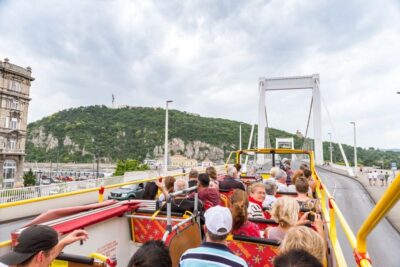 ★ 4.1City Sightseeing Hop-On Hop-Off Bus Tour & ExtrasFrom $414,337 reviews
 ★ 4.2Big Bus Hop-On Hop-Off Tour & Danube River CruiseFrom $403,794 reviews
 ★ 3.5Big Bus Budapest Hop-On Hop-Off Bus and Walking TourFrom $422,206 reviews
 ★ 4.4Grand City Tour with Parliament VisitFrom $701,598 reviews
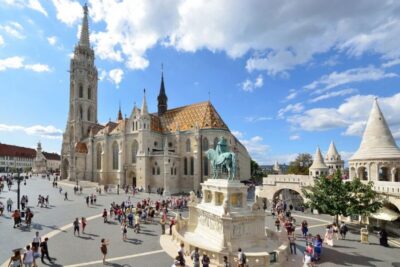 ★ 4.33-Hour Grand City Tour and Castle WalkFrom $491,437 reviews
 ★ 4.43-Hour Live Guided Sightseeing TourFrom $351,041 reviews
 ★ 5.0Budapest Highlights Bike TourFrom $39770 reviews
Browse the lists this tour appears in