Tour review · BUDAPEST
Hungary today: a no-taboo conversation
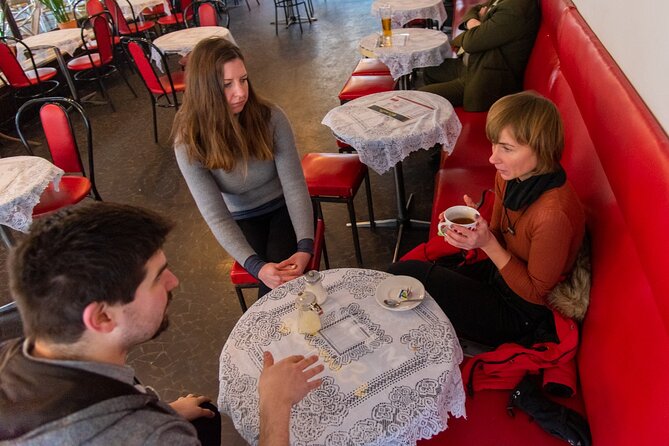
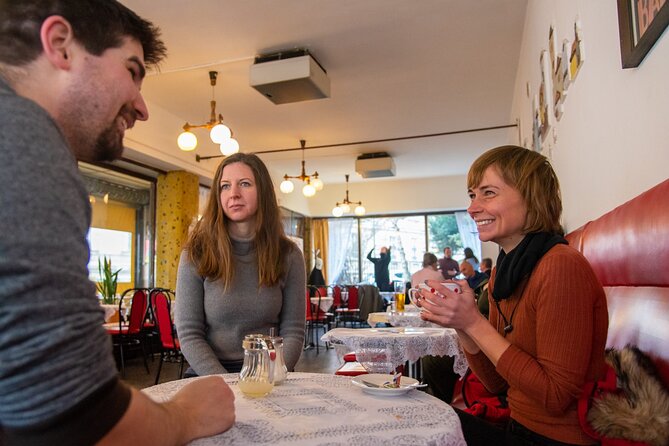
Over coffee, Hungary talks back. This 90 minute chat starts at Bambi Café, a cult spot that has hardly changed since the 1970s, and it quickly turns into a frank conversation about Hungary’s shift from communism to democracy and the rise of illiberal democracy. I love the honest, question-led format and the clear 30-year context you get before the discussion turns personal. One caution: it is politically focused, so if you want mostly sightseeing, this may feel too serious.
You sit in a small group (up to 6 people), which is rare for a topic this heavy and personal. The host approach feels human and direct, and the whole point is that you can ask follow-ups instead of collecting facts like souvenirs. The mobile ticket and easy return to the meeting point make it simple to fit into a busy afternoon.
If you arrive curious, even if you have only a few questions, you’ll get an intro first, then you’ll steer where it goes next. It runs about 1 hour 30 minutes, starting at 2:00 pm, and it stays grounded in what’s happening in Budapest right now, not just what happened once upon a time.
Key highlights

- Bambi Café’s staying power: a cult café with a feel that has barely shifted since the 1970s
- Last 30 years, explained: communism to democracy, then today’s political argument about illiberal democracy
- No-taboo, ask-anything format: controversial politics, economy, the turbulent past, and the uncertain future
- Up to 6 guests: enough space for real Q&A, not a one-way lecture
- Works if you’ve been to Budapest before: ideal if you want meaning behind what you see
- Budapest and beyond: the conversation stretches past the city when questions take you there
Before the plan settles, compare this with a few more ways to spend time around Budapest.
- Budapest: City Highlights Cruise with Welcome Drink★ 4.6 · 35,610 reviews
- Budapest: Unlimited Prosecco, Beer and Aperol Spritz Cruise★ 4.8 · 25,310 reviews
- Budapest: Széchenyi Spa Day Ticket with Optional Upgrades★ 4.3 · 23,911 reviews
- Budapest: Nighttime or Daytime Sightseeing Cruise★ 4.2 · 21,062 reviews
Bambi Café, your calm anchor in a loud topic
The best trick of this experience is where it starts. Meeting at Bambi Café matters because it helps the conversation feel normal, not staged. You get a “we’re just talking” setting, even when the subject is complicated: communism, democracy, today’s political direction, and why people argue so intensely.
Bambi Café is described as a cult café that has changed close to none since the 1970s. That detail is more than trivia. It gives you a baseline feeling of continuity in a country that has lived through major breakpoints. When you talk about political eras that shift fast on paper, it helps to sit in a place that doesn’t seem to chase trends.
One practical perk: the location is at Frankel Leó út 2-4 in Budapest, and it’s near public transportation. That’s useful because this kind of conversation tour works best when you’re not rushing across town. You want your brain ready for questions, not fried from transit.
The 30-year timeline you didn’t know you needed
The host does two phases. First is an introduction to Hungary’s modern era, mainly from the last 30 years. That’s the window where the country’s story can feel like a blur if you only read headlines. Here, you get a structured sense of how the political and economic landscape changed over time.
The conversation covers the movement from Communism to democracy, and then it shifts to the creation and spread of what’s been called illiberal democracy in recent years. The value is not just that these phrases are explained. It’s the way the host ties them to how people experience life, institutions, and power in practice.
You’ll also notice the balance in how this is framed. The tour is not just “bad before, better now,” or “progress for everyone.” It’s presented as a changing story with real tradeoffs and arguments. That matters because Hungary, like many places, can’t be reduced to one tidy slogan.
And because it starts with context, you’re not forced to have every question pre-written. If you don’t have exact questions, the host still sets the stage. That’s a good design choice for a short 1 hour 30 minute experience, and it also respects the reality that not everyone arrives with a political reading list.
How illiberal democracy fits into real life
When the topic turns to illiberal democracy, it can sound abstract, like something you saw in an article. In this conversation, it becomes a living debate, the kind people have at dinner tables and in election-season conversations.
You’ll likely spend time on what people mean when they say democracy is being reshaped. The tour also aims to connect political changes to economic and social expectations, because in Hungary those threads are hard to separate. If you only focus on ideology, you miss why arguments feel personal and why policies can be experienced as either stabilizing or threatening.
A big part of the experience is that the host treats questions as legitimate. If you ask why Hungary’s path differs from other European stories, you’ll get an answer shaped by recent history and current realities. That honesty is one of the most praised aspects of the tour, and it’s also the reason the experience can feel more worthwhile than a standard guided walk.
Your no-taboo Q&A, and how to get the most from it
This is a conversation tour, not a “follow me” tour. After the initial overview, you get a chance to ask anything you’ve wanted about Hungary. The topics are broad, and they can be controversial. Think politics, the turbulent past, the uncertain future, the economy, and the host’s personal opinion.
To make this work well for you, come with at least one question that’s personal to your interests. Examples that fit the theme without being too specific:
- How do political changes affect everyday life?
- Why do people support or oppose recent directions?
- What are the biggest economic pressures people feel right now?
- How do you interpret Budapest today compared to the last few decades?
Even if you don’t have questions, you can still benefit. The host introduces the modern era first, and then the discussion opens up. But if you want maximum value, you should show up ready to respond when the conversation swings. This format rewards curiosity, not just listening.
The small group size helps a lot here, because you’re more likely to get real attention. With up to 6 guests, you can ask follow-ups without cutting in every ten seconds. That’s the difference between a tour that feels like an interview and one that feels like a dialogue.
- Budapest: City Highlights Cruise with Welcome Drink
★ 4.6 · 35,610 reviews - Budapest: Unlimited Prosecco, Beer and Aperol Spritz Cruise
★ 4.8 · 25,310 reviews - Budapest: Széchenyi Spa Day Ticket with Optional Upgrades
★ 4.3 · 23,911 reviews - Budapest: Nighttime or Daytime Sightseeing Cruise
★ 4.2 · 21,062 reviews - Budapest: 1-Hour Evening Sightseeing Cruise with Drink
★ 4.5 · 8,330 reviews
Budapest beyond postcards: the city as a political mirror
Once the conversation is rolling, it tends to pull Budapest into the bigger story. You should expect opinions on the city itself, and on how Hungary’s political shifts show up in attitudes, institutions, and public life.
That’s where the experience can surprise you, even if you’ve already toured Budapest before. If you’ve seen the main sights but still feel like you don’t understand what’s behind them, this tour is built to close that gap. It’s not about getting another photo. It’s about getting a better mental model for what you’re looking at.
Because the host answers questions directly and openly, the conversation can also help you spot what’s missing from simplified impressions you might have picked up elsewhere. One of the most useful outcomes is leaving with sharper questions for the rest of your trip, like what to notice in political messaging, civic culture, and everyday conversations in cafés and markets.
And yes, it can get uncomfortable at times, because no-taboo means exactly that. But discomfort is often a sign you’re learning something real, not just collecting facts that won’t change how you see a place.
Who will enjoy this most (and who might not)
This experience is best for people who want context and frank discussion more than scripted sightseeing. It suits you if:
- You like political history that connects to today
- You enjoy asking questions and getting real answers
- You want a Hungarian perspective, not only textbook summaries
- You’ve already seen major Budapest landmarks and want meaning behind them
It may be less ideal if you prefer light, low-stakes travel. If you’re burned out on heavy topics, or you came mostly for a relaxed walk with minimal discussion, this one could feel like a classroom with better coffee.
Also keep in mind that it’s designed around your participation. The host says how it goes depends on you. If you want a completely passive experience, you might not get the full payoff from the format.
Still, even if you’re on the fence, there’s a strong case for trying it. Reviews highlight that the conversation can be the best use of a packed week, especially because you get depth in a short window and a chance to talk like a person, not like a student.
Price and timing: what $40.52 buys you
At $40.52 per person, this is not priced like a “cheap add-on,” but it also isn’t in the expensive category for private guiding. The value comes from the format: 1 hour 30 minutes of direct conversation with room for questions, capped at a maximum of 6 people.
You should think of the cost as paying for two things:
1) The upfront context on Hungary’s last 30 years, including political and economic framing
2) The flexibility of a discussion, where your questions help shape what you learn
The meeting point is fixed, starting at 2:00 pm at Bambi Café, and the experience ends back at the meeting point. That matters because it reduces friction. You’re not spending energy figuring out logistics in the middle of a focused conversation.
One additional detail: the café time itself is presented as ticket-free for admission in this experience context. So you’re not paying extra for entry to the café as a venue. You’re paying for the guided conversation.
If you like tours where the guide talks at you, you may feel underwhelmed. But if you like tours where you talk back, this price can make a lot of sense.
The practical details that actually affect your day
This experience is capped at 6 travelers, which is your guarantee that the host can respond to questions instead of rushing through talking points. It uses a mobile ticket, so you can keep things simple on your phone.
The start location is Bambi Café at Frankel Leó út 2-4, 1027 Hungary, and it’s near public transportation. That’s helpful when you are planning around other activities in Budapest. The duration is about 1 hour 30 minutes, so you can treat it as a solid block in your schedule, not a vague half-hour gamble.
Service animals are allowed, and most travelers can participate. Confirmation is received at booking time, which reduces uncertainty.
Should you book Hungary today: a no-taboo conversation?
If you want a Budapest tour that goes past monuments and into how people interpret their country, I think you should seriously consider booking. The strongest reason is the format: a small-group, no-taboo conversation that starts with a clear intro, then becomes a Q&A built around your curiosity.
Book it if you enjoy honest answers, even when the topic is controversial. Book it if you’ve already visited Budapest sights and you want a clearer explanation of what you are seeing and why people argue about it. And book it if you want a short experience that gives you real depth without making you sit through a long lecture.
Skip it if your ideal day is light and visual. This is a politics-focused chat. It can be fascinating, but it won’t pretend politics is optional.
If you’re the type of traveler who asks questions anyway, this tour fits you like a good pair of shoes. Not flashy. Practical. And it teaches you how to look at Hungary with your eyes open.
FAQ
Where does the experience start?
It starts at Bambi Café, Budapest, Frankel Leó út 2-4, 1027 Hungary.
How long is the conversation tour?
It lasts about 1 hour 30 minutes.
What is the price per person?
The price is $40.52 per person.
Is there a limit on group size?
Yes. The experience has a maximum of 6 travelers.
Is entry to Bambi Café included?
Admission is listed as free for the café stop.
Do I get a mobile ticket?
Yes, it includes a mobile ticket.
What time does it begin?
The start time is 2:00 pm.
Are service animals allowed, and is it near public transportation?
Service animals are allowed, and the meeting point is near public transportation.