
Jewish Budapest hits you where it happened. This private half-day walk strings together synagogues, ghetto traces, and Holocaust memorials with a guide who can answer the tricky questions. The best part is the route can be tailored to what you want to emphasize, so you do not get a cookie-cutter tour.
I especially like the tight focus on specific places people often skip, like yellow-star houses and the small surviving ghetto segment on Király Street. I also like that you get built-in time for remembrance stops plus a social break at Szimpla Kert, not just sad monuments back-to-back.
One thing to plan for: synagogue access is not the same everywhere. The Great Synagogue can require an extra entrance fee for a fuller building visit, Kazinczy Street is closed, and Rumbach Street is only shown inside on request.
What Makes This Jewish Quarter Walk Worth Your Time
- Private, in-control pacing for your group, up to 15 people, with a route shaped around your wishes
- A guide-led story that connects architecture, the ghetto, and the Holocaust without rushing
- High-impact memorial stops like Carl Lutz and the Shoes on the Danube Bank
- Synagogue access varies, so you should budget for extra entry if you want interiors
- A practical, time-smart mix of solemn sites and a Ruin Bar break at Szimpla Kert
More stories from the Jewish Quarter and District VII
- Budapest Jewish Heritage Memorial Walking Tour & Synagogue Entry★ 5.0 · 568 reviews
- Budapest: Jewish Heritage Guided Tour with Synagogue Ticket★ 4.8 · 533 reviews
- Jewish Quarter of Budapest Walking Tour★ 4.7 · 369 reviews
- Budapest: Best of Downtown and Jewish Quarter Tour★ 5.0 · 312 reviews
Jewish Budapest Gets Personal on a 4 Hour Private Route
This tour is built for people who want more than a quick look at old buildings. You get a concentrated walk through the Jewish Quarter in Pest, centered on sites tied to World War II and the post-war memory that still lives in the streets.
You will be moving at a steady walking pace for about 4 hours, so wear shoes you can stand in. The good news is the group size stays small enough that a serious discussion does not turn into background noise.
If you like guides who keep history grounded in real locations, this one fits. The route also leaves room for you to ask for extra context at the places that grab you most.
Price and Value: What $342.93 Per Group Actually Buys
The price is $342.93 per group for up to 15 people. If you spread it across 10 to 15 folks, it comes out to about the low-to-mid $20s per person. Even at fewer people, it can still feel reasonable because you are paying for private guide attention, not just access to sights.
The tour also includes hotel or port pickup and drop-off (for cruise passengers, you provide ship and docking details). That matters in Budapest, where transit and timing can get annoying fast.
One catch for value: not all entrances are included. Some stops are free, while synagogues may require additional tickets for interior access. Still, you are not stuck paying for everything, and the guide can steer you toward what is possible that day.
How to Plan Your Day: Walking Comfort and the Saturday Problem
This is a city walk, not a sit-down museum marathon. Expect a good amount of listening time outside, with frequent short stops. Plan for weather: Budapest can swing from sunny to cold quickly, and there is not much shelter at street-level sights.
You also need to take the calendar seriously. The tour is not recommended on Saturdays, because the synagogues are closed due to Jewish holidays. If your dates include a Saturday, you may lose interior access and the tour may feel more like an exterior focused route.
If you are coming by cruise, you will want to confirm the exact pickup plan in advance. The operator asks for ship name, docking time, disembarkation time, and re-boarding time, which is exactly what you want for a smooth day shore-side.
Stop 1: The Jewish Quarter Wall Traces and Yellow-Star Houses
You start in the Jewish Quarter with the physical leftovers that shaped daily life. You will see remaining parts of the wall that once surrounded the former ghetto, plus the locations tied to yellow-star houses.
This is a smart opening stop because it sets the scale. Even if you know the basics, standing near surviving traces helps your brain switch from dates to place. It also makes the later synagogue and memorial stops hit harder, because you already understand how confinement worked on the street level.
This first segment is short, around 20 minutes, and the admission is free. That time efficiency is helpful if your group has mixed mobility levels.
Budapest on foot, with a few more routes to compare
- Budapest: Buda Castle District Walking Tour
★ 4.6 · 2,108 reviews - Budapest City Landmarks Walking Tour in 2 Hours
★ 5.0 · 2,048 reviews - 3-Hour Orientation Walking Tour of Buda and Pest
★ 4.8 · 1,834 reviews - Budapest Historical Sightseeing – Free Walking Tour
★ 5.0 · 1,302 reviews - Budapest All in One Small Group Walking Tour with Strudel Stop
★ 5.0 · 1,277 reviews
Stop 2: Dohány Street Synagogue (Nagy Zsinagóga), Ticket Reality Check
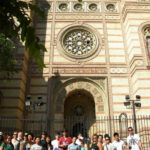
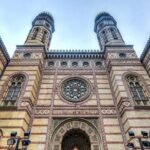
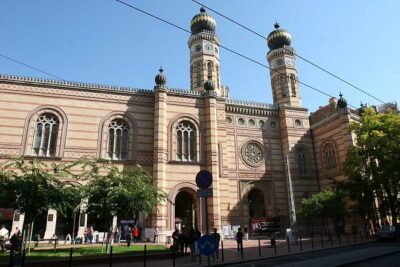
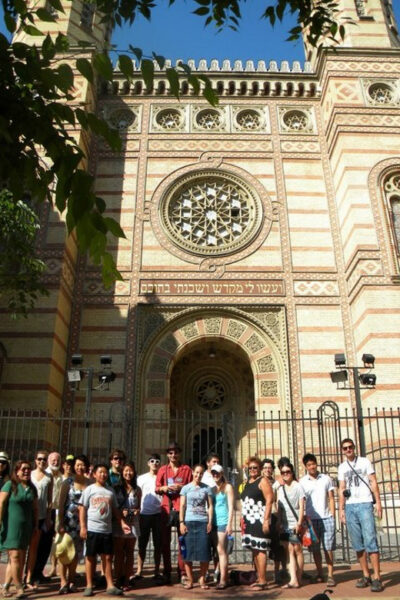
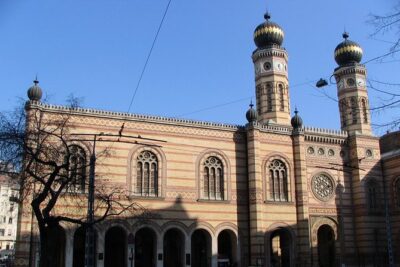
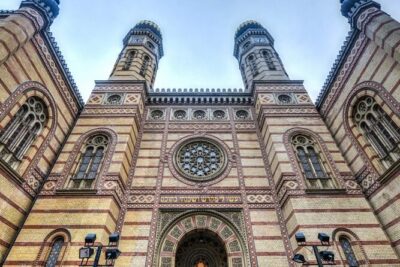
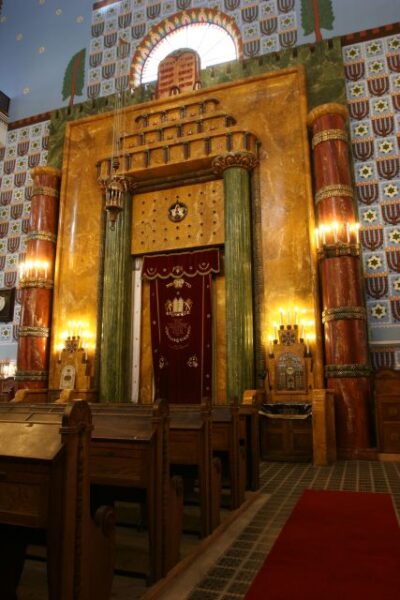
Next comes the Great or Central Synagogue, also known as the Dohány Street Synagogue. This is described as the biggest functioning synagogue in Europe, and you will see why as soon as you are close enough to notice the scale and detail.
Here is the key practical point: the interior visit has an extra ticket component. The building entry is not included, and while you can take in the main experience as guided, the tour mentions that you can go through the whole building on request for an additional entrance fee.
A review detail that you should treat as a warning: one guest noted they were surprised by the extra synagogue cost and wished they had known ahead of time. I would plan for that possibility even if the tour sounds like it includes everything.
Time is about 30 minutes here, so if you want maximum access, tell your guide early and confirm what you will be able to enter.
Stop 3: Kazinczy Street Synagogue, Why You May Only See It Outside
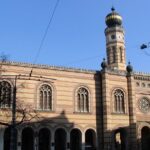
Kazinczy Street Synagogue is next, and this is where your expectations should be flexible. It is listed as closed temporarily because of renovation works and a community ban. That means you cannot enter, and the plan is to view it from the outside only.
Still, you get something valuable from the exterior. The stop is framed as a look at early 1910s synagogue architecture and Art Nouveau style. Even if you cannot go inside, the exterior view works when your guide explains what you are looking at.
This stop is brief, about 10 minutes, and the admission is not included. The time is kept short on purpose, because long exterior-only stops can feel thin if the building is not accessible.
Stop 4: Rumbach Street Synagogue, Recently Renovated and Entry on Request
Rumbach Street Synagogue is another architecture-forward stop. The building is described as recently renovated with astonishing design and a crucial role for the Jewish community of Budapest.
Here, the tour notes a specific limitation: the tour does not include tickets to visit the building. However, it also says that upon request the guide may show you inside.
That is a good setup if you want a flexible day. When you get to this area, ask your guide what access is possible that day. It costs nothing to ask, and you might end up with extra interior time.
Plan on about 30 minutes at this stop. If you do get interior access, you will likely appreciate the added context because this tour is designed to connect visible architecture to the people behind it.
Stop 5: Carl Lutz Memorial, Compassion Told With Specific Names
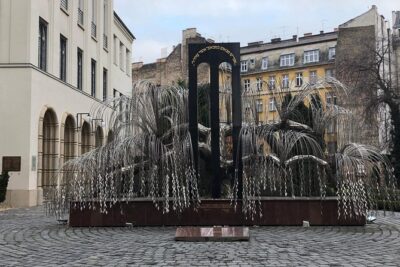
Then you shift from buildings to memory anchored in an individual story. At the Carl Lutz Memorial, you learn about the Swiss diplomat who helped thousands of Jewish people avoid the death camps during the Holocaust.
A memorial can easily turn into a general talk. This one is different because it is about a concrete person and a specific kind of courage. The stop is also paced as a discussion, not just a photo stop, so you get the why behind the place.
This stop is around 15 minutes, and admission is free. It is long enough to land emotionally, but short enough that it does not derail the rest of your afternoon.
Stop 6: Szimpla Kert Ruin Bar Break, Where History and Life Coexist
After heavier stops, you get a breather at Szimpla Kert. This is part of the VII district’s ruin bar scene, and it is singled out as having strong design and atmosphere that attracts visitors from around the world.
I like this break because it changes your body and your brain. You have been standing still in the past, thinking hard. Now you are given a chance to reset, stretch your legs, and keep going without burnout.
Admission is listed as free, and alcohol is not included. If your group wants something non-alcoholic, you can keep it simple and still enjoy the space.
Stop 7: Shoes on the Danube Bank, A Reminder With Sharp Edges
Next is Shoes on the Danube Bank, which commemorates people who were shot into the Danube during the Arrow Cross terror.
This is one of those places where silence does a lot of work. The reminder is blunt by design. Your guide’s job here is to frame what happened without turning it into sensational drama.
Time is listed as 1 hour in the itinerary, which feels long at first. But for this kind of memorial, longer can be a gift because you do not have to rush past the meaning.
If you are traveling with older family members, this is where you will feel the tour’s walking-and-standing demands most. Pace your group, take breaks, and let the guide know if you need a slower rhythm.
Stop 8: Király Street and the Surviving Ghetto Segment
The last major historic stop is on Király Street, under Király str. number 15, where an original segment of the Budapest Great Ghetto can still be found. The tour frames it as the second largest WWII ghetto in the world.
This is a powerful ending because it is about continuity. The tour returns you to street-level reality, not a single monument. You can look at what remains and understand how the city’s layout still remembers.
Time here is about 15 minutes, admission is free. It is short, but it lands well if you have been mentally tracking the story from the first ghetto wall traces.
Guides Matter Here: Suzy, Joel, Bogato, and Patient Answers
The reviews place a clear spotlight on the guides. Names that show up include Suzy, Joel, and Bogato. The common theme is passion and clear explanations that handle tough topics with care.
One review specifically praised patience for a group with many guests over 70. Another highlighted that Suzy connected Jewish community history with Hungarian and even wider world history, while still answering questions thoroughly.
That combination matters more than people think. On a tour like this, facts are only half the job. The other half is helping you ask the next question without feeling rushed or embarrassed.
Since this is an English guided private experience, you can also steer the conversation. If your group wants architecture details, your guide can focus there. If you want the Holocaust story framed in a place-specific way, the guide can do that too.
Timing and Pacing: Why This Half-Day Feels Full
Even though it is called a half-day, the tour can feel like a full story arc. The schedule is designed with shorter stops for quick orientation (like wall traces and specific exterior synagogue views) and longer stretches at the highest emotional sites.
A notable pattern: the itinerary includes multiple synagogues and memorial anchors, but it also includes a practical pause at Szimpla Kert. That prevents the day from collapsing into only solemn moments.
One review also noted the tour ran a bit longer than advertised, with the guide not rushing through key explanations. That is usually a good sign, because it means the guide is adjusting to your group rather than treating history like a checklist.
What You Should Bring (So the Day Goes Smoothly)
You are outdoors for much of the time, and you may stand for memorial moments. I’d bring:
- Comfortable walking shoes for uneven sidewalks
- A water bottle or plan to buy water nearby
- A small snack option if your group gets hungry between tastings
- A modest readiness for extra synagogue entrance costs if you want interior access
If you are the type who likes photos, bring your camera. Just remember you will still want your attention on the story, not just the shot.
Who This Tour Is Best For
This tour is a great fit if you want a place-based Jewish Budapest experience that takes the somber parts seriously. It works well for couples, small families, and history-minded travelers who prefer a guide who can answer questions patiently.
It is also a solid choice if you are short on time. Four hours lets you hit the major highlights of the Jewish Quarter without trying to stitch together everything yourself.
If your group needs guaranteed interior access at every synagogue stop, then this may require a rethink. Kazinczy Street is closed, and Rumbach depends on request. The Great Synagogue interior can require an extra fee.
Should You Book This Jewish Budapest Private City Walk?
I think you should book it if you want structure plus sensitivity. The private format means you can ask questions, slow down where it matters, and move on when your group is ready. The stop choices are well balanced, from ghetto traces and synagogue architecture to Carl Lutz, Shoes on the Danube, and the remaining ghetto segment on Király Street.
Book especially early if you can. The tour is commonly reserved about 50 days in advance, which suggests it is popular with people who want this exact blend of memorial and architecture.
Skip or reconsider if your dates include a Saturday, or if your group cannot handle extra entrance fees for synagogue interiors. If you plan around access limits, this walk becomes a focused and memorable way to understand Budapest’s Jewish story in the actual places where it happened.
FAQ
Is this a private tour?
Yes. It is a private tour, and only your group participates.
How long is the Jewish Budapest Private City Walk?
The duration is about 4 hours.
What language is the tour offered in?
The tour is offered in English.
Are entrance fees included for the synagogues?
Entrance fees are not included. The tour notes that tickets are not included for the Great or Central Synagogue, Kazinczy Street Synagogue, and Rumbach Street Synagogue.
Can I visit synagogues inside on this tour?
It depends on the stop. The Great Synagogue can involve an extra entrance fee for the full building on request. Kazinczy Street Synagogue is closed temporarily, so you cannot enter. For Rumbach Street Synagogue, entry inside is possible on request, since tickets are not included.
Is hotel or port pickup available?
Yes. Pickup is offered from hotels, and cruise ship passengers can request port pickup by providing ship name and docking, disembarkation, and re-boarding times.
Is the tour recommended on Saturdays?
No. It is not recommended on Saturdays because synagogues are closed due to Jewish holidays.
What is the cancellation refund timeframe?
You can cancel up to 24 hours in advance for a full refund. If you cancel less than 24 hours before the start time, you do not get a refund.
Keep Walking Budapest





More of the Jewish Quarter

More Tour Reviews in Budapest






Recently added around Budapest



Budapest Jewish Quarter Tours, compared.
 ★ 5.0Budapest Jewish Heritage Memorial Walking Tour & Synagogue EntryFrom $83568 reviews
 ★ 4.8Jewish Heritage Guided Tour with Synagogue TicketFrom $81533 reviews
 ★ 4.7Jewish Quarter of Budapest Walking TourFrom $2369 reviews
 ★ 5.0Best of Downtown and Jewish Quarter TourFrom $23312 reviews
 ★ 4.5Budapest Dohany Synagogue & Hungarian Jewish Museum & free extrasFrom $44218 reviews
 ★ 5.0Budapest City Walk in Jewish QuarterFrom $356218 reviews
 ★ 5.0Budapest Dohany, Heroes’, Rumbach synagogues & Jewish Ghetto TourFrom $63200 reviews
 ★ 4.8Budapest Grand Half-Day Jewish Heritage TourFrom $116135 reviews
Browse the lists this tour appears in