
Tour review · BUDAPEST JEWISH QUARTER TOURS
Jewish Heritage / Full tour
Budapest tells its Jewish story in three stops. This tour is interesting because it mixes big, famous sites with a real talk about what Jewish life in Hungary looks like right now, not just long ago, guided by local licensed guide Edith. I also love that it is capped at a small group, so questions do not get lost, and you get time to think at each place.
One practical catch: the big ticket item, Dohány Street Synagogue entry, is not included. You should budget an extra €26.00 per person for the synagogue admission ticket.
Key highlights at a glance
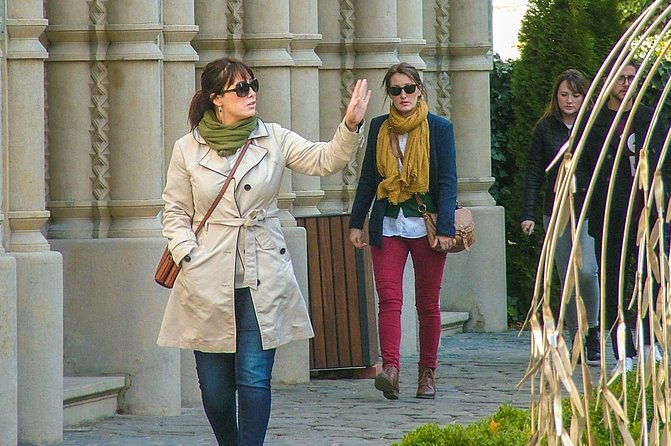
- Edith leads with clear explanations, patient answers, and a human touch to serious history
- Inside Dohány Street Synagogue, plus the Raoul Wallenberg Memorial Garden and the Jewish Cemetery
- Shoes on the Danube Bank hits fast and stays with you, and it is free
- A controversial memorial to the German invasion victims adds context, debate, and protest history
- Jewish Quarter today gets airtime too, including current life around the streets and side sights
More stories from the Jewish Quarter and District VII
- Budapest Jewish Heritage Memorial Walking Tour & Synagogue Entry★ 5.0 · 568 reviews
- Budapest: Jewish Heritage Guided Tour with Synagogue Ticket★ 4.8 · 533 reviews
- Jewish Quarter of Budapest Walking Tour★ 4.7 · 369 reviews
- Budapest: Best of Downtown and Jewish Quarter Tour★ 5.0 · 312 reviews
Why this Jewish Heritage tour works in about 3 hours
This is a short, focused tour, around three hours, with no long detours. That matters in Budapest, where you can easily spend your whole day walking uphill and then still feel like you missed the key stuff. Here, you get a tight set of places tied to Jewish heritage and Holocaust-era memory, plus a bit of what the neighborhood feels like now.
The pace is designed to leave room for your other plans. After this, you can keep exploring the Jewish Quarter at your own speed, pop into a café, or plan an evening out. And because the group stays small, the tour feels more like a conversation than a slideshow with headphones.
Another big plus is the format. The tour does not just point at monuments. It encourages dialogue on what it means to be Jewish in Hungary today. That gives the stops extra weight, because you understand how history connects to current identity, community, and public life.
One more value point you will feel right away is the guide. Edith consistently shows up as the difference between a good visit and a memorable one, with excellent English, clear directions, and enough patience to answer the questions that pop up when you are standing in front of heavy memorials.
Stop 1: Dohány Street Synagogue, cemetery, and the Wallenberg garden
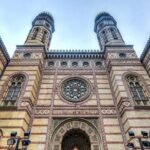
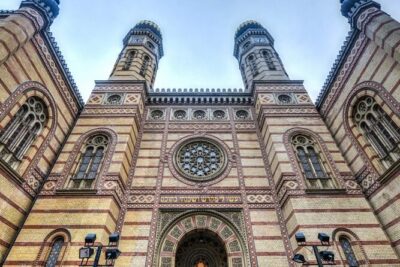
This is the centerpiece, and you should treat it like the main event. The tour spends about two hours here, and it is more than just a quick look at the famous building.
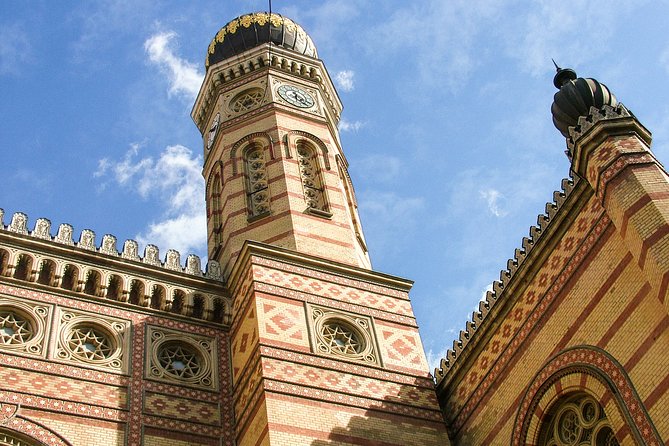
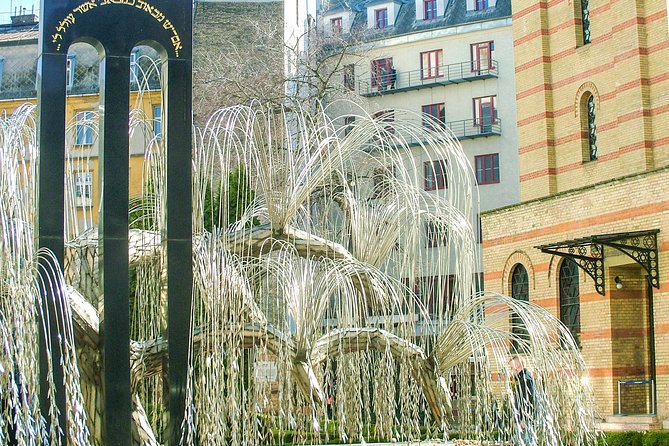
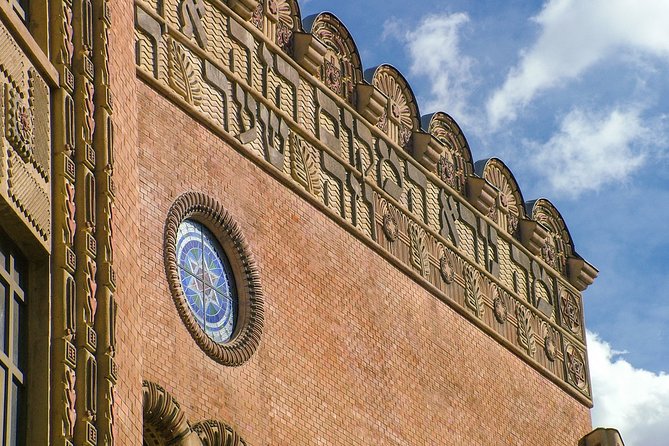
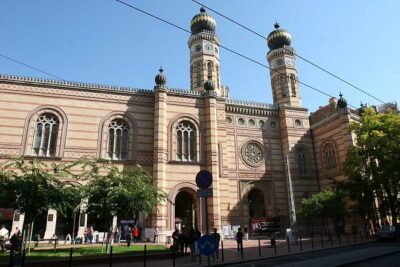
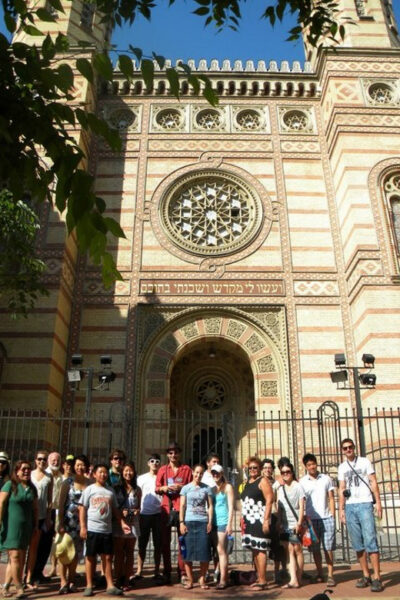
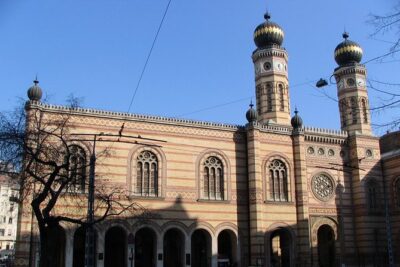
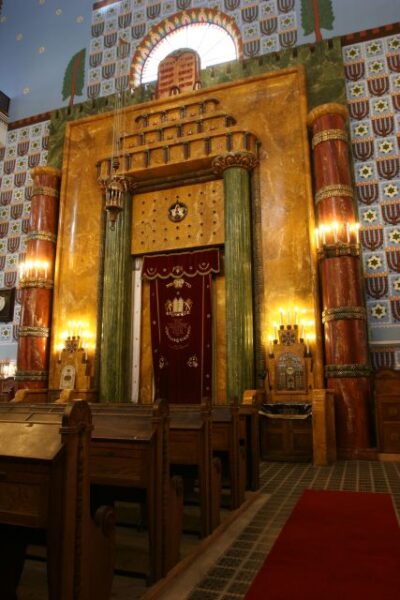
You will see the synagogue building itself, plus the Raoul Wallenberg Memorial Garden and the Jewish Cemetery. That combination matters because it turns one landmark into a fuller story: worship space, remembrance space, and the lingering physical presence of a community that shaped the city.
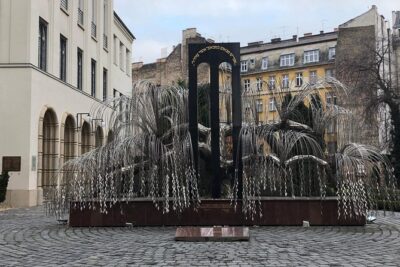
There is also a memorable specific detail tied to remembrance outdoors, the Emmanuel Tree. It is associated with Tony Curtis, and it gives you something visual and personal to connect to. If you like history you can see, not just read, this helps.
The tour also includes a second functioning synagogue with an outside visit. You get a sense of how religious life continues, even when the setting is packed with memorial meaning.
Practical note: synagogue admission is not included in your tour price. You pay about €26.00 per person for that entry ticket. If you plan your day like a pro, you will treat that as part of the real cost and not a surprise at the door.
Also, try to arrive mentally ready for mixed emotions. The setting is stunning, but the stories around it do not stay light for long. Edith guides the emotional tone with care, so you are not left alone with the hardest parts.
Finally, this stop gives you a bridge to the present. The area includes modern street life and even street art and nightlife energy around the Jewish Quarter. The tour helps you hold both ideas in your head at once: history happened here, and people still live here.
Stop 2: Shoes on the Danube Bank, quick, chilling, and free
Then you move to the Danube riverbank and the Shoes on the Danube Bank memorial. The time here is short, about 15 minutes, which is exactly what it needs. It is not meant to be a long photo stop. It is meant to register.
This memorial is for the thousands of Jews who were shot into the river Danube. The structure is simple, and that is part of why it lands. You do not need extra context to feel the weight of it, and the guide helps you understand what you are looking at so it does not turn into just another urban sculpture.
Because it is free, it is also a good emotional contrast to the synagogue stop. One costs extra entry. One is free and still profoundly impactful.
If you want to get the most from this stop, give yourself permission to slow down. Stand there long enough to read the atmosphere, not just to take pictures and move on.
Stop 3: Memorial to the Victims of the German Invasion, controversy included
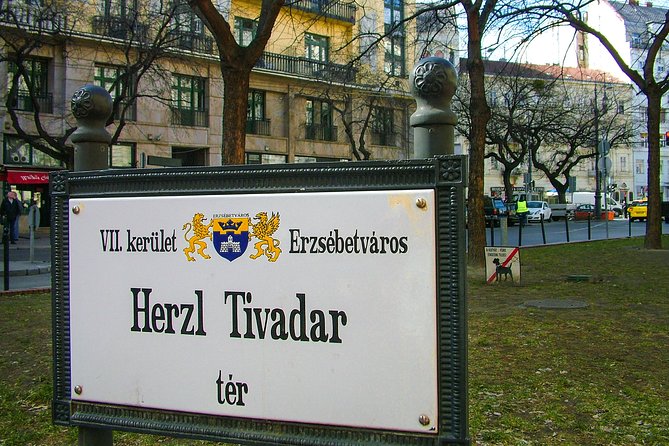
The final main stop is the Memorial to the Victims of the German Invasion. It is also about 15 minutes, and it is free.
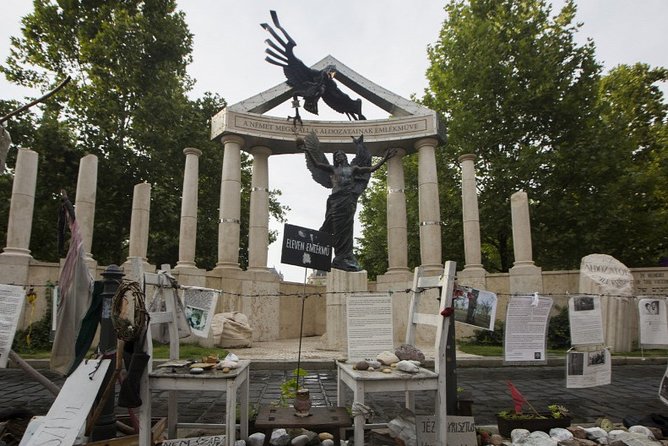
This memorial is described as one of the city’s more controversial public artworks. It was erected at night and guarded by policemen, and it has faced ongoing protests since it was established. That last point matters, because you do not just learn what happened. You learn that memory can be politically contested.
The tour frames it as part of a wider story about how Hungary has remembered, interpreted, and argued over events from the Second World War era. Some memorials ask for agreement. This one shows that public grief and public politics can collide.
You might find that this stop makes you see the city differently. You realize Budapest is not just a set of pretty buildings. It is a place where people still debate how to honor victims, how to tell the truth, and how to move forward without erasing complexity.
More Budapest ideas for the space still left in the itinerary
- Budapest: Historic Cruise with Welcome Drink
★ 4.7 · 6,512 reviews - Budapest Historical Sightseeing – Free Walking Tour
★ 5.0 · 1,302 reviews - Buda Castle District Dark History, Legends and Vampire Night Tour
★ 4.5 · 1,240 reviews - BloodThirsty Hungary: Walking tour & Dark Historical Stories
★ 4.9 · 633 reviews - Budapest Jewish Heritage Memorial Walking Tour & Synagogue Entry
★ 5.0 · 568 reviews
Jewish Quarter today: more than monuments and a chance to ask real questions
What I like most about this tour is how it refuses to be only a museum visit. Yes, you will see major Holocaust-era and Jewish heritage landmarks. But you will also spend time talking about Jewish life in Hungary today.
That is the difference between walking through a neighborhood and understanding a neighborhood. The guide brings the “then and now” connection into the open, so you leave with more than a list of sights. You leave with questions you can carry into your own conversations back home, like what it means to maintain identity in a European country with layers of history, politics, and memory.
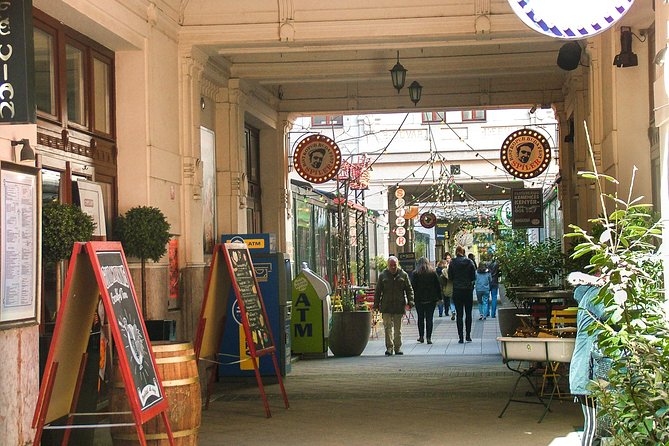
Another modern detail that helps this feel real is the setting itself. The Jewish District includes World Heritage sights, but it also has street art, and it has nightlife energy. That means the tour gives you a practical mental map for the rest of your day, not just a history lesson.
Also, because the group is small, you can ask follow-up questions without feeling like you are interrupting. If you have interest in Soviet influence in Budapest or how post-war life shaped communities, the guide can usually connect dots as the tour moves from site to site.
Edith is especially strong at answering questions with clarity and staying respectful when the topics get heavy. That makes a huge difference when you are trying to understand the human side, not only the dates.
Price and logistics: what you pay for, what you should plan for
Let’s talk value. Your tour price is $80.86 per person, for about three hours, with a local licensed guide and a small group format. You are paying for more than walking. You are paying for context and careful explanations at high-impact sites.
Here is what is included:
- A local licensed tour guide
- A mobile ticket
- The guided visit through the synagogue complex and the memorial stops
Here is what is not included:
- Transportation
- Dohány Street Synagogue admission (about €26.00 per person)
That last point is the one cost detail that changes the math. If you are budgeting tightly, you should factor the synagogue ticket in right away. If you are used to major sights charging separate fees, this will not surprise you, but it is still worth planning.
You also start at Deák Ferenc tér and end at the Dohány Street Synagogue address in central Budapest. That makes the tour convenient for first-day sightseeing, because Deák Ferenc tér is a major hub. You can reach it using public transportation. The tour is also listed as near public transit, so you likely will not be stuck hunting for your first tram.
Because transportation is not included, expect that you may rely on your own transit tickets if you want to minimize walking. In practice, tours in this area often use public transport at least once, since the Danube stops are not always a straight shot on foot.
Who should book this tour, and who might skip it
This tour is a strong pick if you want Jewish heritage sites in Budapest with real context, not just self-guided signage. It is especially good for first-timers who need structure in a dense area, and for repeat visitors who want a better framework than they had the first time.
It is also ideal for travelers who value discussion and personal questions. The tour is built to encourage dialogue on what Jewish identity and community mean in Hungary today. If you like asking why something matters, not only what you are seeing, you will fit right in.
If you dislike emotionally heavy stops or you want a purely visual experience with no discussion, you might find the memorial portions tough. This is not a cheerful walk. It is respectful and guided, but the subject matter is serious.
One more note: the tour is offered in English and allows service animals. Most people can participate, and it runs on a good-weather requirement. If the forecast looks rough, plan to stay flexible.
Should you book this Jewish Heritage tour?
If you care about Jewish heritage sites and Holocaust-era memory in Budapest, and you want a guide who can connect the past to present life, I think this is a smart booking. The price feels fair for a small group, a local licensed guide, and a major synagogue visit that includes the garden and cemetery areas.
But do the math before you go: budget the extra €26.00 synagogue admission. After that, the tour gives you a tight, high-impact route that is hard to recreate on your own without losing the meaning of what you are seeing.
If you are deciding between skipping guided context or just doing monuments on your own, pick the guided option. It is the guide, particularly Edith, that turns the stops into something you carry home, not just something you check off.
FAQ
Where does the tour start?
The tour starts in Budapest at Deák Ferenc tér, Hungary.
Where does the tour end?
The tour ends at Dohány Street Synagogue, Dohány u. 2, 1074 Hungary.
How long is the tour?
The tour is about 3 hours.
How many people are in the group?
The tour is described as having a maximum of ten travellers, and it also lists a maximum of 13 travellers.
What language is the tour offered in?
The tour is offered in English.
What is included in the tour price?
The price includes guiding by a local licensed tour guide.
Is the Dohány Street Synagogue entrance fee included?
No. Dohany Street Synagogue admission is not included and costs €26.00 per person.
Are there admission fees for the other memorial stops?
Shoes on the Danube Bank is free, and the Memorial to the Victims of the German Invasion is also free.
Is transportation included?
No. Transportation is not included.
What are the cancellation and weather rules?
Free cancellation is available. You can cancel up to 24 hours in advance for a full refund. The experience requires good weather, and if it is canceled due to poor weather, you will be offered a different date or a full refund.
More Tours in Budapest





More of the Jewish Quarter


More Tour Reviews in Budapest






Recently added around Budapest


Budapest Jewish Quarter Tours, compared.
 ★ 5.0Budapest Jewish Heritage Memorial Walking Tour & Synagogue EntryFrom $83568 reviews
 ★ 4.8Jewish Heritage Guided Tour with Synagogue TicketFrom $81533 reviews
 ★ 4.7Jewish Quarter of Budapest Walking TourFrom $2369 reviews
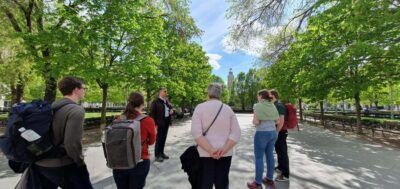 ★ 5.0Best of Downtown and Jewish Quarter TourFrom $23312 reviews
 ★ 5.0Budapest City Walk in Jewish QuarterFrom $356218 reviews
 ★ 4.5Budapest Dohany Synagogue & Hungarian Jewish Museum & free extrasFrom $44218 reviews
 ★ 5.0Budapest Dohany, Heroes’, Rumbach synagogues & Jewish Ghetto TourFrom $63200 reviews
 ★ 4.8Budapest Grand Half-Day Jewish Heritage TourFrom $116135 reviews
Browse the lists this tour appears in