
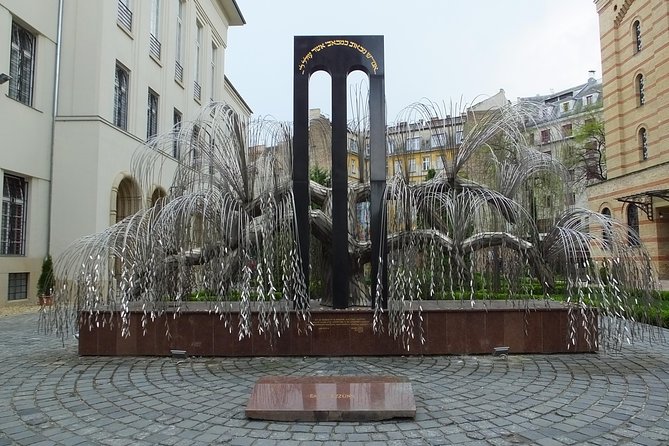
Tour review · BUDAPEST JEWISH QUARTER TOURS
Jewish Heritage in Hungary with a Historian
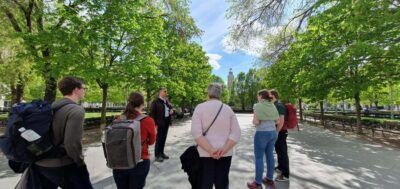
Jewish history in Budapest can feel like a puzzle. This tour turns it into a clear story, with a historian guiding you through the streets, sites, and food. You’ll cover Jewish landmarks in central Pest and get the extra context that makes the architecture and names click. It stays small, with up to 10 guests, so your questions actually get answered.
What I like most is the balance. You get the serious parts, but you also walk through everyday corners like Szimpla Kert, and you even stop for the local Jewish cake, Flódni. I also love that you’re guided past major synagogue areas, including Rumbach Street, Kazinczy Street, and Dohány Street, so you understand the map of the Jewish Quarter instead of just collecting photos.
One thing to consider is that not every synagogue stop includes admission. The Kazinczy Street Synagogue and the Great or Central Synagogue (Nagy Zsinagóga) have tickets not included, and the tour notes that you do not go inside the Great Synagogue. If you were hoping for maximum indoor time, plan for mostly street-level viewing there.
Key things to look forward to
- Historian-led narration that connects buildings, neighborhoods, and big historical turns
- Small group size (max 10) for a more personal pace and easier questions
- Szimpla Kert stop at Budapest’s first ruin bar, a big part of the city’s modern identity
- Raoul Wallenberg’s statue and the diplomat story tied to lifesaving efforts
- Dohány Street area ending point, so you can continue your sightseeing right after
- Flódni at Solinfo Café with food included (not an extra add-on)
More stories from the Jewish Quarter and District VII
- Budapest Jewish Heritage Memorial Walking Tour & Synagogue Entry★ 5.0 · 568 reviews
- Budapest: Jewish Heritage Guided Tour with Synagogue Ticket★ 4.8 · 533 reviews
- Jewish Quarter of Budapest Walking Tour★ 4.7 · 369 reviews
- Budapest: Best of Downtown and Jewish Quarter Tour★ 5.0 · 312 reviews
Why a historian guide matters in Budapest Jewish Quarter
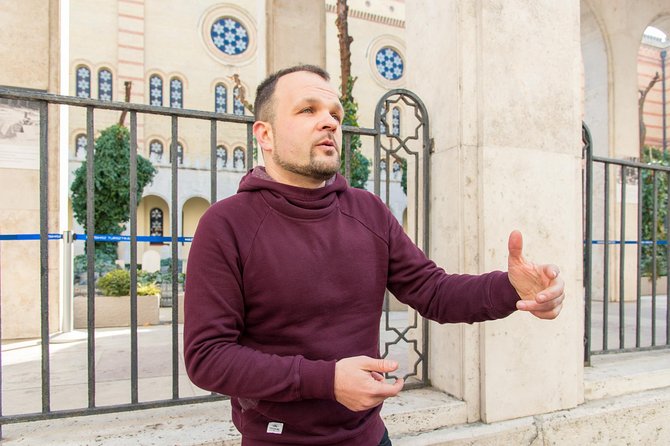
Budapest’s Jewish story is not one straight line. It’s layers. Empires changed. Borders shifted. Communities built, adapted, were targeted, survived, and rebuilt. Without help, you can miss why certain streets and synagogues matter, or you might just see impressive facades with no human scale.
That’s where this tour clicks. The guide is a historian type, and you can feel the difference in how they explain what you’re looking at. You’re not only getting dates. You’re getting causes. You’re hearing how a street became a social center, why one synagogue style or location stood out, and how later events reshaped everything. It also helps that multiple guides on this experience are praised for answering questions patiently and speaking with care, including guides like Gábor, Barbi, Andrea, and Noémi.
The pace is also realistic. It’s about 2 hours 30 minutes, starting at 10:00 am, and it mixes walking with short, focused stops. That format is perfect if you want structure but don’t want to feel dragged from one spot to the next.
And the small group size matters for a practical reason: you’re more likely to get a direct response when you ask, instead of watching your question vanish into the wind.
Price and value: what your $64.71 gets you
At $64.71 per person for an approximately 2.5-hour tour, you’re paying for guidance, interpretation, and the included food moment at the end. A big value signal here is that some stops are free to access, and the itinerary includes a food tasting with the local cake.
Here’s how I’d think about value before you book:
- You’re not paying for a museum marathon. You’re paying for expert street-level explanation tied to real places.
- Food is included. That reduces your everyday spending in a neighborhood where snacks add up fast.
- It’s small-group style. You’re buying time with a guide, not just a big bus tour experience.
The main caveat is admissions at specific synagogue stops are not included, and the Great or Central Synagogue is not visited inside. So if you want indoor access everywhere, you may need to add synagogue tickets separately.
Still, for many people, the trade-off makes sense. You get the context, then you decide later if you want to spend extra time going inside a specific site on your own.
Start at Erzsébet tér: where the story begins
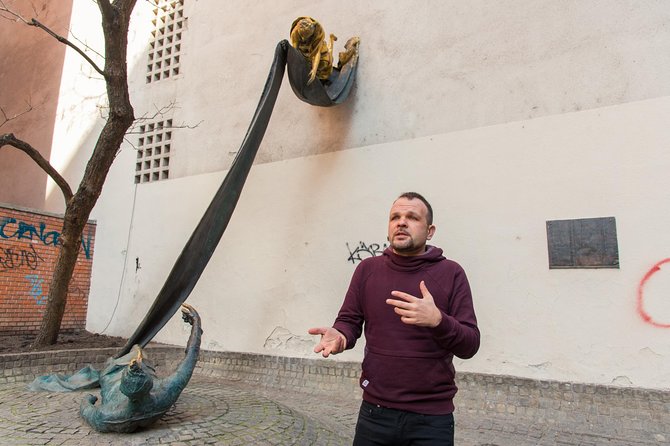
The tour opens at Erzsébet tér, in a medieval market square area that became a major square in Pest. This start point is smart. It reminds you that you’re not only dealing with religious landmarks. You’re dealing with a city that always had commerce, crowds, and movement.
In practical terms, Erzsébet tér is also easy to orient yourself. You’ll be walking among streets that are busy but not chaotic, and you can picture how Jewish communities fit into the wider urban life, not just into one fenced-off district.
You’ll spend about 20 minutes here. That’s enough time to get oriented and understand why certain streets and institutions ended up clustered where they did, without turning the tour into a lecture that lasts half your day.
Raoul Wallenberg’s statue, and the human center of the history
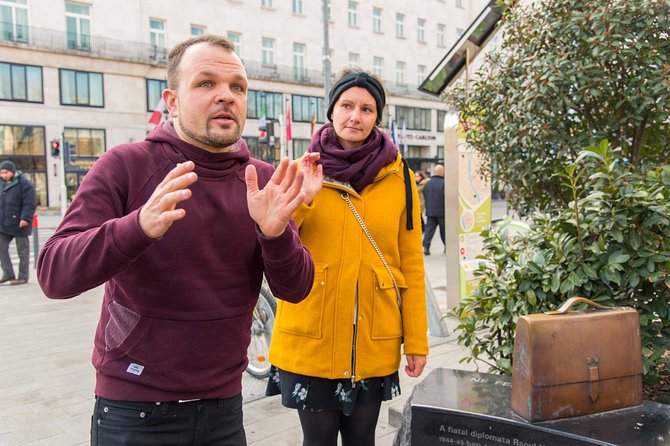
Then you move to the statue of Raoul Wallenberg, with about 10 minutes here. Wallenberg’s name is widely known, but a good guide makes it more than a slogan. You’ll learn why he mattered, and you’ll connect the broader history of Jewish persecution to the reality of individuals who tried to save lives.
This stop also works as an emotional hinge in the tour. Before you get into synagogue areas and community structure, you get anchored in something human and urgent. It’s a reminder that history is not just architecture and dates.
If you’re sensitive to heavy topics, this is one of the spots where a thoughtful guide and a small group style make a difference. You can ask questions, and you’re not forced to power through in a rushed setting.
More Budapest ideas for the space still left in the itinerary
- Budapest: Historic Cruise with Welcome Drink
★ 4.7 · 6,512 reviews - Budapest Historical Sightseeing – Free Walking Tour
★ 5.0 · 1,302 reviews - Buda Castle District Dark History, Legends and Vampire Night Tour
★ 4.5 · 1,240 reviews - BloodThirsty Hungary: Walking tour & Dark Historical Stories
★ 4.9 · 633 reviews - Budapest Jewish Heritage Memorial Walking Tour & Synagogue Entry
★ 5.0 · 568 reviews
Szimpla Kert: how a ruin bar became a cultural symbol
Next comes Szimpla Kert, about 20 minutes. This is where the tour gets fun in a smart way. Szimpla Kert is known for its ruin-bar vibe, but the key point for your understanding is how old space gets reused and reimagined.
Budapest’s ruin bars helped spark a global trend, and the reason that matters here is identity. Jewish heritage in a city is not only about old religious buildings. It’s also about what happens after destruction, neglect, or hardship, and how people repurpose space to keep community life going.
You’ll get enough time here to take in the setting and get the connection back to the broader narrative. You’re not turning the tour into a night-out crawl. You’re using the place as a lens: how the city remembers, how it reframes, and how modern culture forms around older layers.
Gozsdu Udvar: an international street moment
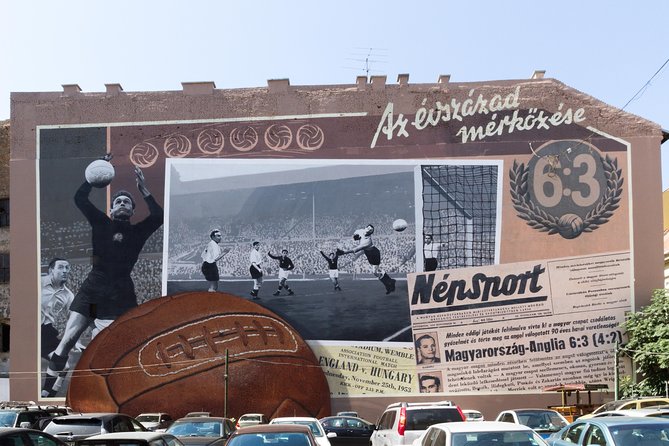
About 10 minutes brings you through Gozsdu Udvar, described as one of Budapest’s most international streets. This stop is short, but it has a purpose. You’re moving from heritage sites and memorial context into the kind of everyday, mixed city life that helps you understand how neighborhoods keep changing.
I like this kind of quick pause because it stops the tour from getting too heavy. It also helps you picture why the Jewish Quarter area is not frozen in time. It’s part of a working city, full of people, commerce, and mixed cultures.
Even if you don’t spend money there, you’ll come away with a better sense of how old and new sit side by side.
Kazinczy Street Synagogue: seeing community focus from the outside
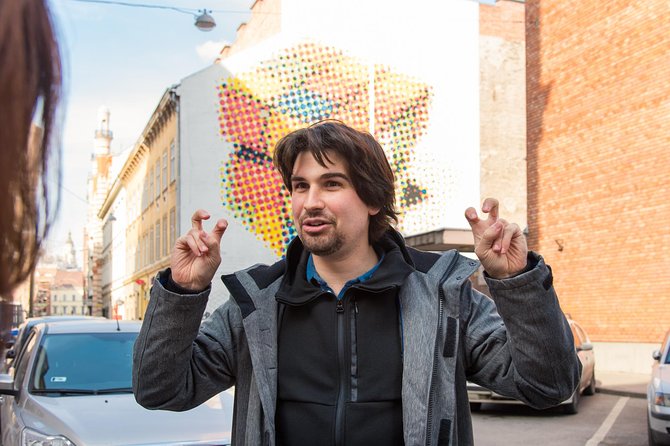
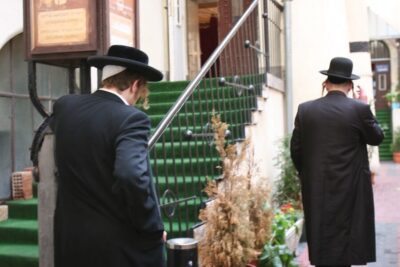
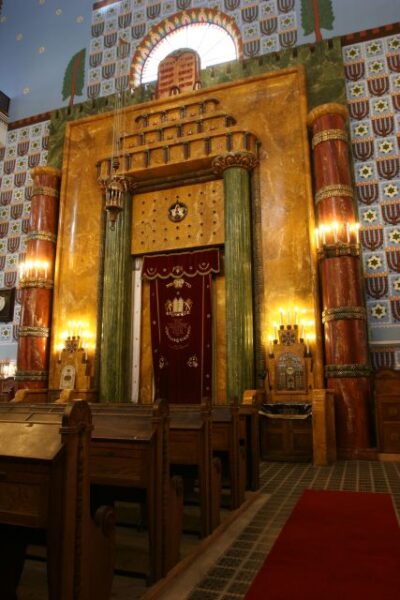
Then you reach the Kazinczy Street Synagogue area, about 20 minutes. This synagogue is associated with the Orthodox Jewish community, and that matters because it points to diversity within Jewish life in Budapest.
One practical note: admission for this stop is not included. So you’re likely viewing from outside or getting context at the boundary of what’s accessible with your tour format. The benefit is that you still get the guide’s interpretation of what makes this community distinct in the city’s story.
If you’re the kind of traveler who wants to step inside religious spaces, you may want to plan separate time. If you’re mainly there for context and street-level understanding, you’ll still come away with a clearer sense of how different communities shaped the neighborhood.
Great or Central Synagogue (Nagy Zsinagóga): the big landmark, no interior
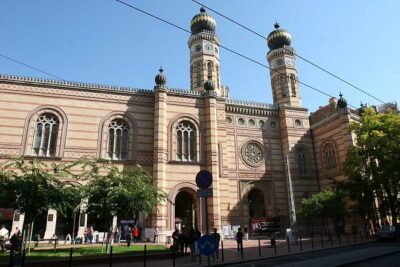
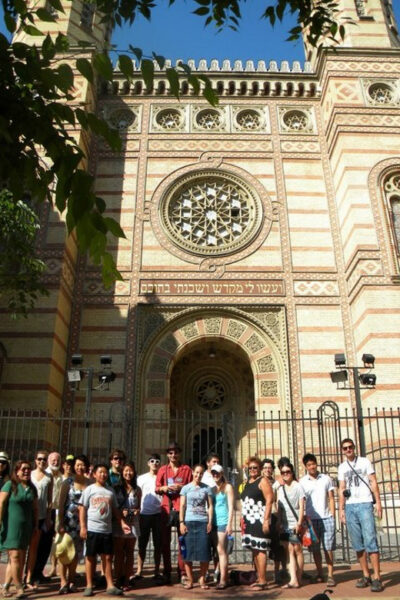
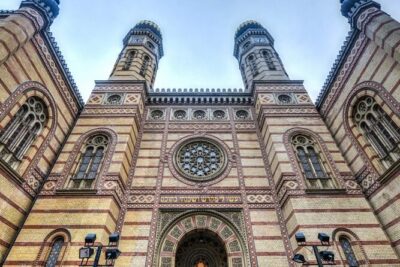
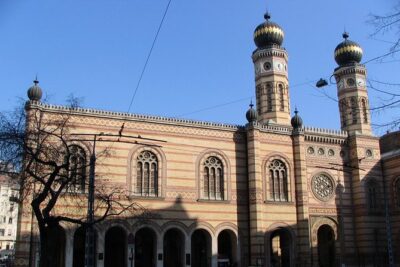
About 45 minutes is spent at the Great or Central Synagogue, also known as Nagy Zsinagóga. This is the one you recognize from photos: Europe’s largest synagogue. The tour specifically notes you do not visit the synagogue inside, so your focus will be on the historical and architectural connotations you can see from outside.
This approach can be a good thing. It keeps the day flowing, and it avoids a common problem on heritage tours: you get stuck waiting or rushing inside without time to absorb what you’re actually looking at. Here, you can watch the building as a symbol and learn how it sits in the last roughly 200 years of Jewish communal life.
If your goal is purely sightseeing, the outside viewing window can be plenty. If your goal is a full interior experience, you will need to add synagogue access separately. Still, having the historian frame it first makes any future indoor visit more meaningful.
Solinfo Café and Flódni: the included taste of Jewish Hungary
The tour ends with a food stop at Solinfo Café, about 20 minutes, and this is one of the most satisfying parts because it’s included. You’ll try Flódni, a local Jewish cake that’s a favorite with both Jews and non Jews in Hungary.
I love food moments like this because they give you a memory that isn’t only visual. You take something edible home with you. And Flódni is especially useful as context: it connects heritage to everyday life, to kitchens and recipes, not just to buildings and ceremonies.
Plan to use this time as a slower break. You’re not touring nonstop. You’re letting your brain rest while your body enjoys something specific to the place. For many people, it’s the moment that makes the tour feel like it belonged in Budapest, not like a generic checklist.
What the small group size really changes
Small group tours sound nice in theory. Here, it’s more concrete. With a maximum of 10 guests, you get:
- more space to hear the guide over street noise
- easier pacing when someone has a question
- a better chance to ask follow-ups, especially in sensitive areas
The reviews you’ll likely read later praise guides for patience and for answering questions carefully. That’s the practical benefit of small-group format. You can ask, you can clarify, and the guide can steer the story back to where you need it.
Also, your time at each stop feels intentional. Around 2 hours 30 minutes means you’re not stuck in a half-day committment that leaves you too tired for the rest of your trip. You can still build the rest of your day around this without losing half the morning.
Practical logistics: meeting point, route, and timing
The tour starts at Kempinski Hotel Corvinus Budapest, Erzsébet tér 7-8, 1051 Hungary, and begins at 10:00 am. It ends outside Dohány Street Synagogue, at Wesselényi utca 1, 1077 Hungary.
That ending point is useful. It lets you continue on your own, because you’re already at one of the most famous sights in the area. If you want extra time for photos, people-watching, or a self-guided walk, you can do it right after the tour rather than scheduling a new appointment.
It’s also set up for real city life: you get a mobile ticket, and the route is near public transportation. The tour notes that most travelers can participate, and service animals are allowed.
If you’re doing this on a walking-heavy day, I’d wear comfortable shoes. You’re moving between squares, streets, and synagogue areas, and you’ll appreciate cushioning on cobblestones and uneven sidewalks.
Should you book this Jewish Heritage in Hungary tour?
Book it if you want a structured, small-group introduction to Jewish heritage in Budapest that goes beyond one topic. You’ll like it if you care about how communities lived, how streets evolved, and how key monuments and synagogues fit into the bigger story.
Don’t book it expecting maximum indoor synagogue access. Two synagogue stops have tickets not included, and the Great or Central Synagogue is not visited inside. If your top priority is going inside specific buildings as much as possible, you may want to pair this tour with additional synagogue ticket time on your own.
If you’re visiting in a fixed window, don’t wait too long. This tour is often booked about 42 days in advance on average, so it’s smart to lock in early if you see a time that fits your schedule.
Overall, this is the kind of tour that makes you look at Budapest differently after you leave the street corner behind. You get the names, yes. But more importantly, you get the why.
More Historical Tours in Budapest




More of the Jewish Quarter


More Tour Reviews in Budapest






Recently added around Budapest



Budapest Jewish Quarter Tours, compared.
 ★ 5.0Budapest Jewish Heritage Memorial Walking Tour & Synagogue EntryFrom $83568 reviews
 ★ 4.8Jewish Heritage Guided Tour with Synagogue TicketFrom $81533 reviews
 ★ 4.7Jewish Quarter of Budapest Walking TourFrom $2369 reviews
 ★ 5.0Best of Downtown and Jewish Quarter TourFrom $23312 reviews
 ★ 5.0Budapest City Walk in Jewish QuarterFrom $356218 reviews
 ★ 4.5Budapest Dohany Synagogue & Hungarian Jewish Museum & free extrasFrom $44218 reviews
 ★ 5.0Budapest Dohany, Heroes’, Rumbach synagogues & Jewish Ghetto TourFrom $63200 reviews
 ★ 4.8Budapest Grand Half-Day Jewish Heritage TourFrom $116135 reviews
Browse the lists this tour appears in