
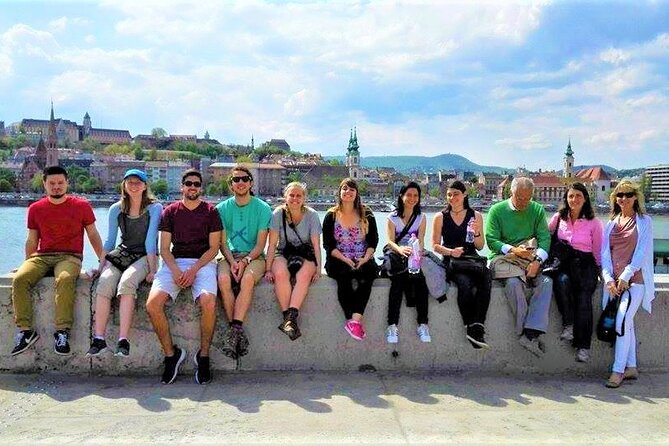
Tour review · BUDAPEST WALKING TOURS
Original Budapest Walking Tour
Budapest hits hard when you walk with a local. This low-cost tour gives you a fast, human-sized way to connect the dots between Buda and Pest. I especially like how it uses a mobile ticket and mixes famous landmarks with the kind of stories you will not pick up from guidebooks.
You will also feel the value in the structure, short stops paired with clear explanations. On top of that, the small-group vibe can be real, with at least one reported group size around 18 people, even though the max is 100. The main drawback to plan around is that the walk can feel more Pest-leaning than you expect, so if you want extra time in the Buda Castle area, give yourself buffer time to go back.
Key Highlights Worth Your Time

- Starting at St. Stephen’s Basilica gives you a clean launch point for the whole day’s orientation.
- Big icons, small chunks of time, so you see more without feeling rushed through the entire city.
- Guide storytelling that is practical for navigating later, not just reciting facts.
- Danube memorial stop (Shoes on the Danube Bank) adds meaning to the river-crossing photos.
- Panoramic viewpoints show up more than once, including Fisherman’s Bastion and the Ferris Wheel.
Budapest on foot, with a few more routes to compare
- Big Bus Budapest Hop-On Hop-Off Bus and Walking Tour★ 3.5 · 2,206 reviews
- Budapest: Buda Castle District Walking Tour★ 4.6 · 2,108 reviews
- Budapest City Landmarks Walking Tour in 2 Hours★ 5.0 · 2,048 reviews
- 3-Hour Orientation Walking Tour of Buda and Pest★ 4.8 · 1,834 reviews
Why This Budapest Walk Starts at St. Stephen’s Basilica
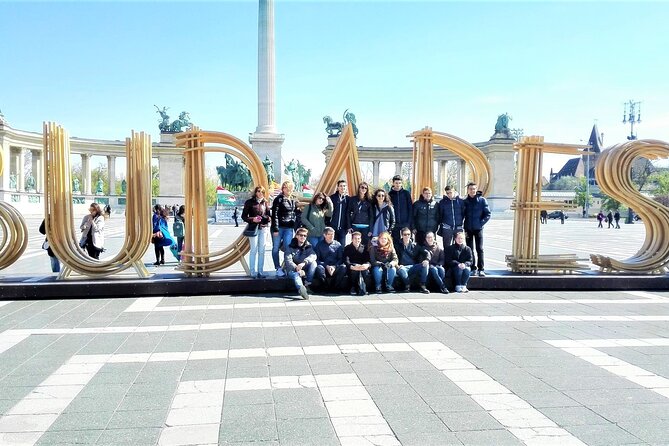
St. Stephen’s Basilica is a strong choice to begin. It is central, easy to find, and it places you right in the middle of Pest’s story first, before you start hopping toward the Castle District viewpoints.
The tour also starts at 11:00 am, so it works well as your first major activity of the day. If you want smooth logistics, I recommend arriving a little early and being ready to spot your guide.
Value for Money: $2.88 and a City-Wide Training Plan
At $2.88 per person, this is the rare tour that feels almost like a public service. You are paying for a guide and for help turning famous places into a mental map.
You are not buying attraction access as part of this experience, since the stops are listed as admission free. Bottled water is not included, so bring your own, especially if you are walking in warmer months.
The real value is what you get between the landmarks: the context that helps you understand why Budapest is split the way it is, and how the city’s layers connect. That means your next self-guided walk is faster and more satisfying.
How the Pace Works for 3.5 Hours Without Exhausting You
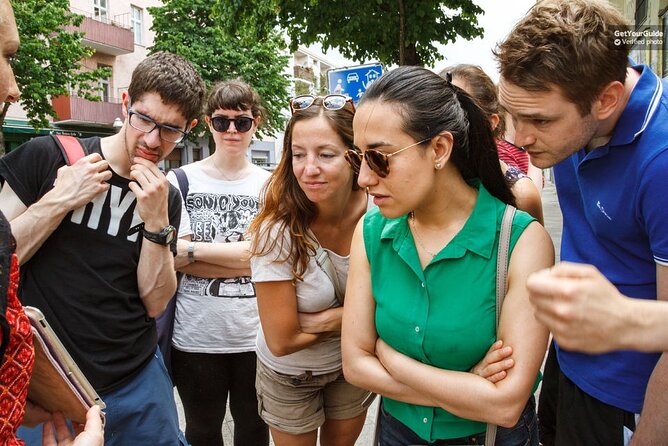
The duration is about 3 hours 30 minutes, and the stops are built for quick viewing plus explanation. Expect short time windows at each stop, roughly 10 to 20 minutes, which keeps the pace lively but manageable.
Group size can vary. The tour has a maximum of 100 travelers, but some groups are reported as much smaller, which is where you tend to hear every word and ask questions without yelling.
This is a walking tour. In other words, wear shoes you trust, and do not plan anything too demanding right after unless you have a buffer.
Parliament to Chain Bridge, the Two-Sides Story Begins Fast

You start with a view of the Hungarian Parliament Building. Even if you never step inside, it is one of Budapest’s most recognizable silhouettes, and it sets the tone for how important the Danube has been for Hungary’s identity.
From there, you head toward the Széchenyi Chain Bridge. This is not just a photo stop. Walking across it helps you feel the city’s geometry, because you literally move between the Castle side and the Pest side.
If you like learning while you walk, this first stretch is where the guide story tends to do its best job. You start understanding what you are looking at, not just staring at it.
Budapest on foot, a few more ways
- Budapest: Buda Castle Walk with Saint Stephen’s Hall
★ 4.5 · 3,012 reviews - Budapest: 3-Hour Grand City Tour and Castle Walk
★ 4.3 · 1,437 reviews - Budapest Historical Sightseeing – Free Walking Tour
★ 5.0 · 1,302 reviews - Budapest All in One Small Group Walking Tour with Strudel Stop
★ 5.0 · 1,277 reviews - Budapest: Buda Castle District Walking Tour with a Historian
★ 4.9 · 867 reviews
Buda Castle District: Matthias Church and Fisherman’s Bastion Views
The next phase brings you into the Buda Castle area. This complex is historically layered: the site dates back to 1265, while the big Baroque palace you see today was built between 1749 and 1769. That timeline matters, because Budapest’s Castle District is not one simple thing, it is a whole history written in stone.
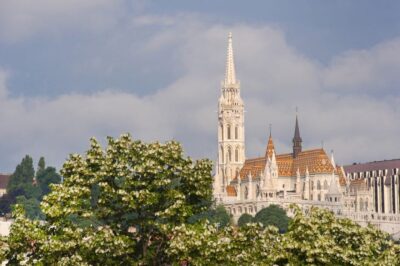
You then pause near Matthias Church. The tour focus is on what makes it distinct, including its association with Hungary’s early monarchy. It is also in the exact zone where the Castle District photos start to look like postcards, especially when the light is right.
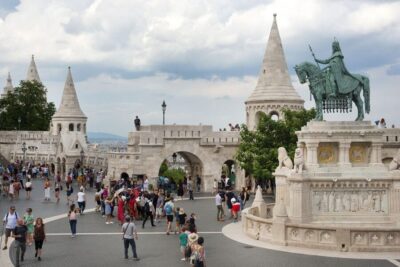
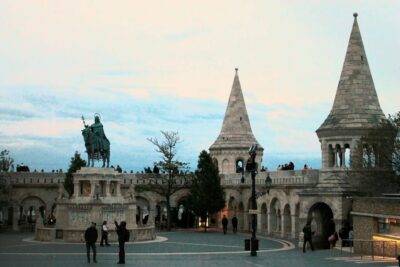
Next is Fisherman’s Bastion (Halászbástya). This stop is mainly about the terraces and the panorama. If you want a viewpoint that makes the city feel big but still readable, this is the kind of place you come away from with better directions for later.
St. Stephen’s Basilica: More Than a Starting Photo
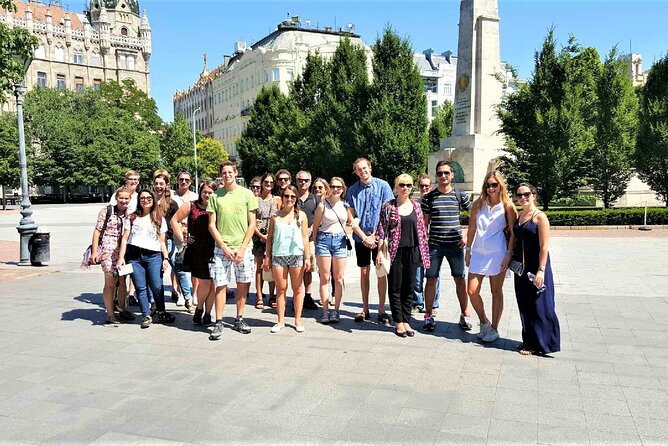
Even though you meet at St. Stephen’s Basilica, it also makes sense as a real stop in your experience, because it is a landmark you will likely want to understand a bit more than just the exterior.
St. Stephen’s Basilica is named for Stephen, the first King of Hungary, and the right hand of Stephen is housed in the reliquary. You also get a sense of the church’s scale and importance, especially because it was once among the largest church buildings in Hungary before 1920.
This is a good point in the walk for resetting your bearings. When you return to your own exploring later, you will use it as a landmark in your head.
Liberty Square, Andrássy Avenue, and the Danube Memorial
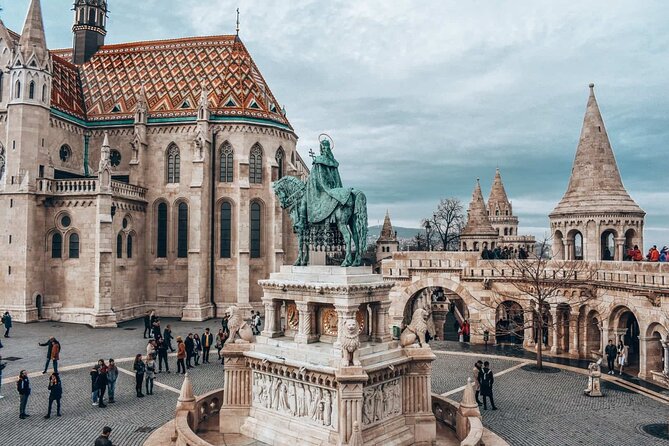
Once you are back on the Pest side, Liberty Square (Szabadság tér) gives you a different kind of stop. It is a mix of business and residential, and it is framed by notable neighbors, including the United States Embassy and the Hungarian National Bank headquarters.
Then you head to Andrássy Avenue, one of Budapest’s grand boulevards, dating back to 1872. It is lined with impressive facades, and it is also recognized as a World Heritage Site since 2002. Even if you keep this stop to a quick walk-by, you will understand why people call this a centerpiece of Pest.
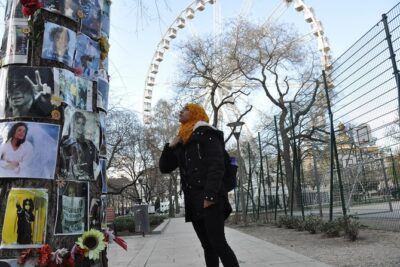
The most emotionally serious moment is Shoes on the Danube Bank. This memorial includes 60 pairs of iron shoes anchored along the riverbank, created by film director Can Togay and sculptor Gyula Pauer, and it was erected on April 16, 2005. The point is to remember the people who lost their lives during the Arrow Cross rule, and it makes the Danube feel personal instead of just scenic.
Ferris Wheel Stops: When Views Win the Argument
You also get time at the Ferris Wheel of Budapest, sometimes nicknamed the Eye of Budapest. The value here is simple: it gives you a panoramic overview that helps you stitch the rest of the day together visually.
From the wheel, you can see how the sights line up, including Buda Castle and the temple towers of Pest. I like this stop because it works for travelers who are not museum people, you still get a different perspective without needing tickets for a collection.
If you are short on energy, you can also treat this as your reset moment. Even a brief break can make the final viewpoints easier.
Margaret Island for Calm, Then Gellért Hill for the Big Overlook
The walk includes Margaret Island, in the middle of the Danube. It is a rare city break built right into the river corridor, with pedestrian promenades, an art nouveau water tower, ruins of a 13th-century Dominican convent, and a musical fountain.
It is also the kind of place where a tour stop can feel like a palate cleanser after long stretches of major landmarks. If you want the city to feel like a living place rather than just a list of monuments, this is a great turn toward normal human scale.
Next is Gellért Hill, a 235 m high hill overlooking the Danube. It is named after Saint Gerard, who was thrown to death from the hill. Even if you only get a short look from the area, the guide context helps the hill feel more like a story location and less like a random viewpoint.
Széchenyi Square: Your Final Landmark and a Good Launchpad
You end at Széchenyi Square, with a statue of Széchenyi that has been in place since 1880, predating Roosevelt’s presence. It is a fitting finish because it feels like a proper city square, not just a transition point.
Since the end point is listed as varying, you should treat the final minutes as getting you into a practical area for continuing on your own. In my experience, that last stretch is where you decide if you want to return to the Castle District for more time, or keep exploring Pest with a clearer map in your head.
Who This Tour Fits Best
This is a smart fit if you want:
- a low-cost way to see the main highlights without buying individual attraction tickets
- guidance that helps you navigate afterward
- a walk that mixes famous sights with meaning, not just photo ops
It is also good for travelers with limited time in Budapest, because you cover a lot of ground in a single session. If you are only in town for one day, this type of orientation can make your remaining hours feel less chaotic.
One Thing to Watch: Expect Route Flex and Add Buffer for Buda
The biggest planning consideration is that the walk can feel more Pest-focused than you might expect from the overall city-spanning list of stops. If Buda Castle is your top priority and you want time to explore beyond quick viewing, plan extra time on your own.
Also, start early and stay alert. One reported issue involved not spotting the expected red umbrella at the meeting point, and another report mentioned a guide not showing up. These sound uncommon, but they are a good reason to arrive on time and double-check you are with the correct group.
Should You Book This Original Budapest Walking Tour?
Yes, if you want an economical, structured way to orient yourself and learn city stories that connect the landmarks. At $2.88, you are buying help turning Budapest into something you can actually navigate, not just something you pass by.
Book it if you are comfortable walking for half a day and you want a guide to point out what matters at each stop. Skip or reconsider if you have a very tight schedule for Buda Castle interior time, because the tour timing may not give you the depth you want there.
If you do book, bring water, wear good shoes, and treat the tour as your foundation. Then build your own Budapest from that map in your head.
FAQ
How much does the Original Budapest Walking Tour cost?
The price is $2.88 per person.
How long is the tour?
It is approximately 3 hours 30 minutes.
Where does the tour start?
The meeting point is St. Stephen’s Basilica, Szent István tér 1, 1051 Hungary.
When does the tour start?
The start time is 11:00 am.
Is the tour in English?
Yes, it is offered in English.
Is a guide included?
Yes, a local tour guide is included.
Is bottled water included?
No, bottled water is not included.
Do I get a mobile ticket?
Yes, the tour uses a mobile ticket.
How many people are in the group?
The maximum number of travelers is 100.
What if the weather is poor?
The tour requires good weather. If it is canceled due to poor weather, you will be offered a different date or a full refund.
More Tours in Budapest






Keep Walking Budapest





More Tour Reviews in Budapest






Recently added around Budapest





Budapest Walking Tours, compared.
 ★ 3.5Big Bus Budapest Hop-On Hop-Off Bus and Walking TourFrom $422,206 reviews
 ★ 4.6Buda Castle District Walking TourFrom $142,108 reviews
 ★ 5.0Budapest City Landmarks Walking Tour in 2 HoursFrom $32,048 reviews
 ★ 4.83-Hour Orientation Walking Tour of Buda and PestFrom $411,834 reviews
 ★ 5.0Budapest Historical Sightseeing – Free Walking TourFrom $31,302 reviews
 ★ 5.0Budapest All in One Small Group Walking Tour with Strudel StopFrom $1001,277 reviews
 ★ 4.9Buda Castle District Walking Tour with a HistorianFrom $63867 reviews
 ★ 4.9BloodThirsty Hungary: Walking tour & Dark Historical StoriesFrom $21633 reviews
Browse the lists this tour appears in