Tour review · BUDAPEST
Pest side stories with a Historian
Budapest can feel like a puzzle at first. This tour gives you the picture, piece by piece, along the Pest side with a historian. I like that it is small-group and story-driven, so you do not just see buildings, you understand why they mattered.
My second big plus is the smart, practical kit: metro tickets plus refreshments, which keeps the afternoon moving. The one watch-out is simple, you walk a lot in about 3 hours, so plan for heat and comfortable shoes.
Key things to know before you go
- Small-group cap of 10 keeps the tour personal and lets the historian slow down when people ask questions
- Metro tickets and refreshments included, so you can focus on the stops instead of logistics
- Optional entry at St. Stephen’s Basilica if the group wants to go inside
- Heroes’ Square, Vajdahunyad Castle, and the UNESCO-listed Andrássy Avenue cover major “why Budapest looks like this” themes
- Millennium Underground adds a quirky, very Budapest kind of stop, especially if you like “firsts”
- A true Pest afternoon loop, ending at St. Stephen’s Basilica, makes it easy to continue your own sightseeing
Before the plan settles, compare this with a few more ways to spend time around Budapest.
- Budapest: City Highlights Cruise with Welcome Drink★ 4.6 · 35,610 reviews
- Budapest: Unlimited Prosecco, Beer and Aperol Spritz Cruise★ 4.8 · 25,310 reviews
- Budapest: Széchenyi Spa Day Ticket with Optional Upgrades★ 4.3 · 23,911 reviews
- Budapest: Nighttime or Daytime Sightseeing Cruise★ 4.2 · 21,062 reviews
Pest side stories: why this route works so well
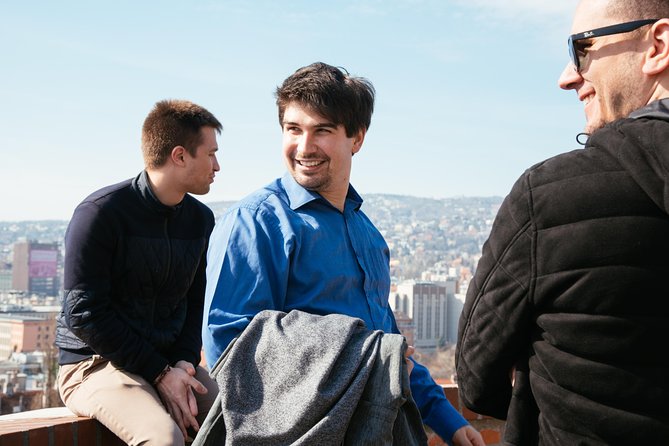
Pest is where you get the everyday Budapest feel, with the big ceremonial moments layered on top. On this walking tour, I like how the historian keeps pulling your attention away from random photos and toward cause and effect: what changed, who had power, and what that left behind in streets, squares, and buildings.
The route is also well-chosen for first-timers. You hit major landmarks early, then you flow into the “in between” places that make a city feel real. Elizabeth Square and Vorosmarty Square are great examples. They are not just backdrops, they help you read the city’s mood, from official-era symbolism to the more modern party and shopping energy.
One more reason I think this tour fits Pest: it is built around walking plus light transit moments. You are not stuck waiting around. And because the group stays small, the guide can adjust pace and keep the stories connected, instead of rushing everyone like a conveyor belt.
Price and what you really get for about $58.94
At $58.94 per person for about 3 hours, this tour is priced like a serious guided experience, not just a casual stroll. What makes it feel like value is the mix of included basics and structure.
Here is what you are actually getting:
- A historian guide leading you through multiple major Pest landmarks
- Refreshments included, which matters on a walking afternoon
- Metro tickets provided, so you can handle the transit elements without extra planning
- Mobile ticket, handy for day-of use
- English language service
- A maximum of 10 guests, which tends to improve the quality of the Q and A
If you usually skip city tours because you worry about paying extra for “standing outside and pointing,” this one has a different rhythm. It is still sightseeing, but the package nudges you to arrive ready, then follow a coherent story arc across Pest.
Also, timing can help you. The tour is often booked about a month in advance, so if you have fixed plans for Budapest, you should not wait until the last minute to grab an afternoon slot.
Your 2:00 pm Pest loop, stop by stop
The tour starts at the Kempinski Hotel Corvinus Budapest, on Erzsébet tér 7-8 (around Elizabeth Square area). It runs until St. Stephen’s Basilica at Szent István tér 1, though the ending point may be close by if you wrap up at another central location in Pest.
You will cover a lot on foot. That can be tiring, but it is also how you get the city feeling in your legs.
Stop 1: Elizabeth Square, from market to modern hangout
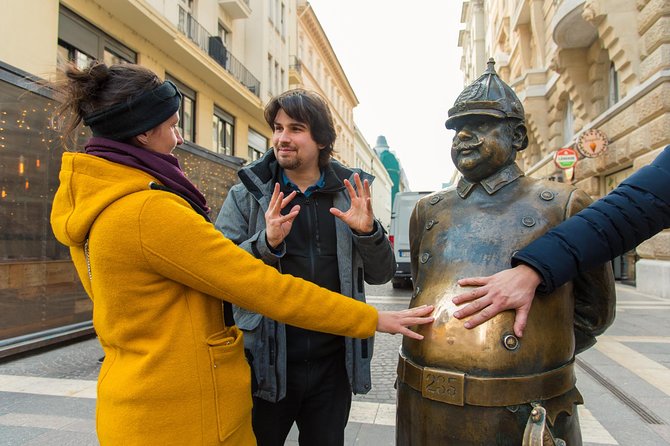
You begin at Elizabeth Square, a former market area that later had major political and transportation layers, and now functions as a lively part of the city. Statues and public art here are not decorative. They are part of the way Budapest keeps rewriting what public space means.
In practical terms, this is a strong starting stop because it gives you a “current Budapest” anchor before the tour turns more ceremonial. If you love people-watching, you’ll also enjoy the shift from the sightseeing mode into the real rhythm of Pest street life.
- Budapest: City Highlights Cruise with Welcome Drink
★ 4.6 · 35,610 reviews - Budapest: Unlimited Prosecco, Beer and Aperol Spritz Cruise
★ 4.8 · 25,310 reviews - Budapest: Széchenyi Spa Day Ticket with Optional Upgrades
★ 4.3 · 23,911 reviews - Budapest: Nighttime or Daytime Sightseeing Cruise
★ 4.2 · 21,062 reviews - Budapest: 1-Hour Evening Sightseeing Cruise with Drink
★ 4.5 · 8,330 reviews
Stop 2: St. Stephen’s Basilica (Szent István Bazilika), outside or inside
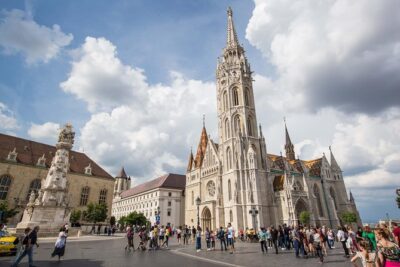
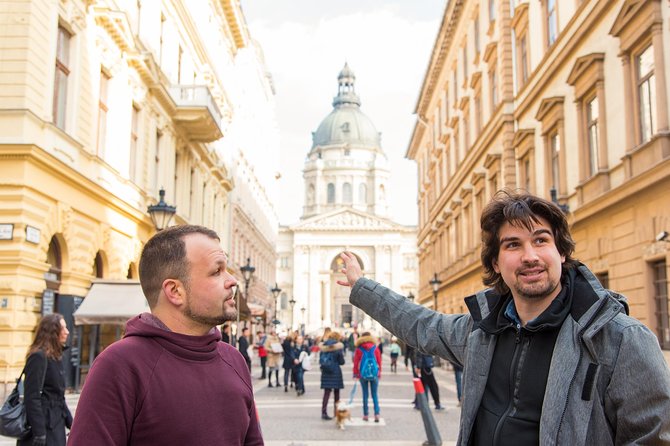
From there, the group goes toward St. Stephen’s Basilica, Budapest’s best-known church icon. It is the largest church in Budapest, and the building’s scale alone helps you understand why it became such a powerful civic symbol.
The tour notes that entry inside is optional, if the group is interested. This matters because the right choice depends on your energy. If you want the interior experience, go for it. If you prefer photos, people-watching, and saving time for the next streets, you can skip the interior and keep momentum.
Either way, the historian’s framing here tends to connect religious architecture to identity and public meaning, which is why this stop feels more than “look at a church.”
Stop 3: Heroes’ Square, a fast timeline you can walk through
Next comes Heroes’ Square, one of Pest’s headline introductions to Hungarian history. This stop is essentially your orientation checkpoint for the entire story.
What makes it valuable is the way squares like this compress time into one view. The monuments and layout are designed to communicate messages about statehood and national identity. You get a guided read of those messages, which helps when you later see other memorials around the city.
Plan on around 30 minutes here. It sounds like enough time for photos, but you also want a minute to look at the details after the guide points them out.
Stop 4: Vajdahunyad Castle, the medieval-looking surprise built in 1896
Most visitors skip this, which is exactly why it’s worth including. Vajdahunyad Castle looks medieval, but it was built in 1896. That twist is the perfect historian move: it forces you to question what you assume about appearances and what a “storybook past” can reveal about a city’s goals.
You spend about 30 minutes here, and the main value is understanding why it was built the way it was. It is not just a pretty structure. It is a statement, and the guide’s explanation helps you see how Budapest used architecture to talk to the future.
If you are the type who likes to photograph details like windows, towers, and stonework, you will enjoy taking your time after the explanation lands.
Stop 5: Andrássy Avenue, UNESCO pride in real-world form
Then you walk onto Andrássy Avenue, often described as a pride point for Budapestians. It has UNESCO world heritage status since 2002, and that designation is not just paperwork. The street is a concentrated slice of what Budapest wanted to project, in terms of style, grandeur, and urban planning.
You get about 30 minutes here. That is enough to appreciate the scale and street rhythm without feeling like you are just trudging down a road. The historian also tends to connect major political and social shifts to the kinds of institutions and buildings you see along the avenue.
Practical tip: if you are photographing, keep your eyes moving. The street offers different “frames” depending on where you stand. One minute you are thinking architecture, the next you are noticing the whole boulevard effect.
Stop 6: Vorosmarty Square (Vorosmarty ter), where commerce meets history
Vorosmarty Square is a shorter stop, around 15 minutes, but it has purpose. It focuses on the central Pest experience, including commerce and upscale retail energy in the heart of the historical city.
This is a good placement in the itinerary. After castles and grand avenues, you return to daily life. It helps you balance your mental picture of Budapest, so it does not become only monuments and monuments again.
Also, squares like this make it easy to remember where you are in the city. Later, if you go out on your own, you’ll feel less lost.
Stop 7: Millennium Underground, Europe’s oldest underground
The tour finishes this story arc with Millennium Underground, described as the oldest underground on the European continent. This is a quirky, satisfying stop because it is concrete history. You see a transportation milestone, then connect it to how cities grow and reorganize.
You get about 30 minutes here. This is a nice wrap because it blends modern mobility with a sense of Budapest’s long-term planning and ambition.
If you like “how it all started” facts, you will appreciate this finale. It also gives you something you can talk about later when friends ask what makes Budapest different from other Central European capitals.
Walking pace, heat, and how the tour handles energy
This is a walking tour, and the duration is close to three hours. That means your main job is to dress and plan like you are doing a real city walk, not a quick coffee stroll.
In the feedback I saw reflected in guides and the way the tour is run, the pace tends to be manageable even over a longer route. People did mention the amount of walking as part of the experience, and that it feels worthwhile, not exhausting for the sake of it.
Still, I would treat it as a hot-day friendly planning challenge. If you visit in summer, bring water, wear shoes with grip, and consider lighter layers. The afternoon timing helps, but it can also mean stronger sun once you hit the open street sections.
If you want the best experience, show up ready to move. If you hate walking, this tour might feel like work rather than fun.
Who this is best for in real life
This tour shines if you want a guided introduction to Pest that goes beyond postcard facts. It suits:
- First-time visitors who want their bearings fast
- People who like stories about how power, identity, and politics show up in everyday places
- Anyone who prefers a small group over big bus tours
- Travelers who like seeing multiple landmark types, not just churches or only museums
It may be less ideal if you want minimal walking, or if you prefer deep museum time over street-level context.
And it is a great fit for English speakers who want clear explanations. It runs in English, and the group size supports questions.
The guides: what passengers tend to love most
The strongest praise centers on the historian style, especially the way guides connect buildings and statues to human stories across centuries. I also noticed consistent mention of guides being kind, story-focused, and good at keeping people engaged.
Guide names that came up include Steven (the Tall), Andrew (andré), and Greg. One review highlighted a guide offering lots of stories and helping them better understand Hungarian people and history over the centuries. Another praised a guide for detailed history and covering a large area while keeping an easy pace.
That mix matters. A walking tour can fail if the guide talks like a textbook. Here, the feedback points toward human storytelling that helps you remember what you saw.
Even better, the small group format tends to reduce that big-tour feeling. People often compare it favorably to cruise-ship style busloads, and the key difference is time and attention.
Should you book this Pest side historian tour?
If you want a structured, story-driven Pest introduction, I’d book it. The value comes from the combination of small-group size, included metro tickets and refreshments, and a route that covers headline landmarks plus the everyday spaces in between.
I would hesitate only if you know you dislike long walking stretches or you want a hands-on museum day instead. Otherwise, this is a smart way to understand Pest without spending your whole trip in one neighborhood.
My quick decision rule: if you like walking city stories and you want help reading Budapest, you’ll get a lot out of this afternoon loop.
FAQ
Is this tour in English?
Yes, the tour is offered in English.
How long is the walking tour in Budapest?
It runs for about 3 hours.
How many people are in the group?
The experience is capped at a maximum of 10 travelers.
What does the tour price include?
The tour includes a historian guide, refreshments, metro tickets, and a mobile ticket.
What are the main stops on the itinerary?
You visit Elizabeth Square, St. Stephen’s Basilica (entry is optional if the group is interested), Heroes’ Square, Vajdahunyad Castle, Andrássy Avenue, Vorosmarty Square, and Millennium Underground.
Where does the tour start and end?
It starts at Kempinski Hotel Corvinus Budapest, Erzsébet tér 7-8, 1051 Hungary, and ends at St. Stephen’s Basilica, Szent István tér 1, 1051 Hungary. The end point may be another central Pest location near the starting area.
Do I need to pay for admissions at these stops?
The stops listed show admission tickets as free.
What time does the tour begin?
The start time is 2:00 pm.
Can I get a refund if I cancel?
Yes, free cancellation is available. You can cancel up to 24 hours in advance of the experience for a full refund.