
Budapest’s Secession buildings can stop you cold. This private tour connects the dots between Art Nouveau and Hungarian National Style, with real time to see interiors, cafés, and grand façades. I like the private, small-group setup and the way the guide keeps the story focused on what you are actually looking at. One thing to plan for: some places are limited to what you can see during renovation, so expect a mix of full interior moments and exterior-only views.
My favorite part is the professional art historian guide. They explain why these buildings look the way they do, and you get a coffee break in an Art Nouveau space, not just a quick photo stop. A second win is convenience, with hotel or port pickup and drop-off and a route built around the city’s most recognizable Secession addresses.
The main drawback is simple timing. Several stops are short, around 15 to 30 minutes, so if you love lingering, you might wish you had extra time at the places that grab you most.
Key highlights to expect on this Art Nouveau Budapest tour
- Private guide attention that helps you spot style details fast
- Hotel or port pickup and drop-off to cut dead time in transit
- Parisian Passage Café coffee in a hands-on Art Nouveau setting
- Lechner and Roth named directly through the buildings you visit
- A practical route that mixes walking streets with key architectural interiors
- Renovation-aware planning, including an exterior-only stop at the Museum of Applied Arts
More days handed to a private guide
- Private Budapest TukTuk Tour: Custom Route, Hotel Pickup★ 5.0 · 1,307 reviews
- Budapest Essentials Private Tour Highlights and Hidden Gems★ 5.0 · 861 reviews
- Budapest Private Tuk Tuk Half-Day Tour★ 5.0 · 606 reviews
- Budapest One Way Private Transfer to or from Airport★ 4.5 · 548 reviews
Why Budapest Art Nouveau feels different on the street
Art Nouveau in Budapest is not just pretty decoration. It is a full visual language, tied to national pride, European influences, and the city’s pre-war ambition. As you move from building to building, you start to notice patterns like how ornament, structure, and symbolism work together.
This tour is built for that kind of seeing. You get a guided flow that helps you understand what you are looking at, then you get to look again with clearer context. And because it is private, you can ask the follow-up questions that pop into your head when a façade suddenly makes sense.
Also, Budapest’s version of the movement is often linked to Hungarian Secession and the Hungarian National Style. That matters here, because the route repeatedly points you toward the architects and design ideas behind the look, not just the dates.
Price and value for a private group up to 15
The price is listed at $243.53 per group, up to 15 people, for about 4 hours. If you travel with a group big enough to fill it, the math gets very friendly fast. For a smaller group, it is a more personal investment, but you are paying for pickup, a dedicated guide, and time in specific interiors and landmark spaces.
I like the value angle here because you are not just buying access to buildings. You are buying guided interpretation, plus a coffee stop included in the experience. And the itinerary is arranged so you do not waste your energy on random wandering, which is what usually costs time and daylight on a half-day tour.
If you want the “maximum wow per hour” approach to architecture, this is the kind of tour that can pay off even when you are not traveling with a crowd.
Getting picked up and keeping the pace realistic
You can be picked up at your hotel or at a port you specify, and you are dropped back off afterward. That removes a lot of friction, especially if you are arriving by cruise or if you simply do not want to spend your first hours figuring out transit.
The tour runs in all weather, so dress for rain or wind if you need to. Smart casual is the suggested dress code, which usually works well because you are moving around the center of Budapest and stepping inside select spaces.
One more practical note: guides can adapt pacing and routing. In past runs, some groups were supported with extra help when walking needs were limited, which can make a big difference on a tour built around multiple stops.
The tour’s first landmark stop: where you see Art Nouveau in full scale
The start is designed around an iconic Budapest landmark with Art Nouveau features, including time for both the exterior and the interior. This is where you get your first “wow” moment, before the tour turns into a street-by-street style lesson.
If you are expecting sweeping ornament, dramatic scale, and detail you can actually study up close, this is the right moment to mentally slow down. You will likely see how the movement uses curves, rich surface work, and theatrical design choices to create a mood, not just a façade.
Some Art Nouveau highlights associated with this tour style include major hotel architecture in the city, such as the Four Seasons Hotel Gresham Palace, which has become a must-see for many architecture fans. Even if your exact starting landmark differs, the goal stays the same: get the grand lesson early.
- Budapest: City Highlights Cruise with Welcome Drink
★ 4.6 · 35,610 reviews - Budapest: Unlimited Prosecco, Beer and Aperol Spritz Cruise
★ 4.8 · 25,310 reviews - Budapest: Széchenyi Spa Day Ticket with Optional Upgrades
★ 4.3 · 23,911 reviews - Budapest: Nighttime or Daytime Sightseeing Cruise
★ 4.2 · 21,062 reviews - Budapest: 1-Hour Evening Sightseeing Cruise with Drink
★ 4.5 · 8,330 reviews
Parisian Passage Café: coffee in an Art Nouveau passage
This is the stop where the tour turns scenic and practical at the same time. You visit the Parisian Passage Café, described as recently renovated, with a passage area that lets you view parts of the interior as you walk through.
Plan to use this moment for two things. First, look for the design decisions that make the space feel intentional as you move under and through it, not just at the front door. Second, enjoy the complimentary coffee in an Art Nouveau setting, which is not a generic café break but part of the architecture experience.
This is also one of the stops that tends to feel most “liveable,” because it is a real place with real seating. You are not just staring at decorative stone, you are sitting in the ambiance and letting the style do its job.
Liszt Academy: mosaics and the Seccession link to music
Next comes Liszt Academy, a homage to Hungarian music and an example of international secession style. You get a shorter visit, but it is targeted: the plan includes stepping inside the hall to see mosaics and interior details.
What I like about this stop is the connection it draws between arts. Art Nouveau and Secession often show up in architecture, but here the tour ties it to the cultural identity of Hungary through music. That makes the ornament feel less random and more purposeful.
Even with limited time, you can still do something useful: pick one area to focus on, like a mosaic panel or a decorative transition in the room. Having a single focus makes short interior visits feel much longer and more satisfying.
Váci Street walk: fashion and historic palaces under the same roofline
Váci Street is the kind of boulevard that can feel like it is all shopping on first glance. In this tour, it becomes a design corridor. You walk Budapest’s famous historic fashion and shopping street, with pauses to look at urban palaces and their Art Nouveau heritage.
The trick on a street like this is to train your eyes quickly. Instead of trying to look at every building, you look for motifs that match what you saw earlier: the style’s visual rhythm, repeated curves, and the way façades turn corners into statements.
You are also helped by the guide’s structure. Short stops mean you get just enough time to confirm what you think you see, then move on before your attention fades.
Torok-Bankhaz Building: the shift from Art Nouveau to Art Deco
The Torok-Bankhaz Building is an important architectural hinge point on this route. It is presented as a way to understand the transition between Art Nouveau and Art Deco, and the stop name connects you to MIKSA ROTH.
This is a great stop if you like pattern recognition. You will likely notice how a building can keep some decorative DNA from Art Nouveau but start to trade softness for sharper geometry, and how that trade shows up in the details.
Even if you are not an architecture nerd, this is where the tour stops being just pretty pictures. You start understanding why styles changed, not just how they looked.
Postatakarek Bank and Lechner’s Hungarian National style
Postatakarek Bank is where the tour leans harder into Hungarian Secession. The building is framed as an example of Secession’s Hungarian National branch, with marvellous architecture and enchanted castle-like details, linked to LECHNER.
I like this stop because it gives you a different flavor from international secession. When you recognize Lechner’s influence, you stop seeing all ornament as the same thing. Instead, you start seeing it as ideology: style as a way to express national identity.
You also get a strong visual target. The mention of castle-like detail is a clue to look for dramatized shapes and a sense of fantasy architecture. When you find that feeling, it clicks fast.
House of Hungarian Art Nouveau: a focused look at the National Style
Next you visit the House of Hungarian Art Nouveau, dedicated to the Secession period in Hungarian architecture. This stop exists to give you insight into the Hungarian National Style and its influences.
Even if you only get a short window, the value here is perspective. You have already seen buildings outside. Now you get a more direct bridge into how the movement thought about design and what sources influenced it.
Think of this as your style translation moment. After it, the next exterior details often start to read like evidence, not just decoration.
Budapest Zoo area: Secession variety beyond the postcard stops
The tour includes seeing some buildings of the Budapest Zoo area, presented as a journey through the diversity of Art Nouveau and Secession architecture. This matters because it expands your frame beyond the most obvious landmark clusters.
When you step into a new set of streetscapes and you still see Secession fingerprints, it tells you something important: this was not a one-time fad limited to a few famous streets. The style appears in the city’s broader fabric.
If you like architecture for its own sake, this is a nice payoff. If you prefer guided structure, count on the guide to keep you focused on what to notice, especially since this kind of area can easily feel like a detour if you do not know why you are there.
Museum of Applied Arts: the façade view during renovation
The route ends with the Museum of Applied Arts. The building carries trademarks of the Hungarian National style of Secession, and you stop there to discuss it. Because it is under renovation, you can only explore the building’s facade.
This stop is a reminder that architectural travel is sometimes about being flexible. A renovation-limited experience can still be worthwhile if the tour gives you the right context for what you are seeing outside.
Use the time well. Look at the façade as a designed surface, not a background. In many cases, a good facade viewing window is enough to catch the core style traits, especially when a guide points out how Hungarian National Style shows up in ornament and massing.
How guides like Suzy, Bogata, and Szoke Zsuzsanna make the difference
The reviews make one thing clear: the guide is the heart of the experience. Names that have shown up in past tours include Suzy, Bogata, Szoke Zsuzsanna, and Michael. The common thread is enthusiasm plus historical framing, with guides tying architecture to the country’s broader story.
I love that this kind of guide approach helps you move beyond surface admiration. When the history and architecture are connected, you understand why certain shapes or symbols appear. It turns a quick look at a building into a short lesson you can remember.
The tour being private also helps. If you are the type who asks questions when something catches your eye, you are not stuck waiting for a group pace. You can steer the conversation to your own interests, whether that is the shift between Art Nouveau and Art Deco or the named architects behind the buildings.
Inclusions that actually matter during a half-day
Included in the experience:
- Professional art historian guide
- Hotel or port pickup and drop-off
- Private tour
- Coffee and/or tea
Two of these are especially valuable. Pickup removes transport stress, and a guide turns buildings into a story you can track. Coffee helps too, because it gives you a real break inside the theme, not a separate detour to find caffeine.
Also, the stops are listed with free admission tickets. That is a big practical advantage because it reduces the chance you hit a surprise cost mid-tour.
What to wear and how to plan your time
Smart casual is the dress code, and the tour runs in all weather. Bring layers, especially if you are traveling in shoulder seasons. Comfortable shoes are also a must, because even with pickup, you will be walking and switching between viewpoints.
The tour lasts about 4 hours, so it works well as a morning or early afternoon block. If you are combining it with other city sightseeing, plan for a lighter evening, because architecture days can be mentally tiring in a good way.
Finally, confirmation is received within 48 hours subject to availability. This is also an experience that tends to book ahead, with an average booking window around 20 days, so earlier planning usually helps.
Who this tour is best for
This tour is a strong fit if you:
- Want a focused Art Nouveau Budapest and Hungarian Secession route without guessing
- Like architecture with named creators, such as LECHNER and MIKSA ROTH
- Prefer a private experience where the guide can adjust pace and attention
- Enjoy short, high-quality interior moments like hall visits and café spaces
It is also a good choice if you are new to the topic. You get a framework early and repeated through the route, so you do not need a background to follow along.
If you are the kind of person who only wants museum-level stops and lots of time inside, you might want to pair this with another longer visit later. Several parts are intentionally short to keep the whole route moving.
Should you book this Art Nouveau tour?
If your goal is to see Budapest’s Secession architecture with expert framing, plus a coffee break inside the theme, this is an easy “yes” for many people. The private guide, hotel pickup, and curated sequence make it feel efficient without feeling rushed, and the named stops like Liszt Academy and the Roth and Lechner connections give you real anchors.
Book it if you want a practical half-day that turns pretty buildings into a story you can explain. If you hate short visits and only want long time in each interior, consider whether the 15 to 30 minute rhythm fits your style.
FAQ
How long is the Private Art Nouveau Tour Budapest?
It runs for approximately 4 hours.
How big is the group?
It is a private tour for your group, with up to 15 people.
Is pickup included?
Yes. Hotel or port pickup and drop-off are included.
What language is the tour offered in?
The tour is offered in English.
Is the tour really private?
Yes. It is a private tour/activity with only your group participating.
Do I get coffee or tea?
Yes. Coffee and/or tea are included.
Are admission tickets included for the stops?
The itinerary lists admission ticket as free for the listed stops.
Are public transportation tickets included?
No. Public transportation tickets are not included.
When should I book to get a spot?
Confirmation is received within 48 hours subject to availability, and the tour is commonly booked about 20 days in advance.
What is the cancellation policy?
There is free cancellation. You can cancel up to 24 hours in advance for a full refund. If you cancel less than 24 hours before the experience start time, the amount paid is not refunded.
More Private Tours in Budapest




More Tours in Budapest




More Tour Reviews in Budapest




Recently added around Budapest

Private, compared.
 ★ 5.0Private Budapest TukTuk Tour: Custom Route, Hotel PickupFrom $991,307 reviews
 ★ 5.0Budapest Essentials Private Tour Highlights and Hidden GemsFrom $116861 reviews
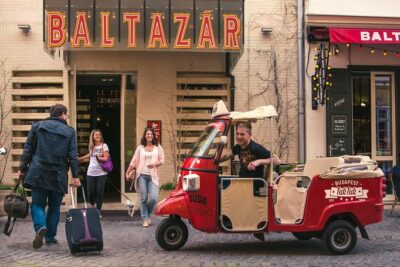 ★ 5.0Budapest Private Tuk Tuk Half-Day TourFrom $178606 reviews
 ★ 4.5Budapest One Way Private Transfer to or from AirportFrom $35548 reviews
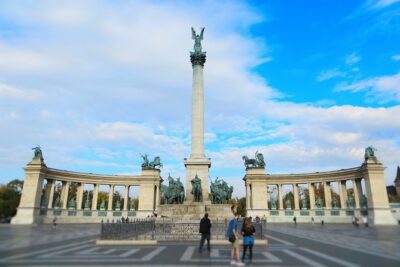 ★ 5.0Budapest Private Luxury Sightseeing Tour with Guide and TransportFrom $483442 reviews
 ★ 5.0Private Budapest City tour with Classic Russian Jeep or G-Wagon!From $256386 reviews
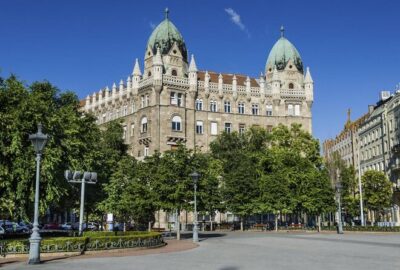 ★ 5.0Budapest Private Full Day City Sightseeing Tour Walking or by CarFrom $181299 reviews
 ★ 5.0Private city tour by vanFrom $181273 reviews