
Tour review · BUDAPEST JEWISH QUARTER TOURS
Private Jewish Heritage Tour of Budapest with Local Expert
Budapest tells its Jewish story in plain sight. This private walking tour connects landmark synagogues and ghetto-era sites with a local expert and real food breaks. You start in the Jewish Quarter and finish with a final stroll through the streets where community life shaped the city.
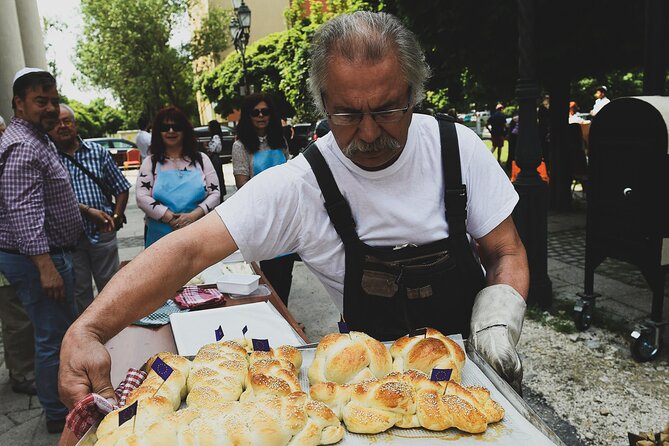
I especially like two things: the way the guide threads WWII Ghetto of 1944 history into what you see outside your window, and the chance to taste Flódni at Fröchlich Patisserie. The tour also keeps moving, so you get a lot of meaningful stops in about 2.5 hours without feeling like you are sprinting.
One possible drawback: it is still mostly walking and you will be outside for a big chunk of the time, so plan for weather and bring shoes that can handle uneven sidewalks.
Key Highlights Worth Booking For
- Flódni at Fröchlich Patisserie plus more Jewish sweets later at Fröhlich Confectioner
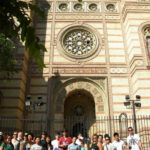
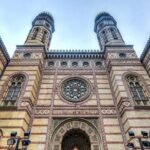
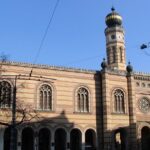
- Dohány Street Synagogue area near Europe’s largest and the world’s second largest synagogue
- WWII Ghetto of 1944 landmarks explained as you walk past major sites
- Carl Lutz Memorial and the story of a Righteous Among the Nations figure
- Moorish style details at Rumbach Street Synagogue that you can actually see up close
More stories from the Jewish Quarter and District VII
- Budapest Jewish Heritage Memorial Walking Tour & Synagogue Entry★ 5.0 · 568 reviews
- Budapest: Jewish Heritage Guided Tour with Synagogue Ticket★ 4.8 · 533 reviews
- Jewish Quarter of Budapest Walking Tour★ 4.7 · 369 reviews
- Budapest: Best of Downtown and Jewish Quarter Tour★ 5.0 · 312 reviews
A Smart Route Through Budapest’s Jewish Quarter
Budapest’s Jewish heritage is not stuck in a museum corner. It is spread across streets, squares, synagogues, and memorials, which is exactly why a walking tour works so well here. You get to see the city’s shape, not just read about it later.
This is a private experience, so you can ask your guide questions as you go. That matters for a topic like Jewish heritage, because the details are personal: names, neighborhoods, changes over time, and what survived. And since it is about 2.5 hours, you are not committing to a full day just to understand one part of the city.
There is also a practical upside. Stops are close enough to keep energy up, but they are varied enough that the time never feels repetitive. One minute you are at a synagogue-focused area, the next you are at a memorial or a food counter, and then you are back on the streets of the former ghetto.
Herzl Square to the Great Synagogue: Where the Story Starts
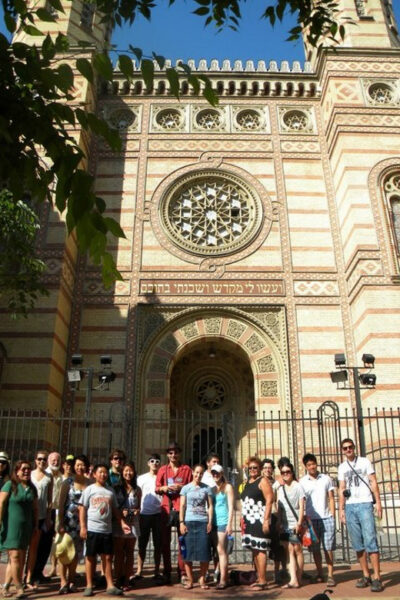
Most people picture synagogues first, but this tour starts where the neighborhood story begins to make sense. You kick off at Herzl Square with the Great Synagogue area as your anchor. From there, you move into the Jewish Quarter with a guided walk that frames how this district became one of the center points of Jewish community life for more than 200 years.
The guide does not just point out buildings. You also get major landmarks tied to the World War II Ghetto of 1944 while you are physically near the spaces where these events played out. That gives you a sense of distance and layout, which is hard to grasp when everything is separated by pages in a book.
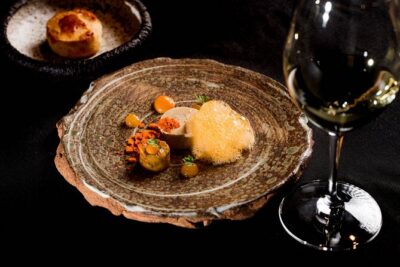
Then there is the food moment that makes the tour feel human. You stop for Flódni at Fröchlich Patisserie. Flódni is one of those dishes that sounds like a local secret until you try it, and suddenly it is not just a historical reference. It is part of everyday Jewish food culture you can taste right now.
If you are the type who likes your sightseeing with an edible reward, this is a good match. It also breaks up the history-heavy parts so you stay awake in the way that matters.
Dohány Street Synagogue: Big Scale, Real Meaning
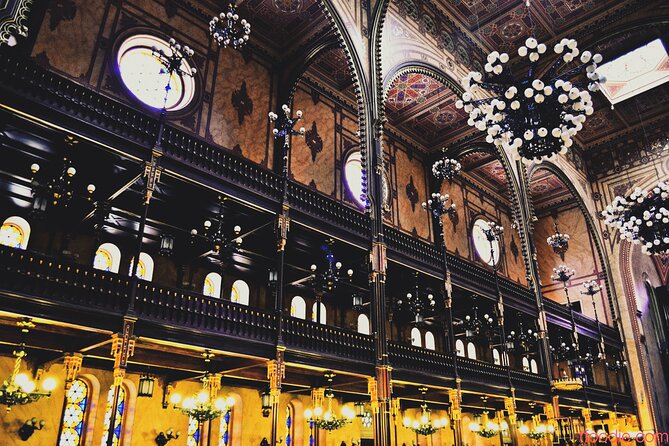
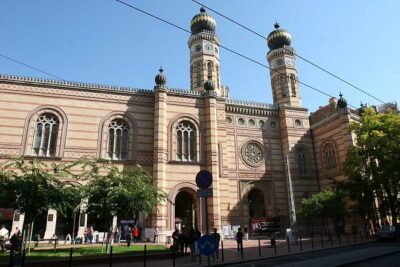
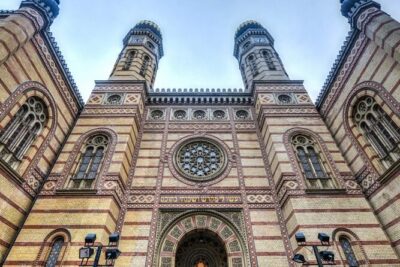
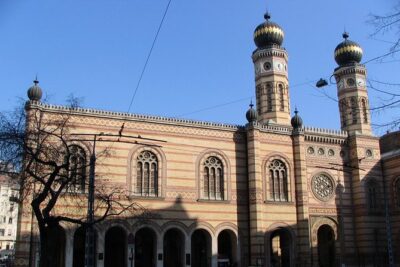
The main event is the vicinity of Dohány Street Synagogue. This is described as the largest synagogue in Europe and the second largest in the world, which tells you two things right away: you are dealing with scale, and you are dealing with a landmark that people built to last.
In practice, the value here is the context you get from the guide. A synagogue of this size is not only architecture. It is community life, endurance, and memory all folded into one place. When you pair that with the earlier Jewish Quarter framing, it clicks faster than if you show up cold.
This stop is also short, so do not expect a long, sit-down visit. The goal is positioning and explanation. The guide gets you oriented, then moves you onward while the story stays connected.
Rumbach Street Synagogue and Moorish Details You Can Actually See
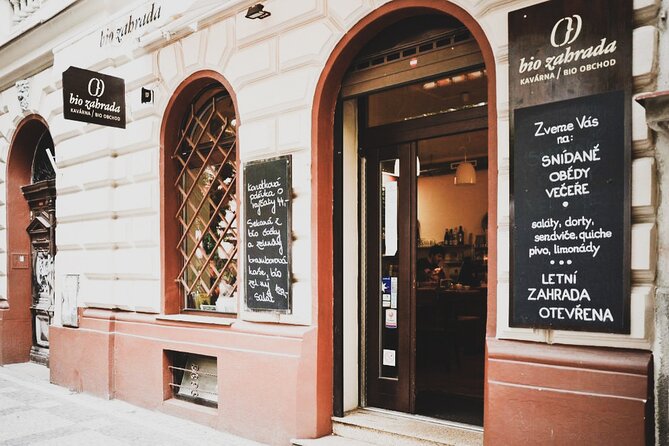
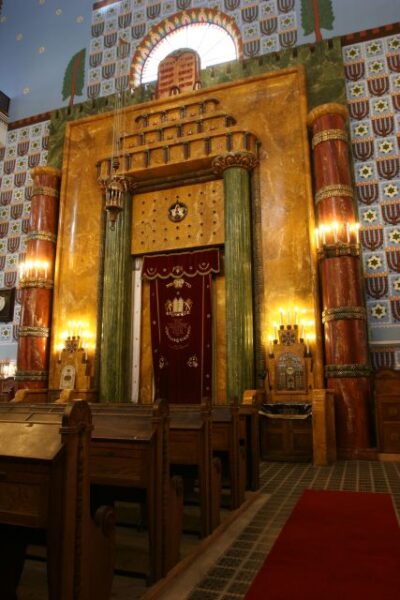
Next up is Rumbach Street Synagogue. The highlight here is the interior decoration, including its Moorish styling and the light you see when the space is illuminated. Even without lingering for a museum-level hour, you can still notice the feel of the place: graceful design choices that are not meant to be functional only, but to express identity and craft.
Short stop, big visual payoff is the name of the game. If you love architecture and religious design, this is one of the most rewarding “blink and you miss it” moments of the route. If you hate quick stops, pace yourself mentally early. You will have chances to slow down later with the memorial and neighborhood walking.
More days handed to a private guide
- Budapest Private Tuk Tuk Half-Day Tour
★ 5.0 · 606 reviews - Budapest One Way Private Transfer to or from Airport
★ 4.5 · 548 reviews - Budapest Private Luxury Sightseeing Tour with Guide and Transport
★ 5.0 · 442 reviews - Budapest Private Full Day City Sightseeing Tour Walking or by Car
★ 5.0 · 299 reviews - Private photography photo session at Fisherman Bastion
★ 5.0 · 269 reviews
Carl Lutz Memorial: A Name to Remember
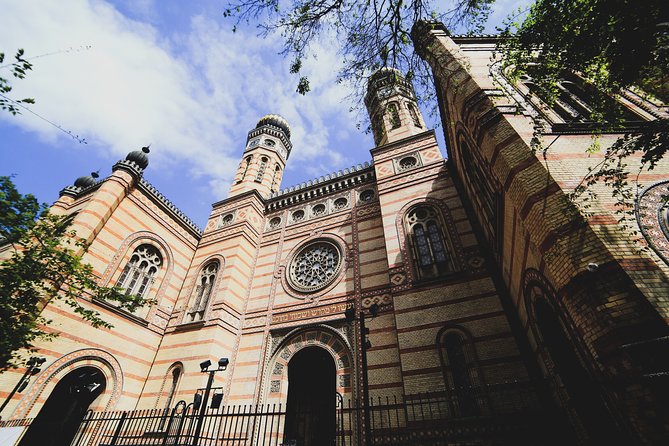
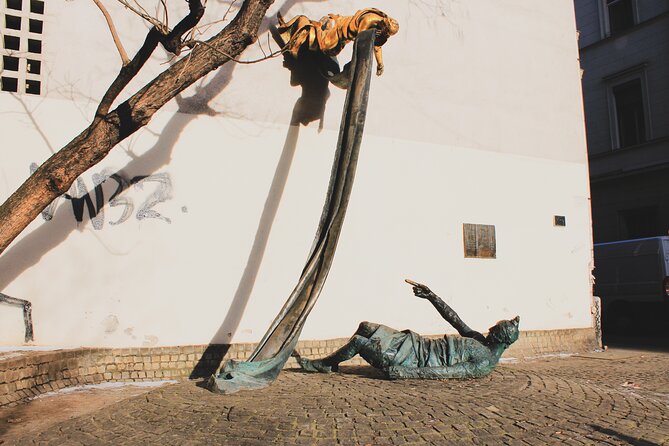
The tour includes the Carl Lutz Memorial, tied to one of the Righteous Among the Nations of the World, often described as the Hungarian Schindler. Even if you only half-know the name going in, you will leave with a clearer sense of why a memorial belongs in a walking route through daily streets and not only in textbooks.
This stop works because it interrupts the architecture and brings you back to people. That is important in a tour about Jewish heritage, because heritage is not just buildings. It is also decisions made under pressure, and individuals whose actions mattered when the world turned ugly.
Time here is enough to listen and absorb, without turning into a lecture that drains your focus. It is one of those moments where the guide can explain a name and a story, and you can let it sit for a minute.
Kazinczy Street Synagogues: Orthodox Life Meets Art Nouveau Style
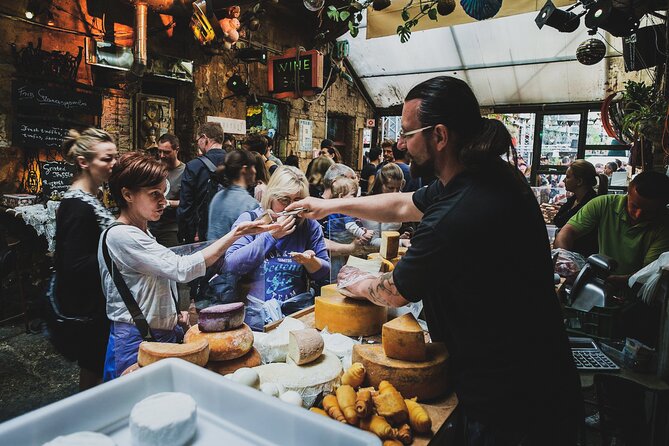
Kazinczy Street shows a different side of the neighborhood. You visit the synagogue on Kazinci Street, described as one of the largest functioning Orthodox synagogues in Europe and built in Art Nouveau style. That mix of religious continuity and design flair is part of what you are looking for in Budapest. The community story is not trapped in the past, it is also about how people live and worship.
This is also where the guide adds local tips beyond the strictly historical. You get advice related to beer ruins and nightlife, plus discussion about street art and other neighborhood secrets. That is a real value-add because it gives you a next step for your own time in Budapest. After you understand what you saw, you can use the knowledge to plan where you go for the rest of the trip.
If you plan to do ruin bars later, this is a helpful primer. Even if you do not care about nightlife, the street art comments can help you notice details you might otherwise walk past.
Erzsébetváros and the Sense of a City Within a City
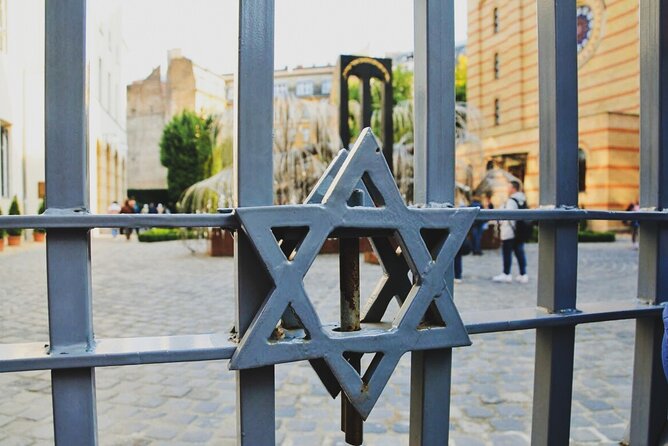
Erzsébetváros is described as the historic Jewish quarter, sometimes called the former ghetto, sitting in the heart of old Budapest. The tour notes that Budapest has 24 synagogues and pray houses, which makes a strong point: this was not a one-building community. It was a network of places that supported religion, culture, and daily life.
The guide helps you understand what makes this “city within a city” feeling real. You do not just hear it as a phrase. You see how many important references cluster in the area, and you get a sense of why the neighborhood earned that nickname.
This stop is also a good mental reset. If you felt overwhelmed by WWII storytelling earlier, the focus here helps balance things out with culture, architecture, and lasting landmarks. It is one of the stops where the tour stays respectful but not grim.
Dob Street and Fröhlich: Food as a Cultural Shortcut
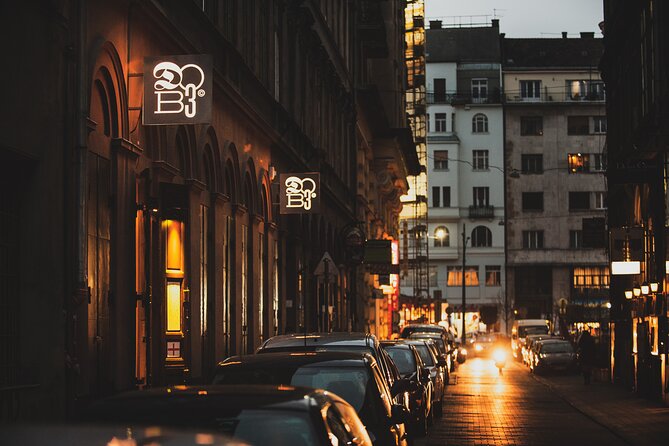
You will likely remember the food more easily than the exact street names. That is not a bad thing.
At Dob Street, the tour points you toward Fröhlich Confectioner for treats such as Flódni, chanukkai donut, Purim Haman’s ears, and other Jewish delicacies. You do not need to be an expert in Jewish holidays to appreciate the shapes and flavors. These are sweets tied to specific traditions, and tasting them gives you a fast, friendly entry point to the larger story.
Food stops also make the tour practical. You have a chance to recharge your legs, cool down or warm up, and keep your energy up for the final stretches of walking.
If you have dietary needs, the tour data only says food and drinks are provided as specified. It does not list options. So it is smart to message the provider ahead of time if you have restrictions, and ask what is available at the moment you arrive.
Kazinczy Again: Passages, Kosher Wine, and Old Market Energy
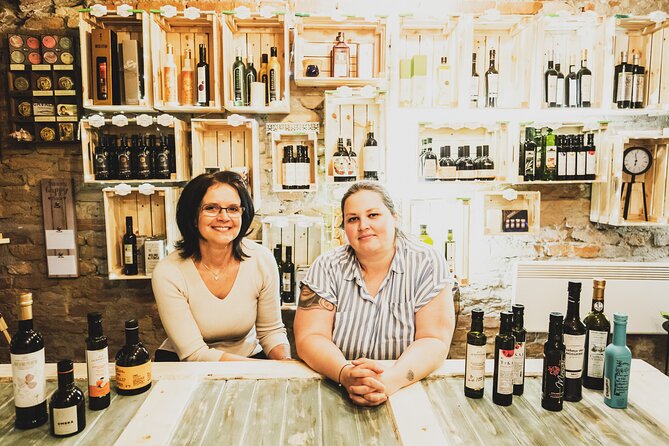
Then you return to the Kazinczy area, described as a central district and once known for a buzzing Jewish market surrounded by shops, restaurants, and law firms. Today it is compared to a wine cellar feel, with mention of kosher wine of high quality.
This is where you get the “what it feels like now” layer. Heritage tours can sometimes freeze time. This one keeps checking in with the present by pointing out how the area’s vibe has shifted. Even if you only walk past it rather than spend hours there, the guide’s talk helps you interpret what you are seeing.
If you like street level sightseeing, you will enjoy this part. The focus is less about one single building and more about the texture of the streets and the way commercial life grew around the community.
Castle Garden Baths: A Ritual Place for a Photo Moment
At Castle Garden, the tour includes a photo stop with the oldest traditional Jewish baths, described as used for ritual purposes. It is brief, but it is a nice reminder that heritage is not only public monuments. It is also practices and daily routines, even when those routines were tied to religious ritual.
This stop is practical for another reason. It gives you a quick visual moment for your photos without taking over the whole schedule. If you are traveling with someone who likes photos but not long museum pauses, this hits a good balance.
Finishing in District VII: A Walk Through Former Ghetto Streets
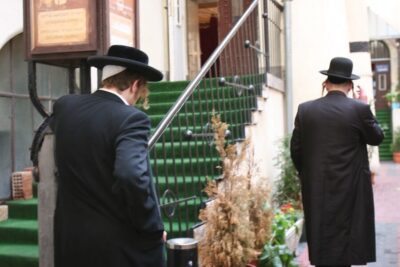
The tour ends back in District VII, in the Jewish Quarter. Here you do a final stroll through streets of the former ghetto, with synagogues, monuments, kosher restaurants, and kosher shops along the way. You also get more local stories about Budapest, which helps you connect what you saw to what you might do after the tour.
This is the part I like best for keeping the information from feeling like a checklist. By the end, you are not just collecting sights. You are seeing a neighborhood as a lived-in place, with surviving institutions and businesses.
If you are short on time in Budapest, this ending is useful because it turns your remaining hours into something purposeful. You now know which streets matter and why.
Price and Value: Is $220 Worth It?
At $220 per person, this is not a budget activity. But the value is in three places.
First, it is private. You are paying for a guide and pacing that matches your group only. That can be worth it in a city where big-group tours can feel like you are being rushed from photo to photo.
Second, the tour bundles several high-interest stops into a single route: Great Synagogue area, Dohány Street vicinity, Rumbach Street synagogue interior decoration, Carl Lutz Memorial, and multiple Orthodox and neighborhood stops. You are not stitching together multiple half-tours.
Third, you get specific food time built in. The Flódni stop at Fröhlich Patisserie and the treats at Fröhlich Confectioner are not random snacks. They are part of the cultural story of Jewish life in Budapest.
You do not need to budget for entrance tickets in the moment for these stops, since the schedule lists admission ticket free at each location. Still, the tour data also says entrance tickets are not included generally, so if you have a strong need for certainty, ask before you go.
Pickup, Private Group, and How to Plan Your Timing
The tour notes pickup is offered and that it is near public transportation. A mobile ticket is provided, which usually makes the start smoother. You get visual handouts, plus a notebook and a souvenir pen, which is a thoughtful touch if you like taking notes while things are fresh.
It runs about 2 hours 30 minutes, and that is a sweet spot. It gives you time for a meaningful walk without wiping out your whole day. Many people book this around a month in advance, so if you are traveling in a busy season, I would not wait too long.
Since it is described as eco-friendly and a walking tour, dress for comfort. Bring water when it is warm. If you do not love steps and uneven sidewalks, plan for moderate physical fitness only. The tour does state a moderate physical fitness level.
Guide Quality: The Difference Between a Tour and an Experience
The biggest make-or-break factor in any heritage tour is how the guide handles details without turning it into an unreadable lecture. The guide approach here includes stories connected to what you see, and it also includes practical suggestions for what to do around the neighborhood later.
One guide named Miklos was specifically praised for being on time, clear, and for taking time to share a lot of information without rushing when time was limited. That kind of pacing matters because you are dealing with emotional subject matter. You want the story told well, but you also need a calm rhythm.
One caution: there has been at least one instance where a guide did not show up because of illness, and the company offered a cancellation and refund. That is rare, but it is a good reason to keep your day flexible if your schedule is tight. If you are on a tight itinerary, you can also message the day before to confirm the meeting details.
Should You Book This Budapest Jewish Heritage Tour?
If you want an organized walk that connects synagogue landmarks to WWII ghetto history and then rewards you with real Jewish food, this tour is a strong choice. I think it fits best if you like questions, short stops with explanation, and a route that helps you understand why this neighborhood mattered.
Book it if:
- you want a focused 2.5-hour Jewish heritage route without planning multiple stops yourself
- you care about WWII context tied to real places
- you are hungry for Jewish sweets like Flódni and want the food woven in, not added later
Skip it or reconsider if:
- you dislike walking and long time outdoors
- you want deep museum-style time at one building rather than multiple neighborhood stops
- you have very limited mobility and need a quieter, less walking-based format
If your goal is to leave Budapest with a clearer sense of how Jewish life shaped the city, and how the darkest chapter connects to the streets you walked, this is one of those tours that actually helps you see the place.
FAQ
How long is the Private Jewish Heritage Tour of Budapest?
The tour lasts about 2 hours 30 minutes.
What is the price per person?
The price is $220.00 per person.
Is this tour private?
Yes. It is a private tour, and only your group participates.
Is pickup available?
Pickup is offered.
What food is included?
You can expect Hungarian and Jewish treats as specified on the route, including Flódni at Fröchlich Patisserie, and Jewish delicacies at Fröhlich Confectioner such as Flódni, chanukkai donut, Purim Haman’s ears, and other Jewish sweets. Coffee and/or tea are also included.
Are entrance tickets included?
Entrance tickets are listed as not included, but the stop details note admission ticket free for the locations you visit. If you want absolute clarity, confirm what is covered for your specific dates.
How do I get the tickets?
The tour includes a mobile ticket.
Is the tour easy to fit into a day?
It is about 2.5 hours long, and it is near public transportation, with multiple start times available.
What is the cancellation policy?
You can cancel for a full refund up to 24 hours in advance of the experience start time.
Is this tour suitable for everyone physically?
The tour states you should have a moderate physical fitness level. Service animals are allowed.
More Tours in Budapest





More of the Jewish Quarter
More Tour Reviews in Budapest




Recently added around Budapest

Budapest Jewish Quarter Tours, compared.
 ★ 5.0Budapest Jewish Heritage Memorial Walking Tour & Synagogue EntryFrom $83568 reviews
 ★ 4.8Jewish Heritage Guided Tour with Synagogue TicketFrom $81533 reviews
 ★ 4.7Jewish Quarter of Budapest Walking TourFrom $2369 reviews
 ★ 5.0Best of Downtown and Jewish Quarter TourFrom $23312 reviews
 ★ 5.0Budapest City Walk in Jewish QuarterFrom $356218 reviews
 ★ 4.5Budapest Dohany Synagogue & Hungarian Jewish Museum & free extrasFrom $44218 reviews
 ★ 5.0Budapest Dohany, Heroes’, Rumbach synagogues & Jewish Ghetto TourFrom $63200 reviews
 ★ 4.8Budapest Grand Half-Day Jewish Heritage TourFrom $116135 reviews
Browse the lists this tour appears in