
Tour review · BUDAPEST CITY SIGHTSEEING TOURS
The beginner’s guide to Budapest – Budapest Sightseeing Tour
Budapest has a way of grabbing you fast. This beginner-friendly tour helps you learn the city with public transport included and a guide who keeps the pace friendly. I especially like the mix of big-name landmarks plus the practical tips that help you move around on your own, and the included café break with coffee and cake. One thing to consider: you only get brief time at each highlight, and a few major interiors are not included in the ticket price.
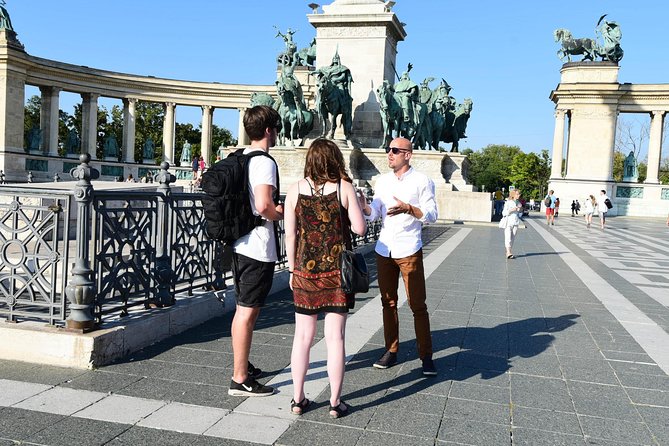
I also appreciate that the group stays small, usually up to 15 travelers, so questions do not get lost. In the guide feedback, names like Ferenc, László, and Fanni show up often, and the theme is consistent: clear explanations, smart timing, and patience when you have questions. The only real drawback is that the schedule is compact, so if you want long museum time or deep interior visits, you’ll still need a plan for later.
Key points to know before you go
- Public transport tickets included so you can ride like a local instead of budgeting for every hop.
- Coffee and cake at a local café plus snacks and coffee or tea, which keeps the walking stretches from feeling brutal.
- A handy souvenir map and follow-up recommendations, useful for turning this intro into your own itinerary.
- Short, focused stop times that work well for first-timers, with plenty of landmarks covered efficiently.
- A small group (max 15) that makes it easier to ask questions and keep the pace comfortable.
More ways to put both banks into one city loop
- Budapest: City Sightseeing Hop-On Hop-Off Bus Tour & Extras★ 4.1 · 4,337 reviews
- Budapest: Big Bus Hop-On Hop-Off Tour & Danube River Cruise★ 4.2 · 3,794 reviews
- Big Bus Budapest Hop-On Hop-Off Bus and Walking Tour★ 3.5 · 2,206 reviews
- Budapest: Grand City Tour with Parliament Visit★ 4.4 · 1,598 reviews
Why this 3.5-hour Budapest intro is such a good first move
If you are arriving in Budapest and want to feel oriented quickly, this tour is built for that moment. It is long enough to connect major sights, yet short enough to avoid turning your day into a marathon. And because the ride time uses the local transit system, you start learning the routes right away, not just collecting photos.
I like that the experience is designed around guidance, not just sightseeing. You will hit the famous spots, but the guide focus is on helping you understand what you are seeing, why it matters, and how the parts of Budapest connect across the river. That is what makes it more than a checklist.
The price is also easier to justify when you look at what’s included. You get the guided tour plus the coffee and cake break, snacks, coffee or tea, a map, and tickets for public transport. In a city where getting around can add up, having that covered is a real value.
Starting at the Hungarian State Opera, then moving with the city
Your tour begins at the Hungarian State Opera on Andrássy út, at Andrássy út 22. From there, the day is set up to get you walking and riding in a way that feels like doing things yourself, just with someone to translate the city into plain language.
A key detail for first-time visitors: you do not spend your whole time crammed into one neighborhood. The schedule threads together Pest’s major sights and the Danube edge, with the Chain Bridge and the Shoes on the Danube Bank late in the route. That order matters. You start with broad orientation, then you move into deeper context as the tour builds.
You will also notice the timing rhythm. Stops are typically around 10 to 20 minutes. That is not a flaw, it is the point. It keeps the energy up and makes sure you see a lot without spending your day waiting in lines.
Heroes’ Square: the chieftains, the memorial, and what to look for
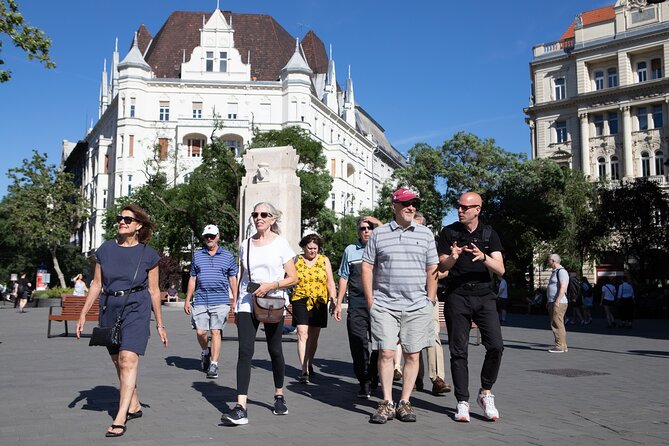
One of the first stops is Heroes’ Square, or Hősök tere. This is the kind of place where you can accidentally miss the details that make it special, especially if you only know it from postcards.
You’ll have about 20 minutes here, and your guide will point out the statue complex of the Seven chieftains of the Magyars and other national leaders. You’ll also hear about the Memorial Stone of Heroes, which people sometimes misname as the Tomb of the Unknown Soldier. That correction sounds tiny, but it helps you read the whole monument correctly.
Practical tip: if you want a photo that includes the full monument, arrive ready to reposition. The square is wide, and your first shot might cut off key pieces. Quick adjustments now save you from awkward cropping later.
Széchenyi Medicinal Bath: thermal water facts and a quick reality check
Next comes Széchenyi Medicinal Bath and Pool. The tour time here is about 15 minutes, and entrance is listed as free for this stop. The big context piece you’ll get is that Széchenyi is the largest medicinal bath in Europe, fed by two thermal springs with water temperatures of 74°C and 77°C.
Now, here’s the honest part: 15 minutes is not enough for a full soak and relaxation session. This is better thought of as a chance to orient yourself to the bath complex, understand what makes it famous, and decide if you want to return for a longer visit with your own schedule.
What makes this stop valuable is the contrast it creates in the day. You are moving from statuary and major avenues into a place that is both historic and functional, where the thermal water is the centerpiece. Even a short look makes you understand why locals treat bath time like an everyday ritual.
If you are going in cool weather, dress in layers so you can step in and out comfortably. And yes, you might want to keep an extra towel in mind for later if you plan to revisit.
Other tours with a local leading the way
- Budapest: Parliament Building Entry Ticket and Audio Guide
★ 4.5 · 3,844 reviews - Budapest: Opera House Guided Tour
★ 4.6 · 1,533 reviews - Budapest Small-Group Guided Tour on MonsteRoller e-Scooter
★ 5.0 · 1,517 reviews - Budapest: Guided Tour of the Parliament Building in Spanish
★ 4.6 · 1,240 reviews - Budapest: 3-Hour Live Guided Sightseeing Tour
★ 4.4 · 1,041 reviews
Vajdahunyad Castle in City Park: a quick look at 1896 ambition
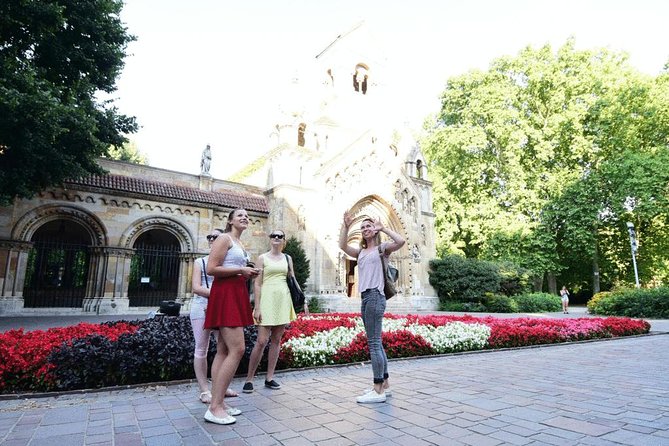
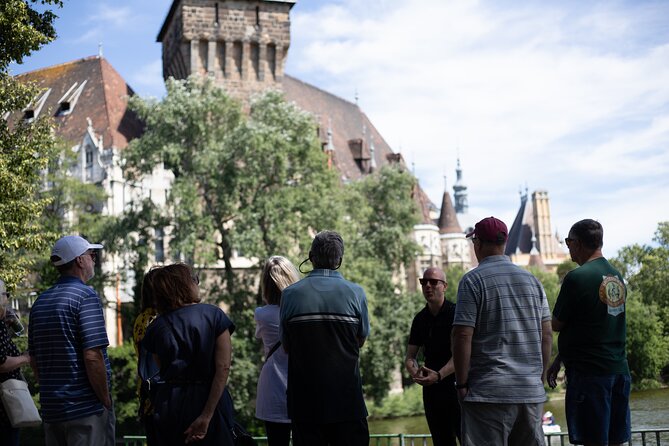
From the baths, the tour heads to Vajdahunyad Castle in City Park. Your stop time is about 10 minutes, and admission here is not included.
This is the kind of sightseeing moment that works perfectly on a first visit. The castle setting in City Park gives you that fairytale feel, but you are not committing your whole day to a ticketed interior. Instead, you get an exterior sense of the place and then you can decide later if you want to go inside.
Why I think this is smart: Budapest has plenty of major museums and churches. If you try to force everything into day one, you end up tired and overbooked. A quick castle stop gives you a taste and a location you can find again easily.
Practical tip: if you care about photos, check the light direction before you settle. City Park can shift from bright to shadow quickly, depending on clouds and trees. A 30-second glance can improve your results more than most people expect.
Andrássy Avenue and the Opera House: grand facades, easy orientation
After City Park, the tour moves to Andrássy Avenue, a boulevard dating back to 1872. It is lined with neo-Renaissance mansions and townhouses, and it is recognized as a World Heritage Site in 2002. Your stop time here is about 10 minutes, and it’s marked as ticket-free.
Andrássy út matters for how Budapest feels. This is the kind of street where you understand that the city’s beauty is not accidental. It was planned, built, and maintained with real ambition. You get a feel for the city’s scale in a way that side streets often hide.
Then you also visit the Hungarian State Opera House, again with about 10 minutes. Entrance is listed as ticket-free for this stop. This makes sense because you are already starting at the Opera, so the tour uses your presence there to connect architecture to what you are learning.
For context that helps you appreciate it: the Opera House was designed by Miklós Ybl, a major figure in 19th-century Hungarian architecture. Even if you never tour the interior, you walk away with clearer context for why the building looks the way it does.
If you are tempted to stand and stare, do it briefly. You can always return later, but on this tour the goal is to keep moving and collecting the right mental map.
St. Stephen’s Basilica: an important exterior stop, interior optional
Next is St. Stephen’s Basilica, or Szent István-bazilika. Your time here is about 15 minutes, and admission is not included.
This is a major landmark, and even a short visit helps. The basilica is named for Stephen, the first king of Hungary, and the tour explains that his right hand is housed in the reliquary. That detail is the kind that makes a building feel personal, not just monumental.
Because admission is not included, plan to use your time for the outside and for any viewing areas you can access without paying an extra ticket. If you want to go inside, you’ll need to budget time and money outside the tour.
What I like about including this stop anyway is that it gives you something truly central to anchor your next days. St. Stephen’s Basilica is an easy reference point. Once you know where it sits, it becomes simpler to plan evenings, markets, and river walks.
Liberty Square and Parliament: remembrance and power in one stretch
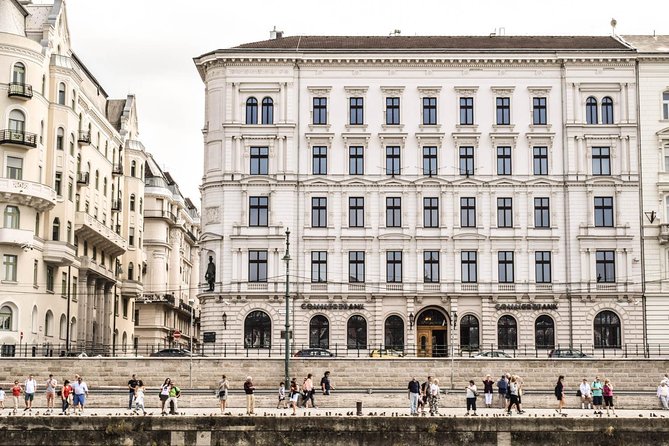
Then the route shifts to Szabadság tér (Liberty Square). This stop runs about 20 minutes and is ticket-free.
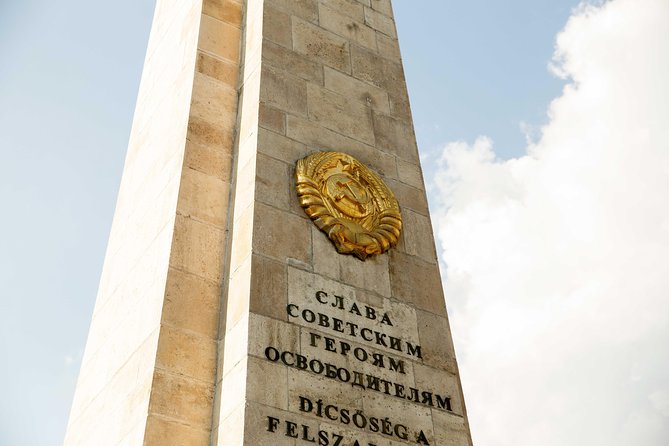
What makes Liberty Square worth your time is the meaning layered into the stone. You’ll see two controversial memorials connected to the Hungarian Jewish victims of the Holocaust and the Soviet soldiers credited with liberating Budapest from the Nazis in 1945. The square also includes notable neighboring buildings, including the United States Embassy in Hungary and the headquarters of the Hungarian National Bank.
You will feel the heaviness of those stories, so I recommend giving yourself a moment to slow down instead of snapping and walking. The guide helps connect what you see to the bigger context.
From there, the tour heads to the Hungarian Parliament Building, Országház. The stop time is about 10 minutes, and admission is not included.
Still, this brief stop works because the Parliament building is one of those sights you can recognize instantly but still struggle to place without context. You get the sense that it is the seat of the National Assembly of Hungary and a major symbol for the country, even if you do not go inside today.
If you are someone who loves interiors, Parliament is one of the first places you should consider revisiting separately.
Chain Bridge and Shoes on the Danube Bank: the river’s story in two steps
The last stretch brings you to the Széchenyi Chain Bridge, and then to the Shoes on the Danube Bank.
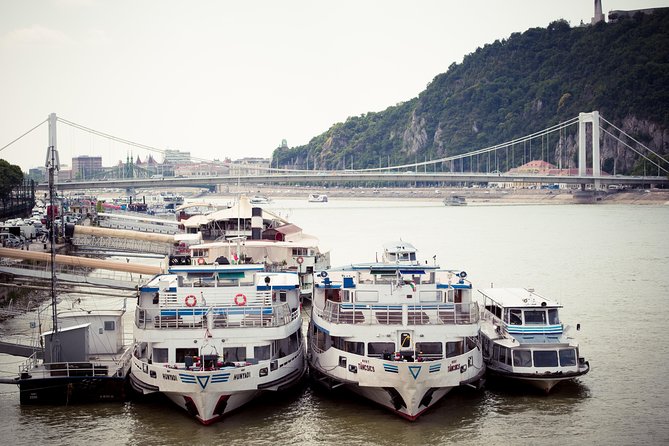
The Chain Bridge is ticket-free and gets about 10 minutes. It spans the Danube between Buda and Pest. This matters because Budapest is really two cities stitched together by the river. Once you see the bridge, you understand how the waterfront walks, views, and neighborhoods connect.
Then you reach the Shoes on the Danube Bank, another 10-minute stop and ticket-free. This memorial honors Jews murdered by fascist Hungarian militia affiliated with the Arrow Cross Party during World War II. It is one of those places where the symbolism hits hard, fast.
On tours, these kinds of stops can become “quick and sad.” But on this one, the structure of the day helps. By the time you arrive here, you have already seen national monuments and key civic sites, so the river memorial feels less like a random stop and more like the final chapter of a story about identity, loss, and survival.
Practical tip: keep your phone down for a moment, then take photos once you have steadied your brain. You will remember the walk more than the picture.
Price and value: what you are really paying for
At $94.63 per person for about 3 hours 30 minutes, you are paying for three big things: a small-group guide, a tight route that links top sights, and included transit plus a built-in food break.
Here’s how I think about value in plain terms.
- If you already plan to ride transit repeatedly that day, the included public transport tickets reduce your day-one friction.
- Coffee and cake, plus snacks and coffee or tea, keeps energy stable so you are not hunting for food while you are trying to sightsee.
- The map and recommendations help you turn the tour into future planning instead of ending with a blur of names.
What might cost extra: some entrances are not included. Vajdahunyad Castle, St. Stephen’s Basilica, and the Parliament Building are listed as not included. If you want interiors, make that your follow-up day plan.
Who this tour is best for, and who should adjust expectations
This is a great fit if you are:
- visiting for the first time and want a practical introduction to major landmarks
- the type who likes asking questions during the walk
- trying to save time and avoid figuring out every route alone
It is also a good option if you are traveling with kids, as long as they are accompanied by an adult. There’s no guarantee of long “stays,” though, because the stops are short.
It might be less ideal if you want slow, detailed museum time or full interior visits at multiple stops. This tour is built to get you oriented. You will likely want a second day for deep dives at the sites that spark your interest.
Also note: the tour operates in all weather conditions. You should dress appropriately. Budapest weather can change quickly, so packing a light rain layer is a good move.
Should you book the Budapest beginner sightseeing tour?
I think this is a strong booking choice for day one in Budapest, especially if you want a guided plan that includes the stuff that usually drains time and money, transit tickets and a café break. It is also worth it if you enjoy history and architecture but do not want to become a self-taught professor before lunch.
Book it if:
- you want a smart route with minimal guesswork
- you like walking plus short stops that keep your energy up
- you appreciate a guide who explains what you are seeing, and you want a group small enough for questions
Skip or supplement it if:
- you are hoping for long interior visits, because several entrances are not included and the stop times are short
- you prefer unstructured days with lots of time to wander without a schedule
If you want flexibility, you can cancel for free up to 24 hours in advance, which makes it easier to hold your spot while your travel plan firms up.
FAQ
How long is the Budapest Sightseeing Tour?
The tour lasts about 3 hours 30 minutes.
What is the price per person?
The price is $94.63 per person.
What languages is the tour offered in?
The tour is offered in English.
Are public transport tickets included?
Yes, tickets for public transport are included.
Which attractions do not have admission included?
Admission is not included for Vajdahunyad Castle, St. Stephen’s Basilica, and the Hungarian Parliament Building.
Where does the tour start and end?
The tour starts at the Hungarian State Opera (Andrássy út 22, 1061) and ends back at the same meeting point.
More Tours in Budapest




See Both Banks, Other Ways



More Tour Reviews in Budapest




Recently added around Budapest


Budapest City Sightseeing Tours, compared.
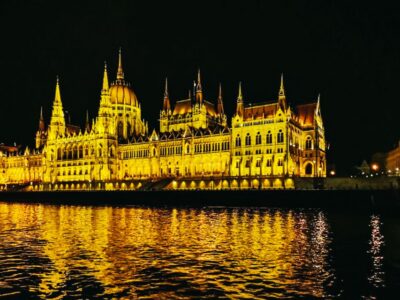 ★ 4.6City Highlights Cruise with Welcome DrinkFrom $1435,610 reviews
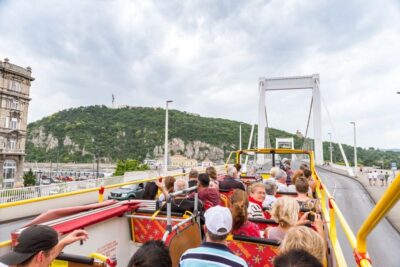 ★ 4.1City Sightseeing Hop-On Hop-Off Bus Tour & ExtrasFrom $414,337 reviews
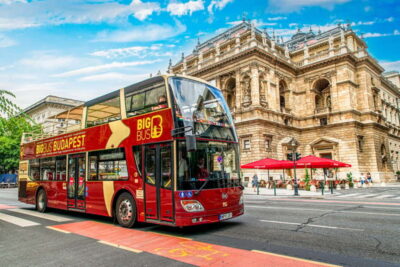 ★ 4.2Big Bus Hop-On Hop-Off Tour & Danube River CruiseFrom $403,794 reviews
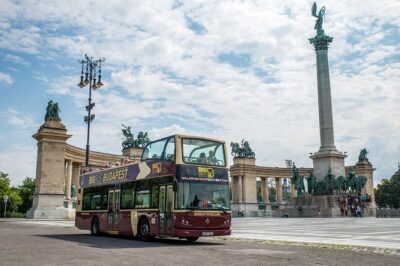 ★ 3.5Big Bus Budapest Hop-On Hop-Off Bus and Walking TourFrom $422,206 reviews
 ★ 4.4Grand City Tour with Parliament VisitFrom $701,598 reviews
 ★ 4.33-Hour Grand City Tour and Castle WalkFrom $491,437 reviews
 ★ 4.43-Hour Live Guided Sightseeing TourFrom $351,041 reviews
 ★ 5.0Budapest Highlights Bike TourFrom $39770 reviews
Browse the lists this tour appears in