

Tour review · STREET ART
Original Budapest Alternative Street Art & Jewish Tour
Street art meets stories in Budapest. I like the friendly, social vibe that keeps the pace easy, and I love how the route spotlights street art in real neighborhoods instead of only big sights. One thing to consider: guide quality can vary, so go in ready to ask questions and judge how well the person leads.
This Original Budapest alternative-style walk mixes visual art stops with cultural context in the 6th and 7th districts. It runs about 3 hours and uses a mobile ticket, which makes it simple to manage on the day.
Key highlights at a glance
- Pay-what-feels-fair guide model that rewards effort and good pacing
- Street art focused stops across the 6th and 7th districts
- No museum-style ticket fees at the listed stops
- Short, punchy segments that keep you from getting bored
- Big-picture context for the Jewish quarter alongside the art
- Up to 100 people max, so it’s large enough to meet people, not a bus tour
More Budapest ideas for the space still left in the itinerary
- Budapest: Street Art and Underground Movements Walking Tour★ 5.0 · 238 reviews
- Alternative Street Art Free Walking Tour of Budapest★ 4.5 · 53 reviews
- Budapest: Alternative Street Art & Jewish Tour★ 4.8 · 49 reviews
- Street Art Tour Budapest★ 5.0 · 40 reviews
Why Budapest street art belongs on your plan
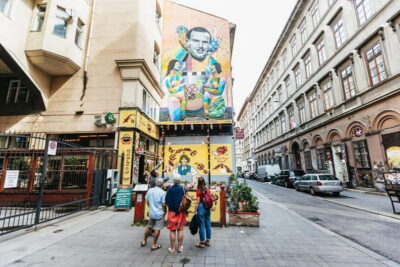
Budapest street art is not just decoration. It’s a way locals talk back to the city, rewrite bland walls, and turn side streets into small stories you can read on foot. This tour is built for exactly that kind of seeing. You walk through working neighborhoods, not just a photo-only loop.
I also like that it’s designed to be informative even if you already know Budapest. The route is short, around three hours, so you’re not stuck on a long day when you’d rather be eating, wandering, and taking photos on your own schedule.
The other plus is the mix of art and identity. One portion leans into Jewish quarter stories while the stops keep you moving through modern Budapest street scenes. That combo can be great, as long as your guide can clearly explain what you’re seeing and why it matters.
Price and what you really get for $25.20
At about $25.20 per person, this is priced like a budget-friendly walking tour. That matters because the “cost” of a walking tour is really the value you get from the guide’s explanations and the quality of the route pacing.
Here’s how I judge value for this one:
- The stops are free to access (based on the listing for the stops), so you are mostly paying for the guide and the walking plan.
- The guide model is tip-driven in spirit, meaning the experience quality tends to improve when you get someone invested and ready.
- You’re not committing a full day. Three hours is enough time to feel you learned something, and short enough to still enjoy the rest of your day.
One practical note: bottled water is not included. For a warm day, or if you’re doing this while juggling lots of walking, grab water before you start.
How the route uses 6th and 7th districts to change your view
A big part of why this tour works is the geography. The 6th and 7th districts feel different from the classic postcard areas. You get that younger, more social street energy without leaving the city center.
The plan moves across a few connected areas, so you’re not constantly backtracking. And because the stops are time-boxed (about 30 minutes each), you get a structure. You still have room for photos and quick questions, but you’re not wandering in confusion.
This layout also helps with context. When your guide points out art and explains local references, it makes more sense when you can see the surrounding streets and buildings, not just isolated murals.
Starting at St. Stephen’s Basilica, then heading into real streets
You start at St. Stephen’s Basilica at Szent István tér 1, 1051. The tour starts at 11:00 am, and it uses a mobile ticket, so you won’t be fumbling with paper on a busy square.
After the meeting point, you transition into walking streets where the experience shifts from landmark Budapest to neighborhood Budapest. That’s where street art tours earn their keep. The city center gets you oriented fast, then the route carries you into the areas where art actually lives.
If you’re planning other stops that day, build in time for the kind of wandering you will want to do after seeing the murals. This tour is short, and it often makes you want to keep looking.
- Budapest: City Highlights Cruise with Welcome Drink
★ 4.6 · 35,610 reviews - Budapest: Unlimited Prosecco, Beer and Aperol Spritz Cruise
★ 4.8 · 25,310 reviews - Budapest: Széchenyi Spa Day Ticket with Optional Upgrades
★ 4.3 · 23,911 reviews - Budapest: Nighttime or Daytime Sightseeing Cruise
★ 4.2 · 21,062 reviews - Budapest: 1-Hour Evening Sightseeing Cruise with Drink
★ 4.5 · 8,330 reviews
Stop 1: Lépcső Street Art and how to read murals like a local
At Lépcső Street Art, you’re set up to notice details. Even with only about 30 minutes here, the goal is not to stare randomly at walls. It’s to learn how to look, what to notice, and how street art fits into the neighborhood.
For many first-time visitors, street art can feel like a mix of styles with no key. The guide’s job is to connect the visual pieces to local themes, and to show you the context of the spot you’re standing in. That’s what turns a “photo stop” into an actual learning moment.
Best way to enjoy this segment: slow down. Step back, then come closer. Look at how the art sits in relation to the street, doorways, and sidewalks. Those small positioning cues matter.
Stop 2: Terézváros, where the city feels lived in
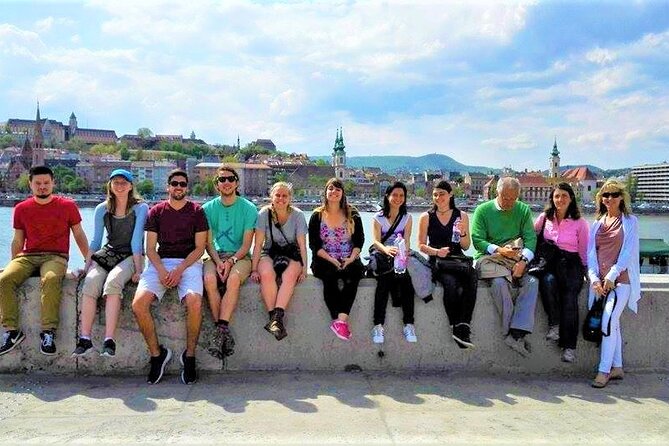
Next you move into Terézváros. This is where the tour leans into the “young and young at heart” energy of the 6th and 7th districts. The point is not nightlife. The point is mood.
Your guide uses this part to frame the city you’re in, and to make it feel easier to understand. Terézváros is the kind of district where you can easily get lost on your own, so having a guide draw lines for you helps. It also helps you connect what you see in one street to what you’ll see in the next one.
A nice aspect of having two neighboring districts is comparison. You start seeing how Budapest keeps reinventing itself block by block.
Stop 3: Andrássy Avenue, then crossing to Király u.
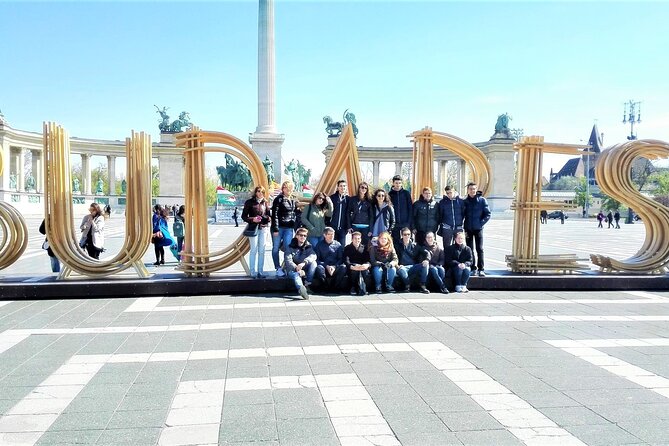
Then you hit Andrássy Avenue, with Király u. acting like a key marker in the tour’s flow. The guide uses this stretch to talk about Budapest’s atmosphere and the feeling of the 7th district after you cross.
This segment can be useful even if you think you already “know” Andrássy Avenue. The street itself is familiar to many visitors, but a street art and neighborhood tour pushes you to see it with different eyes. Instead of only thinking about the big avenue, you start noticing how smaller adjacent streets connect and how the city’s culture shifts as you walk.
This part is also a good time to ask questions. If you’re the type who likes to understand what you’re walking through, your guide can usually tie the art references back to what’s happening in the streets around you.
Stop 4: Színes Esernyők and the Colourful City concept
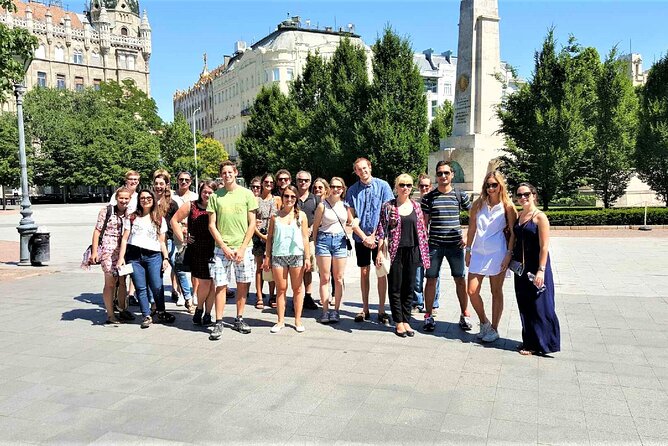
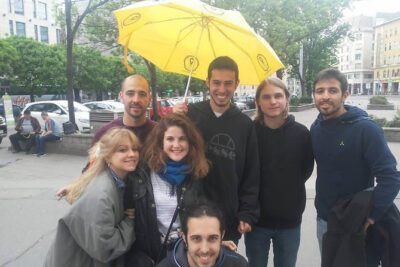
The final listed stop focuses on Színes Esernyők and the idea of Színes Város, also known as the Colourful City. This is the part where the tour leans hardest into the “street art as a city-changing idea” concept.
From what’s described, the local works you’ll see are meant to add life to specific landmarks and ordinary side roads. That’s the heart of this tour theme: street art as a practical form of cultural change, not just an aesthetic hobby.
I like tours that finish with a clear takeaway theme. It helps you remember what you learned instead of treating every mural as a random picture.
Practical tip for this stop: take one photo from far enough away to show the art in context, then take a second close-up. That way you’ll actually remember the street, not only the image.
The Jewish quarter angle, and why guide quality matters
This tour is also framed as a walk through the Jewish quarter. In a good version of this tour, you get help understanding how identity and historical life shaped neighborhoods, and how those stories overlap with what you see on today’s walls.
That overlap can be powerful. When street art is explained in a historical neighborhood, the murals stop feeling like “just street visuals.” They feel like part of an ongoing conversation about the city.
But here’s the consideration I don’t want to gloss over: some guides are better trained than others. In the weaker experiences, the guide struggled to answer questions and even pointed out the Jewish ghetto in the wrong place. If your guide is new or underprepared, it can throw off your understanding fast.
My advice for you: go in with curiosity, but don’t hesitate to ask simple follow-ups if something sounds off. If the explanation doesn’t line up with the street you’re standing in, trust your own eyes and ask the guide to clarify.
Group size, pace, and how much you can ask
The maximum group size is 100 travelers. That’s a wide cap, and the actual feel depends on the day and the guide’s style. Still, the tour is segmented into short blocks, so even a larger group can stay moving without turning into a full-on herd.
In a strong guided walk, you should still feel like you can ask questions. In the better experiences, guides are described as friendly and professional, and the time goes quickly. In the weaker ones, that interaction seems to break down when the guide can’t confidently answer questions.
So, what should you do?
- If you want deep Q and A, pick days when tours are likely to be staffed well.
- If you’re short on time, you’ll still get value from the street art and neighborhood context, as long as the guide keeps things moving.
What to bring so you enjoy every stop
This is a street-walking tour, so your comfort matters. Nothing fancy is needed, but a few basics help:
- Comfortable shoes for uneven sidewalks and turning corners.
- A camera phone with enough space for photos.
- Water, since bottled water is not included.
- A layer if the weather turns. The tour requires good weather.
If you’re the type who likes to linger at murals, consider doing your “big picture” photos early, then spend more time on your favorite two spots.
Who this tour suits best
This works especially well if you fit one of these profiles:
- You want street art but also want explanations, not just wandering.
- You like learning by walking through real neighborhoods in Budapest.
- You’re interested in a Jewish quarter perspective tied to the city’s evolving identity.
- You want a short, structured plan you can build on after the tour ends.
If you prefer silent museum-style learning or you need a highly scripted historical lecture, you might find a street art format less precise. This tour is more about seeing, noticing, and connecting.
Should you book it? My practical take
Book it if you want a fun, budget-friendly walking tour that focuses on street art in the 6th and 7th districts and gives you a chance to understand Budapest beyond the main attractions. It’s short, low-cost, and built around free-access stops, so even if a mural isn’t your taste, you still learn how to look.
Think twice if you only want highly academic, perfectly accurate historical detail, or if your main goal is a very specific version of Jewish quarter facts. The guide training can be uneven, and at least one experience included incorrect ghetto placement.
A smart compromise: treat the street art explanations as the core, enjoy the neighborhood walk, and use questions to confirm any key history points you care about most.
FAQ
FAQ
Where does the tour start?
The tour starts at St. Stephen’s Basilica, Szent István tér 1, 1051 Hungary.
What time does the tour begin?
The start time is 11:00 am.
How long is the tour?
It runs for about 3 hours.
How much does it cost?
The price is $25.20 per person.
Is the ticket mobile?
Yes, the tour uses a mobile ticket.
Which areas of Budapest does the tour cover?
The tour focuses on the 6th and 7th districts, including areas connected around Andrássy Avenue and Király u..
Are there admission fees for the stops?
The listed stops show admission free.
What’s included in the price?
A local tour guide is included.
What is not included?
Bottled water is not included.
What if the weather is bad?
The tour requires good weather. If it is canceled due to poor weather, you will be offered a different date or a full refund.
Can I cancel for a full refund?
Yes. You can cancel for a full refund up to 24 hours before the experience starts. If you cancel less than 24 hours before, the amount paid is not refunded.
More Street Art in Budapest

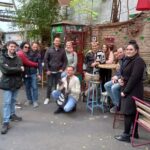
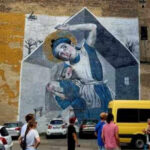
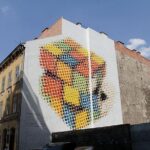
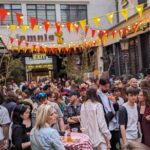
More Tours in Budapest






More Tour Reviews in Budapest






Recently added around Budapest




Street Art, compared.
 ★ 5.0Street Art and Underground Movements Walking TourFrom $27238 reviews
 ★ 4.5Alternative Street Art Free Walking Tour of BudapestFrom $353 reviews
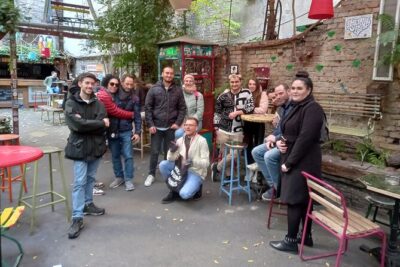 ★ 5.0Street Art and Alternative Tour in BudapestFrom $3652 reviews
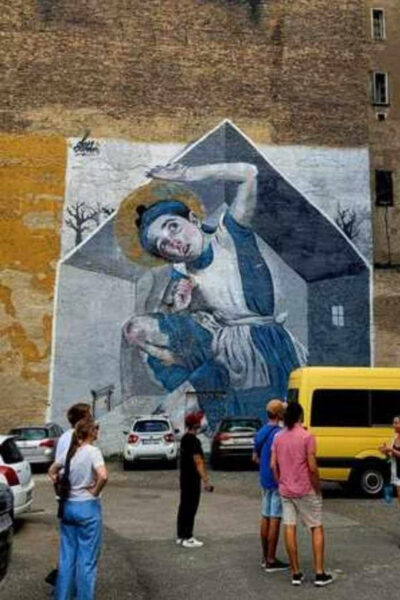 ★ 4.8Alternative Street Art & Jewish TourFrom $2349 reviews
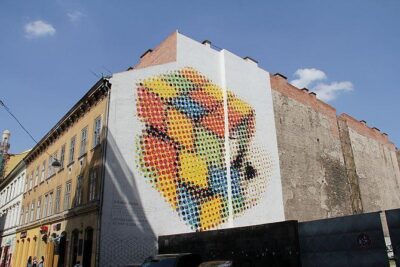 ★ 5.0Street Art Tour BudapestFrom $5340 reviews
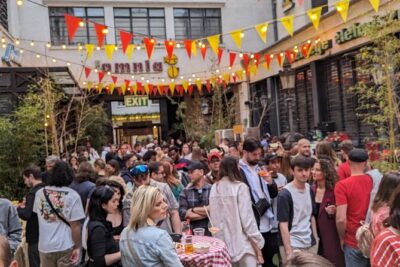 ★ 5.0Budapest Vibe: Ruin Bars, Street Art and Culture TourFrom $6014 reviews
 ★ 4.8Street Art TourFrom $536 reviews
 ★ 5.0Budapest Urban Art – Private Street Art Tour with a Drink in a Ruin BarFrom $1184 reviews
Browse the lists this tour appears in