
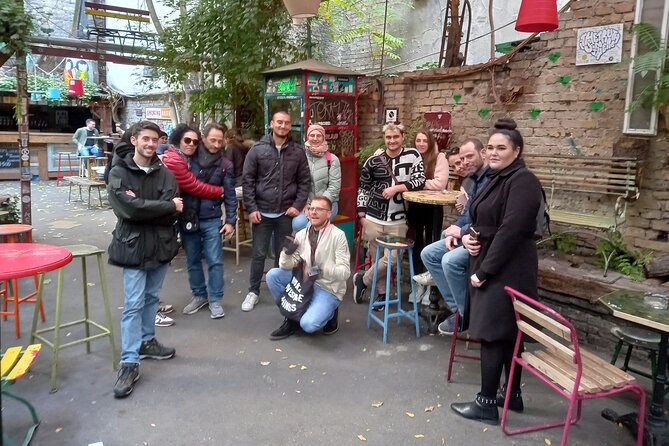
Tour review · STREET ART
Street Art and Alternative Tour in Budapest
Street art turns Budapest into a living map. On this alternative Budapest street art walk in District VII, you get a slow, on-foot route and learn what the walls are really saying, from murals to stickers and more. It is the kind of tour that changes how you look at a city, not just how you remember it.
Two things I like a lot. First, the group stays small, capped at eight travelers, so you actually get time for questions. Second, the guide uses the artwork as a doorway into the local story, including the political and cultural angles that shape what gets painted and posted.
One consideration: this is a walking tour. Expect about 2 hours on foot through thinner streets, so plan comfortable shoes and an energy level for steady strolling.
Quick hits before you go
- Small group, big interaction: maximum eight travelers.
- Meaning-first street art: you focus on what murals and stickers communicate, not just how they look.
- District VII on local streets: a slow walk designed so you do not feel lost.
- Art plus real context: the tour connects street art to local history and changing neighborhood life.
- Easy start and finish: meet at Telep-Art Galéria Budapest and end at Szimpla Kert.
More Budapest ideas for the space still left in the itinerary
- Budapest: Street Art and Underground Movements Walking Tour★ 5.0 · 238 reviews
- Alternative Street Art Free Walking Tour of Budapest★ 4.5 · 53 reviews
- Budapest: Alternative Street Art & Jewish Tour★ 4.8 · 49 reviews
- Street Art Tour Budapest★ 5.0 · 40 reviews
Telep-Art Galéria to Szimpla Kert, a practical 2-hour route
This tour is built for a simple rhythm: start at Telep-Art Galéria Budapest, then walk your way through District VII and finish at Szimpla Kert, one of Budapest’s famous ruin bars. That end point is handy because it gives you a clear “done for today” marker that is easy to spot, even if you stop for photos on the way.
The tour runs about 2 hours and is offered in English, with a mobile ticket included. You also get confirmation at the time of booking, so you can travel with less guesswork. It is also described as being near public transportation, which matters if you want to stitch this into a busy day.
One detail that really helps: the guide is known for giving clear meetup directions. That might sound small, but in a city where streets can look similar block to block, it is the difference between a smooth start and a frustrating hunt for the group.
Walking slowly in District VII, your eyes will learn the trick
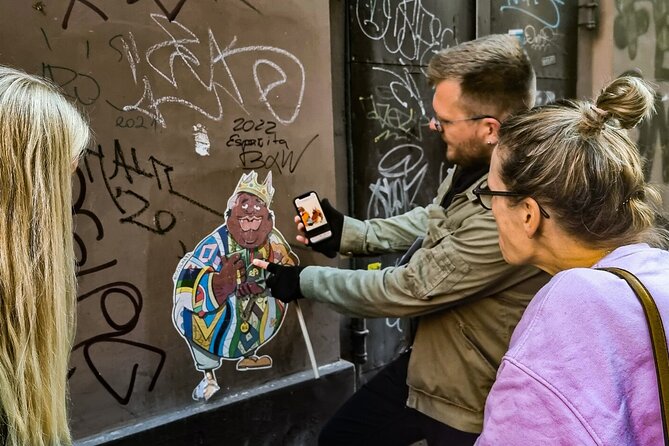
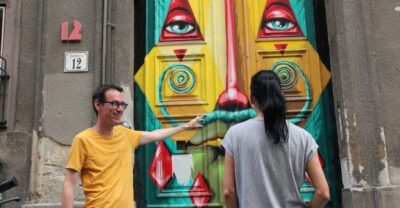
This is not a quick “point and go” tour. You walk slowly on thin streets while the guide shows you many examples of street art up close. That pacing is exactly how you catch what matters, because street art often hides in plain sight. You need a second look, and you need time to ask why it is there.
District VII is the setting, and that is part of the appeal. You are moving through a more local-feeling slice of Budapest rather than aiming only for the postcard streets. The guide helps you interpret what you see while you are still in the neighborhood, so you start making sense of the visual language as you go.
Also, since the group is capped at eight, the tour tends to stay interactive. That matters because street art is personal. Some pieces are political, some are social, some are playful. With a smaller group, you can ask questions and the guide can respond without feeling rushed.
And yes, there is a lot of walking. Even if you are not a “long walk” person, you can still enjoy it if you treat it like a slow conversation with the city.
Meaning behind the murals, how the messages get explained
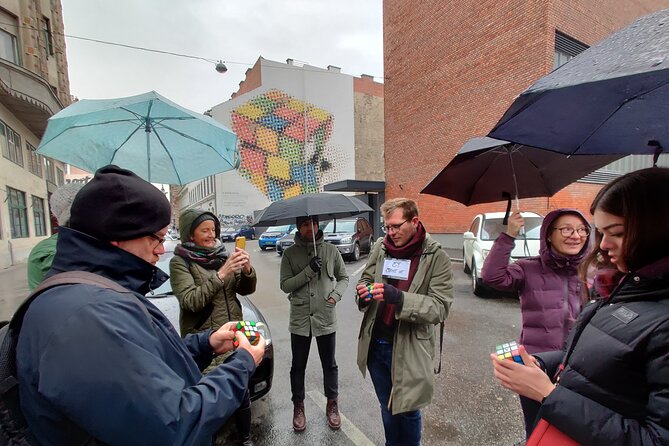
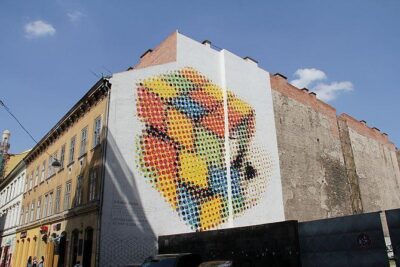
The core of this experience is what the artwork means. You are not just looking at pretty walls. You learn the meaning behind local murals and other street pieces, and you understand how artists express ideas that do not always fit neatly into mainstream spaces.
From the way the tour is described, the focus often lands on messaging, including political viewpoints and social commentary. One review specifically called out how District VII and political events shaped the artists’ ability to express themselves through different media. That is a big deal for first-time visitors, because you may otherwise assume street art is only decoration, not a public bulletin board of ideas.
A helpful pattern you will notice on the walk is that the guide talks about what the work is saying, then connects it to what is happening around it. That is how you stop seeing street art as random and start seeing it as communication.
One more thing I like in the reviews: the guide encourages an open, non-black-and-white way of looking at the city. Street art here is not presented as one simple moral lesson. It is shown as part of ongoing debate, shifting neighborhoods, and different voices pushing back, joking around, or documenting life.
The street art formats you should expect to spot
Street art is not one thing in Budapest. The tour is designed to show variety, and you will likely see a mix of formats as you walk. Based on the descriptions, you might encounter:
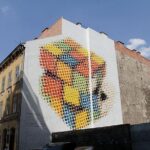
- Murals and large wall paintings, where the message can feel bold and cinematic.
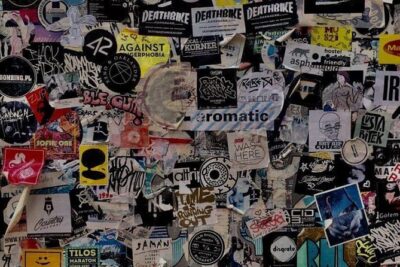
- Stickers, often small but loaded with meaning once you learn what to look for.
- Smart-Art images, which can feel more graphic or design-driven.
- Bronze sculptures, which add a more physical, artwork-like presence rather than only wall-based pieces.
The point is not to memorize the categories. The point is to train your eyes. Different formats shout differently. A sticker can be quick and sharp. A mural can carry a longer argument. A sculptural piece changes your relationship to the street, because it stands there like a public object, not just a quick message.
If you want a tour where you leave staring at corners with curiosity, this kind of variety is exactly why it works.
- Budapest: City Highlights Cruise with Welcome Drink
★ 4.6 · 35,610 reviews - Budapest: Unlimited Prosecco, Beer and Aperol Spritz Cruise
★ 4.8 · 25,310 reviews - Budapest: Széchenyi Spa Day Ticket with Optional Upgrades
★ 4.3 · 23,911 reviews - Budapest: Nighttime or Daytime Sightseeing Cruise
★ 4.2 · 21,062 reviews - Budapest: 1-Hour Evening Sightseeing Cruise with Drink
★ 4.5 · 8,330 reviews
Meeting E.T., the guide who links walls to the bigger story
This tour is led by ET. In the reviews, people keep returning to his enthusiasm and passion for street art, plus the way he answers questions. That combination matters, because street art can raise questions fast. Why this symbol? Why this style? Why now?
ET is also described as connecting street art to context, including history of the area and how it is starting to change. That is especially useful in District VII, where you can feel layers of old and new life happening at the same time. When the guide ties the visuals to that backdrop, you get a better sense of why certain messages show up in certain places.
There is also an important practical detail: the tour may vary. One review noted that weekdays were not as well attended, and the guide tailors the walk to the audience. Another mentioned that the tour varies each time, which is great if you end up loving it and coming back later in your trip.
So you are not just buying a fixed slideshow. You are buying a guided walk shaped by the people in the group and by what questions they bring.
Where Szimpla Kert fits, ending with an easy restart point
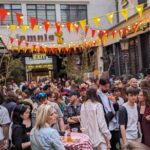
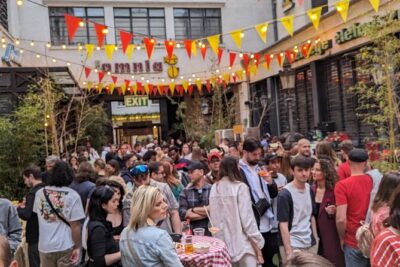
The tour ends at Szimpla Kert, listed as the oldest ruin bar in Budapest and a city symbol. Even if you do not plan anything fancy right after, it is a smart ending point because it is recognizable and central enough to reorient yourself quickly.
A lot of walking tours end wherever the guide happens to finish. Here, you get a well-known place. That makes the end feel clean and gives you a simple next move, whether that is meeting friends, grabbing a casual bite nearby, or just continuing exploring without needing another mini-navigation mission.
In other words: the finish point is not just a stop. It is a travel convenience.
Price and value, what $36.20 buys you
The price is $36.20 per person for about two hours. On paper, that can look like a straightforward guided walk. But the value is in the structure.
You are paying for a niche focus: street art meaning in District VII, not generic sightseeing. You are also paying for small group sizing (eight max), which supports back-and-forth conversation. And you are paying for a guide who keeps the discussion interactive, including answering questions and sharing resources.
If you are the type who likes to understand a neighborhood rather than just photograph it, you will feel like the price is fair. If your main goal is ticking off famous sights, you might feel less satisfied, because the tour is intentionally alternative and message-driven.
One more angle: since this tour is booked on average 25 days in advance, it is clearly something people seek out when they want a different Budapest experience. That usually signals steady demand for the guide and the topic.
Who should book this Budapest street art tour
This is a great match if you want Budapest from a different angle. In the reviews, people explicitly mention it for families, for creative types, and for those interested in politics and the way art expresses critical viewpoints.
It is also a solid first-day activity if you like the idea of training your eyes immediately. One review called it a perfect first day in Budapest because it helped them learn about art and culture while also getting comfortable with the city through conversation and walking.
I would especially recommend it if you:
- Want to explore District VII without feeling like you are wandering blindly
- Like street art that has opinions, not just aesthetics
- Enjoy a guided experience where you can ask questions and compare your interpretations with others
Skip it if you are only here for classic monuments and tight museum schedules. This tour is about the street, the messages, and the neighborhood tone. It is not trying to replace a museum day.
Should you book this alternative street art walk?
Yes, if you want your Budapest trip to include something personal and local. The combination of small group size, a meaning-focused guide, and a slow-paced walk through District VII is exactly what makes this feel more like a conversation than a sightseeing checklist.
Book it if you know you will look at walls anyway, because this turns that habit into an experience with context. And if you are curious about how art connects to politics, community, and change, you are going to have a good time.
If you hate walking, or you only want big-ticket landmarks, then this might not be your best fit. But if you can handle two hours on foot and you want to see Budapest through its street-level voice, this tour is an easy yes.
FAQ
How long is the street art tour in Budapest?
The tour lasts about 2 hours.
Where does the tour start and end?
You start at Telep-Art Galéria Budapest, Madách Imre út 8, 1075 Hungary, and you end at Szimpla Kert, Kazinczy u. 14, 1075 Hungary.
Is the tour offered in English?
Yes, the tour is offered in English.
How many people are in the group?
The tour has a maximum of eight travelers.
Do you allow service animals?
Yes, service animals are allowed.
What is the cancellation policy for a full refund?
You can cancel up to 24 hours in advance for a full refund. Cut-off times are based on the local time of the experience. If you cancel less than 24 hours before the start time, the amount paid will not be refunded.
More Street Art in Budapest



More Tours in Budapest






More Tour Reviews in Budapest






Recently added around Budapest



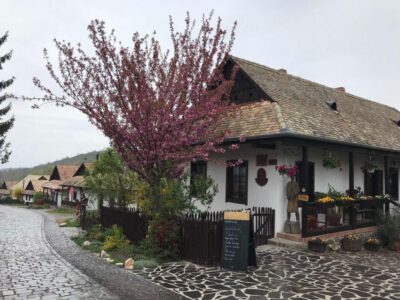
Street Art, compared.
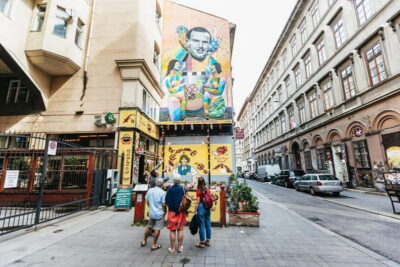 ★ 5.0Street Art and Underground Movements Walking TourFrom $27238 reviews
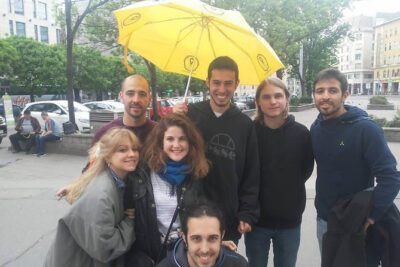 ★ 4.5Alternative Street Art Free Walking Tour of BudapestFrom $353 reviews
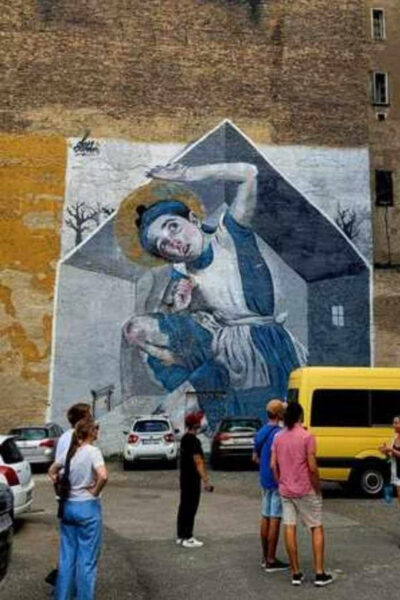 ★ 4.8Alternative Street Art & Jewish TourFrom $2349 reviews
 ★ 5.0Street Art Tour BudapestFrom $5340 reviews
 ★ 5.0Budapest Vibe: Ruin Bars, Street Art and Culture TourFrom $6014 reviews
 ★ 4.5Original Budapest Alternative Street Art & Jewish TourFrom $2514 reviews
 ★ 4.8Street Art TourFrom $536 reviews
 ★ 5.0Budapest Urban Art – Private Street Art Tour with a Drink in a Ruin BarFrom $1184 reviews
Browse the lists this tour appears in