
Tour review · BUDAPEST WALKING TOURS
Communist Budapest Walking Tour
Budapest has layers, and this walk reads them fast. You’ll connect the dots between the 1956 uprising, the Soviet shadow, and everyday propaganda you can still see today, all in about three hours.
Two things I really like: the format is small-group and paced for real questions, and you visit major Cold War landmarks without feeling rushed through photo stops. One caution: this is history-forward, so if you mainly want sightseeing without context, you may find it heavy.
Key highlights before you go
- Small group, big context: a max of eight people, designed to stay intimate (often six).
- Historian-led, discussion-style: guides like András and Kata are noted for answering questions with real depth.
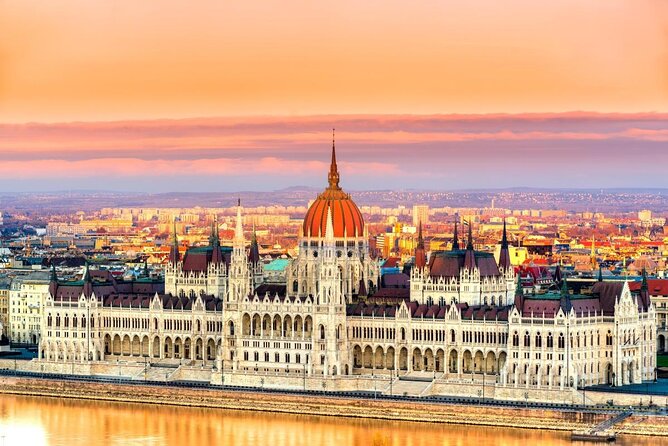
- Iconic Cold War stops outside the usual postcard loop: Parliament, Liberty Square, and the Soviet story in between.
- A smart ending point: you finish just outside the House of Terror, ready to go inside on your own if you want.
- Plenty of free viewing: most stops listed are free to stand and look around.
- Choose morning or afternoon: helpful if you’re juggling thermal baths or the Danube later.
Budapest on foot, with a few more routes to compare
- Big Bus Budapest Hop-On Hop-Off Bus and Walking Tour★ 3.5 · 2,206 reviews
- Budapest: Buda Castle District Walking Tour★ 4.6 · 2,108 reviews
- Budapest City Landmarks Walking Tour in 2 Hours★ 5.0 · 2,048 reviews
- 3-Hour Orientation Walking Tour of Buda and Pest★ 4.8 · 1,834 reviews
Why this Communist Budapest route works on foot
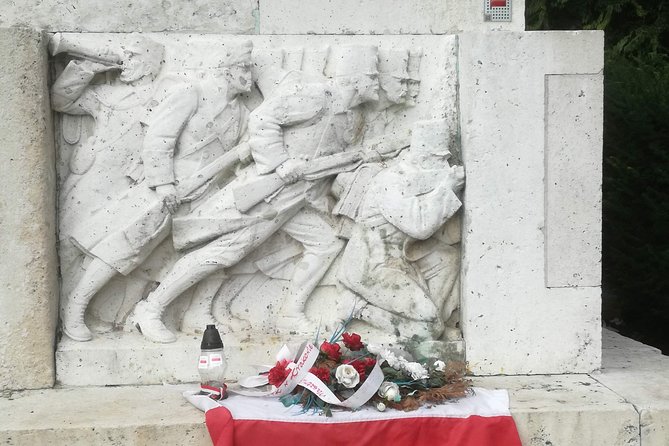
Walking this part of Budapest is the point. The communist and Cold War story here is not abstract. It’s written into squares, embassies, monuments, and the way public space was used to shape beliefs.
This tour is built for understanding, not just ticking off sights. You start at Kossuth Square in front of the Parliament area, then you move through the Cold War geography of Liberty Square and nearby points, finishing at the House of Terror zone. Along the way, you’ll get explanations for what you’re seeing and why it mattered.
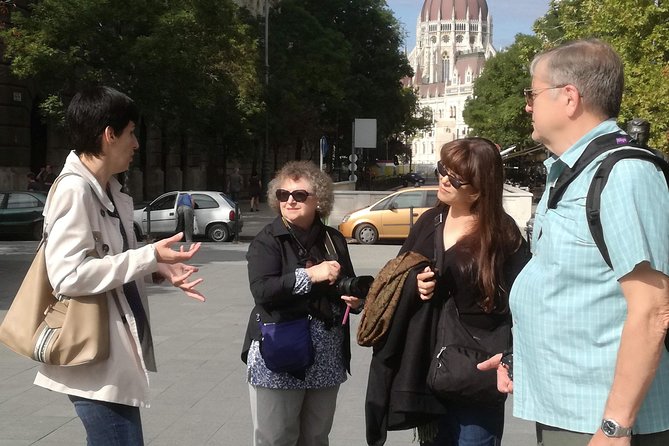
The group size is what makes it work. In a larger crowd, you’d just follow and snap photos. In this one, you get time to ask questions and listen to the story behind the stone.
The historian guide, and the small-group pacing
The tour runs about three hours with a historian guiding the walk. That matters because communist-era Budapest can look like “just buildings” unless someone gives you the map in your head.
You’ll also feel the difference in group size. The stated maximum is eight people, with the experience designed to be limited to six. Either way, you’ll have enough room to hear clearly, and the guide can keep the pace reasonable while still covering major ground.
Language is English, and you’ll have a mobile ticket. If you’re visiting from abroad, that’s a simple win for reducing friction.
Two practical tips based on what’s been praised: wear good walking shoes, and bring water. This is not a sit-and-stare tour. You will be on your feet for the full experience.
From Parliament to Liberty Square: 1956 and the Cold War on the same map
The first stretch is the strongest “framework” for the whole trip. You travel by subway to Kossuth Square in front of the Parliament, then begin with the visual signals of Hungary’s 1956 revolution. This is where the story turns from general postwar politics into something local, urgent, and close to home.
What makes this stop special is that you are not just looking at the Parliament building. You’re exploring the 1956 revolution monuments in the area, then continuing toward Liberty Square to connect those events to the Cold War power struggle that followed.
From there, the guide brings you into the Cold War scene around Liberty Square. You’ll discuss elements of the Cold War before the US Embassy, then move past major symbols in the square area, including:
- the monument to the Soviet Army
- the statue of Ronald Reagan
- an atomic shelter reference point
Even if you already know the headline facts of East-West tensions, this part helps you see how those tensions showed up in public space. It’s also where many guides steer you toward the “why” behind the monuments. You’ll stop long enough to actually process each one, not just glance and move on.
Most of this viewing is free to do on your own, which keeps your costs focused on the guide and structure rather than admissions.
House of Terror Museum: the perfect outside-the-walls endpoint
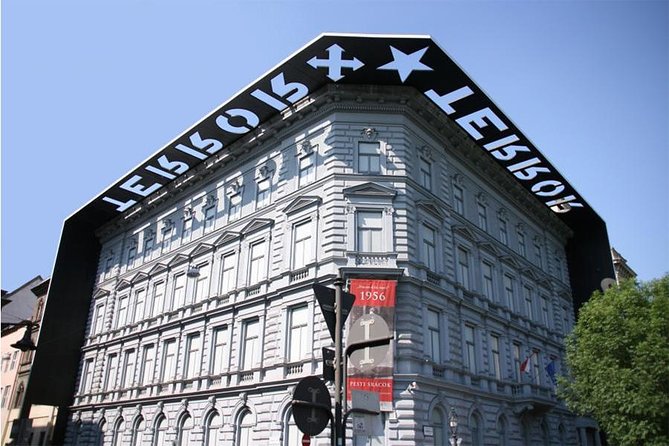
The House of Terror stop is only 15 minutes, and that’s important to understand before you go in expecting a full museum experience. You’ll conclude outside the House of Terror Museum, in the former headquarters of the communist secret services.
There’s a meaningful visual detail right out front, too: a slab of the Berlin Wall in front of the building. That’s the kind of “you can see it instantly” link that helps the Cold War feel real, even before you step inside.
Here’s the balancing truth: the exhibit inside the museum is not included in the tour. You will not get the museum guidance as part of this walk. But ending outside is still a smart choice, because you can decide on the spot if you want to go further.
If you are the kind of traveler who learns best by reading and seeing artifacts, you’ll probably want to add the museum visit later. If you prefer your time split between street-level context and one deeper museum, finishing here gives you flexibility.
More of Budapest behind the Iron Curtain
- Budapest: Communist History Tour with House of Terror Option
★ 4.8 · 182 reviews - Communism in Hungary with a Historian
★ 5.0 · 70 reviews - Budapest: 3-Hour Walking Tour About Communism (Small Group)
★ 4.7 · 70 reviews - Budapest Hammer & Sickle Communist Times Tour
★ 4.5 · 68 reviews - Lives of Hungarians Under Communist and Capitalist system
★ 5.0 · 59 reviews
Puskas Ferenc Stadium: socialist realism you can still see
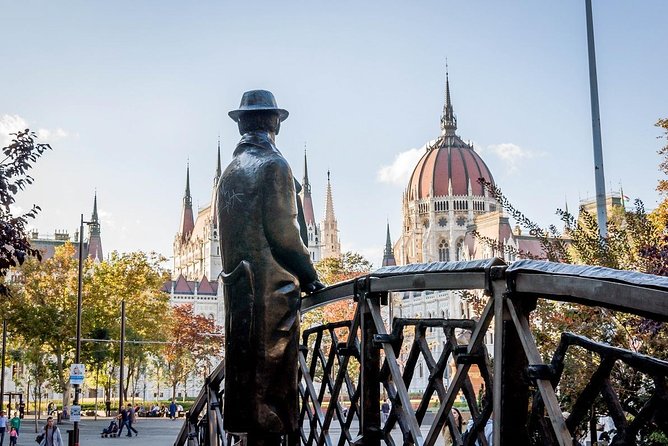
Next you’ll drop by the former People’s Stadium, which is now Puskas Soccer Stadium. The key idea here is propaganda you can spot without special access. Classic socialist realist statues still standing give you a “living textbook” of how the regime wanted people to view ideals and authority.
This stop also works well for mixed interests. Even if you are not a hardcore history person, you’ll recognize the visual language of political art: it’s built to project strength and certainty. The guide helps translate those stylistic choices into what they were meant to communicate.
The time is about 20 minutes, so you’ll get a clear look and explanation without it turning into a long detour. And as listed, there’s no admission ticket required for the viewing.
Ronald Reagan statue: why the Cold War story includes this face
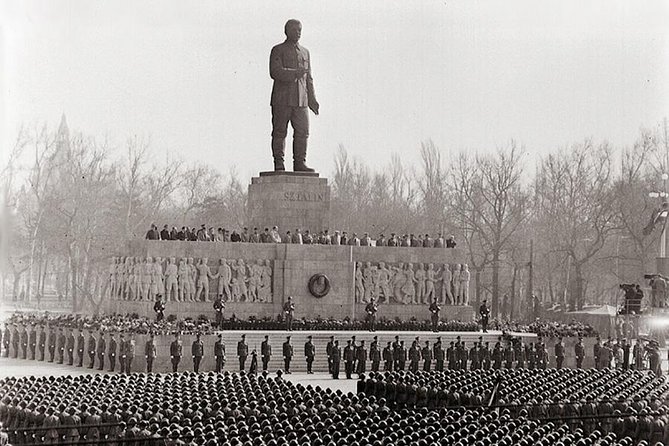
Yes, there’s a Ronald Reagan statue in the route, and it’s not just a random pop culture stop. The tour frames it as part of the Hungarian sense of obligation to US President Reagan for his efforts to bring down the Iron Curtain.
That point may sound simple, but the value here is in how the guide connects it to the broader story you’ve been building since Kossuth Square. You’re seeing how Hungary, coming out of communist rule, also had to narrate international roles in its transition.
You’ll spend about 10 minutes at this point for explanation and viewing. It’s short, but it pays off if you’ve been paying attention to how symbols and public memory work in this city.
Bem József Square and Kossuth Lajos Square: the 1956 spark
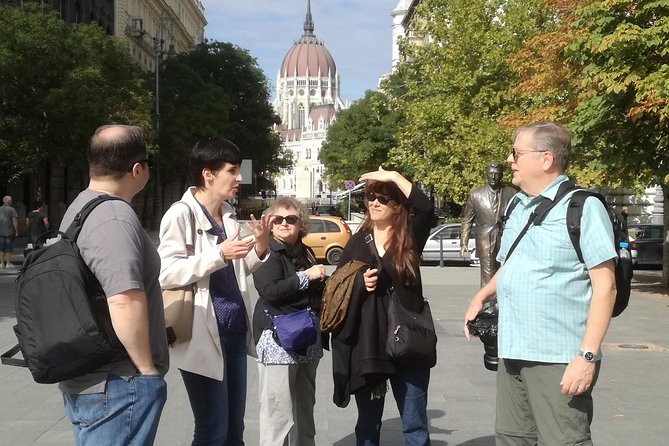
The final “story anchor” stop focuses on Bem József Square, tied to the first big demonstration of the 1956 uprising. This matters because it shifts you from the broader Cold War rivalry to the moment that sparked resistance in Hungary.
This is also where your guide likely helps you understand the uprising as more than a date in a textbook. You’ll look at the public space where action began, then you’ll see how that kind of energy gets remembered and reenacted through monuments and place names.
One especially memorable detail here: there’s a coffeehouse on the square that has retained its original interior from the 1960s. That kind of survival makes history feel less like a closed chapter and more like something that stayed in the city’s bones.
Plan on about 25 minutes here. Again, most of this is free to access for viewing, which keeps the trip good value.
Price and value: what you’re actually paying for
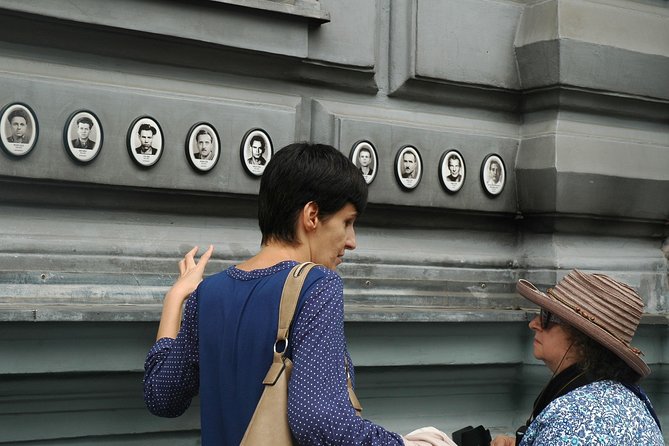
At $126.50 per person for about three hours, you’re paying for two main things: a structured route and a historian-led walkthrough that turns sights into meaning.
If you were doing this on your own, you could certainly reach many of these squares and outdoor monuments. But you’d likely miss the connective tissue: why each site was chosen, what each symbol was designed to communicate, and how the Cold War story unfolded in Hungary’s own public spaces.
What’s included is the guided walk with a historian. What’s not included is the museum exhibit inside the House of Terror and any transportation costs. Your guide can help you purchase Budapest tram and Metro tickets if you don’t already have a visitor pass, which is a practical inclusion because Budapest transit can be confusing on your first day.
You also get a mobile ticket, and the tour is offered in English with a choice of morning or afternoon departure. Group discounts are mentioned as well, which can help if you’re traveling with someone.
A small but useful planning note: this tour tends to get booked around 27 days in advance on average. If your dates are fixed, I’d reserve early so you get the departure time you want.
How to time your day in Budapest around this walk
Since the tour lasts about three hours, you can treat it as a smart “morning brain” or “afternoon clarity” activity.
Morning works if you want to build context before you start wandering on your own. After the walk, you’ll read the city differently because you’ve already learned what the monuments are “saying.”
Afternoon works if you’ve already gotten oriented to Budapest. By then, you can zoom in on details like statues and square layouts because you understand the political story they connect to.
Either way, wear comfortable footwear. Even with careful pacing, you’re walking between major points and standing to view monuments while the guide explains what they mean.
What to bring (and what to expect on the ground)
Keep it simple:
- Good walking shoes
- Water
- Your phone for the mobile ticket
If you have a visitor pass for transit, bring it. If you don’t, the guide can help you buy tram and Metro tickets. That support reduces stress, especially if you are trying to make your first transit connections.
Also, mentally prep for a history-heavy experience. One of the strongest points from the reviews is that people felt they understood how life under communism could feel, not just what happened politically. That shift takes focus and listening.
If you want pure sightseeing or photo ops with minimal story, you might prefer a lighter route. But if you want your Budapest day to make sense, this walk is built for that.
Who should book this tour, and who should skip it
I’d book this if you want to understand Budapest beyond postcards. It’s ideal for first-timers who want a fast, guided way to connect 1956, the Soviet presence, and the Cold War landscape.
It’s also a great fit if you like asking questions. The guides named in feedback, such as András and Kata, are praised for depth and for having answers that go beyond surface-level talking points. If you enjoy conversation, this tour will feel like a guided seminar on the street.
I’d be more cautious if your goal is mostly casual sightseeing. This is not just wandering around for views. It’s a structured explanation of communist Hungary and Cold War-era symbolism, and that takes mental energy.
Should you book this Communist Budapest Walking Tour?
Yes, if you want a compact, historian-led route that helps you actually read the city’s political symbols. The small-group size, the discussion style, and the smart ending outside the House of Terror make it a strong value for $126.50, especially when you realize how much context you get for the outdoor sights alone.
I’d skip it only if you want light, skip-the-details sightseeing. Otherwise, this is one of those Budapest experiences that makes later wandering easier, because you’ll have a clearer framework for what you are looking at.
FAQ
How long is the Communist Budapest walking tour?
It runs about 3 hours.
What is the price per person?
The price is $126.50 per person.
Is the tour guided, and by what kind of guide?
Yes. The tour includes a 3-hour guided walk with a historian.
How many people are in the group?
The tour is limited to six people, and it has a stated maximum of eight travelers.
What language is the tour offered in?
It is offered in English.
Are there morning and afternoon departures?
Yes, you can choose either a morning or an afternoon departure.
What are the main stops during the walk?
Key locations include the Parliament area, Liberty Square, the House of Terror outside, the former People’s Stadium (Puskas Soccer Stadium), a Ronald Reagan statue stop, and Bem József Square.
Is the House of Terror Museum included inside the ticket?
No. The tour ends outside the House of Terror Museum, and the exhibit inside is not included.
Is admission required for the tour stops?
Some stops are listed as admission ticket free. The House of Terror Museum is listed as not included for admission, since the tour focuses on being outside.
Do I need tram and Metro tickets?
The guide can help you purchase Budapest tram and Metro tickets if you do not already have a visitor pass.
More Communist-Era Budapest



Keep Walking Budapest



More Tour Reviews in Budapest





Recently added around Budapest



Budapest Walking Tours, compared.
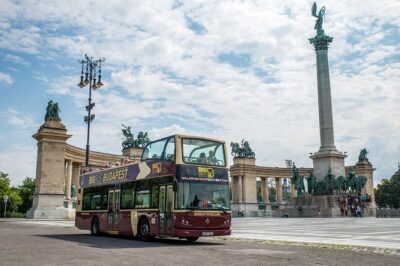 ★ 3.5Big Bus Budapest Hop-On Hop-Off Bus and Walking TourFrom $422,206 reviews
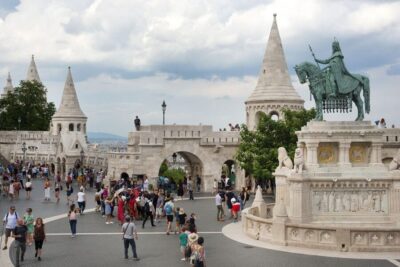 ★ 4.6Buda Castle District Walking TourFrom $142,108 reviews
 ★ 5.0Budapest City Landmarks Walking Tour in 2 HoursFrom $32,048 reviews
 ★ 4.83-Hour Orientation Walking Tour of Buda and PestFrom $411,834 reviews
 ★ 5.0Budapest Historical Sightseeing – Free Walking TourFrom $31,302 reviews
 ★ 5.0Budapest All in One Small Group Walking Tour with Strudel StopFrom $1001,277 reviews
 ★ 4.9Buda Castle District Walking Tour with a HistorianFrom $63867 reviews
 ★ 4.9BloodThirsty Hungary: Walking tour & Dark Historical StoriesFrom $21633 reviews
Browse the lists this tour appears in