
Tour review · BUDAPEST COMMUNIST HISTORY TOURS
Private Budapest Hammer & Sickle Communist Times Tour
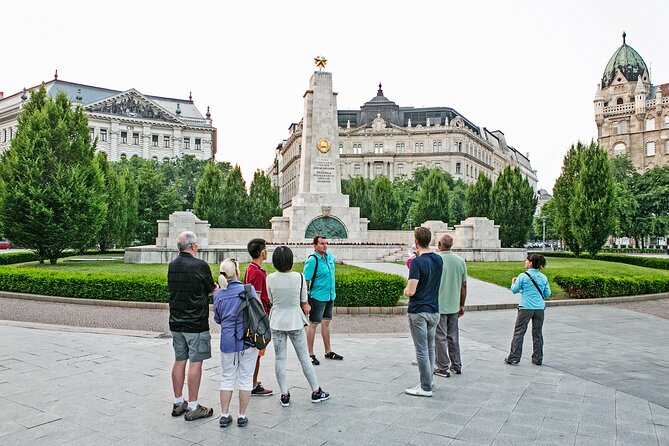
Big history, grim streets, and clear answers. This is a focused small-group walk built around Prague’s Nazi and communist-era sites, with the tour name hinting Budapest while the stops are unmistakably Prague. You’re guided by a licensed English speaker and led through the moments that shaped modern Czech life.
Two things I really like: first, the route connects big headlines to real street corners, so it feels personal instead of textbook. Second, the group size stays limited, which means you can actually ask questions and get real context, not just a headset lecture.
One drawback to plan for: it is heavy on walking. The tour includes about two hours of continuous walking on high curbs, stairs, and potentially slippery surfaces, so it is not a great fit if you have limited mobility or expect long quiet breaks.
Key points before you go
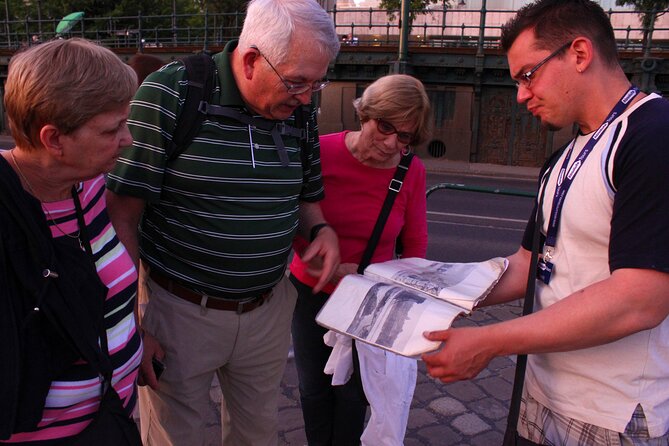
- You get a tight 15-person limit, which usually keeps the experience grounded and conversational.
- National Avenue to Wenceslas Square to Republic Square gives you a strong timeline of occupation, resistance, and resistance again.
- The guide’s delivery matters here, and several guide names associated with the tour include Honza, Jan, Martina, Martin, Yonas, Mike, and Mikel.
- The stops are not just pretty squares. You also visit places tied to prisons, secret police, the SS, and the KGB.
- Weather does not stop the walk, so dress for cold or damp conditions if you travel in shoulder season.
- Stairs and curbs are part of the deal, especially in the old-city sections.
More of Budapest behind the Iron Curtain
- Budapest: Communist History Tour with House of Terror Option★ 4.8 · 182 reviews
- Communism in Hungary with a Historian★ 5.0 · 70 reviews
- Budapest: 3-Hour Walking Tour About Communism (Small Group)★ 4.7 · 70 reviews
- Lives of Hungarians Under Communist and Capitalist system★ 5.0 · 59 reviews
Budapest or Prague? Double-check the actual stops
Let’s address the odd naming right away. The experience is labeled as a Budapest Hammer & Sickle Communist Times Tour, but the details provided point to Prague: you meet in central Prague, you visit Wenceslas Square, and the tour ends around Letna Park by the Vltava River.
So before you go, sanity-check that your booked day matches the Prague route. If the confirmation or pickup details mention the central Prague meeting point and the specific squares, you are set. If not, message the operator so there is no scramble when you arrive.
Why this walking route is so effective for 20th-century history
This tour works because it treats history like a walkable map. Instead of bouncing between unrelated museums, you move through the places where people protested, negotiated survival, hid information, or tried to push back against occupiers.
You also get a good sense of how regimes left physical fingerprints. Some stops are symbolic squares, others are tied to secret police work and propaganda power, and the ending gives you a visual reminder of how communist states used huge public projects.
That mix is what makes it worth doing early in a trip, when you still want your bearings. It turns the city into a timeline you can feel.
Bartolomejska Street prison: the start with a hard truth
You begin near Bartolomejska Street, where the story leads to a former WWII prison used by secret police and reportedly linked to torture. It is an intense opening, and the point is not shock value. It sets the tone for how coercion shaped daily life and how fear could be engineered.
From there, the walk transitions toward bigger thoroughfares and public spaces. The contrast is useful. You see how the same system that used underground pressure also built the kind of public order you could spot on major streets.
Practical note: this start is part of what makes the tour feel grounded, but also expect your legs to be awake from the first stretch.
National Avenue protests: from 1939 Nazis to 1989 Soviet rule
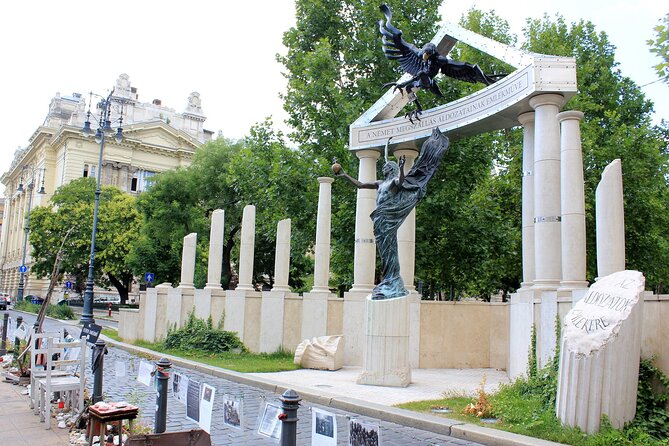
Next up is National Avenue, a grand street that literally divides old and new parts of the city. Here, the guide connects student protest movements across decades, first against the occupying Nazis in 1939 and later against Soviet rule in 1989.
This stop is great for history buffs because you see the repetition of tactics and the shift in stakes. The idea is the same, but the power structure changes, and that changes the risks people took.
Also, because you are walking a long avenue, it is easier to understand sightlines and geography. You can picture why crowds gathered where they did, and how a major corridor becomes a stage for dissent.
Other Budapest days with the guide to yourself
- Budapest Essentials Private Tour Highlights and Hidden Gems
★ 5.0 · 861 reviews - Private Budapest City tour with Classic Russian Jeep or G-Wagon!
★ 5.0 · 386 reviews - Private city tour by van
★ 5.0 · 273 reviews - Budapest: Private City Tour with a Vintage Russian Jeep
★ 4.9 · 246 reviews - Budapest Private City Tour With a Vintage Russian Jeep
★ 5.0 · 198 reviews
Wenceslas Square and the Prague Spring, 1968 to 1969
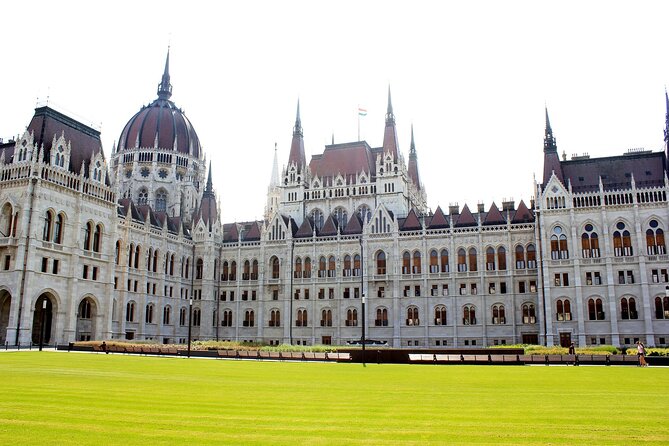
Then you reach Wenceslas Square, one of the most famous public spaces in the country. This is framed as the historical focal point of Czech struggle against foreign occupation, which means it is not treated as just a landmark for photos.
The guide asks you to imagine the square during the Prague Spring in 1968 and the early months of 1969, when Soviet tanks rolled in to crush that liberalization effort. That timing matters, because it helps you understand why the 1989 revolution did not come from nowhere.
If you have seen posters or documentaries about this era, this is where it clicks. The square becomes the physical setting for the moment when reform met force.
Republic Square: 1918 independence, WWII resistance, and the 1948 shift

At Republic Square, the story starts with the proclamation of an independent Czechoslovakia in 1918. From there, the focus moves into WWII, when secret broadcast stations tied to resistance efforts helped set the stage for the 1945 Prague Uprising.
Then comes the part many people find quietly unsettling: the struggles end, and a few years later the square becomes home to the Communist Party. You get that ironic twist right on site, which makes it harder to gloss over the messy reality of political power transitions.
This is one of the stops where a good guide really earns their fee. The best ones pace it so you understand causality, not just dates.
Old Town highlights: Gottwald’s balcony and Einstein’s Prague
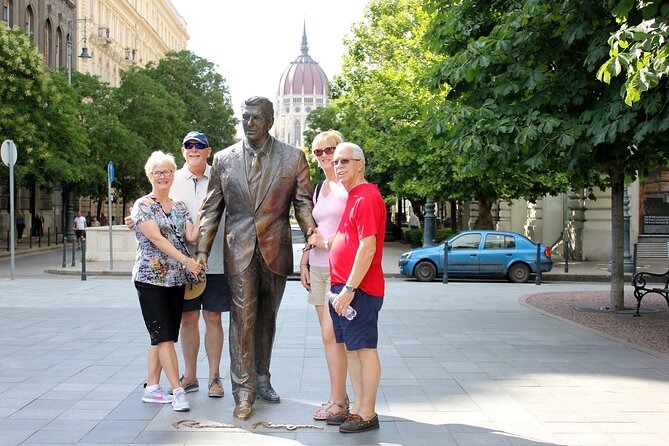
As you wander into the Old Town, you hit several anchors that make the communist takeover feel real.
One major stop is the balcony connection tied to Klement Gottwald, where he declared the takeover of the Czech government in 1948. It is a small architectural detail with big consequences, and the guide uses it to explain how public ceremonies and government messaging worked.
You also see the spot where Albert Einstein lived during his work at Charles University. The guide ties his theories to the path that led toward the atom bomb. That is a heavy connection, and it can feel like a left turn if you expect only political street history. Still, it belongs, because the 20th century is not just about borders. It is also about how ideas and scientific power changed the world.
Old Jewish Cemetery and the SS and KGB footprints
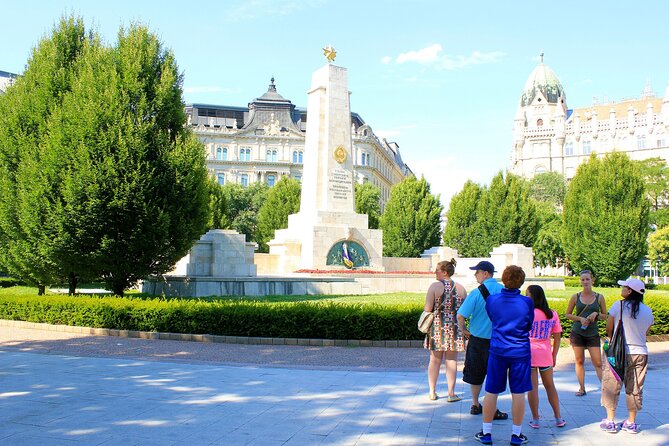
You then move through the area near the Old Jewish Cemetery and other landmarks tied to the Nazi SS and the communist-era KGB.
This is where the tour’s value becomes very personal, even when it stays factual. You are not only hearing about policies. You are looking at the physical surroundings where power operated, including institutions associated with surveillance and control.
If you care about the human scale of these systems, you will likely appreciate how the guide connects location to function. A building becomes more than brick and stone.
One caution: with a topic this weighty, you might want to pace your attention and take short mental breaks. The walk is continuous for a while, and the content is intense.
Letna Park finish: Stalin’s statue, 1955 to 1962
The final segment ends around Letna Park on the Vltava River. The waterfront walk is a nice change of pace because it gives you room to breathe and think, while the guide keeps the story locked to the politics.
Here you hear about the world’s largest statue of Stalin, built in 1955 and destroyed in 1962. That detail carries a strong message: regimes do not only rewrite laws. They also rewrite what a city chooses to celebrate in plain sight.
Finishing here works well because it leaves you with an image you can point to later, even after you forget a date.
Tour pace, group size, and how the guide adapts
This is a 3-hour (approx.) tour in practice, but you should plan around closer to 3.5 hours of walking and storytelling. The duration matters because you are outdoors for a lot of the experience.
The good news is the limit of up to 15 people. That small size is why so many people praise the guide. With fewer people, you can get answers when questions pop up, and you can steer emphasis toward what you care about most.
There can also be flexibility in flow. Some guides tailor to what you want to focus on, including Cold War era emphasis versus moving strictly issue by issue. The downside is that the order might not feel perfectly chronological to everyone, depending on how the guide handles storytelling.
For me, that is a reason to arrive with at least one personal focus question ready. You will likely get a better experience from the guide if you ask something specific like how occupation propaganda worked, or how protest movements differed between the 1939 and 1989 moments.
Price and value: $133.67 per person for a private walk
At $133.67 per person for a private experience, you are paying for more than route coverage. You’re paying for a licensed guide, a tight small group, and a walkthrough that connects multiple eras without requiring you to manage transport between sites.
That value is strongest if you fit this profile:
- you like dark, real-world history
- you want context, not just dates
- you prefer fewer people and more back-and-forth questions
It is less of a bargain if you want a light sightseeing day, or if you prefer self-guided museum time. Since it is a walking tour with continuous movement, it does not give you the option to wander slowly on your own unless you budget extra time.
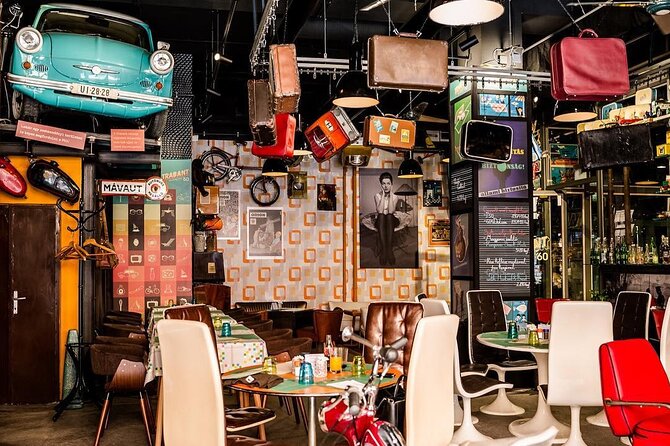
Also, there is a refreshment stop with a beverage, which helps, but you should still expect it to feel like a real walking tour, not a comfortable stroll with long breaks.
What to wear and bring for the Prague streets
Because this walk includes high curbs, stairs, and slippery surfaces, your shoe choice matters more than usual. Wear grippy shoes you trust. If the weather turns damp, you will feel it.
Dress for all-weather operation. The tour runs in all weather, so bring a rain layer if you travel in seasons where Prague can surprise you.
For comfort, I would also bring a small bottle of water if you tend to get thirsty on long walks. The included beverage at the refreshment stop helps, but you still want your own hydration rhythm.
Finally, if English comprehension is important to you, note that guides are English-speaking, but the ability to follow closely can vary from guide to guide. You might want to choose a tour time when you can concentrate, not right after a long travel day.
Should you book this Hammer-and-Sickle Communist Times Tour?
Book it if you want your Prague history with sharp edges. This is a strong choice for anyone who likes political history that is grounded in real places, from the prison setting linked to secret police work to the major protest scenes at National Avenue and Wenceslas Square, and the symbolic ending at Letna Park.
Skip it if you need a low-effort day. The walking is a real commitment, and it is not recommended for children under 14. It is also not suitable for limited mobility due to curbs, stairs, and potentially slippery surfaces.
One last practical tip before you decide: double-check the meeting point details and the actual city coverage. If your booking confirms Prague landmarks, then this tour looks like a highly efficient way to understand how Nazi rule, Soviet influence, and Czech resistance shaped the streets you will be walking for the rest of your trip.
FAQ
How long is the Private Budapest Hammer & Sickle Communist Times Tour?
The tour is listed at about 3 hours, with the experience described as roughly 3.5 hours of walking overall.
Where does the tour start and end?
You meet your guide in central Prague, then the walk starts along Bartolomejska Street and ends in central Prague after the final stop around Letna Park.
Is pickup included?
Yes. Pickup is offered and included.
Is drop-off included?
No, drop-off is not included.
How big is the group?
The tour is limited to a small group, with numbers capped at 15 for a more personalized experience.
Is this tour private?
Yes. It is private, meaning only your group participates.
What kind of walking is involved?
It includes about two hours of continuous walking on high curbs, stairs, and slippery surfaces.
Is the tour suitable for children?
It is not recommended for children under age 14.
Does the tour run in bad weather?
Yes, it runs in all weather. Dress appropriately for outdoor walking.
What is the cancellation policy?
You can cancel for a full refund up to 24 hours in advance of the experience start time. If you cancel less than 24 hours before, the amount paid is not refunded.
More Private Days in Budapest


More Communist-Era Budapest

More Tour Reviews in Budapest



Recently added around Budapest


Budapest Communist History Tours, compared.
 ★ 4.8Communist History Tour with House of Terror OptionFrom $58182 reviews
 ★ 5.0Communism in Hungary with a HistorianFrom $5970 reviews
 ★ 4.73-Hour Walking Tour About Communism (Small Group)From $5770 reviews
 ★ 4.5Budapest Hammer & Sickle Communist Times TourFrom $7968 reviews
 ★ 5.0Lives of Hungarians Under Communist and Capitalist systemFrom $459 reviews
 ★ 5.0Communist Budapest Walking TourFrom $12624 reviews
 ★ 4.9Memento Park and Icons of Communism Guided TourFrom $6323 reviews
 ★ 4.5Communist History Evening Walking Tour of BudapestFrom $3623 reviews
Browse the lists this tour appears in