
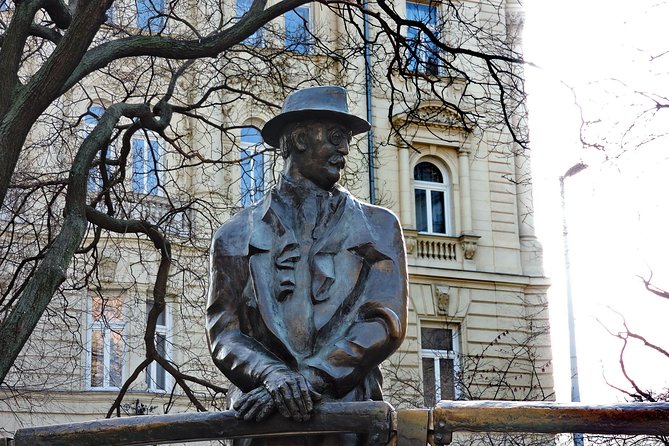
Tour review · BUDAPEST COMMUNIST HISTORY TOURS
Communism in Hungary with a Historian
Budapest has a second, darker map. This historian-led Communism in Hungary walk connects famous squares to how people lived, worked, and coped under party rule, all at a small-group pace with metro tickets and coffee included. I really like the family-story style of teaching and the chance to see Cold War-era details in public spaces, not just in photos. One thing to consider: most of the big moments here are explained while you look around outside, so if you’re hunting for lots of indoor museum time, this format is more street-history than gallery-hopping.
You’ll meet at Kempinski Hotel Corvinus Budapest, then head out from Elizabeth Square with an English-speaking guide. The route balances major landmarks with human details, and the guides are known for answering questions, even when the weather turns wintry.
Key things I’d bet you’ll notice
- Small group, max 10 travelers, so you can ask questions without shouting across the group
- Elizabeth Square to Freedom Square gives you a clear “then and now” view of political change
- Outside-looking-inside storytelling at St. Stephen’s Basilica and the Parliament area, with the religious angle explained
- Cold War leftovers on Szabadsag ter, including part of a bunker visible from outside
- Metro ride with tickets included, so you spend more time seeing and less time figuring out transit
- Coffee included at the Communist-style cafe, a fitting end point that feels time-warped
More of Budapest behind the Iron Curtain
- Budapest: Communist History Tour with House of Terror Option★ 4.8 · 182 reviews
- Communism in Hungary with a Historian★ 5.0 · 70 reviews
- Budapest: 3-Hour Walking Tour About Communism (Small Group)★ 4.7 · 70 reviews
- Lives of Hungarians Under Communist and Capitalist system★ 5.0 · 59 reviews
Elizabeth Square: the Communist era starts in plain sight
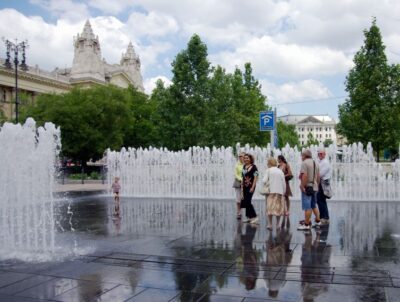
Elizabeth Square, Erzsébet tér, is an easy place to start because you’re already in Budapest’s public-life flow. The big hook here is that the square used to be known as Stalin Square, and your guide uses that fact to pull the story into focus. Instead of treating Communism like a distant theme park, you learn how power shows up in street names, monuments, and the way people move through space.
What I love about this first stop is how it sets your mental lens. You start noticing details you would normally walk past, like how official symbols can feel permanent while the rules behind them can change fast. And because the group is kept intentionally small, you’re more likely to catch the “why does this matter?” explanation rather than just the “what is this called?” version.
Practical note: give yourself time to stand, look, and listen. This isn’t a quick photo line tour. You’ll get more value if you take a moment at each stop to actually study what’s in front of you.
St. Stephen’s Basilica and the church under Communist rule
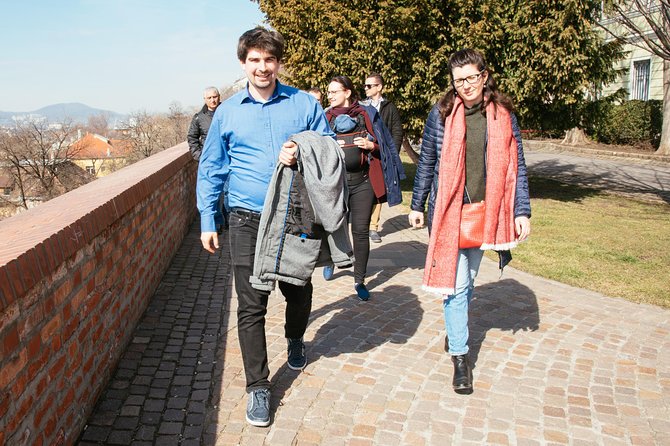
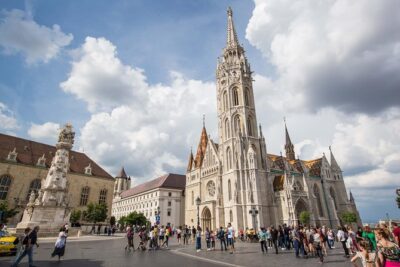
At St. Stephen’s Basilica, the focus is not an inside visit. You’ll walk by and see it from the outside while your guide talks through religious life during the Communist period. That religious thread is important because it adds a different kind of pressure to the story, beyond politics and police headlines.
This stop also leans on the kind of teaching that shows up again and again with the guides: personal family stories. Guides who’ve led this tour, including Judit, Greg, Raymond, Gábor (Gabriel), András, and Virág, are praised for using family experiences to make the topic feel real. You should expect the explanation to connect how the church survived, how people negotiated the rules, and how ordinary life kept going despite the state’s reach.
Drawback to flag honestly: you won’t be doing a full basilica visit here. Admission isn’t included for this stop, and you’re not meant to spend time indoors. If you want a more traditional “go inside the cathedral” experience, plan that separately and keep this tour for the story-led street view.
Szabadsag ter: Freedom Square and the bunker you can spot
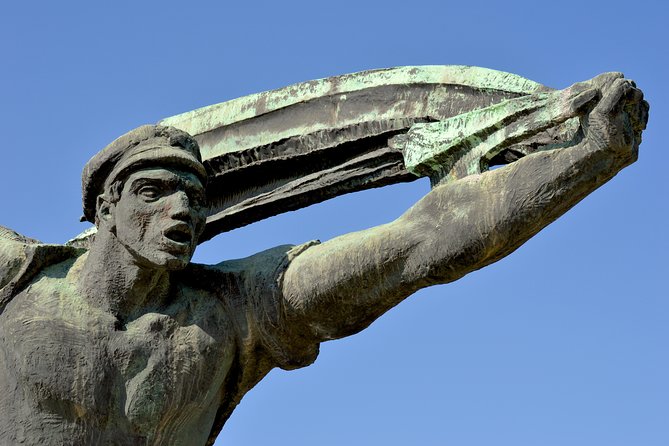
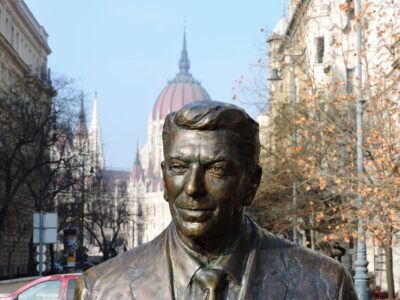
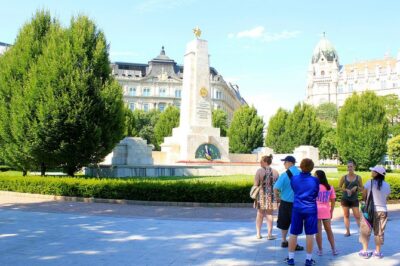
Szabadsag ter, Freedom Square, is where the tour shifts from symbolism to physical leftovers. You’ll see remnants of the era through memorials, statues, and even the way embassies and buildings mark the political landscape. The tone here is very “look closely,” and that’s where the small group size pays off again.
One of the standout details is that you’ll even get a glimpse of part of a bunker from the outside. You’re not crawling through anything dramatic, but you are getting the chance to recognize Cold War-era infrastructure in a place that still functions as a normal public square. That contrast is the whole point: politics built for fear and control, right in the middle of everyday life.
This is also one of the easiest stops to ask questions. People tend to have “wait, how did that work in real life?” questions, and your guide’s job is to connect the dots between the city’s structures and how people lived day to day. If you’re the kind of traveler who likes to understand the human angle, you’ll likely enjoy this section the most.
Weather tip: since this is mostly outdoors, wear layers. Even on a cold or rainy day, the guides keep the pacing moving and the stories coming.
Hungarian Parliament and the 1956 Revolution story behind Bloody Thursday
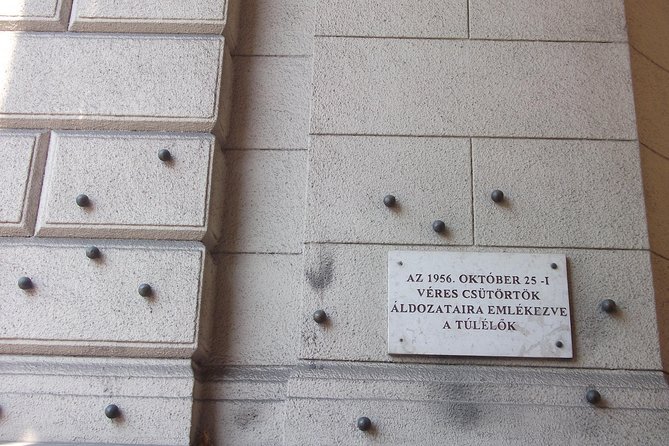
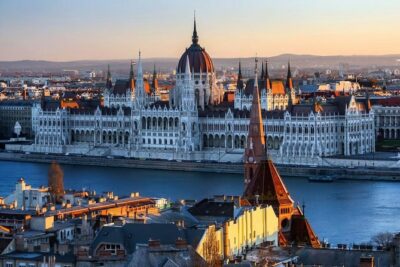
The tour culminates at the Hungarian Parliament Building area, where you’ll hear about a major moment in the 1956 revolution, the so-called Bloody Thursday. Your guide places the event on Kossuth square, in front of the Parliament, so you’re connecting the historical narrative to the exact setting.
What makes this stop effective is the storytelling style. You’re not only hearing what happened. You’re learning why this moment matters in the larger arc of control and resistance, and how the revolution is remembered through the built environment. Standing in front of Parliament while the guide explains the day gives you a different kind of understanding than reading about it later.
Admission is not included for this stop, so again, think of this as an exterior-history moment. You’ll get the scene, the context, and the meaning, without needing a timed ticket inside.
If you’re short on time in Budapest, this is one of those stops that can make the city feel more readable. Once you’ve heard the 1956 story placed in the right location, Budapest’s political geography clicks.
- Budapest: City Highlights Cruise with Welcome Drink
★ 4.6 · 35,610 reviews - Budapest: Unlimited Prosecco, Beer and Aperol Spritz Cruise
★ 4.8 · 25,310 reviews - Budapest: Széchenyi Spa Day Ticket with Optional Upgrades
★ 4.3 · 23,911 reviews - Budapest: Nighttime or Daytime Sightseeing Cruise
★ 4.2 · 21,062 reviews - Budapest: 1-Hour Evening Sightseeing Cruise with Drink
★ 4.5 · 8,330 reviews
Metro ride and the Communist-style cafe where it all lands
Between the squares and the landmarks, you’ll travel by metro, and metro tickets are included. That’s a practical win. You spend less time buffering your route choices, and more time focusing on the narration and the streets around you. It also makes the tour feel like a local pattern of movement, which helps the history sit in real life rather than staying stuck in your head.
The end point is at Bambi Café, usually on the Buda side close to the center and near Margaret bridge. On colder or wet days, the ending location is often shifted to the Pest side in the center close to where you began. That kind of adjustment matters more than you might think, because it reduces the chances of you freezing while waiting for the last part to wrap up.
The cafe is a big part of the value: it’s treated like a Communist-style setting, and coffee is included. There’s even a notable time-stamp detail here. Bambi Café opened in 1961 and it has not changed too much since, which helps the finale feel grounded. Instead of ending with a generic coffee stop, you end with a place that carries a time texture.
Expect a chance to slow down and think. Many guides also use the last stretch to tie what you saw to how the city feels today, so the coffee moment becomes part of the lesson, not just the reward.
The guide factor: why these tours feel personal
This is where the reviews strongly point to what matters. The guides who lead this experience, such as Judit, Raymond, Gabriel (Gábor), Greg, András, and Virág, are repeatedly praised for storytelling that feels warm, not staged. They also tend to bring family-level anecdotes, which can turn abstract political history into something you can picture.
That also explains why this tour can work even if you are not a history superfan. You don’t just get dates. You get cause and effect in human terms: how policies shaped housing, how people navigated religion, and how fear and loyalty could play out in daily life.
Another repeated strength: you can ask questions. A good guide invites curiosity rather than rushing through a script. If you like to clarify what you’re hearing as you go, you’ll probably feel taken care of here. And if you’re traveling with a family member or friend who asks lots of “why” questions, this small group structure supports that dynamic.
Price and value: what $59.13 buys you in 3 hours
At about $59.13 per person for roughly three hours, the value comes from the mix of guided context and included transit and refreshments. You are not paying for a long museum day. You are paying for a compact route where the guide does the heavy lifting in interpretation.
You get:
- Small-group access (maximum 10), which keeps the experience conversational
- English-led narration, so you’re not stuck with translation gaps
- Metro tickets included, which adds real convenience
- Coffee included at the Communist-style cafe, so you end with a built-in break
The best way to judge whether this is worth it for you is to ask this: do you enjoy walking tours that explain meaning, not just point out objects? If yes, this price is easy to justify. If you prefer mostly interior visits or prefer a fully self-guided pace, you might feel like you want more time in buildings and less time on the street.
Who this works best for (and who might want a different format)
This tour is a great match if you:
- Want Budapest through the lens of political power and everyday life
- Appreciate a guide who uses personal stories to explain big events
- Enjoy walking routes with multiple stops and a clear storyline arc
- Like being in a group capped at 10, where questions are welcome
It may be less ideal if you:
- Want mostly inside sightseeing stops and museum-style time
- Prefer purely architectural commentary with minimal social context
- Are hoping for synagogue visits as part of the route
The route is focused on Communism in Hungary, so it keeps its subject matter tight. That focus is part of why the tour tends to satisfy people who want this specific theme, rather than a general overview.
Should you book this Communist in Hungary historian tour?
I’d book it if you want Budapest to feel specific, not generic. The combination of Elizabeth Square’s Communist-era framing, exterior story stops tied to religion and 1956, a bunker remnant you can actually notice, and the ending at Bambi Café makes this feel like a well-shaped experience for the theme.
I would hesitate only if you need lots of indoor time. This is built around walking and looking outward, plus metro rides and a coffee finish. Still, if you’re open to learning how history lives on in street corners, monuments, and buildings, you’ll likely find it a strong use of an afternoon.
If you book, wear comfortable shoes, bring layers for weather, and come ready to ask questions. This tour rewards active listening more than frantic picture-taking.
FAQ
What time does the tour start, and how long is it?
The tour starts at 2:00 pm and runs for about 3 hours.
How big is the group?
The tour has a maximum of 10 travelers.
Where do we meet, and where do we end?
You start at Kempinski Hotel Corvinus Budapest at Erzsébet tér 7-8, 1051. You usually end at Bambi Café on the Buda side near Margaret bridge. On colder or wet days, the ending is often on the Pest side in the center closer to where you began.
Is coffee or metro included?
Coffee is included at the Communist-style cafe stop. You also travel by metro with tickets included.
What language is the tour offered in?
The tour is offered in English.
Do we visit St. Stephen’s Basilica inside?
No. At St. Stephen’s Basilica, you walk by and see it from the outside, and admission is not included.
What is the cancellation policy?
You can cancel for a full refund up to 24 hours before the start time. If you cancel less than 24 hours before, the amount paid is not refunded.
More Communist-Era Budapest

More Tour Reviews in Budapest




Recently added around Budapest

Budapest Communist History Tours, compared.
 ★ 4.8Communist History Tour with House of Terror OptionFrom $58182 reviews
 ★ 4.73-Hour Walking Tour About Communism (Small Group)From $5770 reviews
 ★ 4.5Budapest Hammer & Sickle Communist Times TourFrom $7968 reviews
 ★ 5.0Lives of Hungarians Under Communist and Capitalist systemFrom $459 reviews
 ★ 4.5Private Budapest Hammer & Sickle Communist Times TourFrom $13347 reviews
 ★ 5.0Communist Budapest Walking TourFrom $12624 reviews
 ★ 4.5Communist History Evening Walking Tour of BudapestFrom $3623 reviews
 ★ 4.9Memento Park and Icons of Communism Guided TourFrom $6323 reviews
Browse the lists this tour appears in