
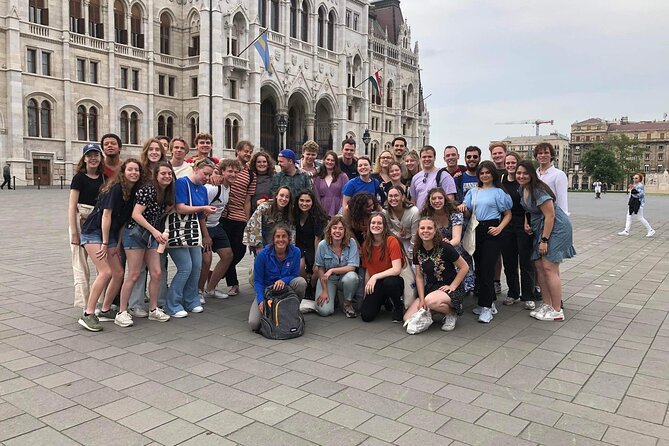
Tour review · BUDAPEST COMMUNIST HISTORY TOURS
Lives of Hungarians Under Communist and Capitalist system
Budapest has a second map of history. This Communism and post-Communism walk turns big textbook topics into street-level stories, guided by people who lived through it. I especially liked the personal, lived-in perspective and the way each stop ties to daily life, not just slogans. One thing to consider: if you want a pure photo sightseeing loop with minimal context, this won’t be your fastest route.
The pacing works. It’s built around a guided history thread, with short interactive moments along the way and plenty of room for questions, plus a small group size that keeps the conversation human. You’ll also notice a careful balance, moving from everyday life under communism to the messy, uneven changes after it.
At $4.65, it feels like a steal on paper, but the real cost is your time and your tip. The booking fee is separate, and the guides rely on donations at the end, with many people tipping around €10 per person. If that tip budget is a stress for you, plan for it now.
Key points that make this Budapest Communism walk worth your time
- Real lived experience from your guide, not just a script of dates
- Travel documents, housing, schools, and media propaganda, explained through what people actually faced
- Religion at St. Stephen’s Basilica, and how faith could look different from family to family
- Urban details with political weight, from monuments to the emergency exit connected to the F4 military nuclear bunker
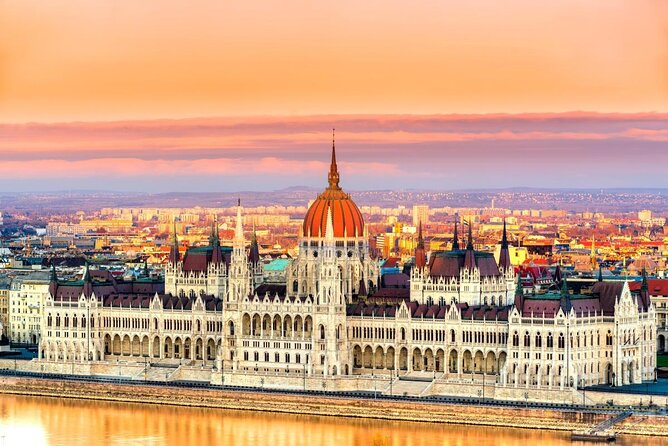
- 1956 on the ground, including stories tied to the Parliament area and visible evidence on nearby buildings
- Small group size up to 20, so the tone stays personal and question-friendly
More of Budapest behind the Iron Curtain
- Budapest: Communist History Tour with House of Terror Option★ 4.8 · 182 reviews
- Communism in Hungary with a Historian★ 5.0 · 70 reviews
- Budapest: 3-Hour Walking Tour About Communism (Small Group)★ 4.7 · 70 reviews
- Lives of Hungarians Under Communist and Capitalist system★ 5.0 · 59 reviews
Entering Budapest’s communist story at the Budapest Eye
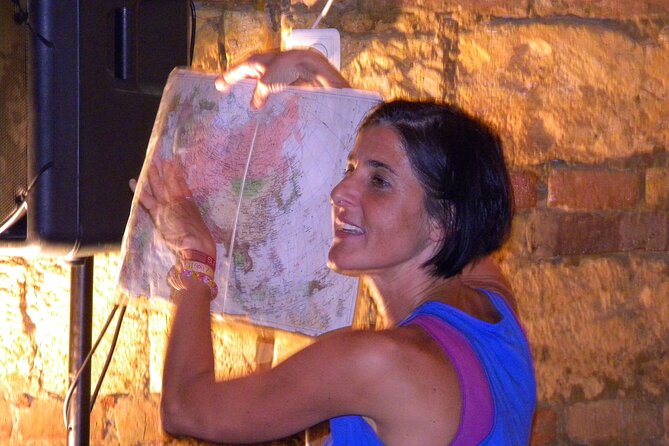
You start near the Budapest Eye ferris wheel, at Erzsébet tér. Your guide meets you close by and immediately sets the tone with a short, interactive history lesson on Hungarian and Central European communism.
What I like about this opening is that it gives you a mental framework before you start seeing monuments and landmarks. It also helps you follow the why behind the what, which matters a lot with the communist era, where the public face and private life could be totally different.
You also get a gentle orientation for the day’s theme: how systems shape ordinary routines. Even early on, the tour signals that this won’t be just dates and leaders, it will be daily life and the long shadows those choices left behind.
Ferris wheel lessons and travel stories that show how movement was controlled
From the start, you’re guided toward the topic of movement, and you’ll feel that theme keep resurfacing. A big part of life under communism was who could travel, how they traveled, and what paperwork made you allowed or blocked.
At the next stop, Fröccsterasz, you’ll hear stories about incoming and outgoing travel from Hungary. You also see basic travel documents and learn about transport options associated with the era, including the distinctive communist-era car world.
This is one of those “small detail, big meaning” parts of the tour. When you understand travel documents and restrictions, you start to see why borders felt personal, not abstract. You’re not just learning policy, you’re learning how policy could affect a weekend plan or a family visit.
If you’re the kind of traveler who wants history to connect to real life, this section is a win. If you hate paperwork talk and just want famous buildings, you might need to mentally switch gears and treat it like social history.
St. Stephen’s Basilica and religion under state pressure
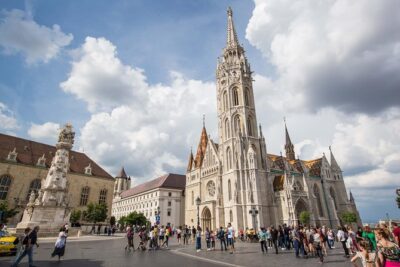
At St. Stephen’s Basilica (Szent Istvan Bazilika), the tour turns to a quieter but powerful angle: how religion was treated under communism. You’ll hear about the difficulties different denominations faced and how religious life could vary from family to family.
This part helps you understand something many visitors miss. Communism was not only about politics or economics, it also shaped what could be said, practiced, and passed down at home. By looking at religion through family stories, the tour avoids turning faith into a single, uniform experience.
The practical benefit for you is clarity. You’ll walk through one of Budapest’s best-known churches with a more informed lens, and you’ll likely notice how many different lives can fit inside one era.
One consideration: this stop is time-focused, so it’s not a full-on church tour. It’s history first, architecture second, and the goal is understanding life under pressure, not just taking photos.
District V inner city: housing, health care, education, and media propaganda
Next comes the inner city and District V, where your guide explains how systems showed up in daily services. You’ll cover topics like housing, health care, education, and media culture, including propaganda mechanics.
This is where the tour becomes very practical in its thinking. Instead of only asking what the government wanted, you learn how people had to navigate daily reality: what was available, what was delayed, what was controlled, and what families learned to expect.
You’ll also talk about sport and the Olympic Games in communism and post-communism, and why some people have nostalgia for the communist era. That last piece is handled carefully, because nostalgia is not the same thing as ignorance. It often reflects what people felt was stable or fair, even if the system had major flaws.
If you’re traveling with teens or with curious adults who ask lots of follow-up questions, this is likely the most “sticky” section. It’s the part where history starts to feel personal instead of distant.
- Budapest: City Highlights Cruise with Welcome Drink
★ 4.6 · 35,610 reviews - Budapest: Unlimited Prosecco, Beer and Aperol Spritz Cruise
★ 4.8 · 25,310 reviews - Budapest: Széchenyi Spa Day Ticket with Optional Upgrades
★ 4.3 · 23,911 reviews - Budapest: Nighttime or Daytime Sightseeing Cruise
★ 4.2 · 21,062 reviews - Budapest: 1-Hour Evening Sightseeing Cruise with Drink
★ 4.5 · 8,330 reviews
Szabadság tér: controversial monuments and the F4 nuclear bunker exit
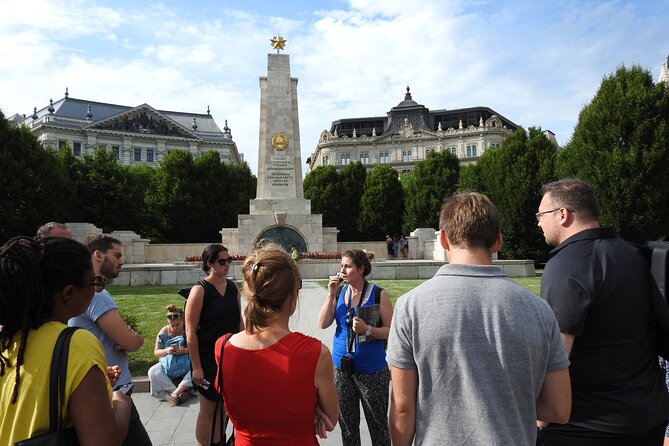
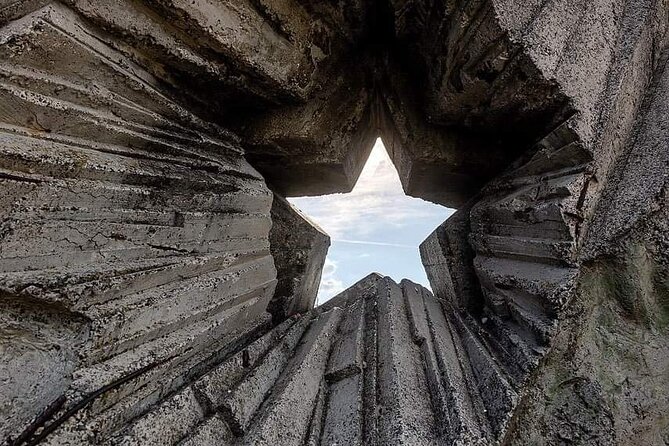
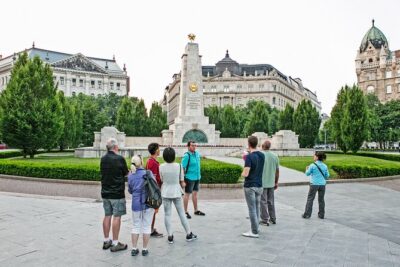
At Szabadság tér, you’ll see political memory stacked in layers. The tour includes controversial monuments, urban street art style guerrilla statues, and a close look at a guarded building tied to a long shelter story for a prominent Hungarian person.
You also get the standout, chilling detail tied to the F4 military nuclear bunker emergency exit. This is the kind of stop that changes how you interpret the city. Suddenly, the normal-looking street setting carries an undertone of fear and contingency plans.
What I appreciated here is the contrast. You’re shown the official face of power through monuments, then reminded through bunker history that fear of threats was baked into planning. It makes the era feel real, not just ideological.
A practical note for you: this is an outdoor stop that depends on weather. If you’re going in hot summer sun or chilly shoulder seasons, bring water or a layer and stay aware of your walking time.
Parliament area and 1956: bullet holes and childhood memories
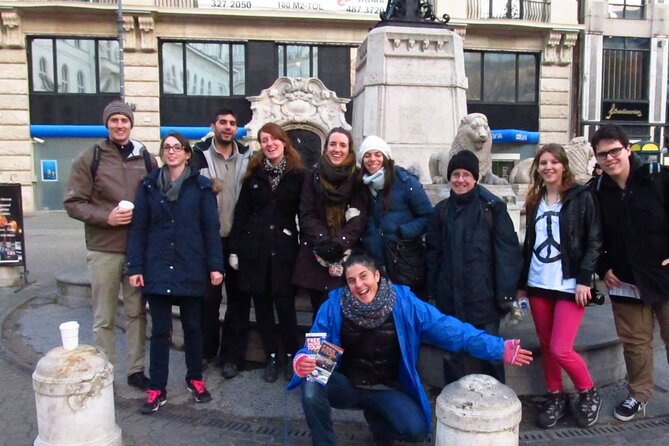
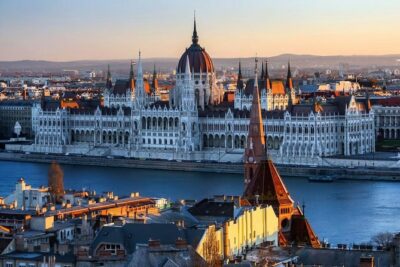
The tour ends near the Hungarian Parliament Building, and it leans hard into 1956. You’ll learn the 1956 uprising in depth, and you’ll also see bullet holes on the facade of certain residential buildings around the Parliament area.
This section doesn’t treat 1956 as a sealed event in the past. Instead, it ties the revolution to lived experience as a child and to the way memories pass through families.
That matters because it helps you understand why the city keeps certain marks visible. Budapest does not hide its layers. It argues with you, politely, through architecture and scar tissue, depending on what you choose to look at.
If you want a smooth finish, this ending location is convenient too. The conclusion point is about 50 meters from the M2 red metro line, so you can get moving quickly after the tour.
How to get more out of the guide-led approach
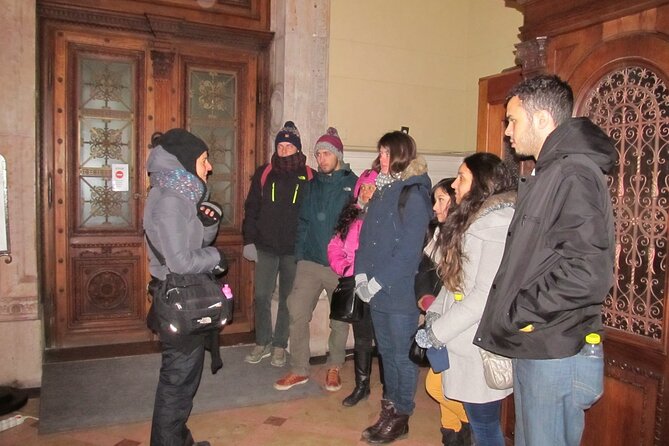
This is a licensed, guide-led walking format with a small group max of 20 travelers, and that setup changes the vibe. You’re not stuck listening to a monologue while everyone drifts into their phones. The tour is built around interaction, including a history lesson early on.
To make this tour really click for you, come in with two mindsets:
- Treat it like social history, not just sightseeing.
- Ask why a detail mattered, not only what happened.
Your guide will connect daily routines to bigger system choices: how people got around, what they studied, what they believed they could say publicly, and what they had to handle privately. That cause and effect chain is the heart of the experience.
Also, keep your questions ready for the “between the lines” moments. When the tour mentions things like nostalgia or propaganda, there’s usually a deeper human story underneath. That’s where you’ll get the most out of a small-group walk.
Price and budgeting: the $4.65 fee plus what you choose to tip
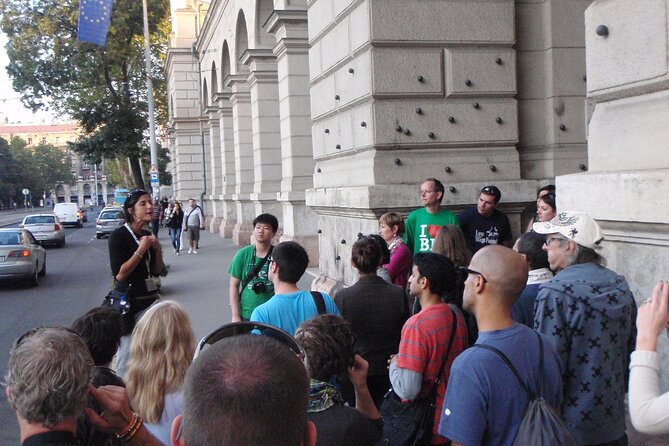
The advertised price is $4.65 per person, and the tour is usually booked about 14 days in advance. At first glance, it looks almost too low, but here’s the useful way to think about it.
Your booking fee is described as an administrative and marketing fee, and it does not go directly to the guide’s earnings. Your guide is supported by tips at the end, and the guidance given is that most people tip around €10 per person, with some tipping more.
So the value equation is not just price, it’s fairness and outcome. If you appreciate the lived perspective and you want the guide to be able to keep doing this kind of work, plan your tip budget in advance.
Timing also matters for value. The tour runs about 1 hour 30 minutes, and it’s scheduled to start at 3:30 pm. If your day is packed after that, schedule in some breathing room so the experience lands without you rushing through questions.
Who this Budapest Communism and Capitalism tour fits best
This tour is a strong match if you want authentic, local context around Hungary’s shift from communist rule to post-communism. It’s also a good fit if you enjoy learning through specific places, because the stops are tied to travel life, religion, services, monuments, and 1956.
I’d especially recommend it for:
- First-time visitors who want history explained through the city.
- Travelers with teens who can handle meaningful context.
- Anyone who likes questions about everyday life under systems, not only political headlines.
On the other hand, if you’re only hunting for the classic Budapest postcard route, this is more thought-forward than photo-first. You’ll still see major sights, but the point is interpretation.
Should you book the Lives of Hungarians Under Communist and Capitalist system tour?
I’d book it if you want to understand Hungary beyond monuments and dates. You’re getting a short, well-structured walk where the guide lived through the era and uses that perspective to explain daily life, travel limits, education, religion, and the meaning of 1956.
I would not skip it purely because it’s short. In 1 hour 30 minutes, the tour covers enough ground that you’ll leave with clearer context for how the communist system worked in real homes and how its aftermath still shows up in Budapest.
Just go in ready to tip. The experience is built on your guide’s effort and your donation at the end, so plan for it and you’ll feel the value in a more honest way.
FAQ
How long is the tour?
The tour lasts about 1 hour 30 minutes.
Where do I meet the guide?
You meet at the Ferris Wheel of Budapest, Erzsébet tér, 1051 Hungary.
Where does the tour end?
The tour ends near the Hungarian Parliament Building, Kossuth Lajos tér 1-3, 1055 Hungary. The conclusion point is about 50 meters from the M2 red metro line.
What is included in the price?
The price includes the booking fee and a mobile ticket. The tour description also lists admission as free at each stop.
Do I need to tip the guide?
Tips are not included, but tipping is encouraged. The guidance says many guests tip around €10 per person, and some tip more.
How big is the group?
The tour has a maximum of 20 travelers.
When does the tour start?
The start time listed is 3:30 pm.
What is the cancellation policy?
You can cancel for a full refund if you cancel up to 24 hours in advance of the experience start time. If you cancel less than 24 hours before, the amount paid is not refunded.
More Communist-Era Budapest

More Tour Reviews in Budapest




Recently added around Budapest

Budapest Communist History Tours, compared.
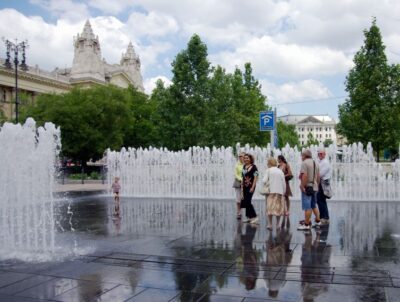 ★ 4.8Communist History Tour with House of Terror OptionFrom $58182 reviews
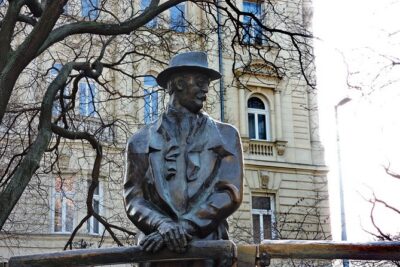 ★ 5.0Communism in Hungary with a HistorianFrom $5970 reviews
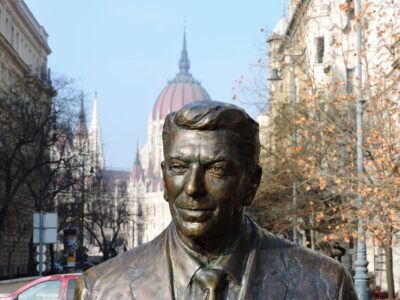 ★ 4.73-Hour Walking Tour About Communism (Small Group)From $5770 reviews
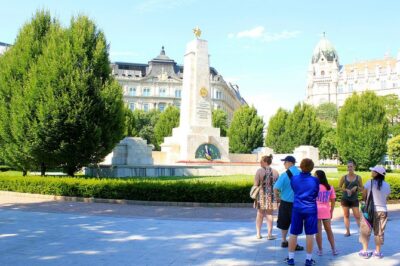 ★ 4.5Budapest Hammer & Sickle Communist Times TourFrom $7968 reviews
 ★ 4.5Private Budapest Hammer & Sickle Communist Times TourFrom $13347 reviews
 ★ 5.0Communist Budapest Walking TourFrom $12624 reviews
 ★ 4.5Communist History Evening Walking Tour of BudapestFrom $3623 reviews
 ★ 4.9Memento Park and Icons of Communism Guided TourFrom $6323 reviews
Browse the lists this tour appears in