
Tour review · BUDAPEST COMMUNIST HISTORY TOURS
Rise Against the Soviet: The 1956 Revolution – Private Tour
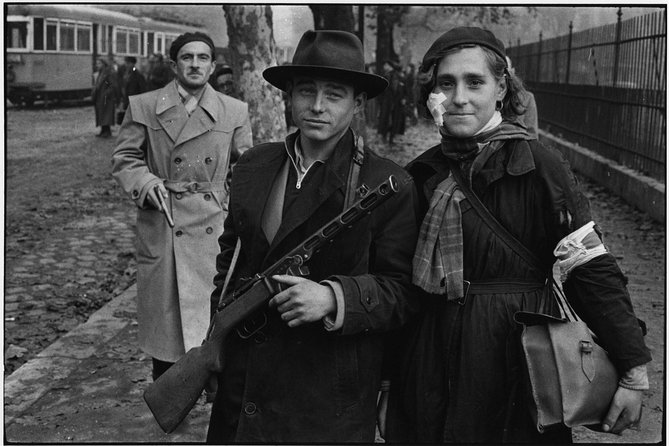
A revolution with names, streets, and scars still visible. This 3-hour private tour guides you through key 1956 revolt sites in Budapest, with context that links Hungary’s political turn to the later fall of communism. I like that it uses real places and plain talk, not a museum-style lecture, and I also appreciate the focus on personal testimonies and how ordinary life was affected, both before and after. One thing to consider: the theme is huge, so in just a few hours you’ll move fast between stops, even though you do get time at each place.
The best part for me is how the day is built for learning on the move. You’ll get handouts plus a communism-related souvenir, and your guide can answer questions about what you’re seeing, including why these specific spots mattered in 1956. If you want a long, highly detailed lecture only on 1956, this format may feel tighter than you’d like, but it’s a strong way to get your bearings quickly.
Key highlights worth planning for
- Kossuth Lajos Square: where a mass demonstration in 1956 turned deadly in front of the Hungarian Parliament complex
- The White House on Margaret Bridge: a Communist Party HQ plus a visit to the Imre Nagy statue
- Bem Square and student resistance: a major student protest of 200,000 that began with support for Polish workers
- Petöfi statue and the 1956 rallying voice: Sándor Petöfi, plus actor Sinkovits Imre at the statue in 1956
- Radio Budapest fighting epicenter: revolutionaries asking for help from the world
- Corvin Cinema and Corvin köz: local youngsters resisting Soviet forces with stolen weapons and Molotov cocktails
More of Budapest behind the Iron Curtain
- Budapest: Communist History Tour with House of Terror Option★ 4.8 · 182 reviews
- Communism in Hungary with a Historian★ 5.0 · 70 reviews
- Budapest: 3-Hour Walking Tour About Communism (Small Group)★ 4.7 · 70 reviews
- Lives of Hungarians Under Communist and Capitalist system★ 5.0 · 59 reviews
Budapest’s 1956 Revolution in 3 hours
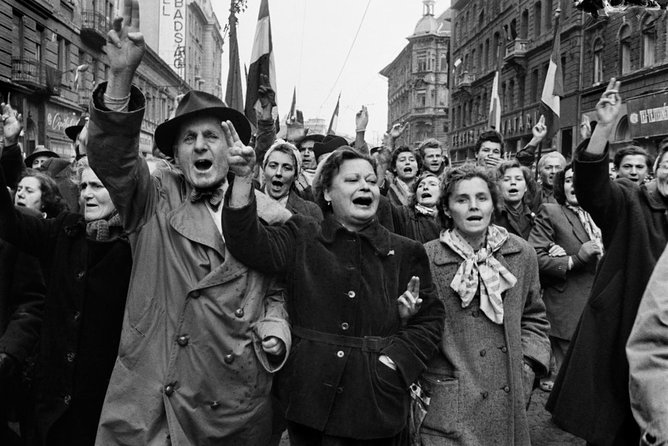
This tour is built for people who want history with location cues. You’re not just learning dates, you’re walking a line through the city where the 1956 uprising actually played out, from public squares to buildings that became communication and resistance points.
You’ll also get a more connected story than a single-event retelling. The revolution is presented with the background that shaped it, including the political seeds planted long before 1956 and the aftermath that came later, when communism fell in 1990. That link matters, because it helps you understand why people were ready to act, not just that they did.
Private pickup and how the route works in real life
This is a private tour, so only your group rides along. The group size tops at five people, which keeps things flexible: you can ask questions, linger at a detail that catches your eye, and keep the pace from turning into a sprint.
Pickup is offered at your hotel in Budapest or from a central meeting point you agree on. That matters here because several stops are spread across the city, including areas you might not hit on foot in a normal sightseeing day. The tour is also offered in English, and you’ll use a mobile ticket.
Time is the tradeoff. At about 3 hours, you’re covering a lot of ground, so wear shoes that handle short walks and uneven sidewalk moments. If you’ve got a moderate fitness level, you’re in the right range for this.
Stop 1: Kossuth Lajos Square and the Parliament-side tragedy
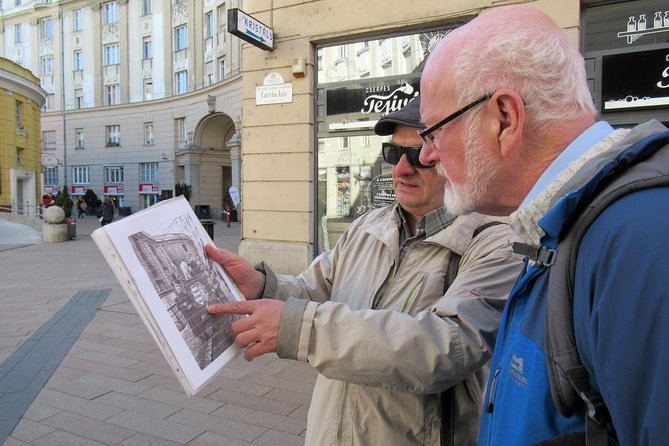
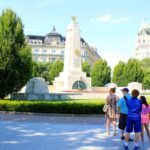
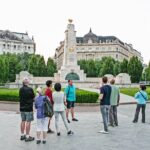
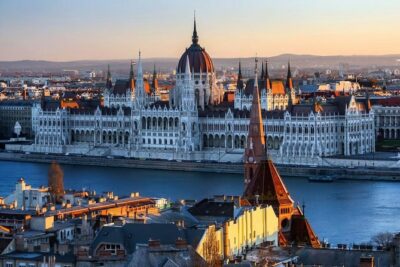
You start at Kossuth Lajos Square, centered on the Hungarian Parliament area. This is one of those places that looks grand in daylight and feels heavy once you know what happened there in 1956.
After a mass demonstration in 1956, dozens were massacred by the government. Your guide is there to connect the dots between the setting you see, the kind of crowd politics unfolding, and the consequences that followed. If you like history that sticks, this is the kind of stop that makes you look up at buildings and suddenly see them as witnesses, not just scenery.
The practical upside: there’s no admission cost here. The time window is about 25 minutes, which is enough to understand the story without turning the square into a blur.
Stop 2: Margaret Bridge, the Communist Party HQ, and Imre Nagy’s shadow
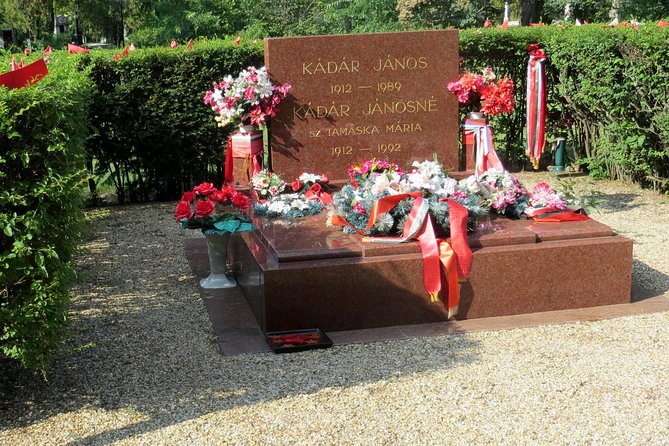
Next you move to the Danube riverfront near Margaret Bridge, where a building in communist times was nicknamed The White House. It served as the Party HQ of the Hungarian communist government, so this isn’t just a pretty waterfront stop. It’s a power stop, the kind of place where decisions get made and then the city absorbs the result.
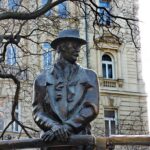
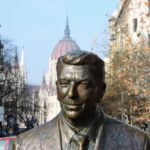
You’ll also look at the statue of Imre Nagy, the Prime Minister in 1956 who was later murdered. This combination is useful because it gives you two angles in one place: where authority sat, and how a key political figure was treated when things shifted.
Like the first stop, the admission situation is free, and the visit is short, about 20 minutes. That short timing works if your priority is an overview that you can build on later with a museum or book.
Other Budapest days with the guide to yourself
- Budapest Essentials Private Tour Highlights and Hidden Gems
★ 5.0 · 861 reviews - Private Budapest City tour with Classic Russian Jeep or G-Wagon!
★ 5.0 · 386 reviews - Private city tour by van
★ 5.0 · 273 reviews - Budapest: Private City Tour with a Vintage Russian Jeep
★ 4.9 · 246 reviews - Budapest Private City Tour With a Vintage Russian Jeep
★ 5.0 · 198 reviews
Stop 3: Bem Square student protests and a ride-friendly break at Bambi Eszpresszó
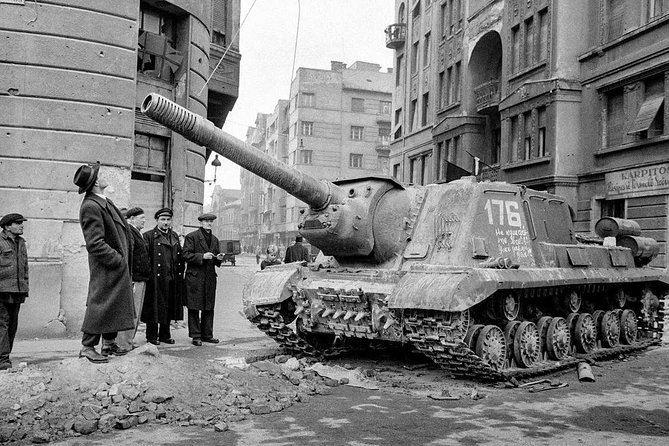
South of Margaret Bridge, you reach Bem Square, tied to one of the most striking images of 1956: students protesting Soviet rule. The rally drew 200,000 Hungarian students, and it was originally organized to support Polish workers. That detail matters, because it shows 1956 wasn’t isolated, it was part of a wider, regional pressure for freedom and dignity.
This stop is also where you get a sense of how youth became a political engine. When you see the space and hear how large the protest was, you start to understand why communist authorities felt threatened.
A smart bonus here is time at Bambi Eszpresszó, a shelter for Buda-side intellectuals in Frankel Leó utca that has operated since the 1960s with the same interior design and atmosphere. It’s not presented as a museum prop. Instead, it helps you remember that after revolutions, life still has to be lived, argued, and rebuilt.
Expect about 30 minutes at this stage, and again, admission is free. If you want coffee later, plan to buy it on your own, since drinks are not included.
Stop 4: Sándor Petöfi statue, public gathering points, and Sinkovits Imre’s words
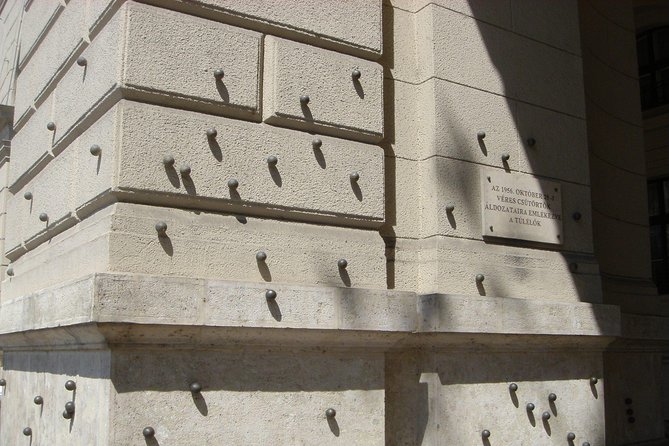
At the Sándor Petöfi statue, you’re stepping into a spot that still functions like a meeting point for political events. Petöfi is presented as a key figure from the 1948 revolution, and by 1956 his symbol meaning expanded to represent struggle against government.
The story gets sharper with an episode involving actor Sinkovits Imre. In 1956, he came to the statue and recited Petöfi’s words that incited revolution. He was arrested and imprisoned afterward. That’s the kind of personal, human-scale event that turns ideology into stakes you can feel.
Timing here is about 15 minutes, so treat this stop as a concentrated “why this place matters” moment rather than a long walk-through. If you enjoy political speeches and symbols, you’ll likely want extra time, but the schedule moves you onward for the next sites.
Stop 5: Radio Budapest fights and revolutionaries begging for help
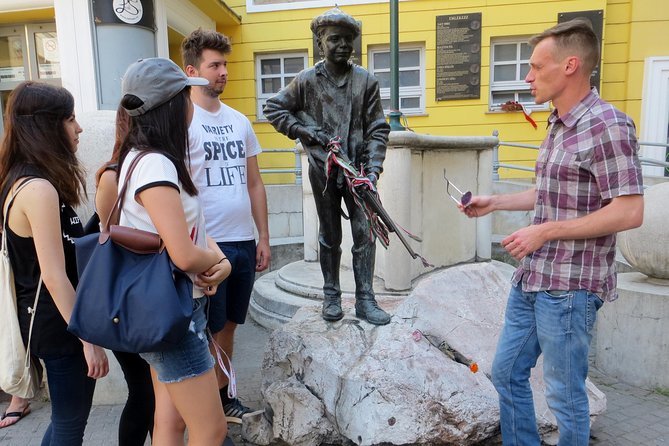
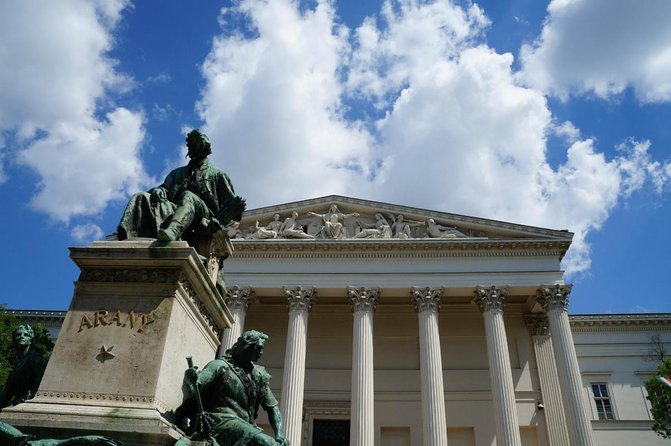
Next comes the Hungarian National Museum area, but the key setting is the Magyar Rádió Building, also known as Radio Budapest, located along Sándor Bródy Street. It’s described as somewhat secluded from the city’s busier thoroughfares, which makes sense. In 1956, communication points mattered, and being off the main glare could also mean vulnerability.
This building was one of the epicenters of fighting. From here, revolutionaries begged for help from the world at large. Even if you know the broad outcome, this specific detail makes you rethink how revolutions try to gain attention, legitimacy, and support when force is crushing.
The visit is short, about 20 minutes, and admission is free. If you’re the kind of traveler who wants to continue the thread after the tour, this is a good anchor point for later self-guided reading, because you can look up the building and follow the story further.
Stop 6: Corvin Cinema and Corvin köz resistance against Soviet tanks
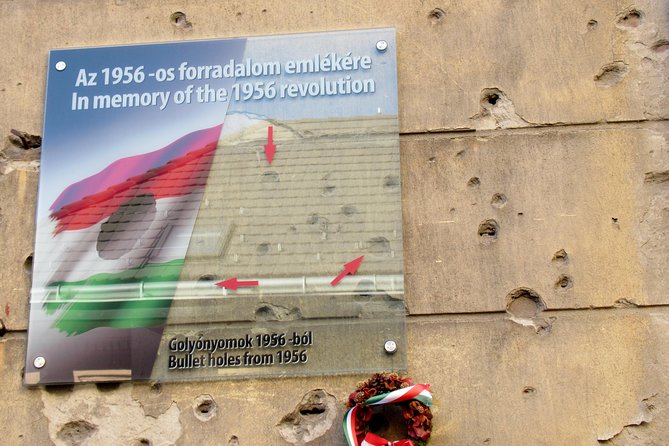
Your final stop heads to the south-east part of Budapest, around Corvin köz. Here, the story shifts from demonstrations and government buildings to street resistance. Corvin Cinema is tied to the area described as a major resistance center in 1956.
Young locals fought invading Russians using Molotov cocktails and guns they stole from soldiers to fight against Soviet tanks. That’s a grim sentence, but it’s also one of the clearest ways to understand what “revolt” meant on the ground. The revolution wasn’t only about speeches. It was about improvised courage in a city neighborhood.
You’ll also look at reminders of the battles in the area and talk through the invasion and its aftermath. The visit is about 30 minutes, which is the longest stop after Bem Square, giving you time to absorb what you’ve learned and connect the final dots.
Admission is free again, so you’re paying mainly for the guide’s story and the time you spend in these exact places.
Guides bring the story to life, and names do matter
One of the most praised parts of this experience is the quality of the guiding. In the examples you provided, guides such as Peter and Miklos are described as strong at making Budapest history easy to follow and deeply grounded in lived context.
In particular, I like that some guides adjust the pace for the group. One review mentioned guiding a father who had escaped Hungary during the 1956 revolution, and the guide slowed down so the key parts of the story stayed relevant to him. That’s not just kindness. It’s how you keep a heavy story from becoming too fast or too abstract.
You might also get extra angles beyond the listed highlights. For example, one review mentions an underground memorial related to the 1956 revolution and learning about a cemetery where victims were buried. Those are the kinds of details that can make the tour feel less like a checklist and more like a guided map through memory.
Price and value for small groups
The price is $228.66 per group, up to 5 people, for about 3 hours. That sounds high if you’re comparing solo prices, but you should compare it to what you get: private guiding, hotel pickup, English commentary, handouts, and a souvenir, plus a route that strings together several meaningful stops across the city.
Here’s the simple math. If you book with a full group of five, the cost comes out to about $45.73 per person. If you’re only two people, it’s about $114.33 per person. In other words, this tour becomes excellent value when you can share it with friends or family.
Also note that there’s no admission fee included for the listed stops. That keeps the budget predictable. Your costs outside the tour will mostly be personal, like drinks or snacks.
Who this tour fits best
This tour suits history buffs and anyone who wants a clear view of communist legacies in Budapest. It’s also ideal if you’re traveling with at least one person who likes stories with names, places, and personal consequences, because the content leans into real people and real events.
You’ll likely enjoy it most if you:
- want a guided overview that helps you understand what you see in Budapest
- like walking plus quick transitions, rather than long museum sessions
- prefer a private format where you can ask follow-up questions
It’s less of a match if you want a long, lecture-style deep dive that spends most of the time on 1956 alone. This one is short on purpose, so you leave with clarity and next steps, not with every possible detail.
Should you book this private tour?
If you’re deciding between doing random sights and doing something focused, I think this is the easier choice. The route hits high-impact places tied directly to the 1956 uprising, and the guide support is the real value. With handouts, a souvenir, and free access to the key stops, you’re spending money mostly on interpretation and timing, not entrances.
Book it if you like structured storytelling through the city and you want your Budapest day to have meaning beyond photos. Consider skipping or pairing it with more time elsewhere if you already know every major fact about 1956 and you want only that one topic at full depth.
FAQ
FAQ
How long is the private tour?
It runs for about 3 hours.
How many people can be in a group?
This is a private tour for your group, with up to 5 people.
Where does pickup happen?
Pickup is offered either at your hotel in Budapest or at a central point you agree upon.
Is the tour offered in English?
Yes, it is offered in English.
Are admission tickets included for the stops?
Admission is listed as free at each of the stops in the plan.
What is included in the price?
The tour includes handouts and a communism-related souvenir. A mobile ticket is also mentioned.
What is not included?
Food and drinks, public transportation tickets, or a pass are not included.
Is the tour only for my group?
Yes. It is a private activity, so only your group participates.
Is the tour physically demanding?
You should have a moderate physical fitness level.
Is free cancellation available?
Free cancellation is available, and you can cancel up to 24 hours in advance for a full refund.
More Private Days in Budapest



More Communist-Era Budapest

More Tour Reviews in Budapest



Recently added around Budapest

Budapest Communist History Tours, compared.
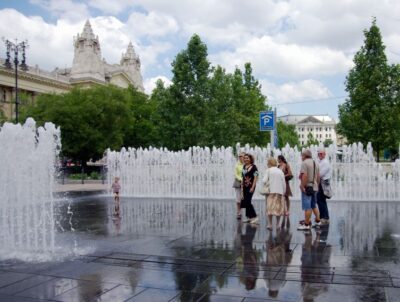 ★ 4.8Communist History Tour with House of Terror OptionFrom $58182 reviews
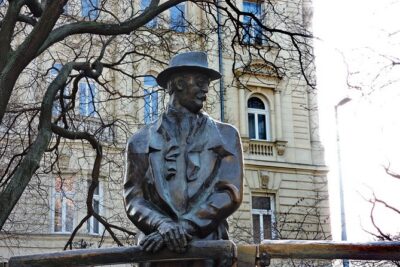 ★ 5.0Communism in Hungary with a HistorianFrom $5970 reviews
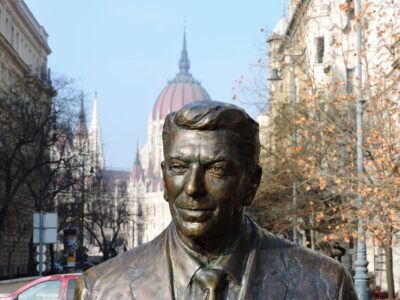 ★ 4.73-Hour Walking Tour About Communism (Small Group)From $5770 reviews
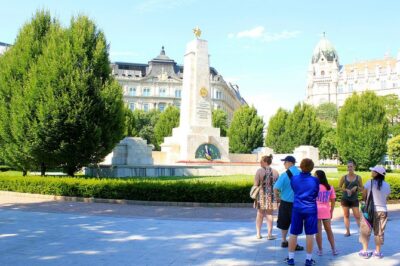 ★ 4.5Budapest Hammer & Sickle Communist Times TourFrom $7968 reviews
 ★ 5.0Lives of Hungarians Under Communist and Capitalist systemFrom $459 reviews
 ★ 4.5Private Budapest Hammer & Sickle Communist Times TourFrom $13347 reviews
 ★ 5.0Communist Budapest Walking TourFrom $12624 reviews
 ★ 4.9Memento Park and Icons of Communism Guided TourFrom $6323 reviews
Browse the lists this tour appears in