
Tour review · BUDAPEST COMMUNIST HISTORY TOURS
Life Under Communism” with optional visit to the House of Terror
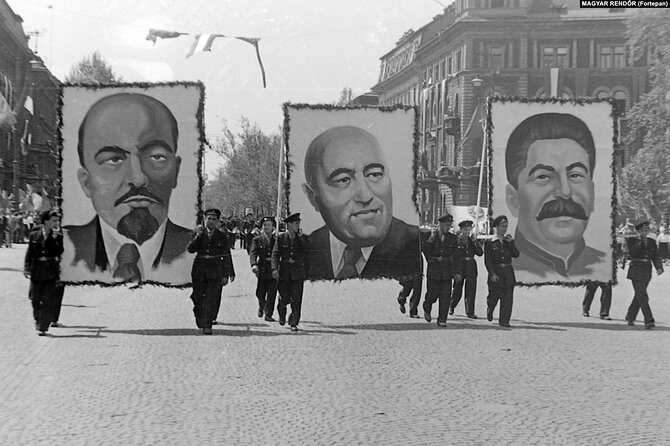
Communism is still written into Budapest’s streets. This 3-hour walking tour gives you a clear, street-level way to understand how Soviet power, fear, and resistance shaped daily life. I especially like how the guide ties the big political events to specific corners of the city, not just textbooks.
Then you get coffee at Bambi Presszó, described as a last stronghold of communist culture, which makes the whole story feel human instead of only grim.
One consideration: the optional stops matter. If you pick the base city walk, you may not get the House of Terror museum entry, so double-check your option before you go.
Key highlights worth planning for
- Liberty Square to Szabadság tér: see Soviet-era memory alongside older Habsburg-scale planning
- Kossuth Square and the 1956 firefight: a tense moment tied to the Parliament building and the crowd mix
- Corvin köz: resistance in 1956 with young fighters, Molotov cocktails, and stolen weapons
- Gellért Hill viewpoint: Liberty statue references Soviet “liberation” and how that story is framed
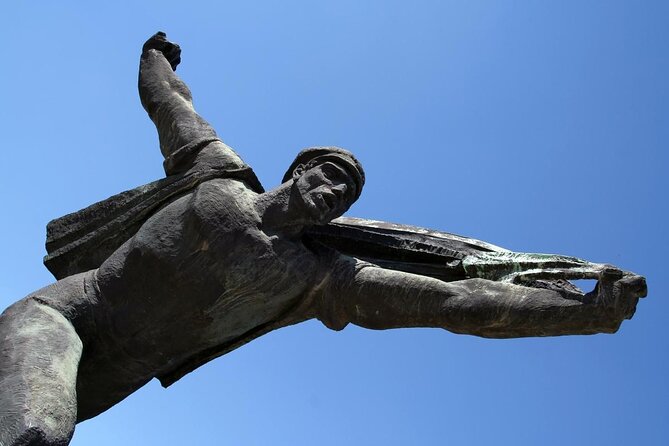
- Optional Memento Park: statues preserved after 1989, saved instead of destroyed
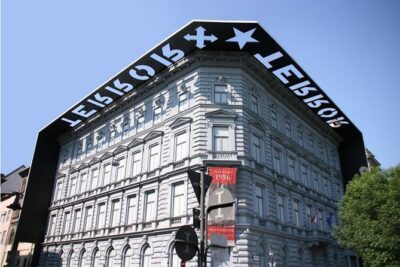
- Optional House of Terror: renovated museum with a T-54 tank inside and a stark exterior on Andrássy Avenue
More of Budapest behind the Iron Curtain
- Budapest: Communist History Tour with House of Terror Option★ 4.8 · 182 reviews
- Communism in Hungary with a Historian★ 5.0 · 70 reviews
- Budapest: 3-Hour Walking Tour About Communism (Small Group)★ 4.7 · 70 reviews
- Lives of Hungarians Under Communist and Capitalist system★ 5.0 · 59 reviews
How this Budapest communism tour actually feels
Budapest can look elegant and calm, even when you know the city went through serious brutality in the 20th century. This tour works because it treats politics like something you can read on the street. You start at major public squares and move through neighborhoods where 1956 and Soviet rule left physical reminders.
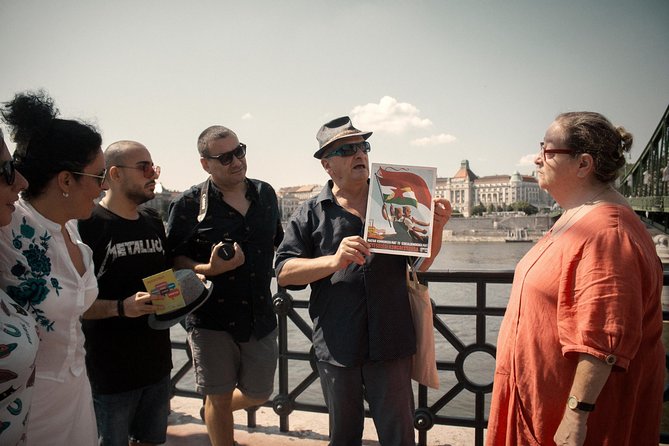
What makes it especially worth your time is that the guide brings the “how it felt” layer. Several guides in the program are praised for answering questions and sharing first-hand context. If you like your history with names, details, and cause-and-effect, you will likely enjoy the way the walk connects events to real locations you can point at.
The pacing also matters. It’s built as a short walking experience, about 3 hours, with optional adds. If you only have an afternoon and you want a focused route, this format is easier to fit than a full-day museum marathon.
Starting at Liberty Square and the Soviet memorial’s “big message”
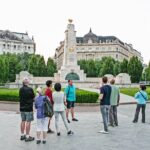
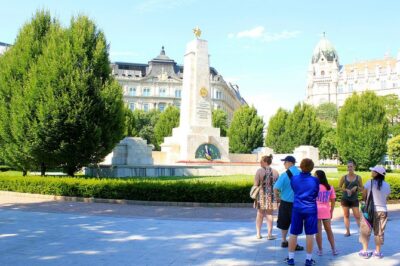
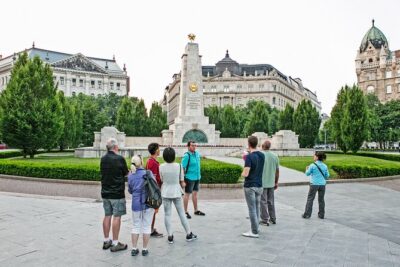
You begin in Liberty Square, where the memorial to the Soviet army dominates the scene. It’s grand on purpose, linked to the Siege of Budapest, a 50-day encirclement near the end of World War II.
This stop sets the tone fast. The message here is not subtle: it tells one side of the story in a massive, official way. As you walk, you’ll keep noticing how Budapest handles memory. Some monuments honor “liberation.” Others honor resistance. Sometimes you see both ideas in the same wider city conversation.
Practical note: squares like this are open and easy to understand, but they also expose you to wind. If you are visiting in shoulder season, bring a light layer and prepare for chilly drafts.
Szabadság tér, space to breathe, and layers of empire
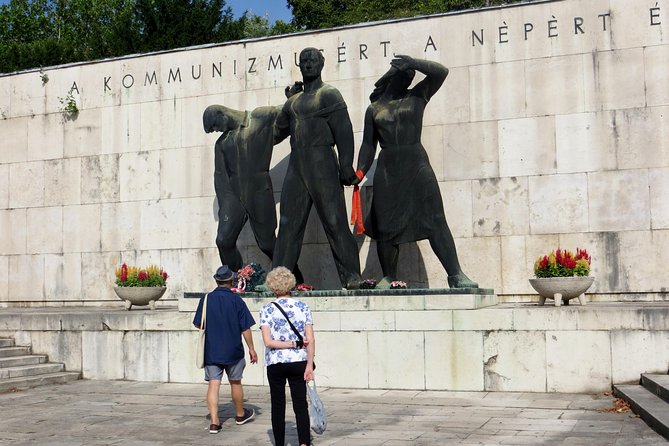
Next you move to Szabadság tér, one of the stately central squares. The tour explains that the square’s wide dimensions connect back to the Habsburg era, when the Újépület stood here.
This is a good moment to pause and let the city scale land in your mind. Even when you are thinking about communism, it helps to remember: Budapest’s story doesn’t start in 1945 and it doesn’t end in 1989. The city’s layout carries older power structures too.
The square is also described as peaceful and spacious, which is exactly what you want mid-walk. It’s a chance to rest without feeling like you are stepping away from the theme.
Kossuth Square and the 1956 revolution’s flashpoint
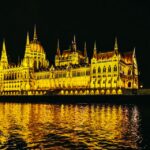
Kossuth Square is where you face the Hungarian Parliament building. The tour frames the square’s importance through 1956, when a firefight began in front of the Parliament.
You’ll hear that the exact number of demonstrators who died is not fully known, and that the crowd included mixed civilians: men, women, children, and the elderly. The point is not only the gunfire, it’s how a broad cross-section of society gathered, and how the massacre helped push events toward armed struggle.
This stop can feel heavy even if you are not a history-history person. The trick is to listen for the guide’s framing. They help you understand how one early violent incident became a turning point, and why the Parliament area remains symbolically loaded.
If you are planning photos, aim for angles that show both the building and the square. You want the “stage” feeling, not just a close-up.
- Budapest: City Highlights Cruise with Welcome Drink
★ 4.6 · 35,610 reviews - Budapest: Unlimited Prosecco, Beer and Aperol Spritz Cruise
★ 4.8 · 25,310 reviews - Budapest: Széchenyi Spa Day Ticket with Optional Upgrades
★ 4.3 · 23,911 reviews - Budapest: Nighttime or Daytime Sightseeing Cruise
★ 4.2 · 21,062 reviews - Budapest: 1-Hour Evening Sightseeing Cruise with Drink
★ 4.5 · 8,330 reviews
Parliament-facing museums and free time to reorient
Standing in the Parliament area also lines you up with the Museum of Ethnography and the Ministry of Agriculture across the space. Even though the tour time at the Parliament stop is short, it’s useful.
Admission here is free for the segment, so you can use the time to simply ground yourself. I like this kind of “no-ticket” stop because it keeps the tour moving while you still get context. It’s also a good reset if your feet start feeling the earlier walking.
Petőfi Statue and Március 15. Square, plus a social-life reality check
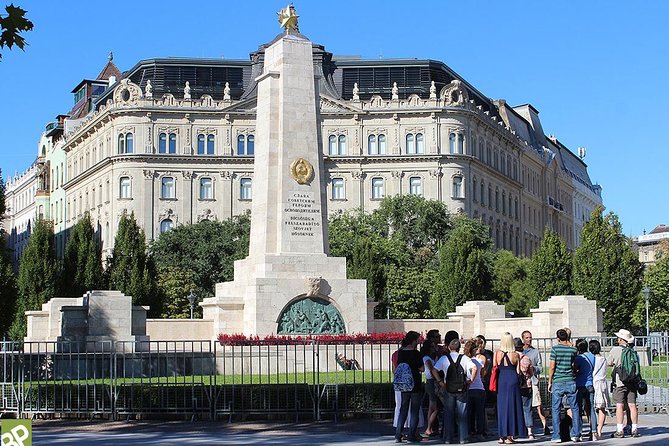
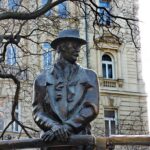
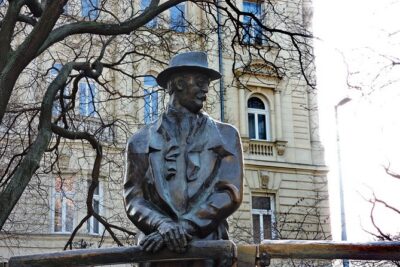
From Kossuth Square you head toward Március 15. Square and the Petőfi Statue near the foot of Erzsébet Bridge, in front of the oldest church of Budapest (as described on this route).
After the heavier 1956 material, this is a smart transition. The focus becomes public life and the way monuments and squares function for everyday people, not only protest or commemoration. The tour notes that after a renovation in 2011, the spot became a popular scene of social life, not just a tourist photo point.
You’ll feel the difference immediately: this part of the city acts like a place where Hungarians live their day, even though the historical naming remains right there in the background.
Bambi Presszó coffee stop, where atmosphere does the storytelling
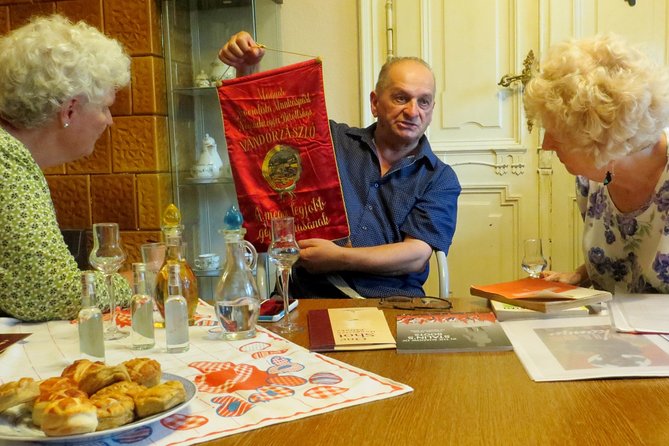
Now for the tonal shift. The walk includes a stop at Bambi Presszó for coffee, described as the last stronghold of communist culture.
Even without going deep into politics again, this stop helps you see something important: food and drink venues can preserve memory and style. It also gives you a break in a real-world Budapest location, not a staged visitor center.
Plan realistically. The tour highlights coffee at Bambi Presszó, but food and drink are not listed as included in the main package details you receive. So assume you may pay for your own coffee unless your chosen option explicitly states otherwise.
Corvin köz, resistance on a street corner
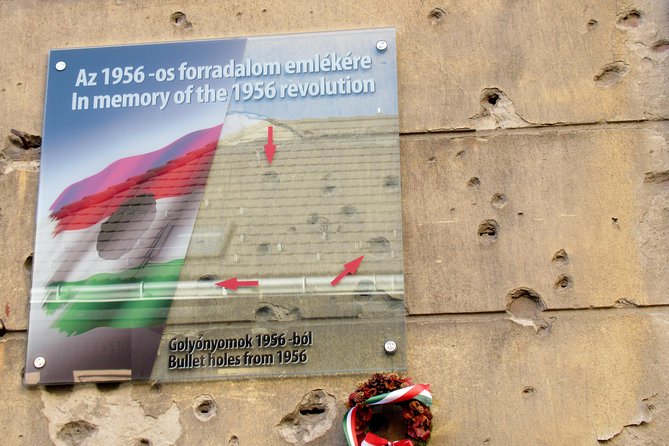
One of the most striking parts of the tour is Corvin köz. The guide positions it as the major resistance center during the 1956 uprising, where local youngsters fought invading Russians using Molotov cocktails and guns they stole from soldiers to fight Soviet tanks.
This is where the tour becomes more than “old statues.” You are looking at reminders of a specific kind of resistance, one built from improvisation and risk, not military advantage.
Two things I like about this stop:
- It shifts the focus from leaders to regular people, especially young fighters.
- It gives you a place to understand the aftermath, not only the dramatic moment.
If you want to get more out of it, ask your guide how the story of Corvin köz fits into the broader collapse and crackdown after 1956. The guide can usually connect the local street narrative to what happened elsewhere in Budapest.
Gellért Hill area, Liberty statue framing, and the view payoff
Next you cross one of Budapest’s most beautiful bridges to reach the Gellért hill side. From there you’ll reach St Gellért Square, named after Bishop St Gellért, also called the Martyr for Hungarian Christendom.
This is one of those “history plus geography” stretches. The location gives you an excellent view of the Liberty statue, erected in 1947 in remembrance of Soviet liberation of Hungary.
Here’s the key idea: the tour doesn’t treat this as a neutral statue. It uses it as a prompt for how official narratives work. The term “liberation” carried meaning for Soviet power and for people under communism, and it still carries tension today.
Take a moment at the viewpoint if you can. It’s easier to understand memory wars when you can see how the city opens up around you.
Optional add-on: Memento Park and why saving statues mattered
If you choose the Memento Park option, you’ll add about 1 hour and the admission ticket is included.
This part of the story starts after 1989, when communism collapsed in Hungary. Budapest ended up with many public works of art that celebrated that era. In 1993, the city decided to save the statues rather than destroy them, and that decision became the basis for Memento Park.
I like this option because it shows you a practical cultural response. It’s not only “remove symbols.” It’s also “preserve them so people can’t pretend the past didn’t happen.” You get a place where propaganda art is treated as history evidence.
One consideration: these statues can feel repetitive if you are expecting variety in architecture. The value is in seeing the scale of the imagery and how the city chose to handle it.
Optional add-on: House of Terror Museum for the darkest chapter
If you pick the House of Terror Museum option, you’ll add about 1 hour and the admission ticket is included.
This museum focuses on the oppressive machinery of totalitarian rule, and the experience begins with the outside look. The building was renovated inside and out, and the reconstruction plans were designed by architects János Sándor and Kálmán Újszászy. The exterior is black and framed like a monument with blade walls and granite footpath, making it stand out sharply against nearby buildings on Andrássy Avenue.
Inside, the tour description highlights a T-54 tank on display. You don’t need to be a tank person to feel what that implies in a museum about terror.
This option is powerful, but it is also emotionally heavy. If you know you prefer a lighter day, the Memento Park add-on might fit better. If you want the hardest questions answered in a museum setting, House of Terror is the right choice.
Price and value for a private group up to 5
The price is $280.33 per group for up to 5 people, with a total tour length listed as about 3 hours.
For value, the biggest detail is that this is private. You are not sharing your guide with strangers. That matters when you want to ask follow-up questions, especially in a topic like Soviet rule where nuance counts.
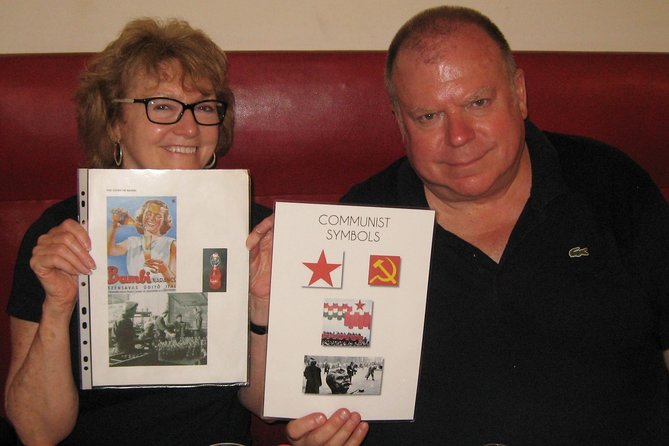
Also, the tour includes informative handouts and a local guide, and it includes entrance tickets for the optional visit choices (Memento Park and House of Terror) when you select those parts.
Food and drink are not included, and any entrance tickets not listed are on you. That’s not a deal-breaker, but it does mean you should budget for at least water and your coffee stop.
If you are deciding between only the walk versus adding a museum, think like this:
- If you want context on the street and prefer less time inside, do the base walking tour.
- If you want a stronger museum hit, add House of Terror.
- If you want a visual “how symbols were handled after communism” experience, add Memento Park.
Getting the most out of the guide you meet
The guides are a major reason this tour gets strong marks. You’ll see praise for guides who can answer questions and explain how to connect the political story to the city. In the feedback you shared, names like Miklós and Balaz come up for being personable, adapting timing to the group, and making the whole walk feel like a real conversation.
That kind of guide is not magic. You can help by coming prepared with a couple of questions. Good ones:
- How did everyday life change from the late war years into the 1956 period?
- Why does the city still display certain Soviet-era memory in public spaces?
- What does the statue symbolism try to teach, and what does it hide?
Also, consider your comfort preferences. One review mentioned the guide being hard to hear and another mentioned smoking during the tour. If those things matter to you, say it early. A good guide adjusts.
Who should book this Budapest communist era walk
This tour is a great fit if you:
- want a short, focused route instead of a full-day museum plan
- like your history grounded in specific places and squares
- want 1956 and Soviet-era memory tied to the Budapest you can actually walk through
- value private-group pacing, so you can ask questions as you go
You might want to pick the base walk only if you already feel museum-fatigued. You might want the House of Terror option if you want the darkest, most direct confrontation with the idea of state terror in a museum setting.
Should you book this Budapest communism tour?
I would book it if you want a smart, street-level introduction to Budapest’s Soviet and communist legacy, with optional add-ons that let you choose between a symbol-focused park (Memento Park) or an intense museum (House of Terror).
Book sooner rather than later if you can. This experience is often reserved about a month in advance, so last-minute plans can leave you with fewer times.
Finally, take 60 seconds to confirm your option selection before you start. The difference between the base walk and the museum add-ons is the whole point of customizing your afternoon.
FAQ
Where does the tour start?
It starts at Liberty Square.
How long is the tour?
The walking tour is listed at about 3 hours. Optional add-ons each add around 1 hour.
Is this a private tour?
Yes. It’s a private experience, so only your group participates.
What language is the tour offered in?
The tour is offered in English.
Do I need to pay for museum tickets?
Entrance tickets are included for the optional visit choices. If you choose Memento Park or the House of Terror Museum options, the corresponding admission is included. Entrance tickets that are not listed are not included.
Is pickup included?
Pickup is offered, but hotel pickup and drop-off is listed as not included.
Is there a coffee stop?
Yes, the highlights include sipping coffee at Bambi Presszó. Food and drink are listed as not included, so plan to pay for what you order unless your specific option states otherwise.
Is the tour physically demanding?
It calls for moderate physical fitness and includes walking through squares and bridges.
Can I cancel?
Free cancellation is available up to 24 hours in advance for a full refund.
FAQ
Are there options besides the main walking route?
Yes. You can add either Memento Park or the House of Terror Museum, depending on what you select.
Is a mobile ticket used?
Yes, the tour includes a mobile ticket.
Can kids join?
Children must be accompanied by an adult.
Are service animals allowed?
Service animals are allowed.
Is it near public transportation?
Yes, it’s near public transportation.
More Communist-Era Budapest



More Tour Reviews in Budapest




Recently added around Budapest


Budapest Communist History Tours, compared.
 ★ 4.8Communist History Tour with House of Terror OptionFrom $58182 reviews
 ★ 4.73-Hour Walking Tour About Communism (Small Group)From $5770 reviews
 ★ 5.0Communism in Hungary with a HistorianFrom $5970 reviews
 ★ 4.5Budapest Hammer & Sickle Communist Times TourFrom $7968 reviews
 ★ 5.0Lives of Hungarians Under Communist and Capitalist systemFrom $459 reviews
 ★ 4.5Private Budapest Hammer & Sickle Communist Times TourFrom $13347 reviews
 ★ 5.0Communist Budapest Walking TourFrom $12624 reviews
 ★ 4.5Communist History Evening Walking Tour of BudapestFrom $3623 reviews
Browse the lists this tour appears in